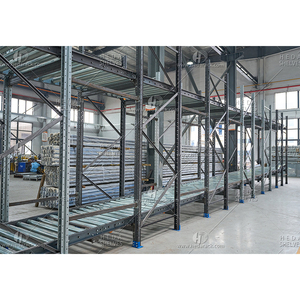
 Dynamic Gravity Flow
Warehouse Storage Roller Racking Carton Flow Racking High Quality Gravity Carton Flow Racking
FIFO Principle
Aluminum / Steel Rollers
Split-Case Picking
Precision-fabricated in Guangzhou under ISO 9001:2015 and CE certification standards. Each structural configuration is engineered to maximize cubic volumetric efficiency and seismic tolerance across global logistics hubs.
Dynamic Gravity Flow
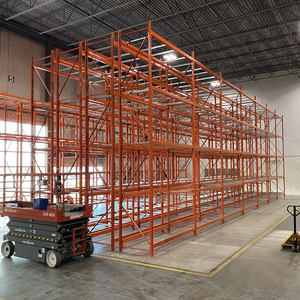 High Density Reach
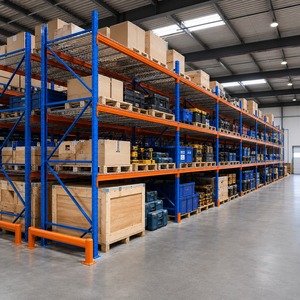 Logistics Hub Grade
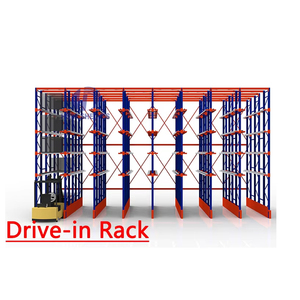 Maximum Cube Density
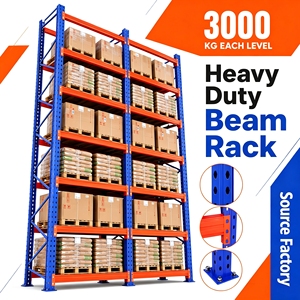 Ultra Heavy Load
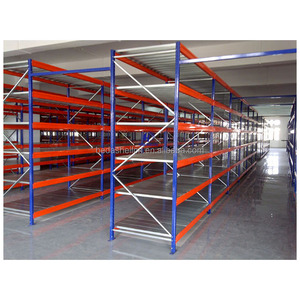 Boltless Modular
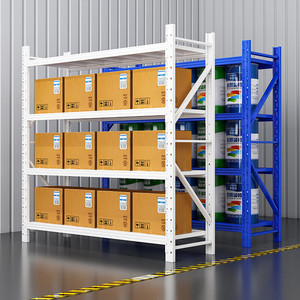 Heavy Manual Picking
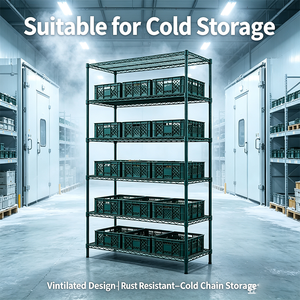 Cold Room Anti-Rust
Push back racking bridges the operational chasm between low-density selective racking and labor-restrictive drive-in systems. Below is an engineering evaluation of gravitational slope gradients, nested trolley metallurgy, and structural resistance under dynamic load forces.
Push back pallet systems rely on nested steel carts rolling over inclined structural structural steel tracks (typically configured at an exact 2.5% to 3.2% slope angle). The gravitational gradient must overcome the rolling coefficient of friction ($\mu \approx 0.015$) of precision-sealed bearings without inducing uncontrolled acceleration when releasing rear unit loads into the discharge face.
Fabricated from heavy-gauge Q235B or high-yield Q355B cold-formed structural steel, nested trolleys stack with progressive clearances to avoid binding during asymmetrical pallet placement. Low-profile multi-stage cart assemblies allow 2-deep, 3-deep, 4-deep, 5-deep, and 6-deep accumulation without consuming excessive vertical mast clearance under building sprinkler heads.
Every lane terminates at the operational pick face with heavy-duty structural steel cart stops and anti-lift capture hooks. Carts cannot jump the guide tracks even when subject to rapid forklift positioning strikes or eccentric forklift operator withdrawal. Heavy-gauge front column protectors prevent direct fork impact against base frame uprights.
Selecting optimal pallet storage architecture requires evaluating capital expenditure (CapEx), operational throughput velocity, SKU selectivity, and long-term total cost of ownership (TCO).
| Storage Topology | Space Utilization | SKU Selectivity | Forklift Cycle Time | Handling Principle | Damage Risk Index | CapEx Factor |
|---|---|---|---|---|---|---|
| Push Back Racking (2–6 Deep) | 70% – 78% Floor Area | High (per lane) | Fast (No rack entry) | LIFO (Last-In, First-Out) | Extremely Low | Medium |
| Standard Selective Racking | 35% – 45% Floor Area | 100% Direct Access | Standard | FIFO / LIFO Flexible | Medium | Low |
| Drive-In / Drive-Through | 75% – 85% Floor Area | Very Low (per block) | Slow (Mast inside lane) | Strict LIFO (Drive-In) | High (Forklift collisions) | Low to Medium |
| Gravity Pallet Flow | 80% – 88% Floor Area | Medium (per lane) | Fast (Dedicated pick face) | Strict FIFO | Low | High |
| Radio Shuttle Cart System | 85% – 90% Floor Area | High (Automation managed) | Fastest (Semi-automated) | Programmable FIFO/LIFO | Very Low | Very High |
Established in 2001, Guangzhou Heda Shelves Co., Ltd. operates a high-capacity 30,000 square meter intelligent manufacturing facility headquartered in Haizhu District, Guangzhou, China. With 300+ structural engineers, automated roll-forming technicians, and international project consultants, HEDA manufactures and exports over 30,000 metric tons of certified warehouse racking systems every month to more than 120 countries worldwide.
Our automated 10-step fabrication chain spans precision steel coil slitting, multi-roll progressive cold forming, automated CNC column punch indexing, robotic beam welding, and a multi-tank immersion pickling/phosphating pre-treatment plant. Racking uprights and components receive an electrostatic epoxy-polyester powder coat baked at 200°C, delivering salt-spray and moisture resistance engineered for the high-humidity, coastal tropical conditions of Southeast Asia (Vietnam, Philippines, Malaysia, Thailand, Indonesia, and Singapore) as well as global cold chain facilities.
Modern distribution hubs are rapidly evolving beyond static iron. As supply chain infrastructure consolidates, push back racking systems are adapting to robotics, smart telemetry, climate resilience, and sustainable metallurgical lifecycle standards.
Next-generation push back installations feature laser alignment plates and optical target tags designed for autonomous reach trucks (AMRs) and AGVs, enabling 24/7 automated pallet loading without human forklift operators entering dynamic bays.
With global demand for frozen food and biopharma soaring, procurement strategies mandate sub-zero (-30°C) ductile steels and synthetic low-temperature wheel bearing grease to eliminate freeze-seizing inside energy-intensive cold storage facilities.
Embedded strain-gauge micro-sensors and optical flow monitoring sensors along inclined tracks provide real-time vibration alerts, dynamic load eccentricity reporting, and impact detection for proactive maintenance compliance.
Enterprise procurement specifications increasingly require verifiable Environmental Product Declarations (EPDs). HEDA utilizes high-strength, recyclable steel with low embedded carbon footprints to meet corporate Scope 3 sustainability targets.
Definitive answers to the technical, commercial, structural, and shipping questions posed by warehouse operations directors, structural engineers, and intralogistics procurement leaders.
A 2-deep system uses a single rolling cart nested on top of the rails (the second pallet sits directly on the structural rail surface at the charge face). As depth scales to 3, 4, 5, or 6 pallets deep, multi-tiered telescoping cart layers are nested on top of each other. The more carts nested, the higher the requirement for precision level tolerances, heavy-duty guide wheels, and forklift mast tilt discipline during initial charge-in cycles.
Yes. Push back racking is far more forgiving of compromised, broken, or irregular bottom runners than gravity roller pallet flow racks. In a push back system, the pallet sits static on a wide steel cart platform rather than riding directly on conveyor rollers. However, significant bottom stringer deflections must be accounted for during cart frame dimensioning to ensure clear nested operation.
Structural calculations conducted by Heda Shelves calculate dynamic base shears and overturning moments according to international standards (including RMI MH16.1, EN 15512, and local seismic zone spectral acceleration factors $S_s$ and $S_1$). We configure oversized heavy-gauge baseplates, heavy duty anchors, welded upright footings, and structural cross-aisle bracing towers to guarantee stability.
Standard production cycles at our Guangzhou facility range between 15 to 25 business days depending on tonnage. Port-to-port ocean transit from Nansha/Guangzhou to major ASEAN hubs is exceptionally fast: 2–5 days to Haiphong/Cat Lai (Vietnam), 3–5 days to Manila (Philippines), 5–7 days to Bangkok/Singapore, and 7–10 days to Jakarta (Indonesia). North American and European shipments average 22 to 35 days under FOB or CIF terms.
Every cart manufactured by HEDA features captured guide bearings running along C-channel or structural angle track profiles with integrated anti-lift mechanical flanges. This positive interlock prevents the cart from jumping track under irregular forklift approach. High-grade urethane or zinc-plated steel roller wheels with sealed pre-lubricated radial bearings ensure zero friction hot spots along the inclined track.
Before coating, components undergo chemical immersion pickling and phosphating to eliminate mill scale and grease. We then apply an 80–120μm electrostatic thermoset powder coat. For outdoor lumber yards, coastal port facilities, or sub-zero blast freezers with persistent condensation cycles, HEDA provides complete hot-dip galvanization (HDG) per ASTM A123 standards to ensure rust-free longevity.
To design an optimized layout, our engineering team requires: (1) Architectural floor plan showing building column centers, door clear paths, and building truss heights; (2) Pallet specifications (width, depth, overall height including cargo, and maximum gross weight); (3) Forklift model, maximum lift height, and minimum aisle turning radius; and (4) Throughput targets and SKU velocity profiles.
While radio shuttle systems provide higher lane depths (up to 40+ deep), they incur high capital costs for robotic shuttle vehicles, lithium battery replenishment, and PLC electronic maintenance contracts. Push back systems have zero electronic components, zero battery charging routines, and operate purely on classical Newtonian gravitational physics, delivering an exceptionally low 10-year maintenance TCO.