Heavy Duty
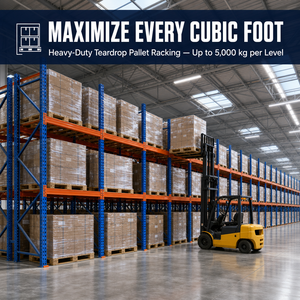
Explore our heavy-duty industrial warehouse racking systems, modular structural mezzanines, and precision rail-guided dynamic storage solutions manufactured for high volumetric efficiency.
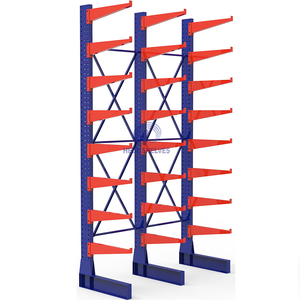
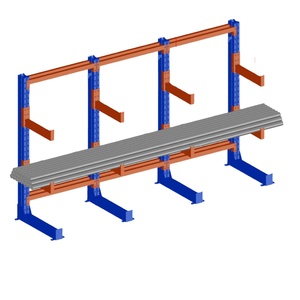
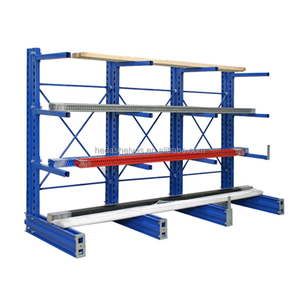
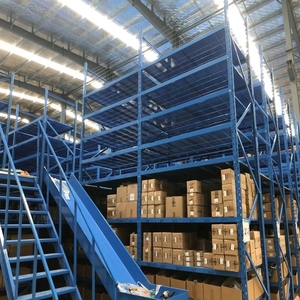
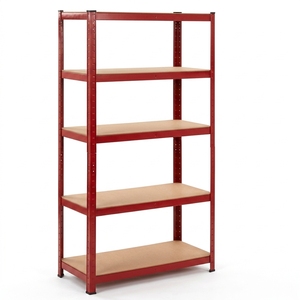
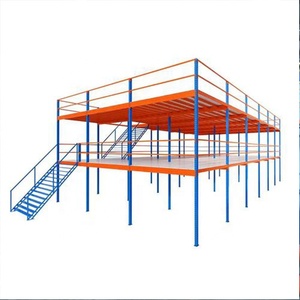
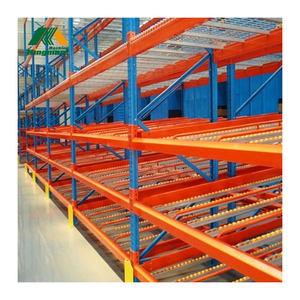
In modern intralogistics engineering, pallet racks on tracks—alternatively designated as powered mobile pallet racking (PMR), motorized rail-mounted racking, or high-density mobile base systems—represent the ultimate equilibrium between maximum volumetric density and direct pallet selectivity. Conventional static selective racking systems consume between 55% and 65% of floor surface solely for forklift operational transit aisles. Pallet racks on tracks compress this footprint by mounting superstructure racking units onto electro-mechanically driven structural steel mobile chassis that traverse precision-leveled steel guide and runner rails embedded flush into the warehouse slab.
By consolidating all operational storage blocks into an unbroken high-density cube, a single mobile racking block eliminates redundant parallel access aisles. When inventory retrieval or pallet putaway is triggered via radio frequency terminal, WMS API, or manual push-button console, the electromechanical chassis traverse laterally along the floor tracks at a controlled velocity of 4.0 to 4.8 meters per minute, opening an access aisle precisely where needed. This operational model unlocks an immediate storage capacity expansion of 85% to 100% within the exact same structural footprint, while simultaneously preserving 100% individual pallet accessibility (selectivity).
Structural Load Equilibrium Rule: Unlike static racking where base plates disperse concentrated point loads across large surface footprints, mobile pallet racks on tracks concentrate static and dynamic loads through double-flanged forged steel wheels onto embedded rails. Slab design must rigorously satisfy DIN 18202 Table 3 flatness tolerances and EN 15620 deformation classes to guarantee absolute zero binding during multi-chassis synchronized displacement.
The core mechanical reliability of track-mounted pallet racks is determined by rail geometry, rail-to-concrete load transfer anchors, and wheel-bogie synchronization. China’s premier engineering and manufacturing practice utilizes heavy-gauge Q355B or C45 structural alloy steels for track rails. Two distinct rail profiles comprise a functional mobile track installation:
Features a machined inverted V-ridge or precision central keyway profile designed to engage double-flanged, induction-hardened guide wheels. Absorbs transverse thrust vectors and prevents chassis yawing or skew during synchronized travel.
Heavy duty flat rail tracks machined from high-tensile solid bar stocks. These surface tracks carry direct vertical compressive loads down to the secondary concrete infill, accommodating minor building settlement without binding.
Equipped with individual decentralized helical-bevel SEW gearmotors synchronized electronically via variable frequency drives (VFD) and internal PLC encoder feedback loops, ensuring smooth acceleration ramps and micro-inch positioning.
To establish accurate return on investment (ROI) calculations, logistics engineers evaluate mobile pallet racking against other industrial storage configurations. The following data visualization demonstrates the spatial and operational differences:
| Storage Architecture | Footprint Utilization (%) | Direct Selectivity | Cold Storage Energy Savings | Throughput Speed | Average CAPEX Tier |
|---|---|---|---|---|---|
| Pallet Racks on Tracks (Mobile) | 85% – 90% | 100% Direct Access | 45% – 50% Reduction | Moderate (Aisle Shift) | Medium-High (High ROI) |
| Conventional Selective Racking | 35% – 45% | 100% Direct Access | 0% (Baseline Energy Cost) | Fast (Permanent Aisles) | Low |
| Drive-In / Drive-Through Rack | 65% – 75% | Poor (LIFO / FIFO Honeycombing) | 20% – 25% Reduction | Slow (Forklift Drives In) | Low-Medium |
| Radio Shuttle Racking | 75% – 82% | Medium (Channel Dependent) | 30% – 35% Reduction | High (Autonomous Shuttle) | Medium-High |
| Double Deep Pallet Racks | 50% – 58% | 50% (Requires Pantograph Reach) | 10% – 15% Reduction | Moderate | Low-Medium |
Global logistics demands are shifting from passive steel racking toward intelligent, energy-harvesting, and fully automated rail-guided mobile ecosystems.
Procurement trends indicate modern facilities reject standalone push-button consoles in favor of direct bidirectional API integration with enterprise Warehouse Management Systems. Racks automatically pre-open pick aisles based on inbound AGV schedules.
Freezer spaces (-25°C to -30°C) incur extraordinary electricity expenses. Future buyers prioritize pallet racks on tracks featuring IP67 low-temperature heating coils inside motor casings, Arctic-grade synthetic lubricants, and anti-icing optical laser sensors.
Next-generation mobile bases incorporate redundant safety systems: continuous photoelectric safety light barriers spanning floor-level approach zones, ultrasonic obstacle distance sensors, long-range laser scanners, and physical impact stop bars.
As sustainability certifications (LEED, BREEAM) govern procurement tenders, powered mobile bases are engineered with energy-recovery regenerative braking modules that channel deceleration energy back into facility power grids.
From prime hot-rolled structural steel coils to containerized shipping, every upright frame, box beam, mobile chassis, and rail profile is fabricated in-house under strict ISO 9001:2015 quality control.
Certified Q235B and Q355B coil analysis verifying tensile yield strength.
High-speed uncoiling, leveling, and CNC shear cutting to exact strip widths.
Fully automated multi-station progressive die punching for 50mm/75mm upright pitch.
24-station cold rolling line ensuring tight section modulus tolerances.
Multi-axis robotic arms for seam welding of beam connectors and mobile chassis.
SA 2.5 surface blast cleaning to eliminate rust scales, oils, and mill impurities.
Automated multi-stage immersion treatment delivering optimal anti-corrosion bonding.
Thermosetting epoxy-polyester powder applied at 80–120μm dry film thickness.
Uniform high-temperature polymerization for heavy abrasion and impact resistance.
Component bundle marking, custom wooden cradles, and ocean container optimization.
Combining 25+ years of specialized logistics racking manufacturing with international export compliance, short shipping routes, and complete engineering advisory.
Operating out of a modern 30,000 m² integrated production plant staffed by over 300 experienced technical and production specialists. With an industrial production volume topping 30,000 tons per month, we comfortably fulfill large-scale global logistics tenders without project schedule delays.
Quality is authenticated by certified international testing bodies. We hold full European conformity CE Certificate No. 2435-CPR-8605159, certified ISO 9001:2015 Quality Management System No. 18624Q00169R0M, environmental management accreditation, and RoHS material safety validation.
Before manufacturing commences, our senior structural engineers provide complimentary CAD floor plans, 3D parametric renderings, and finite element method (FEM) structural load calculations based on seismic zone criteria, ensuring local building code compliance.
Positioned directly in Guangzhou, our manufacturing facility enjoys direct multimodal transit to Nansha and Huangpu container terminals. Indicative sea freight direct times: 2–5 days to Vietnam, 3–5 days to Manila, 5–7 days to Singapore/Thailand, and 6–10 days to Malaysia and Indonesia.
Established in 2001, we possess more than 25 years of specialized OEM/ODM manufacturing expertise. We have successfully delivered over 10,000 turnkey warehouse projects across 120+ countries and regions, serving 3PL conglomerates, food cold chains, and automotive manufacturing plants.
Industrial storage destined for high-humidity, marine, or chemical atmospheric environments receives automated dual pickling-phosphating wash cycles prior to heavy electrostatic powder coating. Hot-dip galvanized cold-forming options provide zero-corrosion protection in sub-zero freezers.
In-depth engineering answers addressing floor slab tolerances, seismic engineering, emergency fail-safes, and containerized logistics.
Floor tracks can be embedded into new slabs or installed on existing slabs via diamond slot milling. The underlying concrete must have a minimum compressive strength of C25/C30 (25-30 N/mm²) and comply with DIN 18202 Table 3 Group 4 flatness tolerances. Precision leveling screws allow rail leveling within ±1.0 mm across the entire aisle length prior to high-strength non-shrink grouting.
All HEDA Shelves mobile chassis systems feature dual backup modes: an automatic uncoupling manual drive mechanism using a mechanical hand-crank ratchet or emergency battery UPS power supply. This ensures warehouse personnel can open individual access aisles to retrieve mission-critical goods even during total electrical failure.
Each mobile base is equipped with photoelectric safety light barriers covering outer and inner clearance envelopes, optical presence sensing curtains along base edges, audible startup warning alarms, flashing xenon beacons, and mechanical contact bumpers. Breaking an optical beam immediately cuts motor contactors within 100 milliseconds.
Yes. For seismically active regions (such as the Philippines, Indonesia, and the Pacific Rim), our structural engineering team calculates dynamic ground acceleration coefficients according to ASCE 7, Eurocode 3 (EN 1993), or local structural codes, configuring reinforced portal ties, heavy-duty base plate anchors, and anti-derailment wheel retainers.
Standard manufacturing cycle for a 500 to 3,000-pallet position mobile system is 25 to 35 business days. Direct sea freight transit from Guangzhou/Nansha Port is 2–5 days to Vietnam, 3–5 days to the Philippines, 5–7 days to Singapore and Thailand, 6–8 days to Malaysia, and 7–10 days to Indonesia.
Provide: (1) Warehouse architectural drawings showing clear heights, structural columns, and door locations; (2) Pallet dimensions (Length × Width × Height including load overhanging) and maximum gross weight; (3) Forklift model, mast collapsed height, and turning radius; (4) Ambient operating temperature.
Refrigerated warehouse operating expense is heavily dictated by cubic air volume refrigeration. By doubling pallet positions inside the identical refrigerated room, the thermal energy cost per pallet position drops by approximately 40% to 50%, resulting in a rapid return on investment (ROI) within 24 to 36 months.
Yes. Every export shipment includes detailed 3D step-by-step assembly drawings, electrical schematic diagrams, and labeled cable harnesses. For large-scale projects, we deploy on-site English-speaking field service commissioning engineers to supervise track embedding, chassis leveling, and PLC system testing.
Send your warehouse floor plan to our senior logistics engineers today. We will return a comprehensive 2D CAD layout, 3D structural visual rendering, and accurate factory-direct project quotation within 24 hours.