Featured Industrial Pallet Flow & High-Density Storage Racks
Direct from Guangzhou Heda Shelves Co., Ltd.—delivering precision gravity roller lanes, heavy-duty structural uprights, and custom-fabricated mezzanine and flow racking systems tested across 10,000+ completed international installations.
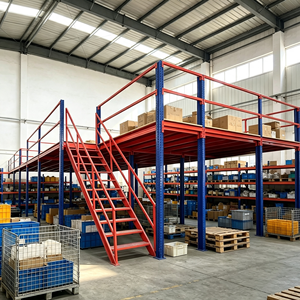 Multi-Tier Integration
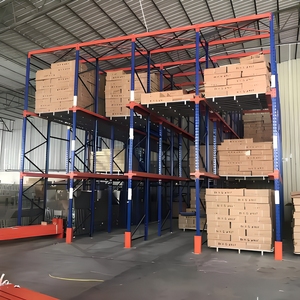 Core Pallet Flow
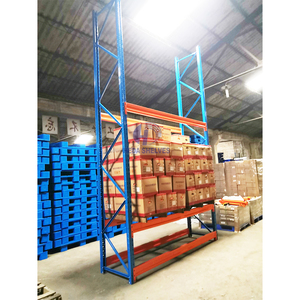 Dynamic Versatility
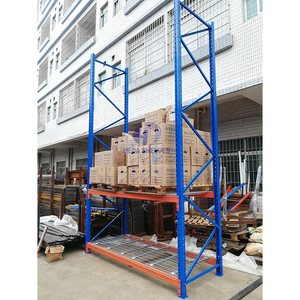 High-Bay Heavy Duty
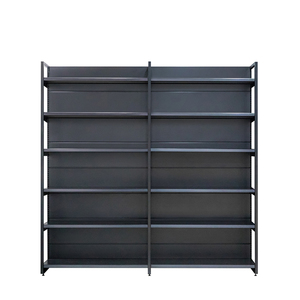 Rapid Assembly
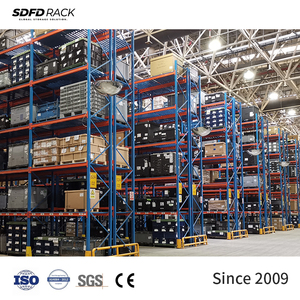 Structural Steel
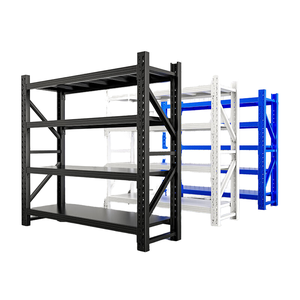 Adjustable Levels
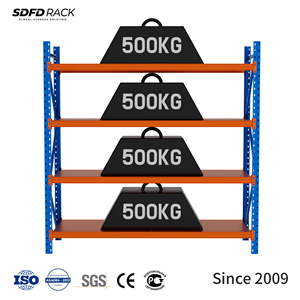 E-Commerce Logistics
Mechanics, Physics, and Load Distribution of Gravity Pallet Flow Racking
In modern industrial logistics and high-velocity warehousing, Pallet Flow Racking (commonly designated as Gravity Flow Racking or Dynamic Pallet Flow Systems) operates as the engineering pinnacle of First-In, First-Out (FIFO) material handling. As leading Chinese exporters and direct structural manufacturers, Guangzhou Heda Shelves Co., Ltd. designs, fabricates, and calibrates gravity flow systems engineered to eliminate aisle congestion, double operational storage density, and achieve seamless rotation of expiration-sensitive or batch-critical inventories. By utilizing inclined wheel or roller conveyor tracks set within heavy-duty upright frames, pallet loads travel autonomously from the replenishment entry face to the front extraction face under controlled gravity forces.
Unlike conventional static selective pallet racks that demand an access aisle for every two rows of shelving, pallet flow racks consolidate deep storage lanes ranging from 2 up to 25 pallets deep into a single dynamic block. Forklift operators deposit pallets at the rear charging face; as a front pallet is retrieved by picking equipment at the discharge face, successive pallets roll smoothly forward at a regulated terminal velocity—typically controlled between 0.2 m/s and 0.3 m/s. This mechanical autonomy segregates loading equipment from retrieval equipment, establishing distinct logistics corridors that completely eradicate aisle cross-traffic hazards and accelerate picking cycles by more than 40%.
Critical Subsystems of an Export-Grade Pallet Flow Installation
Exporting pallet flow systems from China to high-demand international markets requires strict adherence to multi-component tolerances. A structural failure or roller freeze-up 10 meters inside a 20-pallet-deep lane can halt entire supply chain operations. Our factory integrates four proprietary technical subsystems:
Centrifugal internal brake rollers engage automatically as rotational speed exceeds threshold velocity, dissipating kinetic energy safely regardless of whether pallets weigh 300kg or 1,500kg.
Mechanical pallet separators hold back trailing pallets behind the lead discharge unit, eliminating backpressure friction so forklifts extract the front unit effortlessly without binding.
Reinforced structural entry guides center distorted or uneven pallets immediately upon rack insertion, preventing track wedging and protecting sensitive side-rails from mast collision.
Cushioned steel end-stops engineered from high-yield structural plate arrest the pallet safely at the discharge pick-face without damaging bottom boards or shifting fragile product loads.
Technical Comparison: Pallet Flow vs Alternative High-Density Systems
When engineering industrial storage facilities, logistics consultants must compare volumetric space utilization, operational pick cycle speeds, initial capital expenditures, and equipment maintenance demands across dynamic and static racking topologies.
| Evaluation Parameter | Pallet Flow Racking (FIFO) | Drive-In Racking (LIFO) | Push-Back Cart Racking (LIFO) | Radio Shuttle Racking (Hybrid) |
|---|---|---|---|---|
| Inventory Management Model | 100% Strict FIFO (Gravity Dynamic) | LIFO (Last-In, First-Out) | LIFO (Cart-based push) | FIFO or LIFO (Semi-Automated) |
| Volumetric Space Utilization | Up to 85% Floor Footprint | 65% - 75% Floor Footprint | 70% - 75% (2 to 6 deep) | 80% - 90% (Deep automation) |
| Loading vs Picking Corridors | Dedicated Separate Aisle Faces | Shared Single Entry Aisle | Single Front Access Face | Configurable Dedicated or Single |
| Risk of Forklift Rack Collision | Zero Internal Collision Risk | High Risk (Truck drives inside) | Low Risk (Masts stay outside) | Zero Internal Collision Risk |
| Optimal Application Sectors | Cold Stores, Pharma, Dairy, FMCG | Bulk Raw Materials, Non-Expiry | Fast Turnover Medium Batch | Cold Logistics, High Volume Fast-SKU |
| Structural Standards Compliance | EN 15512, RMI MH16.1, AS 4084 | EN 15512, RMI MH16.1 | EN 15512, RMI MH16.1 | CE Machinery Directive, EN 15512 |
As illustrated in the engineering benchmark matrix, Pallet Flow Racking delivers superior material velocity while entirely removing forklifts from entering rack lanes. In standard Drive-In configurations, operators must navigate narrow upright aisles with elevated loads, resulting in frequent upright damage and costly maintenance interventions. Pallet Flow lanes prevent structural impact because lifting equipment remains strictly in perimeter transit corridors, drastically elevating operational safety protocols while slashing warehouse cycle times.
Future Procurement Trends in Industrial Pallet Flow Systems
Global enterprise procurement teams no longer evaluate racking solely on steel tonnage price. Modern supply chain managers demand lower Total Cost of Ownership (TCO), cold chain operational resilience, and environmental lifecycle accountability.
Rapid expansion in cold food processing, seafood logistics, and biopharmaceuticals demands roller bearings lubricated with aerospace-grade synthetic sub-zero greases that operate reliably at -35°C without gumming or seizing up.
Automated Guided Vehicles (AGVs) and Autonomous Mobile Robots (AMRs) require ultra-precise pallet centering tolerances (±3mm). Pallet flow pick-faces increasingly serve as gravity accumulation buffers delivering palletized payloads to robotic crane heads.
International environmental procurement mandates push for solvent-free, heavy-metal-free thermosetting epoxy-polyester coatings applied over multi-stage zirconium or silane pretreatments, cutting embodied carbon emissions by over 28%.
Global supply chains utilize diverse pallet types (Euro 800x1200, ISO 1000x1200, plastic skids, and GMA wood pallets). Modern flow beds incorporate full-width staggered steel rollers capable of managing defective bottom boards without snags.
As logistics hubs concentrate near coastal tectonic fault lines (Southeast Asia, Americas, Europe), procurement requires third-party finite element analysis (FEA) validating rack stability under simultaneous dynamic fluid load and earthquake conditions.
Buyers avoid welded, rigid mono-blocks. Systems engineered with bolt-together upright trusses, slotted tear-drop or diamond-punched uprights allow future relocation, lane lengthening, and rapid re-pitching as SKU dimensions evolve.
Technological Breakthroughs in Modern Pallet Flow Systems
Engineering advances in metallurgical chemistry, polymer composite rollers, and hydrodynamic speed control continue to redefine warehouse storage capabilities.
Smart Acoustic and Thermal Diagnostic Roller Assemblies
In mega-distribution hubs with continuous three-shift operations, roller maintenance can become labor-intensive. Emerging flow bed systems incorporate smart acoustic and temperature-monitoring sensor hubs within test bays. These wireless micro-sensors evaluate internal bearing vibration frequency signatures during pallet transit, flagging worn bearings or excessive internal friction before dynamic roller seizure occurs, thus shifting facility management from reactive firefighting to predictive maintenance.
Dual-Chamber Centrifugal Damping Control
Historic flow systems struggled with variable load weights in the same lane: a light 300kg pallet could stall prematurely, while a subsequent 1,400kg pallet gained dangerous acceleration. Modern Guangzhou Heda engineering integrates dual-chamber eddy-current or hydraulic progressive damping rollers. These sophisticated units exert negligible resistance against light pallets rolling at slow velocities, while instantaneously scaling hydraulic braking resistance quadratically in response to the momentum of heavier loads, guaranteeing consistent coasting speeds regardless of SKU weight variances.
Why Global Importers Partner with Guangzhou Heda Shelves
With continuous manufacturing operations since 2001, Guangzhou Heda Shelves Co., Ltd. has evolved into China's premier manufacturer and exporter of heavy-duty pallet racking, mezzanine platforms, and dynamic flow storage systems.
Full third-party conformity verification: Official CE Certificate No. 2435-CPR-8605159, ISO 9001:2015 Quality Management Certificate No. 18624Q00169R0M (valid through June 2027), and RoHS compliance documentation for all finishes.
Our 30,000 square meter standardized industrial facility houses automated continuous roll-forming lines, computerized multi-station punching presses, and robotic welding stations delivering an unmatched monthly capacity of 30,000 tons of structural steel storage equipment.
Situated strategically in Guangzhou near Nansha and Huangpu ports, our maritime shipments reach major ASEAN hub ports (Ho Chi Minh, Manila, Singapore, Bangkok, Port Klang, Jakarta) in 2 to 10 days, with streamlined container consolidation for European and American trade lanes.
Our 10-Step In-House Precision Manufacturing Pipeline
Frequently Asked Questions by International Racking Buyers
Clear, engineer-backed answers addressing the most common technical, logistical, and structural inquiries submitted by global supply chain executives.
The universal engineering slope for gravity pallet flow ranges from 2.5% to 3.5% (approximately 1.4° to 2.0° pitch), depending on bottom runner orientation and pallet rigidity. Speeds are precisely stabilized via internal centrifugal brake rollers spaced periodically along the track, preventing runaway acceleration regardless of lane depth.
Yes. While 3-runner GMA or Euro wooden pallets run efficiently on twin-track skate-wheel beds, plastic pallets or units with perimeter base-runners or deflection vulnerabilities require continuous full-width cylindrical steel rollers or triple-track configurations to distribute point-load stresses and eliminate runner deflection.
All carbon steel uprights and step beams undergo multi-tank chemical pickling, degreasing, and zinc phosphating prior to electrostatic polyester powder coating. For sub-zero freezers, coastal container ports, or chemical applications, pre-galvanized or hot-dip galvanized steel tracks and stainless-steel axle roller assemblies are specified.
Our certified structural engineering team generates site-specific finite element modeling in accordance with EN 15512:2020, RMI MH16.1, or AS 4084 standards. We calculate frame bracing geometry, enlarged anchor baseplates, and high-tensile floor anchor bolts based on your local geotechnical seismic acceleration parameters (Ss and S1 coefficients).
Production lead time for standardized projects is 15 to 25 days. Components are custom-nested and banded using protective corrugated spacers to maximize 40ft High Cube container volumetric limits (averaging 24-26 tons per container), drastically cutting ocean freight cost per pallet location.
Every project includes full 3D CAD shop drawings, component identification tags matched with packing manifests, and step-by-step 3D assembly animation videos. On-site technical installation supervision by senior factory engineers is available globally for multi-tier and high-bay flow projects.