Engineered Storage Racking Systems & Technical Specifications
Explore heavy-duty, boltless, dynamic, and automated pallet storage configurations designed for logistics hubs, cold chain distributions, and structural mezzanine expansions.
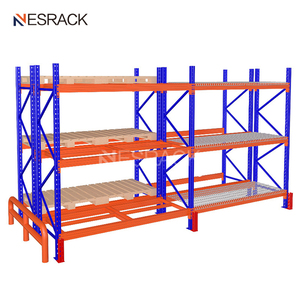
Adjustable Boltless Heavy Duty Pallet Rack (500-3000kg)
Technical Specs →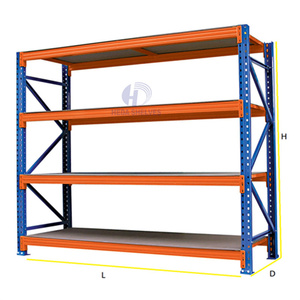
Heavy Duty Industrial Storage Shelf & Racking
Technical Specs →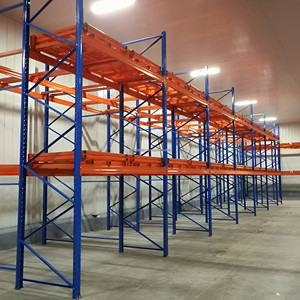
High Density Push Back Deep-Lane Pallet Rack
Technical Specs →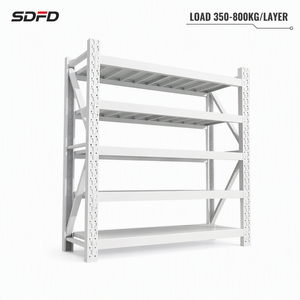
Medium Duty Longspan Starter & Add-on Shelving
Technical Specs →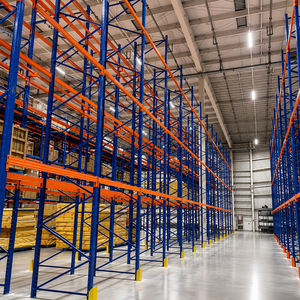
Custom Q235B Structural Pallet Rack (Free CAD)
Technical Specs →
Galvanized Nestable 5-Ton Steel Pallets
Technical Specs →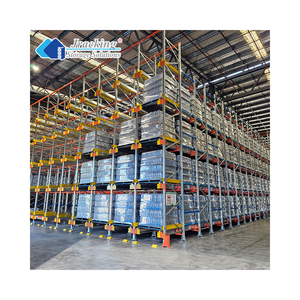
High-Density Semi-Automated Radio Shuttle System
Technical Specs →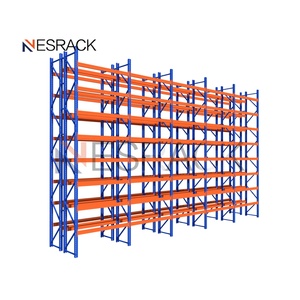
Heavy Duty Pallet Rack with Wire Mesh Decking
Technical Specs →Industrial-Grade Reliability: The Structural Engineering Matrix
Modern supply chain resilience relies on precision metallurgy, seismic absorption calculations, and high-adhesion anti-corrosive finishes. Sourcing from our Guangzhou manufacturing facility delivers rigorous structural integrity certified for global engineering codes.
High-Grade Certified Metallurgy
Manufactured strictly utilizing certified hot-rolled Q235B and high-yield Q355B structural steel coils. Each structural batch undergoes mechanical yield testing to eliminate structural deflection under sustained nominal payloads.
- Tensile strength exceeding international benchmarks
- Cold-rolled continuous uncoiling profiles
- Optimized moment of inertia per upright section
Surface Passivation & Tropical Coating
A continuous 10-step surface finishing line integrates ultrasonic degreasing, pickling, acid phosphating, and electrostatic powder coating baked at 180°C. Engineered specifically for high-salinity and high-humidity environments.
- Corrosion resistance up to 500 hours salt-spray testing
- Heavy metal-free, non-toxic RoHS compliant coatings
- Impact-resistant finish preventing forklift scratch oxidation
Certified Engineering Compliance
Full engineering validation compliant with EN 15512 (European Racking Standard), RMI ANSI MH16.1, and AS 4084 guidelines. Certified under CE Certificate No. 2435-CPR-8605159 and ISO 9001:2015 Quality Management standards.
- Seismic finite element analysis (FEA) per site layout
- Full dynamic live load safety factors (1.4 - 1.5)
- Comprehensive 24-hour CAD & 3D isometric engineering turnaround
Emerging Warehousing Dynamics: Future Trends in Storage Racking Procurement
Logistics infrastructures are undergoing unprecedented operational transformations. Driven by skyrocketing commercial land values, nearshoring reconfigurations, and rapid automation deployments, structural racking is evolving from static storage frames into integrated mechatronic conduits.
1. Convergence Toward Automation-Ready Dynamic Density: Traditional selective pallet racking is increasingly being superseded by semi-automated Radio Shuttle systems and automated high-bay AS/RS systems. Logistics planners prioritize maximizing vertical airspace (exceeding 24 meters) to minimize building footprints while cutting operational heating or freezing volumes in temperature-controlled cold chains.
2. Structural Modularity & Hybrid Catwalk Mezzanines: Omni-channel fulfillment centers demand adaptive multi-tier rack-supported platforms. Rather than relying on static masonry structures, logistics directors favor structural steel modular mezzanines capable of bearing picking conveyors, spiral chutes, and autonomous mobile robot (AMR) fleets over the lower levels.
| Storage Architecture | Floor Space Efficiency | Direct Selectivity | Forklift Cycle Time | Optimal Industry Application |
|---|---|---|---|---|
| Selective Pallet Racking | Baseline (35-40% footprint) | 100% Direct Access | Standard | FMCG, High-SKU Retail, 3PL Distribution |
| Push Back Racking | High (+45% over Selective) | Batch / LIFO Access | Fast (Gravity Feed) | Batch Manufacturing, Staged Dispatch Hubs |
| Radio Shuttle System | Ultra-High (Up to 80% volume) | Channel FIFO / LIFO | Fastest (In-lane Autonomous) | Seafood, Cold Chain, Food & Beverage Hubs |
| Rack-Supported Mezzanine | Extreme (Multiplies Floor x2/x3) | Split Storage & Pick | Integrated Ergonomics | E-commerce Sorting, Auto Parts, Apparel |
3. Resilience-Driven Lifecycle Procurement: Strategic buyers no longer evaluate storage systems simply on upfront tonnage cost. The total cost of ownership (TCO) calculation now factors in seismic base-plate resilience, galvanized protection against high tropical moisture, and universal slot pitches (50mm / 75mm adjustments) that enable easy retrofit repurposing over 15 to 25 operating cycles.
Frequently Asked Questions: Global Sourcing & Engineering
Clear, direct answers regarding technical load parameters, international maritime container logistics, seismic compliance, and factory-direct customization.
What primary inputs are required for an exact CAD layout?
To produce an authoritative structural layout, our engineering team requires: warehouse clear ceiling height, slab thickness and concrete psi rating, precise column grid locations, unit load dimensions (Width x Depth x Height including pallet overhang), maximum pallet gross weight, and forklift model specifications (mast lift height, aisle turning radius, and outrigger constraints).
How do your coatings resist tropical humidity and ocean salt-fog?
Components undergo an automated chemical surface treatment including hot alkaline degreasing, phosphoric passivation, and dual-rinse stages. We apply thermoset epoxy-polyester architectural powder baked uniformly. For sub-zero cold stores or open-yard maritime depots, hot-dip galvanization (HDG) per ISO 1461 is fully available.
Can the structural designs accommodate regional seismic load codes?
Yes. Utilizing state-of-the-art finite element software, our engineering department designs upright frame bracing, floor anchor bolt depth, and widened heavy-gauge base-plates according to local seismic accelerations (compliant with UBC, IBC, and Eurocode 8 requirements across seismically active zones).
How is container stuffing optimized to minimize ocean freight overhead?
Uprights are nested horizontally using custom structural dunnage, beams are securely strapped in bundled modules, and decking units are packed on custom steel skid collars. This container-optimized nesting prevents transport scuffing while achieving maximum container payload weights across 20GP, 40GP, and 40HQ configurations.
Accelerate Your Warehouse Storage Capacity Today
Send your warehouse architectural plans or pallet load parameters directly to our senior structural engineering team. Receive full CAD layouts, structural FEA calculations, and direct factory pricing within 24 hours.
Send an Inquiry