Top-Rated Industrial Gravity Flow Rail Racking Solutions
Precision-engineered dynamic roller lanes designed for high-density FIFO stock rotation, accelerated pick face ergonomics, and zero-energy pallet conveyance. Engineered and manufactured in our 30,000 m² Guangzhou production facility.
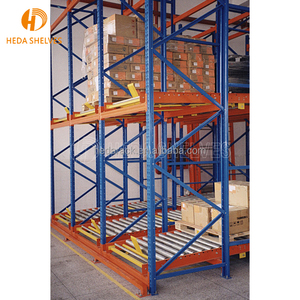
Industrial Steel Gravity Flow Roller Racking Systems Corrosion Resistant FIFO Carton Flow Racks
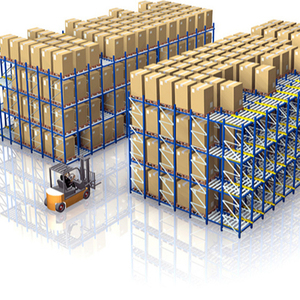
High Density Rack Gravity Flow Racking for Large Load Capacity Pallet Storage
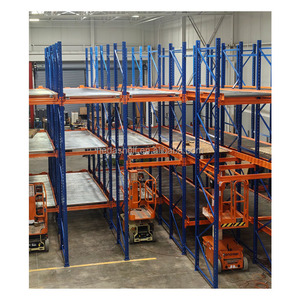
Heavy Duty Steel Gravity Flow Rack Customizable Warehouse Racking System FIFO
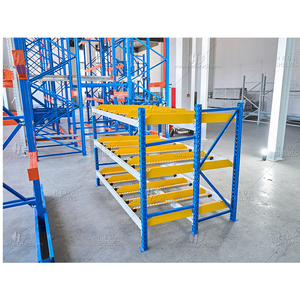
Adjustable Multi-Level Painted Steel Warehouse Heavy Duty Carton Flow Racks
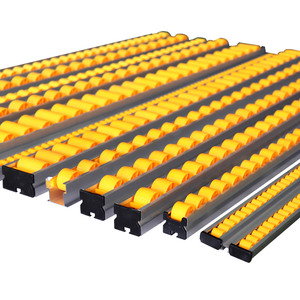
Gravity Flow Rail Roller Track PE ABS Wheel 200KG Load Carton Flow Rack Storage Shelf
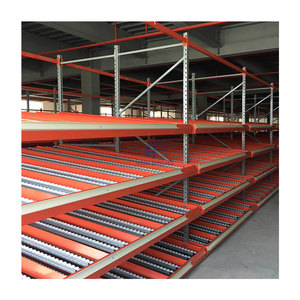
Dynamic Pallet Flow Racking Track Customized Gravity Carton & Pallet Flow Racking
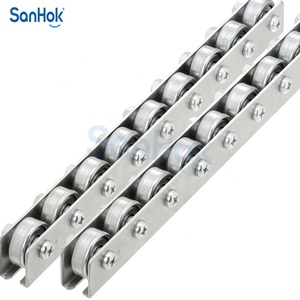
Industrial Customizable Stainless Steel Flow Rail Roller Track for Logistic Sorting
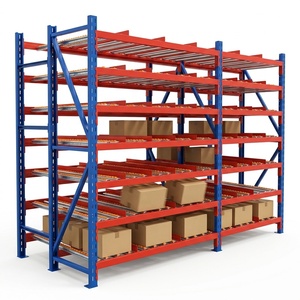
Industrial Carton Flow Rack Durable Cold Rolled Steel Roller Rails FIFO Logistics Rack
Executive Engineering Synthesis: The Physics and Metallurgy of Gravity Flow Rail Systems
In dynamic warehouse distribution networks, maximizing cubic volume utilization while minimizing internal transit bottlenecks represents the apex operational objective. Flow Rail Racking Systems—spanning heavy-duty pallet flow beds and split-lane carton flow tracks—serve as the mechanical backbone for non-powered, self-regulating FIFO (First-In, First-Out) material conveyance. Unlike static selective pallet racking, which requires upwards of 60% of floor real estate dedicated exclusively to forklift operating aisles, a precision-engineered gravity flow rack condenses storage footprints by eliminating intermediate service aisles, consolidating replenishment to the upper loading face and order extraction to the lower discharge face.
As China’s foremost industrial rack engineering group, Guangzhou Heda Shelves Co., Ltd. (HEDA Shelves) approaches gravity flow fabrication through stringent mechanical modeling. The functional velocity of a gravity lane is governed by the gravitational acceleration component parallel to the inclined rail, offset by dynamic rolling friction and inertial drag: a = g · (sin θ - μ · cos θ) Where θ represents the rail gradient angle (typically held between 1.5° to 2.2° for high-mass pallets and 3.0° to 4.5° for lightweight corrugated plastic or paper cartons), and μ denotes the combined coefficient of rolling resistance across bearing races and wheel surfaces. HEDA Shelves utilizes cold-formed high-tensile structural steel profiles (Q235B and Q355B structural grades), integrated with zinc-chromate or electrostatic powder coatings that resist cyclic contact fatigue, dynamic impact deformation, and tropical ambient humidity.
A critical engineering hurdle in deep-lane pallet flow systems (often extending 10 to 25 pallets deep) is the containment of catastrophic run-out velocity and dynamic line pressure. When consecutive loaded pallets weighing 1,000 kg to 1,500 kg each accumulate on an inclined lane, hydraulic and centrifugal speed-governor rollers are calculated and placed at precise pitch intervals (typically every pallet pitch after the second position). These internal centrifugal brake drums disengage under slow rotation but dynamically apply mechanical braking once roll velocities exceed 0.25 to 0.3 meters per second. Concurrently, floor-level automatic pallet separators isolate the lead pallet from upstream back-pressure, enabling forklift tines to safely extract the extraction pallet without binding or sudden gravitational lurching.
Centrifugal Speed Controllers
Self-adjusting internal brake rollers engineered to maintain uniform pallet descent speeds regardless of operator loading habits or variations in pallet bottom roughness.
Back-Pressure Relief Separators
Mechanically actuated end stops isolate the front pallet from the hydraulic force of stacked upstream loads, facilitating friction-free extraction and zero operator risk.
High-Precision Bearing Metallurgy
Deep-groove shielded carbon and chrome alloy ball bearings sealed in ABS/steel roller shells, guaranteeing 100,000+ continuous revolutions under maximum rated dynamic loads.
Dynamic Storage Engineering Matrix: Pallet Flow vs. Carton Flow
| Performance Parameter | Pallet Flow Rail Racks (Heavy-Duty) | Carton Flow Rail Racks (Medium-Duty) | Standard Selective Pallet Rack (Baseline) |
|---|---|---|---|
| Target Unitized Load | Wooden / Plastic / Metal Pallets (500–1,500 kg) | Corrugated Cartons, Totes, KLT Boxes (5–40 kg) | Discrete Pallets (500–2,000 kg) |
| Stock Rotation Discipline | Strict FIFO (100% Guaranteed) | Strict FIFO (Split replenishment/pick) | Variable / Mixed FIFO-LIFO (Operator dependent) |
| Typical Rail Incline Angle | 1.5° to 2.2° (Customized per pallet runner) | 3.0° to 4.5° (Adjustable rail brackets) | 0.0° (Horizontal beams) |
| Speed Braking & Control | Direct / Indirect Centrifugal Brake Rollers | Gravity deceleration ramps, entry/exit end stops | Not Applicable |
| Floor Footprint Utilization | Up to 75% Floor Density | Up to 60% Picking Density | 35%–40% (Aisle-dominant consumption) |
| Forklift Travel Requirements | Restricted to end perimeters (Loading/Unloading) | None (Human manual picking or AMR shuttle) | Full travel into every internal warehouse aisle |
| Surface Protection System | Hot-dip galvanized rails / Pickled powder frame | Galvanized sheet rail channel with ABS/PE wheels | Electrostatic powder coating (Epoxy-polyester) |
Why Global Tier-1 Logistics Hubs Source From HEDA Shelves
Established in 2001 in Guangzhou, China, Guangzhou Heda Shelves Co., Ltd. has spent over a quarter-century defining structural racking and intralogistics performance standards. Supplying critical infrastructure across Southeast Asia, the Middle East, the Americas, and Europe, our facility bridges structural heavy steel engineering with micrometric dynamic roller tolerance.
-
10-Stage Surface Pre-Treatment: Chemical degreasing, ultrasonic acid pickling, zinc phosphating, and electrostatic powder coating prevent rust in coastal and tropical distribution environments.
-
Verifiable Third-Party Credentials: Certified under CE Marking No. 2435-CPR-8605159, ISO 9001:2015 Quality Management No. 18624Q00169R0M, and comprehensive RoHS metallurgical compliance.
-
Comprehensive Seismic & FEA Calculations: Custom structural engineering incorporating finite element analysis (ANSYS) tailored to regional building codes, floor slab tolerances, and seismic zones.
-
Direct Guangzhou Sea Hub Proximity: Direct multi-modal dispatch from Nansha and Huangpu ports ensures 2–8 day port-to-port sea transit across the entire ASEAN corridor.
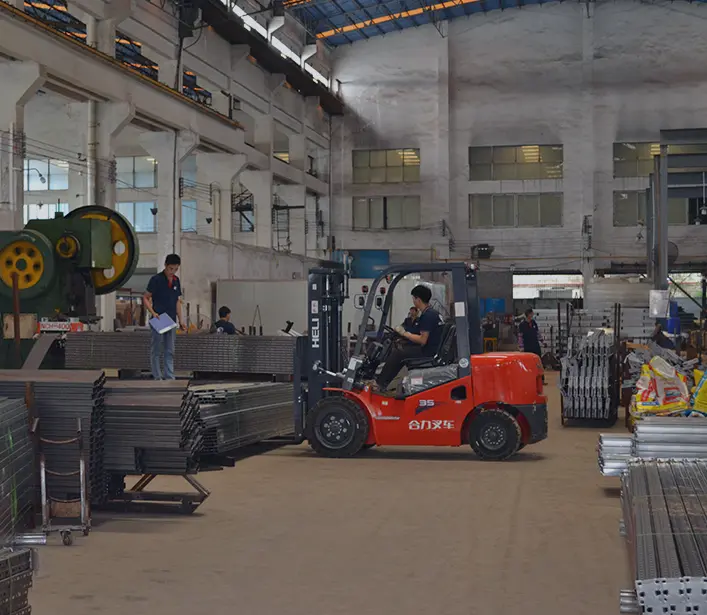
Every flow rail lane is subjected to rigorous dynamic mock testing in our shop floor testing towers, validating rolling continuity, brake resistance, and automatic separator indexing before batch container packing.
Future Procurement & Technology Trends in Flow Rail Racking
How automation, cold-chain expansion, micro-fulfillment demands, and sustainability mandates are reshaping flow rail procurement specifications across international supply chains through 2030.
AMR / AGV Hybrid Interface Integration
Modern distribution facilities are integrating gravity flow racks with Autonomous Mobile Robots. Flow discharge faces are increasingly equipped with pneumatic index pins and optical sensor brackets to coordinate automated tote collection and pallet fork transfer without human touch.
Sub-Zero Cryogenic Polymer Engineering
With the rapid rise of pharmaceutical and frozen food logistics, roller rail materials are transitioning from standard ABS to ultra-high-molecular-weight polyethylene (UHMW-PE) blends rated for continuous cyclic operation down to -35°C without wheel embrittlement or bearing seizure.
Pick-to-Light (PTL) Snap-On Modular Railing
Rapid e-commerce order fulfillment requires zero-error piece picking. The newest generation of carton flow frames features integrated aluminum extrusion channels designed to seamlessly house wireless Pick-to-Light light bars, digital address counters, and lane dividers without drill alterations.
Total Landed Cost (TLC) Nesting Optimization
Global ocean freight volatility has prioritized high-efficiency knockdown packing engineering. Manufacturers are developing interlocking roller beds and nested upright designs that achieve over 95% 40HQ container cube utilization, reducing the freight surcharge per stored pallet position.
The Procurement Paradigm Shift: Dynamic Flow as an Energy-Free Automation Alternative
As corporate ESG (Environmental, Social, and Governance) commitments intensify alongside soaring electrical grid utility tariffs, warehouse operators are re-evaluating high-capital fully automated storage systems (ASRS). While mini-load and crane-based ASRS installations incur multi-million dollar capital outlays, high electrical draw, and continuous software maintenance overhead, gravity flow rail racking operates with zero kilowatt consumption. By harnessing gravitational potential energy to transport unit loads across 30-meter lane depths, flow systems achieve throughput velocities competitive with mechanical conveyors while providing a structural lifespan exceeding 15 to 20 years with near-zero electro-mechanical servicing liabilities.
Frequently Asked Questions: Flow Rail Engineering & Sourcing
Authoritative technical answers to common engineering, maintenance, and logistics questions encountered by warehouse planners and international procurement teams.
Request an Engineered Layout & Factory Quote
Connect directly with HEDA Shelves' Senior Structural Engineering Team. Receive custom 2D/3D CAD layout proposals, dynamic gradient velocity calculations, and factory-direct FOB/CIF pricing for your high-density flow racking project.