Featured Static & High-Density Pallet Racking Portfolios
Explore factory-direct structural systems precision-engineered for palletized unit loads ranging from 1,000 kg to over 4,500 kg per level, with specialized surface protection for tropical humidity and cold chain regimes.
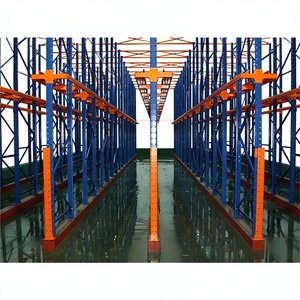
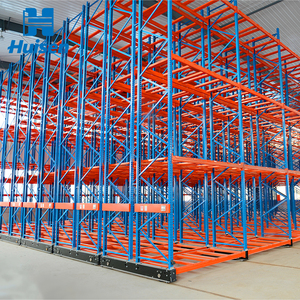
Heavy Duty Drive-In Selective Pallet Rack Iron/Steel/Metal Storage System with Corrosion Protection for Warehouses
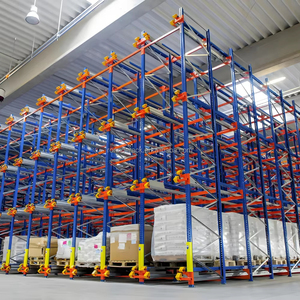
High Efficiency Automatic Warehouse Storage Radio Shuttle Pallet Racking System
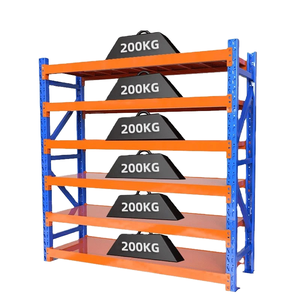
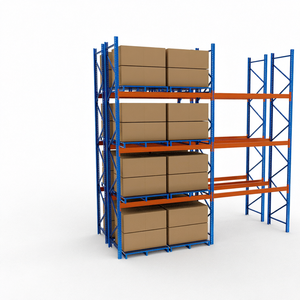
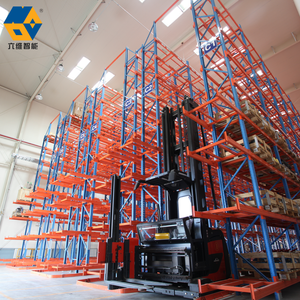
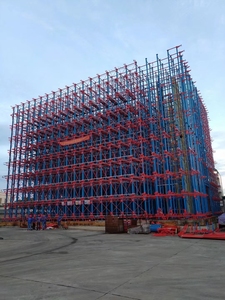
Industrial Warehouse Warehouse Storage Heavy Duty Very Narrow Aisle Rack
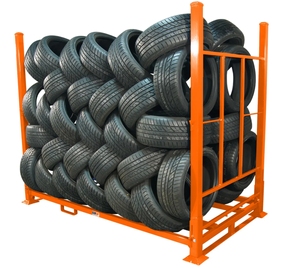
Steel Stacking Rack Heavy Duty Sheleving Racks Warehouse Stackable Racking
Engineering Rigor: CE Marking & Structural Conformity in Static Racking
In modern industrial intra-logistics, static pallet racking is not merely a steel shelving system; it is a critical structural installation classified under structural engineering regulations. In the European Union and quality-conscious global markets, pallet racking frameworks fall under the European Construction Products Regulation (CPR 305/2011/EU) and harmonized standards EN 15512 (Steel static storage systems - Adjustable pallet racking systems - Principles for structural design), EN 15620 (Tolerances, deformations and clearances), and EN 15629 (Specification of storage equipment).
Purchasing CE-certified static pallet racking from authorized manufacturers guarantees that structural calculations undergo finite element limit-state modeling. Beam-to-column connections, base plate floor anchors, and diagonal lattice trusses must withstand rigorous dead loads, dynamic placement impact loads, horizontal seismic accelerations, and structural shear forces. Guangzhou Heda Shelves Co., Ltd. executes full manufacturing in conformity with certified quality controls, holding CE Certification No. 2435-CPR-8605159, ISO 9001:2015 Quality Management No. 18624Q00169R0M, and comprehensive RoHS chemical compliance.
Crucial Procurement Warning: Non-certified racking profiles produced without third-party audited steel yield limits (Q235B vs. Q355B structural grades) frequently exhibit progressive column buckling, beam clip detachment under eccentric loadings, and fatal cascading collapses when subject to forklift corner impacts or seismic ground shifts.
Micro-Geometry and Roll-Forming Precision
The structural load-bearing capacity of an upright frame depends fundamentally on the cold roll-formed cross-section geometry. HEDA’s static uprights are cold-rolled via continuous automated 16-to-24-pass roll-forming mills, creating multi-ribbed omega and delta closed profiles. These profiles integrate 50mm, 75mm, or 76.2mm pitch precision punching with laser-monitored tolerances. The resulting profile geometry significantly enhances the cross-sectional moment of inertia ($I_x$, $I_y$) and torsional rigidity ($J$), ensuring superior deflection performance that exceeds standard limit thresholds ($L/200$ for beam level deflections under maximum permissible static loads).
Technical Comparison of Industrial Static Racking Configurations
Evaluate load tolerances, floor area utilization ratios, inventory accessibility, and structural requirements to match your facility's operational throughput.
| System Configuration | Direct Selectivity | Floor Space Utilization | Payload Per Level (kg) | Typical Clear Heights | Best Applied Sectors |
|---|---|---|---|---|---|
| Standard Selective Racking | 100% Immediate Access | 35% - 40% Floor Coverage | 1,000 - 4,500 kg | Up to 12.0 meters | High SKU counts, 3PL FMCG, Retail Fulfillment |
| Drive-In / Drive-Through | 15% - 20% (LIFO/FIFO) | Up to 75% Floor Coverage | 1,000 - 2,500 kg | Up to 11.0 meters | Cold storage, Bulk homogeneous beverage, Seasonal crops |
| Very Narrow Aisle (VNA) | 100% Immediate Access | 55% - 60% Floor Coverage | 1,000 - 3,500 kg | Up to 16.5 meters | E-commerce high-bay, Pharmaceutical batch storage |
| Double Deep Pallet Racking | 50% Direct Access | 55% - 60% Floor Coverage | 1,000 - 3,000 kg | Up to 11.5 meters | Medium SKU velocity, Paper processing, Auto parts |
| Gravity Flow / Push-Back | 30% - 50% Dynamic Face | 65% - 70% Floor Coverage | 500 - 1,800 kg | Up to 9.0 meters | Perishable foods, First-In-First-Out expiration runs |
Future Strategic Trends in Global Pallet Racking Procurement
Macro supply chain disruptions, carbon taxation frameworks, and automation convergence are fundamentally transforming industrial storage procurement strategies.
Supply Chain Regionalization & Hub Sourcing
Global procurement teams are shifting away from fragmented brokerage traders toward asset-backed direct manufacturing plants. Sourcing from massive manufacturing ecosystems such as HEDA’s 30,000 m² Guangzhou production facility enables direct container loading and port connections. Shipments reach ASEAN hubs (Manila, Haiphong, Singapore, Port Klang, Tanjung Priok) within 2 to 10 days, mitigating maritime shipping volatility and freight overheads.
Decarbonized Cold-Formed Steel Procurement
Under international Scope 3 emissions reporting and Carbon Border Adjustment Mechanisms (CBAM), enterprise logistics developers demand structural steel with verifiable metallurgical provenance. Procurement now focuses on high-tensile, low-alloy grades (such as Q355B / S355JR) that deliver higher load capacity per kilogram of structural deadweight. This reduces raw material consumption without compromising safety margins.
Modular Automation-Ready Structural Footprints
Leading operators now specify static pallet racking that can be retrofitted for automation. Rather than tearing down static racking when expanding into robotics, warehouses are investing in high-precision upright profiles with standardized slot geometries. This allows drop-in integration of autonomous pallet shuttles, guided AGV bottom clearances, and optical safety sensor arrays without structural alterations.
Technological Frontiers: Structural Coatings, Digital Twins & Seismic Engineering
Static pallet racking engineering is seeing continuous innovation across materials science, surface passivation chemistry, and computational structural modeling.
Advanced Electrostatic Duplex Surface Treatments
In high-humidity, high-salinity industrial environments (such as coastal manufacturing hubs in Southeast Asia, the Middle East, and Latin America), standard paint finishes rapidly develop subterranean rust around bolt holes and floor interfaces. Modern manufacturing applies a multi-stage pre-treatment featuring hot acid pickling, zinc phosphating, and deionized water rinsing before applying thermo-hardened TGIC-free electrostatic polyester powder coatings.
This process cures at 180°C to 200°C, producing a dense 70μm to 100μm barrier that withstands 500+ hours of continuous ASTM B117 salt spray exposure. For severe conditions—such as blast freezers down to -30°C or open fertilizer yards—continuous hot-dip galvanization to EN ISO 1461 provides permanent sacrificial cathodic protection.
Dynamic Structural Health Monitoring & Seismic Design
In seismic regions along the Pacific Ring of Fire (including the Philippines, Indonesia, Japan, and western South America), static racking must be engineered to resist horizontal ground acceleration without brittle fracture. Finite Element Analysis (FEA) software conducts modal response spectrum calculations to determine natural frequencies ($T_1$) and dynamic displacement drifts.
State-of-the-art facilities are now introducing passive piezoelectric strain sensors and multi-axis accelerometers directly into high-bay upright bases. These sensors deliver real-time telemetry on static frame deflection, pallet overloading, and forklift collisions, integrating with warehouse management software (WMS) to prevent catastrophic structural failure.
Guangzhou Heda Shelves Co., Ltd.: Global Manufacturing Authority
Over 25 years of end-to-end heavy-duty steel manufacturing, certified European engineering compliance, and tailored turnkey warehouse storage implementations.
Complete In-House Production: From Raw Steel Coil to Certified System
Unlike assemblers or regional intermediaries, HEDA Shelves controls the entire manufacturing chain inside our 30,000 square meter plant in Guangzhou. Our 300+ technical personnel oversee uncoiling, automated high-tonnage column punching, continuous 20-station cold roll-forming, robotic MIG welding, 10-stage automated pickling-phosphating wash tunnels, and dual Swiss Gema electrostatic powder coating lines.
Producing over 30,000 metric tons of certified racking monthly, we guarantee container shipping schedules, consistent dimensional tolerances, and direct structural engineer consultation for your facility layout.
Frequently Asked Questions by Industrial Storage Buyers
Clear, definitive answers to help warehouse operators, EPC contractors, and procurement heads source static pallet racking safely and cost-effectively.
Transform Your Warehouse Floor Space with CE Certified Structural Racking
Submit your warehouse drawings and cargo profiles today. HEDA Shelves' structural engineering team will deliver a complete CAD layout plan, 3D visualization, and structural load calculation within 24 hours.