High-Performance Certified Racking Systems
Manufactured to rigid European Standard EN 15512 and FEM 10.2.02 tolerances using premium Q235B and Q355B cold-rolled steel coils with precision robotic welding and electrostatic powder finishes.
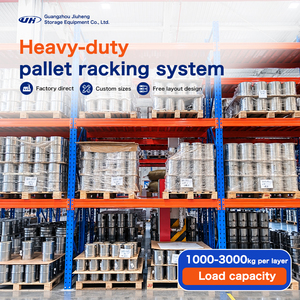 CE Certified
Heavy Duty Adjustable Beam Storage Pallet Rack
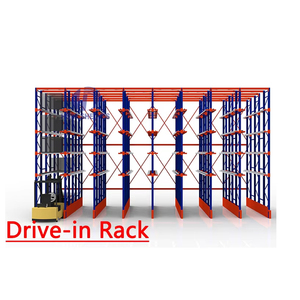 High Density LIFO/FIFO
High-Capacity Drive-In / Drive-Through Racking
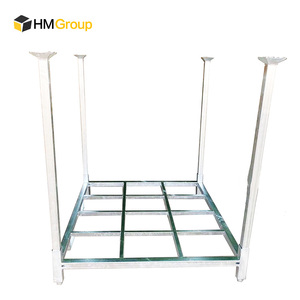 Hot-Dip Galvanized
OEM Heavy Duty Galvanized Steel Stacking Racks
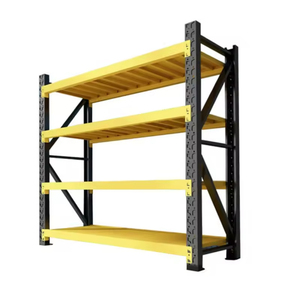 Hybrid Multi-Tier
5-Layer Drive-In Supermarket & Retail Rack
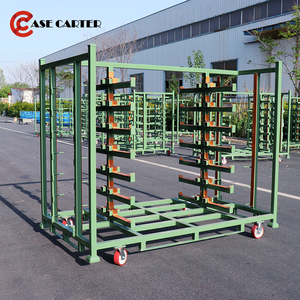 Automotive OEM
Auto Parts Engine & Component Turnover Rack
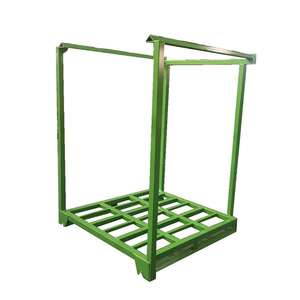 Cold Room Rated
Cold Storage Stackable Steel Post Pallet Frame
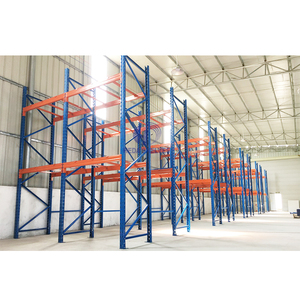 Heavy Duty Box Beam
High-Load Industrial Steel Pallet Racking
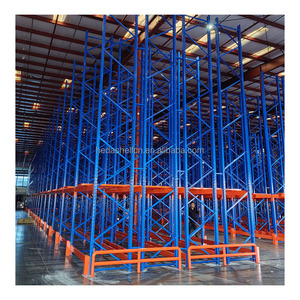 Double-Deep Layout
Double Deep High-Density Steel Storage Racking
Structural Mechanics, Compliance & Load Verification
A rigorous examination of cold-formed steel racking physics, detailing how CE certification (EN 15512) and finite element design safeguard industrial facilities from cataclysmic structural collapse.
EN 15512 Structural Verification
Unlike basic commercial shelving, pallet rack uprights are subject to complex torsional-flexural buckling modes under asymmetric live loading. We calculate column slenderness, perforations, and frame stability strictly in accordance with EN 15512 limit state criteria.
Safety Margin: 1.5γ Dynamic LoadSeismic-Resilient Engineering
Warehouses located within the circum-Pacific seismic belt (e.g., the Philippines, Indonesia, New Zealand) face acute transverse ground acceleration. We customize base-plate anchoring shear bolts, diagonal back-bracing, and high-ductility connection clips tailored to local spectral acceleration factors (Ss & S1).
Eurocode 8 / ASCE 7-22 CompliantMicro-Alloy High-Yield Steel
Our raw material coils are hot-rolled and cold-finished exclusively from Tier-1 integrated mills (e.g., Baosteel, Shougang). Cold-formed profile sections maintain a minimum yield strength of 235 to 355 N/mm² (Q235B / Q355B), ensuring controlled elastic deformation without permanent beam sag under maximum loading.
Deflection Threshold ≤ L/200| Engineering Parameter | HEDA Standard (CE Certified) | Generic Market Rack | Industrial Advantage |
|---|---|---|---|
| Steel Grade Specification | Certified Q235B / Q355B (Yield ≥ 355 MPa) | Recycled scrap steel (Yield < 210 MPa) | Prevents sudden brittle frame rupture under peak shock loads |
| Pre-Treatment Protocol | 10-Stage Acid Pickling + Zinc Phosphating | Manual solvent wipe or dry spray | Eliminates sub-surface oxidation; 500+ hr salt spray resilience |
| Upright Forming Perforation | Continuous multi-station high-speed CNC roll punching | Batch punch press with variable tool wear | 0.05mm pin-to-hole tolerance; zero connector wobble or play |
| Welding Integrity | Robotic double-sided submerged / gas-shielded fillet weld | Manual intermittent spot welding | Uniform weld throat thickness; zero beam end-plate shear failure |
| Connector Safety Locks | Spring-steel auto-engaging drop-proof locking pins | Flimsy wire clips or omitted fasteners | Prevents accidental beam dislodgement from upward forklift forks |
Guangzhou Heda Shelves Co., Ltd. - Scale & Capacity
Founded in 2001, HEDA has evolved into a global benchmark manufacturer and exporter of automated and heavy industrial racking structures, executing end-to-end design, fabrication, and export logistics.
10 Controlled Production Steps from Raw Coil to Loaded Container Zero-Defect QA
Every individual structural element is produced in-house within our Guangzhou complex under an ISO 9001:2015 certified Quality Management System (Certificate No. 18624Q00169R0M) and verified under CE Certificate No. 2435-CPR-8605159.
Direct Port Proximity & Fast Maritime Transit
Situated in the Pearl River Delta logistics corridor, HEDA dispatches factory-direct containers via Guangzhou (Nansha) and Shenzhen ports. Typical port-to-port ocean transit runs just 2–5 days to Vietnam (Haiphong/Cat Lai), 3–5 days to Manila, 5–7 days to Singapore/Laem Chabang, 6–8 days to Port Klang, and 7–10 days to Jakarta. Our engineering teams provide optimized container cubic layout simulations (packing up to 25 metric tons per 40HQ), reducing freight costs per pallet location by up to 22%.
Complete Engineering Verification & Free 3D CAD
We do not treat pallet racks as mere metal shelving; we engineer them as specialized structural systems. Clients receive free comprehensive site evaluation services, including 2D CAD spatial plans, 3D photorealistic renderings, frame load stress charts, and finite element moment connection calculations before signing a purchase contract. Our project drawings include individual piece numbering for effortless overseas contractor erection.
Future Procurement Trends for Industrial Pallet Racks
How supply chain disruptions, soaring industrial land rents, automated intralogistics, and ESG compliance are redefining the enterprise procurement playbook for warehouse racking systems through 2030.
ASRS & Shuttle Readiness
Procurement teams are moving away from purely manual selective racks toward structures engineered for automated 4-way radio shuttles and automated storage/retrieval cranes (ASRS). Racking tolerances must tighten from ±3mm down to ±0.8mm to accommodate robotic optical sensors and laser guidance systems.
Vertical Cube Densification
With prime warehouse leasing rates surging worldwide, buyers are investing in high-bay structures reaching 15m to 35m in height. This shift demands superior base-slab tie-downs, heavy roll-formed profile gauges (up to 3.0mm thickness), and dynamic building-supported rack-clad architecture.
Cold-Chain Infrastructure Surging
Global demand for biological pharmaceuticals, fresh perishables, and prepared foods is fueling heavy investments in temperature-controlled warehouses (-25°C to -30°C). Buyers increasingly require specialized impact-tough low-temperature steel grades and zinc-galvanized finishes resistant to condensation cycles.
Circular Life-Cycle & ESG Steel
Corporate ESG procurement mandates favor suppliers utilizing scrap-supplemented EAF (Electric Arc Furnace) steel with lower embodied carbon, solvent-free TGIC-free thermoset powder coats (RoHS verified), and modular structures that can be dismounted, repurposed, or 100% recycled at end of life.
Racking Engineering Innovations & Smart Warehousing
The transition of warehouse storage from passive static steel skeletons into intelligent, sensor-monitored, dynamic intralogistics platforms.
Digital Twin & FEA Stress Mapping
Modern pallet rack structural engineering utilizes parametric Finite Element Analysis (FEA) to model complex node interactions under asymmetric loading conditions. By feeding digital twin software with real-time operational pallet movement data, structural engineers can forecast progressive rack fatigue, beam micro-deflection, and anchor bolt strain before plastic failure occurs.
IoT Impact & Overload Detection
Smart upright sensors embedded inside floor-level column protectors now detect and alert facility managers to high-velocity forklift collisions in real time. These wireless mesh sensors register impact g-force metrics and beam deflection changes, instantly transmitting inspection alerts to warehouse management software (WMS).
Anti-Microbial & Corrosion Nano-Coatings
Advancements in powder metallurgy have introduced anti-microbial thermosetting polyester coatings for pharmaceutical cleanrooms and food packing plants. Simultaneously, specialized zinc-aluminum-magnesium alloy finishes are replacing conventional post-galvanizing, delivering up to 300% superior scratch-healing anti-corrosion barrier performance in humid tropical environments.
Frequently Asked Questions on Pallet Rack Procurement
In-depth technical answers addressing regulatory verification, seismic safety, tropical humidity defenses, and turnkey overseas delivery.
What exact international compliance standards must a CE-certified pallet rack meet?
A legitimate CE-certified industrial steel storage rack structure must comply with the European Construction Products Regulation (CPR 305/2011/EU) and design codes EN 15512 (Steel static storage systems - Adjustable pallet racking systems - Principles for structural design), EN 15620 (Tolerances, deformations and clearances), and EN 15635 (Application and maintenance of storage equipment). HEDA holds verified CE Certification No. 2435-CPR-8605159 issued by an accredited notified body. This guarantees that all structural steel grades, section moduli, moment-resisting beam-to-column connections, and perforated column profiles meet verified yield strength and deflection safety thresholds under static and dynamic loading.
How do you calculate and prevent rack frame failure in active seismic zones (e.g., ASEAN / Pacific Rim)?
Seismic design requires dynamic spectral response analysis in accordance with Eurocode 8 (EN 1998) or American ASCE 7-22 codes. When engineering pallet racks for earthquake-prone regions such as the Philippines, Indonesia, or Japan, our structural engineers incorporate local site-specific ground acceleration coefficients (peak ground acceleration PGA, design spectral acceleration parameters SDS and SD1). We mitigate dynamic shearing forces by engineering enlarged 10mm-16mm thick anchored base plates with chemical epoxy wedge anchors, reinforcing diagonal bracing frame configurations, upgrading cold-formed upright profiles to 2.5mm or 3.0mm high-tensile steel, and integrating 5-claw interlocking beam end-connectors with certified energy-dissipation ductile properties.
How does HEDA prevent rust and corrosion in coastal or tropical high-humidity environments?
In humid tropical climates (such as Southeast Asia, where relative humidity routinely exceeds 80%), standard spray paints fail within 12–18 months, causing sub-film rust creep. HEDA solves this through an automated 10-stage pre-treatment line: components undergo high-temperature alkali degreasing, multi-tank acid pickling to eradicate all microscopic mill scale, followed by chemical zinc phosphating. This chemically bonds a corrosion-resistant crystal layer to the raw steel before robotic electrostatic deposition of 60–80 micron thick pure polyester thermosetting powder. Curing occurs in a 220°C tunnel oven. For extreme cold rooms, coastal open sheds, or chemical fertilizer plants, we supply complete hot-dip galvanized components (BS EN ISO 1461 compliant) providing 65–100 microns of metallurgical zinc protection.
What critical engineering inputs are required to receive a free 2D/3D CAD warehouse layout proposal?
To produce an optimized CAD floor plan, structural load calculations, and cost quote, our engineering team requires: (1) Architectural building layout drawings indicating column grids, fire exit corridors, overhead sprinkler heights, and dock doors; (2) Building clear height beneath ceiling beams/trusses; (3) Pallet specifications including overall dimensions (width × depth × total height including pallet overhang) and maximum gross pallet weight; (4) Material handling equipment (forklift model, minimum turning aisle requirement AST, and maximum lift height); (5) SKU profile and inventory turnover method (FIFO vs. LIFO); (6) Concrete slab thickness, compressive strength (e.g., C25/30), and reinforcement details to verify point-load bearing safety.
How are overseas shipments packaged to prevent container transit damage and lower ocean freight costs?
All upright frames are pre-assembled or flat-packed into rigid steel-strapped bundles with protective heavy-duty corrugated board, plastic shrink wrap, and corner edge protectors. Beams are bundled in matched face-to-face pairs separated by foam spacers to eliminate paint abrasion during ocean freight. Small accessories (base plates, row spacers, shims, and safety locking pins) are sealed in heavy wooden crates or heavy-gauge steel bins. We run computerized container stuffing simulations for every order, systematically interleaving heavy beam lengths and frame packages into 40ft High Cube containers up to the maximum road weight limit of 25–26 metric tons, ensuring no wasted cubic volume and zero maritime transit damage.
Do you provide overseas installation support, drawings, and after-sales maintenance documentation?
Yes. Every international shipment is accompanied by comprehensive bilingual installation blueprints, 3D exploded assembly diagrams, frame torque specifications, and step-by-step video tutorials. Every major component features factory part-number labeling correlating directly with the CAD drawing set. For large-scale multi-tier mezzanines or automated warehouse projects, HEDA can dispatch certified bilingual project engineers on-site to direct your local contractor labor team, verify vertical plumbness and anchor torque limits, and conduct formal handover load-testing inspections in full compliance with EN 15635 standards.