High-Density Industrial Storage Rack Recommendations
Explore our heavy-duty cold-rolled steel storage systems engineered for maximum cubic efficiency, load safety, and seamless forklift/AS/RS material handling operations.
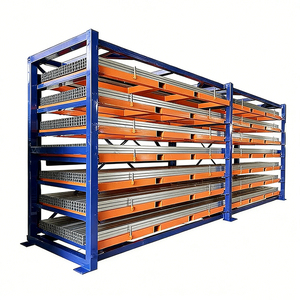
Industrial Metal Warehouse Pallet Racks Shelving Units
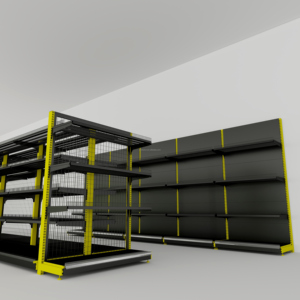
Double-Sided Metal Supermarket Storage Display Shelves
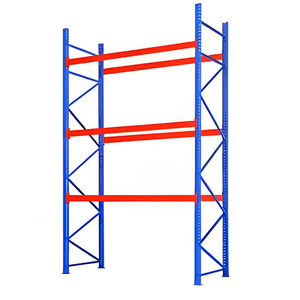
Heavy Duty Warehouse Push Back Pallet Racking System
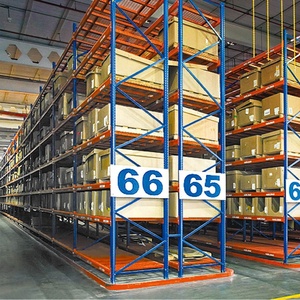
Narrow Aisle VNA Pallet Racking High-Density System
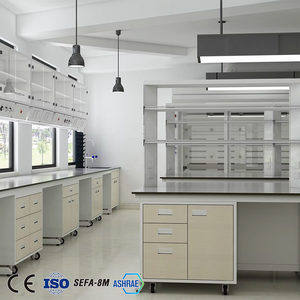
Height Adjustable Modular Steel Lab Workstation Bench
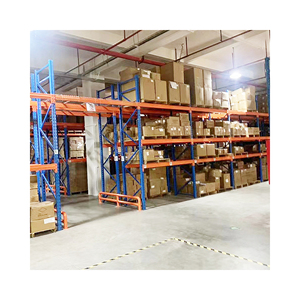
Customized Double Deep Heavy Warehouse Racking
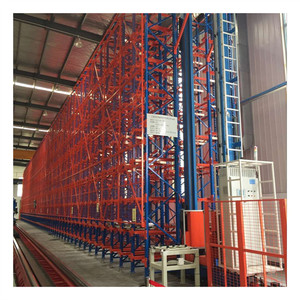
Heavy Duty Automated AS/RS Steel Racking System
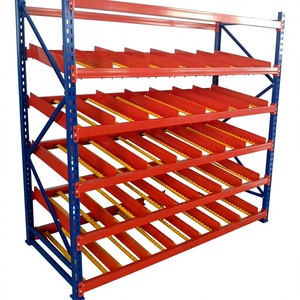
Gravity Carton Flow Rack FIFO Roller Picking System
Engineering Authority: Structural Integrity & Certification Compliance
In modern supply chain architecture, industrial storage racking is no longer treated merely as passive steel shelving; it is fundamentally an engineered, load-bearing skeletal infrastructure. Modern warehouses operate under intense operational cadences, subject to cyclic dynamic loading, seismic excitations, and stringent life-safety mandates. Specifying racking systems requires compliance with globally harmonized design codes—most prominently EN 15512:2020 (European Standard for Steel static storage systems - Adjustable pallet racking systems - Principles for structural design) and the American RMI (Rack Manufacturers Institute) MH16.1 standard.
Material Metallurgy & Structural Cold-Formed Steel Performance
The integrity of high-bay and heavy-duty storage racks hinges upon the structural profile of upright columns and horizontal load beams. Our manufacturing lines exclusively utilize verified prime structural coils—primarily Q235B and high-strength Q355B (comparable to European S235JR and S355JR according to EN 10025-2). Cold roll-formed omega upright sections are punched with continuous CNC precision down to ±0.1mm tolerance, ensuring that multi-tier installations maintain vertical plumblines over heights exceeding 24 to 30 meters.
| Steel Grade | Nominal Yield Strength (MPa) | Ultimate Tensile Strength (MPa) | Recommended Racking Component Application | Safety Factor Compliance |
|---|---|---|---|---|
| Q235B (Cold Rolled) | ≥ 235 MPa | 370 – 500 MPa | Standard box beams, bracing struts, base plates, decking | 1.5 – 1.65 (EN 15512 / FEM 10.2.02) |
| Q355B (High Tensile) | ≥ 355 MPa | 470 – 630 MPa | Heavy-load upright frames, seismic bottom posts, cantilever columns | 1.65+ (Rigid Dynamic Verification) |
| Hot-Dip Galvanized Zinc | Yield match base metal | Coating ≥ 65–85 μm | Cold storage freezers (-30°C), outdoor sea yards, chemical rooms | ISO 1461 Anti-Corrosion |
Surface Engineering: Electrostatic Powder Coating & Pre-Treatment Rigor
Environmental degradation, especially across tropical ASEAN corridors (such as Malaysia, Thailand, Vietnam, and Indonesia) or coastal logistics hubs, introduces high relative humidity (>80% RH) and airborne chloride salts. Racking that lacks chemical pre-treatment will suffer subsurface filiform corrosion, leading to delamination and steel embrittlement.
Our production utilizes an automated 10-stage immersion and spray surface preparation protocol: alkali degreasing, ultrasonic cleaning, acid pickling to eliminate scale, and crystalline zinc-phosphating. Following thorough deionized water rinsing, an architectural-grade epoxy-polyester powder polymer is applied electrostatically at 60–80 kV, cured in convection curing tunnels at 180°C–200°C. This process delivers an ultra-dense, pinhole-free finish (≥ 70–90 μm thickness) capable of withstanding 500+ hours in ASTM B117 salt spray testing.
Future Industrial Racking Procurement Trends (2025–2030)
Strategic purchasing managers are pivoting from basic capital expenditure (CapEx) metrics toward total cost of ownership (TCO), automated integration, seismic safety margins, and circular steel lifecycles.
1. High-Density Dynamic & Shuttle-Ready Systems
With real estate costs rising globally, warehouses are shifting from traditional selective racking (which dedicates over 60% of floor space to forklift aisles) to high-density semi-automated solutions. Four-way radio shuttle systems, push-back racks, and gravity flow channels allow facilities to increase pallet capacity by 70% without expanding physical footprints.
- Deep-lane storage reaching up to 40 pallets depth
- Direct integration with lithium-powered shuttles
- Drastically cuts forklift collision risks in rack lanes
2. AS/RS Automation & Tight Deflection Standards
The expansion of lights-out automated distribution centers requires tight manufacturing tolerances. Automated Storage and Retrieval Systems (AS/RS) cannot tolerate frame deflections exceeding European FEM 9.831 tolerances. Procurement specifications now mandate strict horizontal alignment and dynamic beam stability.
- High-bay clad racks reaching 30+ meter elevations
- Laser-guided automated stacker crane tolerances
- Continuous upright roll-forming without mid-splices
3. Multi-Tier Mezzanines for E-Commerce Fulfillment
Rapid SKUs diversification in e-commerce picking has created strong demand for rack-supported mezzanines and industrial catwalk structures. Instead of building horizontal expansions, supply chain operators utilize vertical building clearances to incorporate multi-tiered manual picking, automated conveyor routings, and spiral chutes.
- Deck loading capacities from 300 to 1,200 kg/m²
- Galvanized open-grid steel floor grating for fire safety
- Full NFPA 13 in-rack sprinkler compatibility
Technological Innovations in Industrial Storage Racking
From smart IoT sensors to seismic engineering software, discover the structural advances transforming modern storage equipment.
Seismic Simulation & Site Soil Factoring
Warehouses located along the Pacific Rim seismic belt—such as the Philippines, Indonesia, Japan, and western Americas—require custom dynamic structural finite element modeling. Modern racking uses oversized baseplates, reinforced anchor embedments, and heavy-duty diagonal back-bracing systems tuned to spectral acceleration values (Ss & S1).
- Structural seismic calculations based on local site data
- Upgraded high-ductility anchor bolt anchorages
- Energy-dissipating baseplate isolation designs
Corrosion-Proof Galvanized Cold Storage Solutions
With temperature-controlled frozen logistics expanding for seafood, meat, and biologics (-25°C to -30°C), condensation cycling triggers accelerated metal oxidation. Thermal zinc galvanizing (hot-dip ≥ 85 μm) and specialized anti-embrittlement structural cold steels are replacing standard surface coatings to ensure multi-decade service life.
- Resists sub-zero steel embrittlement
- Complete internal corrosion protection in hollow tubes
- Non-shedding coating safe for food hygiene
IoT Structural Health Monitoring & Collision Sensors
Forklift impact remains the primary cause of racking failure and progressive warehouse collapse. Future installations integrate low-cost piezoelectric impact sensors, RFID load tracking, and digital twin monitoring platforms to report accidental frame deformation in real time, alerting safety inspectors before structural failure occurs.
- Real-time upright impact load logging
- Overload warning sensors on primary cross-beams
- Automated inspection logs supporting EN 15635 compliance
Guangzhou Heda Shelves Co., Ltd. Global Manufacturing Prowess
Founded in 2001, we are an integrated engineering enterprise providing warehouse storage system R&D, layout consultation, production, and worldwide logistics.
In-House End-to-End
Complete control from prime steel coil slitting, cold roll-forming, and robotic welding to automated powder coating, ensuring consistent component tolerances.
Free Engineering & 3D
Our 30+ project engineers provide complimentary warehouse CAD space-utilization layouts, 3D photorealistic renderings, and structural calculations within 24-48 hours.
Short Port-to-Port Transit
Located in Guangzhou / Nansha, shipments reach major global ports reliably: 2–5 days to Vietnam, 3–5 days to Manila, 5–7 days to Singapore, and direct routes to Europe & the Americas.
Rigorous Factory QC
Certified under CE No. 2435-CPR-8605159 and ISO 9001:2015 No. 18624Q00169R0M with full weld-penetration testing, powder adhesion peel assays, and load trials.
10-Step Controlled Factory Production Flow
Every beam, upright frame, baseplate, and crossbar is processed in-house across controlled manufacturing stages.

Raw Steel QA
Incoming certified Q235B/Q355B coils verified for tensile yield, chemical properties, and thickness consistency.

Precision Slitting
High-speed uncoiling and laser-guided slitting lines cut structural steel strip within tight tolerances.

CNC Punching
Automated punch presses stamp tear-drop or diamond pattern pitch holes at precise 50mm / 75mm intervals.

Cold Bending
Multi-stage cold brake presses bend structural connector tabs, beam clips, and heavy-duty seismic base footings.

Roll Forming
Continuous 18-pass roll-forming mills produce rigid closed box beams and complex omega upright profiles.

Deburring & Polishing
Automated mechanical grinding stations remove sharp stamping burrs, edges, and weld spatter.

Robotic Welding
Six-axis robotic CO2 shielded gas welding lines connect 3-prong and 4-prong beam end connectors with deep penetration.

Pickling & Phosphating
Immersion pre-treatment chemically strips surface oils and creates an anti-corrosive micro-crystalline zinc-phosphate conversion layer.

Powder Coating
Automated powder spray booths apply epoxy-polyester coatings, followed by curing in 200°C baking tunnels.

Export Pack & Shipping
Every piece is labeled, protective-wrapped, and strapped for container loading to prevent transit abrasion.
International Testing & Quality Certifications
Our structural manufacturing facility holds international certifications, providing engineering documentation for local building permits and insurer audits.
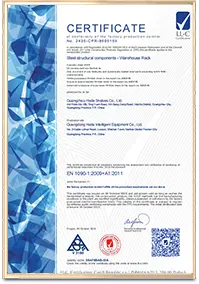
CE Certificate
No. 2435-CPR-8605159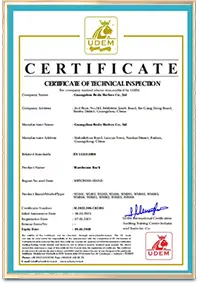
ISO 9001:2015
No. 18624Q00169R0M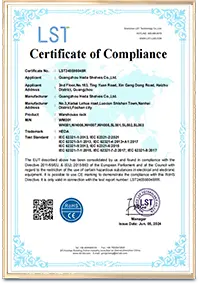
RoHS Certified
Heavy Metal Free Surface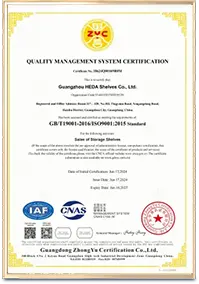
Load Capacity Tested
Tensile & Deflection VerifiedFrequently Asked Questions on Industrial Storage Racks
Comprehensive engineering, regulatory, and logistics answers for procurement directors, warehouse managers, and EPC contractors.
Ready to Optimize Your Warehouse Storage Footprint?
Connect directly with Guangzhou Heda Shelves engineering specialists. We will deliver an optimized CAD warehouse layout, complete 3D structural model, and transparent factory-direct pricing tailored to your logistics demands.