[email protected] Serving Malaysia · Thailand · Vietnam · Indonesia · Philippines · Singapore
English
Factory-Direct Global Exporter
CE Certified Industrial Racking Systems Exporter & Exporters
Precision-Engineered Heavy Duty Warehouse Storage Solutions | Certified Under EN 15512 & CE 2435-CPR-8605159
Precision Manufactured Systems
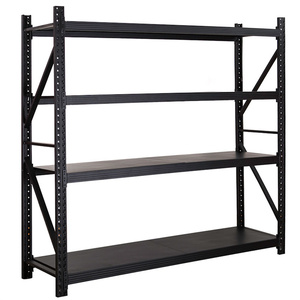
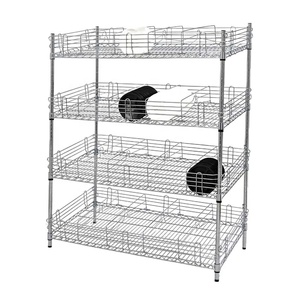
Engineered Industrial Storage Product Showcase
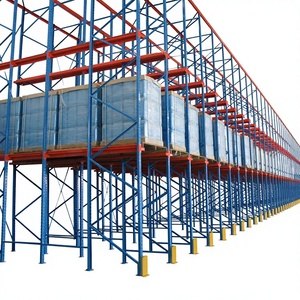
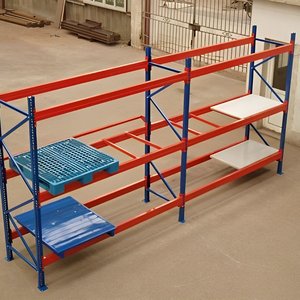
Tested for dynamic live loads, structural seismic resiliency, and industrial wear, our CE-certified modular storage solutions maximize footprint density and throughput efficiency.
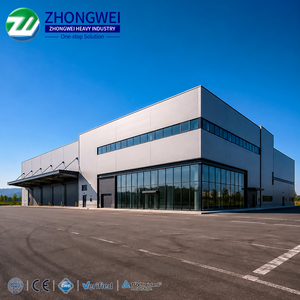
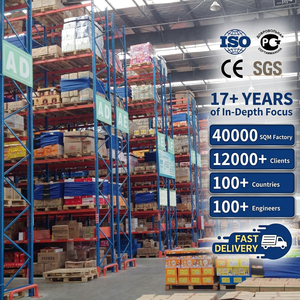
Operating a dedicated 30,000 m² state-of-the-art manufacturing campus staffed by 300+ structural engineers, precision operators, and logistics specialists since 2001.
As an internationally accredited CE certified industrial racking systems exporter, our technical manufacturing protocols are grounded in continuous mechanical optimization and European structural safety standards. Sourcing directly from verified cold-rolled steel coils, our facilities execute full in-house cold profile forming, precision automated column punching, robotic beam welding, pickling, phosphating, and heavy-duty electrostatic powder coating.
Structural reliability is non-negotiable in modern logistics. Every racking system exported by our enterprise is engineered under the stringent criteria of CE Certificate No. 2435-CPR-8605159 and backed by an audited ISO 9001:2015 Quality Management System (No. 18624Q00169R0M). Whether serving large 3PL logistics parks, refrigerated pharmaceutical warehouses, or multi-tier retail fulfillment centers, we ensure full material traceability, load deflection verification (≤ L/200 under maximal dynamic load), and verified seismic resilience tailored to local site accelerations.
Stringent Conformity & CE Marking
Verified third-party testing guaranteeing static and dynamic calculation integrity under EN 15512, EN 15620, and EN 15629 standards for total peace of mind on civil inspections.
Advanced Surface Treatment
High-adhesion pickling and zinc phosphating pre-treatment followed by thermosetting epoxy-polyester powder coating guarantees long-term durability in ambient 85%+ relative humidity.
Turnkey Technical Services
Our in-house project engineers provide complimentary 2D AutoCAD layouts, structural capacity verifications, realistic 3D spatial renders, and full containerized export packing plans.
Zero-Defect Quality Control
10-Stage Vertically Integrated Production Protocol
From prime cold-rolled steel coils to ocean-ready container stuffing, every component is manufactured within our Guangzhou facility under strict mechanical tolerances.
STAGE 01
Raw Steel Assay
Spectral grade verification of high-tensile Q235B and Q355B coil stock.
STAGE 02
Precision Slitting
Automated longitudinal CNC cutting to exact developmental widths.
STAGE 03
CNC Column Punching
Continuous hydraulic stamping with 50mm/75mm universal pitch tolerances.
STAGE 04
Cold Bending & Roll
Continuous multi-station cold-roll forming to create rigid closed profiles.
STAGE 05
Structural Welding
Robotic pulse MIG welding connecting box beams with multi-claw connectors.
STAGE 06
Shot Blasting
Surface descaling and polishing achieving Sa 2.5 cleanliness profiles.
STAGE 07
Chemical Pre-Treatment
Multi-stage ultrasonic degreasing, acid pickling, and protective phosphating.
Controlled 180°C - 200°C tunnel baking for cross-linked impact resistance.
STAGE 10
Stowage & Dispatch
Container cube optimization, timber cushioning, and weather-proof wrapping.
Market Intelligence
Future Procurement Trends in Industrial Racking Systems
Strategic analysis of technological shifts, automation convergence, and regulatory criteria transforming global material handling investments through 2030.
Modern supply chain architecture is experiencing unprecedented verticalization. As industrial land values surge across Southeast Asia, North America, and Europe, supply chain directors are moving away from traditional low-density static racking toward semi-automated shuttle systems, very narrow aisle (VNA) infrastructure, and rack-supported multi-tier mezzanine floors. Sourcing decisions now prioritize total life cycle performance, seismic certification, and system adaptability to Autonomous Mobile Robots (AMRs) and Automated Storage and Retrieval Systems (AS/RS).
Storage Technology
Space Utilization
Throughput Velocity
Primary Industry Fit
Strategic Outlook (2025-2030)
Selective Pallet Racking
40% - 50% Floor Density
High (100% Direct Access)
General Distribution, Retail DCs, 3PL
Standard baseline; rapid migration toward VNA wire-guided configurations.
Stable demand for bulk storage; increasingly retrofit with pallet rails.
Multi-Tier Mezzanines
200% - 300% Floor Multiplier
High for Piece/Carton Picking
E-Commerce, Automotive Parts, Apparel
Surging adoption to maximize clear warehouse heights without civic expansion.
Automation-Ready Modularity
Global procurement teams prioritize uprights and guide rails with structural tolerances tight enough to interface directly with automated radio shuttles and laser-guided AGVs without post-installation shimming.
Cold Chain Energy Conservation
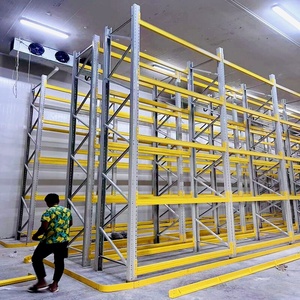
Sub-zero logistics facilities in seafood and meat exporting require maximum cubic density to amortize massive refrigeration power costs. Dense shuttle runs cut cold air dissipation while eliminating manned vehicle operations in frozen zones.
Supply Chain Decoupling
Importers are bypassing trading intermediaries, contracting directly with vertically integrated Chinese manufacturers capable of supplying certified mill certificates, independent weld ultrasound logs, and turnkey shipping management.
Technical Due Diligence
Frequently Asked Questions on Sourcing Industrial Racking
Essential guidance covering international shipping logistics, structural engineering calculations, seismic parameters, and CE certification compliance.
What specific standards and test reports back your CE certification?
Our industrial racking systems conform fully to EN 15512 (Steel static storage systems - Adjustable pallet racking systems - Principles for structural design), EN 15620 (Tolerances, deformations and clearances), and EN 15629 (The specification of storage equipment). The systems are audited under CE Certification No. 2435-CPR-8605159, guaranteeing validated mechanical yield strength, elastic limits, deflection compliance under full design loads, and weld integrity.
How do you engineer racking systems for active seismic zones (e.g., Philippines, Indonesia, Western Americas)?
Seismic engineering requires adjusting beam-to-column connector rigidity, upright steel wall thicknesses, footplate bearing areas, and horizontal/vertical cross-bracing patterns. Buyers provide regional seismic spectral acceleration parameters (Ss, S1), building soil classifications, and ground-level importance factors. Our structural engineers calculate dynamic horizontal loads and provide complete structural load calculation sheets compliant with local building codes.
What surface treatments protect steel racking against humid tropical climates and coastal condensation?
We employ an intensive automated 7-step chemical pre-treatment cycle comprising industrial alkaline degreasing, clean-water rinsing, acid descaling pickling, and zinc-phosphate conversion coating before powder deposition. The components are then electrostatically coated with pure polyester or epoxy-polyester architectural-grade thermosetting powder (60-90 microns thick) baked at 200°C. For aggressive environments such as coastal yards or sub-zero refrigeration condensation zones, hot-dip galvanized components (minimum 65μm zinc layer conforming to ISO 1461) can be specified.
What is the typical shipping lead time and container packing efficiency from Guangzhou?
Standard manufacturing cycle time runs between 15 to 25 business days depending on tonnage and custom color requirements. Situated near Nansha and Guangzhou international ports, our ocean transit times are among the shortest in the world: 2 to 5 days to Vietnam, 3 to 5 days to Manila, 5 to 7 days to Singapore and Bangkok, 6 to 8 days to Port Klang, 14 to 20 days to Australia, and 22 to 30 days to Europe or North America. Components are bundled with protective corrugated paper corners, bundled with steel strapping, and custom-stowed into 40HQ containers to maximize tonnage without exceeding civil highway axle limits.
What engineering drawings and site specifications are required to obtain a complimentary CAD layout?
To generate a high-precision storage proposal, we require: (1) Warehouse architectural drawings indicating clear height under roof joists, column spacings, and door/dock locations; (2) Pallet specifications including overall dimensions (W x D x H), total gross weight per pallet, and pallet overhang; (3) Materials handling equipment details including forklift type, turning radius, maximum mast reach height, and aisle clearance requirements; (4) Desired operational throughput (SKU count, turnover cycle, and FIFO vs. FILO preference).
Connect Directly with Our Structural Engineering Team
Send your warehouse architectural plans or pallet load parameters today. Receive a certified CAD layout, 3D structural render, and comprehensive containerized CIF pricing within 24 hours.