Featured High-Density Dynamic Flow Systems
Direct-from-factory live storage systems for pallets, totes, and production containers. Manufactured with high-yield Q235B/Q355B steel under strict CE structural execution standards.
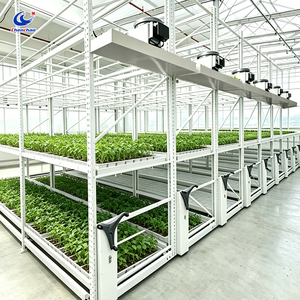 Agri-Flow
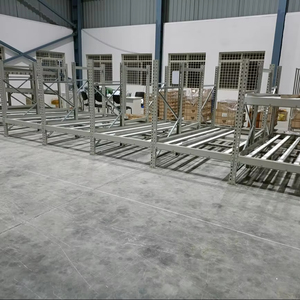 Heavy-Duty Pallet
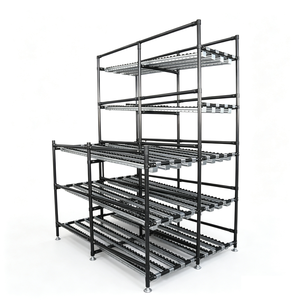 Lean Assembly
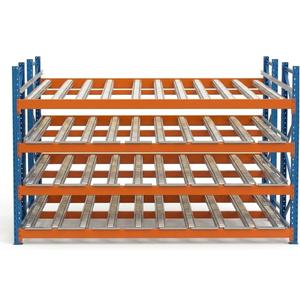 High Density
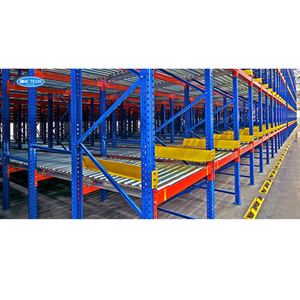 Export Grade
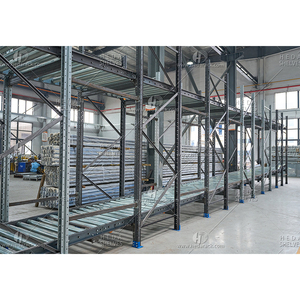 Carton Picking
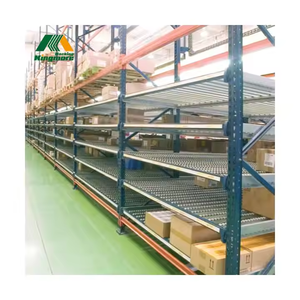 Durable Industrial
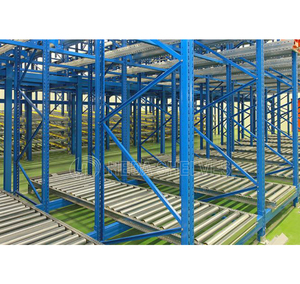 Automated Gravity
Warehouse Gravity Auto Flow Rack
Kinematics & Structural Dynamics of Flow Through Racking
Flow through racking (also referred to as gravity flow or dynamic live pallet storage) represents the pinnacle of First-In, First-Out (FIFO) compact warehouse logistics. Operating on a precisely calibrated gravitational plane, pallets or carton cases are introduced at the upper loading aisle (charge face) and automatically slide down slightly inclined roller tracks toward the extraction aisle (discharge face).
The system eliminates cross-traffic interference by completely segregating restocking and picking functions. However, achieving flawless dynamic operation requires meticulous structural calculation: balancing slope angle, roller friction coefficients, kinetic brake resistance, and pallet entry dynamics.
Our engineering design incorporates centrifugal speed controller rollers embedded at predetermined intervals throughout the lane depth. These self-regulating mechanical brakes ensure that pallet speeds never exceed safe inertia thresholds, preventing terminal collision shocks against the end stops, irrespective of lane depth extending up to 20 or more pallet positions.
| Engineering Attribute | Pallet Flow Specification | Carton Flow Specification |
|---|---|---|
| Load Range per Unit | 300 kg – 2,000 kg / pallet | 5 kg – 50 kg / tote |
| Gradient Inclination | 3.2% to 4.2% (approx. 2.0°–2.4°) | 4.0% to 6.0% (adjustable pitch) |
| Braking Architecture | Centrifugal / Eddy-current friction | Gravity roller friction / Guide rails |
| Line Pressure Relief | Automatic Mechanical Separator | Drop-stop end profile tray |
| Structural Standard | EN 15512:2020 & CE Execution Cl. 2 | EN 15620 Dynamic Class 300 |
| Pallet Interface Types | Euro (EPAL), GMA, Plastic Runner | Cardboard cartons, KLT plastic boxes |
Braking Roller Technology
Without controlled resistance, pallets in lanes deeper than 3 positions accelerate dangerously. HEDA integrates heavy-duty internal geared centrifugal brake rollers. As rotation speed increases, centrifugal shoes expand against the internal housing, regulating flow speed to a safe 0.25–0.30 m/s throughout the entire trajectory.
Pallet Separation Mechanisms
Dynamic line backpressure from queued pallets can accumulate into tens of kilonewtons at the front extraction stop, causing forklift lockup or pallet damage. Our mechanical time-delay separators hold back upstream pallets until the front pallet is completely lifted and cleared by the forklift mast.
Cold-Formed Beam Integrity
Manufactured from certified high-tensile structural coil (Q235B & Q355B), upright columns feature continuous multi-bend omega profiles for maximum torsional resistance. Roll-formed connector hooks with 5-tooth locking pins prevent accidental beam dislodgment under heavy lift truck impact.
Benchmarking High-Density Warehouse Methodologies
Selecting the right pallet storage topology directly governs warehouse building volume utilization, operational capital expenses (OPEX), and material handling cycles.
| Evaluation Parameter | Flow Through (Pallet Flow) | Standard Selective Racking | Drive-In Racking System | Automated Radio Shuttle |
|---|---|---|---|---|
| Inventory Rotation Logic | Strict FIFO (Automatic) | FIFO or LIFO (Manual) | Strict LIFO (Last-In, First-Out) | Flexible FIFO & LIFO Modes |
| Floor Area Utilization | Up to 75% – 85% | 35% – 45% (Wide Aisles) | 65% – 75% (No Aisles) | 75% – 85% (Ultra Deep) |
| Forklift Travel Distance | Minimal (Separate In/Out) | High (Traversing All Aisles) | Medium (Deep Lane Entry) | Low (Perimeter Transfer Only) |
| Handling Speed / Throughput | Maximum (Parallel Work) | Standard | Low (Slow Driving Inside Bays) | Very High (Automated Carrier) |
| Risk of Racking Collision | Very Low (No Bay Entry) | Moderate | High (Forklift Enters Structure) | Very Low (Shuttle Inside Racks) |
| Power Consumption / OPEX | Zero Electricity (Pure Gravity) | Zero | Zero | Lithium Battery Charging Needed |
In a 3,000 m² distribution facility holding 4,000 pallet locations, switching from traditional selective racking to an 8-deep flow through racking system yields the following measurable efficiency dividends:
- Aisle Surface Elimination: Operating access aisles reduced from 14 individual forklift alleys down to just 2 operating corridors (1 loading face, 1 picking face).
- Cold-Chain Energy Reduction: In refrigerated facilities (-18°C to -25°C), the 45% footprint compression slashes ongoing cooling compressor loads by roughly 32% per annum.
- Travel Time Optimization: Elimination of interior forklift maneuvering saves up to 4 minutes per dual-cycle pallet transaction.
Total Cost of Ownership (TCO) & Return on Investment
While the initial capital expenditure (CAPEX) for precision gravity rollers and separator hardware is higher than static selective steelwork, the payback window consistently amortizes within 14 to 22 months across high-turnover logistics hubs.
By eliminating aisle travel time, warehouse operations can downsize their required material handling equipment (MHE) fleet by up to 40%. The strict FIFO guarantee also prevents costly product expiration write-offs in food, beverage, pharmaceutical, and chemical industries.
Strategic Procurement & Technological Trends
As automated supply chains evolve, procurement directors must evaluate flow through systems against four transformative technical paradigms.
1. AMR & AGV Kinetic Interfacing
Traditional flow racking was designed around counterbalanced manual forklifts. The trend through 2030 demands optical-guide and LIDAR docking ports for Autonomous Mobile Robots (AMRs). Front stops are now integrated with photoelectric zero-pressure sensors and robotic docking fixtures, enabling unmanned automated guided vehicles to drop and pick pallets without human operators.
2. Cold-Chain & Controlled Climates
With global cold chains expanding rapidly across perishable food, dairy, and pharmaceuticals, flow racking steel must endure sub-zero thermal shock without ductile-to-brittle transition. Procurement specifications now mandate hot-dip galvanized (HDG) roller beds and low-temperature synthetic lubrication on bearings capable of smooth gliding at temperatures as low as -35°C.
3. IIoT "Smart Roller" Telemetry
Sensors are moving directly into gravity tracks. Next-generation installations embed self-powered piezoelectric bearings that measure lane velocity, pallet residency duration, and vibration anomalies. Real-time WMS telemetry alerts warehouse supervisors to defective pallet bottoms, roller wear, or lane stagnation before structural jams can occur.
Why Global Supply Chains Trust Guangzhou Heda Shelves
Established in 2001, Guangzhou Heda Shelves Co., Ltd. is a premier Chinese manufacturer of heavy-duty racking, mezzanine systems, and precision live storage. Our 30,000 m² factory operates under verified ISO 9001:2015 and CE certification standards.
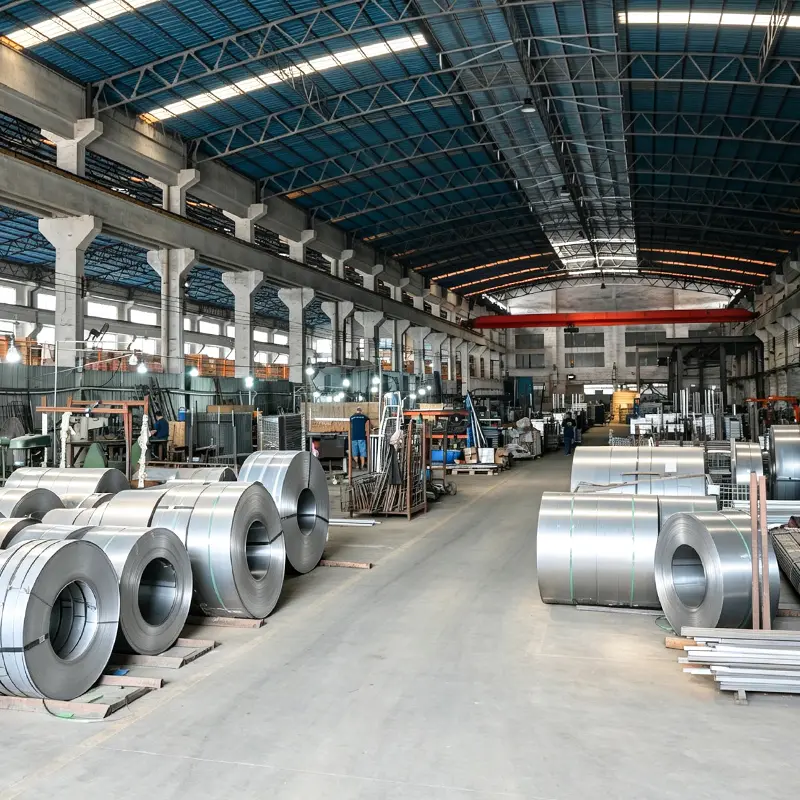
25+ Years Heavy Engineering
Over two decades of structural racking innovation, completing 10,000+ complex warehouse installations across 120+ countries worldwide.
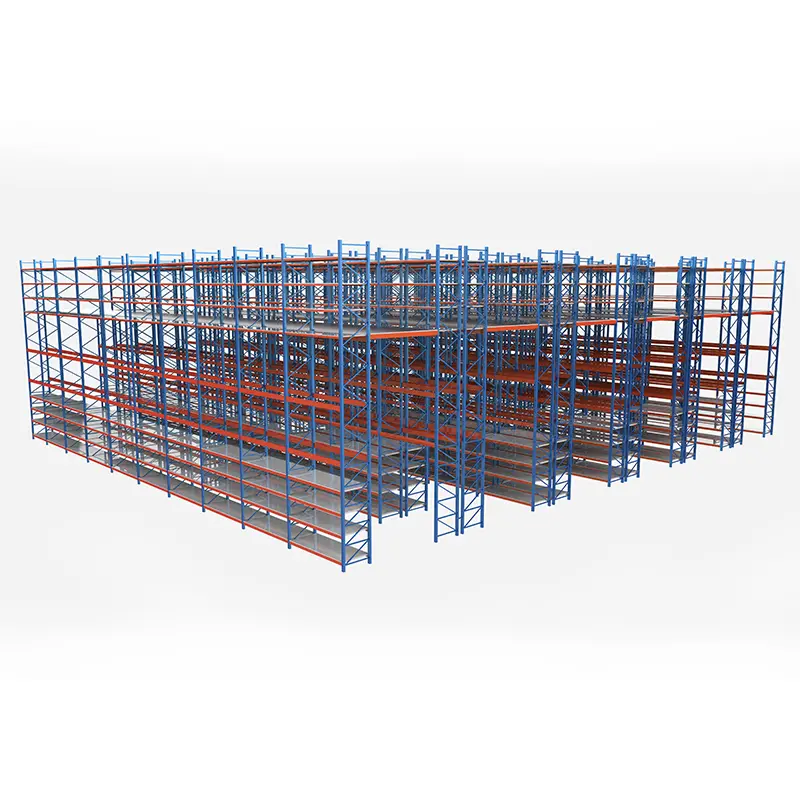
Complimentary 3D & CAD Design
Our dedicated structural engineering team provides complete CAD floor layouts, finite element load stress calculations, and 3D walkthroughs without design fees.
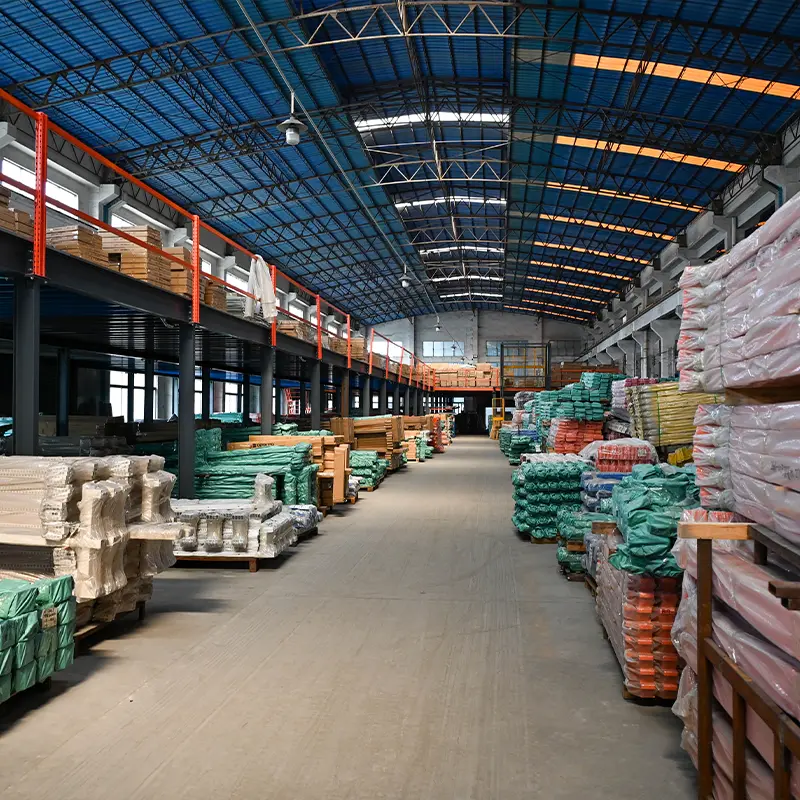
Verified CE & ISO Certification
Authentic CE Mark (No. 2435-CPR-8605159) under structural steel execution, combined with ISO 9001:2015 (No. 18624Q00169R0M) QA management.
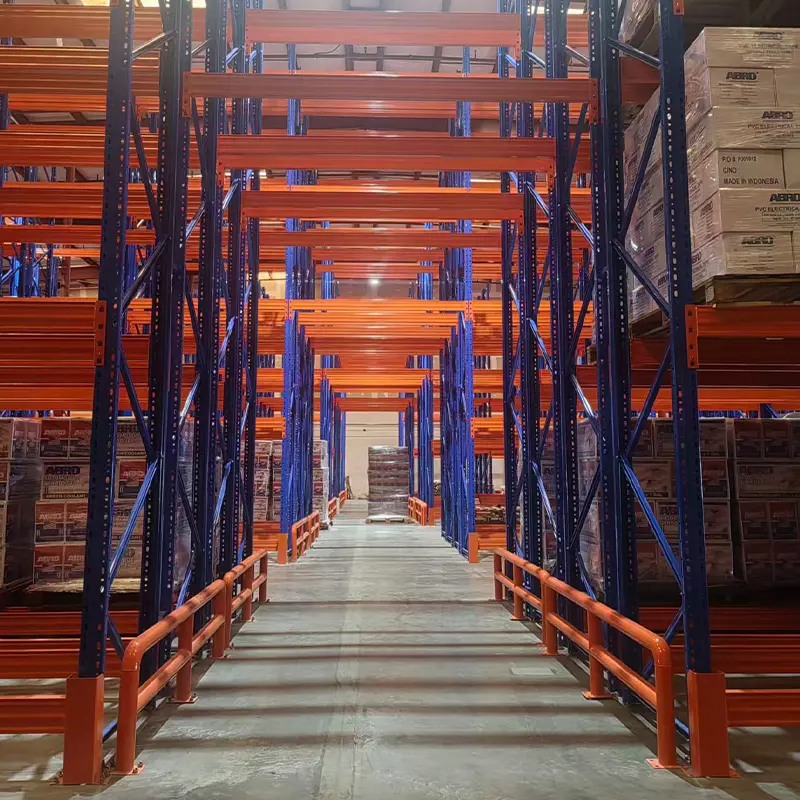
Fully Custom Modular Build
From custom beam profiles and dual-color epoxy electrostatic powder coating to seismic reinforcement engineered for high-earthquake zones.
10 Controlled Manufacturing Steps from Raw Coil to Ocean Container










Frequently Asked Questions by Industrial Buyers
In-depth technical answers addressing pallet compliance, inclination tuning, braking physics, seismic design, and international shipping protocols.