EN 15512 & CE Certified Standard (No. 2435-CPR-8605159)

CE Certified FIFO Racking Manufacturers & Exporters

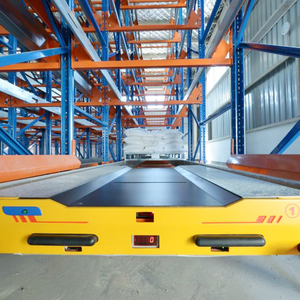
High-density gravity flow, radio shuttle, and dynamic live storage systems engineered for global distribution hubs, high-turnover cold chains, and automated intralogistics.

2001+
Established Engineering Origin
30,000t
Monthly Manufacturing Output
10,000+
Global Turnkey Projects
100%
Stock Rotation Accuracy (FIFO)

Engineering White Paper: Mechanical Principles of Industrial FIFO Storage Systems

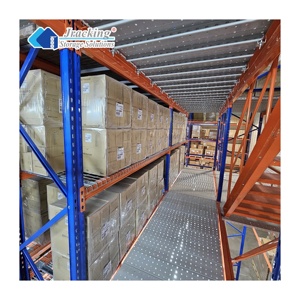
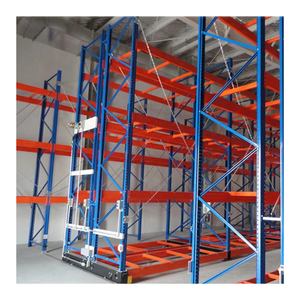
In modern high-velocity fulfillment centers, warehouse economics is dictated by inventory turnover rate, footprint footprint costs, and handling cycle efficiency. First-In, First-Out (FIFO) racking systems—principally characterized by Gravity Pallet Flow and Two-Aisle Radio Shuttle Systems—resolve the inherent dead-stock vulnerabilities common to selective and Drive-In configurations.

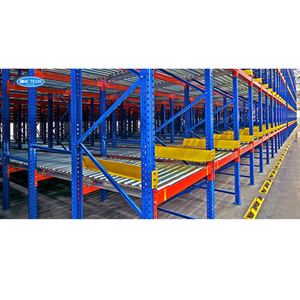
Under the European Racking Standard EN 15512 and the CE Construction Products Regulation (EU CPR No. 305/2011), manufacturing certified FIFO flow systems requires precise kinematic engineering. In gravity flow systems, heavy steel beds are built with a continuous downward slope of 3.0% to 4.0%. Each lane features an integrated cascade of calibrated braking rollers equipped with centrifugal or magnetic eddy-current resistance mechanisms. This technical setup prevents run-away pallets from exceeding safety speeds (capped at 0.3 m/s) when moving downward from the feeding (loading) aisle to the retrieval face.

At the unloading face, an engineered mechanical pallet separator automatically locks subsequent line loads away from the lead pallet, allowing standard counterbalanced or reach trucks to retrieve the lead unit without overcoming compressive back-pressure. This dynamic isolation eliminates load pinching, operator hazard, and packaging rupture—delivering flawless compliance with strict global standards for cold chains, pharmaceuticals, and perishable FMCG logistics.

Strategic Procurement Horizons

Future Procurement Trends in Industrial FIFO Racking (2025–2030)

Supply chain leaders are modernizing their material handling procurement matrices. Understand the critical trends shaping cross-border racking RFQs and turnkey capital expenditure.

1. Cold Chain Densification & Carbon Footprint Limits

Global commercial refrigeration costs are surging. Procurement teams across cold chains are actively converting wide-aisle setups into zero-energy gravity live storage and high-cube radio shuttles. Maximizing cubic pallet concentration directly reduces the refrigerated volume footprint, slashing kWh consumption per stored pallet unit by 35%.

2. Hybrid ASRS & Shuttle-Flow Interoperability

Racking buyers are increasingly moving away from closed, proprietary single-vendor mechanics. Modern tenders require racking steelwork to integrate universally with automated guided vehicles (AGVs), automated stacker cranes, and autonomous shuttle carts via standardized IoT and WMS interfaces.

3. Strict Seismic Qualification & Material Traceability

Recent seismic updates in ASEAN, the Pacific Rim, and Mediterranean markets mandate finite element modeling (FEM) seismic calculations. Enterprise clients are rejecting mill-run uncertified steel, requiring certified Q355B tensile performance and transparent raw metal mill certificates for every structural batch.

R&D Roadmap

The Technological Evolution of FIFO Racking Systems

From passive mechanical roller tracks to dynamic sensorized lanes—how FIFO racking technology is evolving to eliminate material bottlenecking.

Eddy-Current Speed Governed Rollers

Traditional frictional friction-pad speed reducers wear out under heavy use and degrade in cold stores. Newer systems leverage non-contact magnetic eddy-current controllers, providing smooth, maintenance-free deceleration regardless of pallet weight variations from 300kg to 1500kg.

Laser-Guided Auto-Pallet Alignment

Deformed or sagging wooden pallets cause operational jams in conventional flow racks. Advanced FIFO entries now integrate optical sensors and mechanical guide flanges to verify pallet structural integrity before load release, eliminating lane hang-ups.

Tropicalized Pre-Treatment Coating Formulations

Exporting to humid, coastal, or tropical regions requires exceptional coating integrity. Racking profiles are now processed through multi-stage pickling, zinc phosphating, and electrostatic polymer cross-linking to prevent subsurface rusting even at 90%+ relative humidity.

Factory Direct Manufacturing Prowess

Why International Importers Rely on HEDA Shelves

Headquartered in Guangzhou with a 30,000 m² advanced fabrication complex, Guangzhou Heda Shelves Co., Ltd. provides robust end-to-end engineering from raw steel coil to on-site assembly.

CE & ISO 9001 Certified

Rigorous third-party European conformity (Certificate No. 2435-CPR-8605159) and ISO 9001:2015 quality control across all roll-formed profiles.

30,000t Monthly Output

Integrated automated CNC punching lines, high-frequency rolling machines, and dual continuous electrostatic powder coating lines.

Free 3D & CAD Layouts

Experienced structural application engineers design your warehouse floor plan, 3D spatial renders, and load limit calculations within 24 hours.

Direct Port Transit

Strategically located in South China, offering 2-7 days fast sea shipping to ASEAN (Vietnam, Manila, Singapore, Bangkok) and swift ocean links worldwide.

Procurement Knowledge Base

Frequently Asked Questions on CE Certified FIFO Racking

Clear, technical, and commercial answers for project developers, intralogistics planners, and industrial buyers.

Q: What is the critical difference between Pallet Flow (FIFO) and Push-Back Racking (LIFO)?

Pallet Flow operates on a true First-In, First-Out (FIFO) dynamic mechanism using dedicated loading and unloading aisles with an inclined roller bed. Goods move down by gravity. In contrast, Push-Back uses a single access aisle on nested carts where incoming pallets push back previous ones, creating a Last-In, First-Out (LIFO) sequence unsuitable for perishable date-stamped inventories.

Q: How do you prevent pallet acceleration damage in high-depth gravity flow lanes?

We install speed controller brake rollers every 1 to 2 pallet intervals along the flow lane. These mechanical and magnetic governors actively regulate descent velocity to approximately 0.25 m/s regardless of pallet tonnage. In addition, an end-of-lane automatic safety load separator releases only the front pallet upon lift-truck contact, preventing rear pallet pressure from damaging handling equipment.

Q: What standard pallet variations can your live storage systems handle?

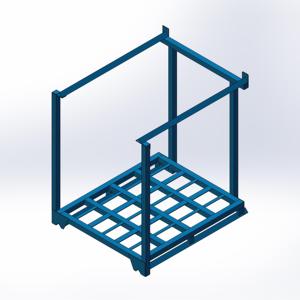
Our gravity and shuttle flow systems handle European Standard Pallets (800x1200mm), Industrial Pallets (1000x1200mm), and American GMA pallets (40x48 in), as well as plastic skids and custom steel stillages. For low-quality or non-standard wooden bases, we configure multi-track roller arrangements or steel slave pallets to avoid track derailment.

Q: Can HEDA Shelves FIFO racking be engineered for high-seismic zones?

Yes. Using advanced finite element analysis (FEA) per EN 16681 and RMI standards, our design engineers configure baseplate thicknesses, anchor embedment depths, cross-aisle bracing towers, and heavy-duty upright column sections specifically to absorb peak ground acceleration (PGA) values in seismic territories such as the Philippines, Indonesia, and New Zealand.

Q: What anti-corrosion protection is applied for sub-zero freezer cold storage?

For cold chain applications down to -25°C, components undergo intensive chemical pickling and phosphating pre-treatment followed by high-adhesion polyester electrostatic powder coating. For aggressive condensation zones, high-moisture loading docks, or chemical wash-down areas, we provide hot-dip galvanized finishes certified to ISO 1461 standards.

Q: What documents are provided for municipal building permits and tender compliance?

Every shipment includes our CE Declaration of Performance (DoP), factory ISO 9001 inspection certificates, mill test reports for all raw steel, static structural calculation sheets, load limit placards, and detailed component assembly drawings for local authority approval.
Transform Your Warehouse Density with Certified FIFO Racking

Submit your architectural drawings or clear ceiling heights. Our application engineering team will provide a full CAD layout, structural load analysis, and factory-direct quotation within 24 hours.

Get a Quote