High-Performance Pallet Racking & Industrial Storage Systems
Explore our export-grade storage racking portfolio designed for batch-storage efficiency, heavy load durability, and maximum warehouse cube utilization.
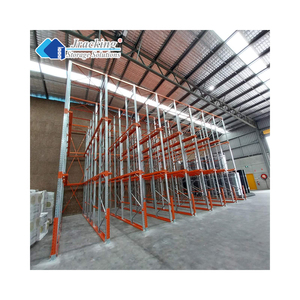
Heavy Duty High Density Storage Racking System FIFO Drive-in Pallet Rack
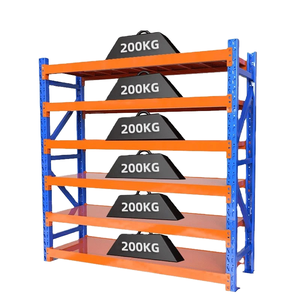
High Density Adjustable Warehouse Storage Racking Steel Pallet Rack Heavy Duty Drive in Rack System
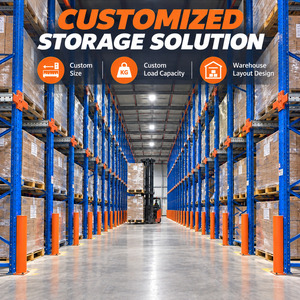
ODM OEM Q235 Steel Heavy Duty Coldroom Coldstore Drive in Through Pallet Racking System
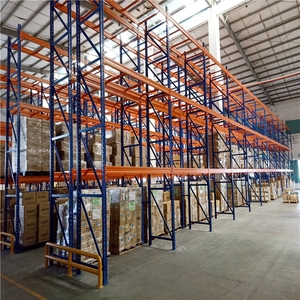
Factory Price Customized Metal Drive-In Warehouse Racking System 5 Layer Adjustable Epoxy Powder Rack
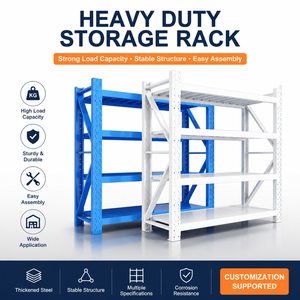
Standard Medium Duty Shelving Rack With Separator Board for Small Factory Storage Room
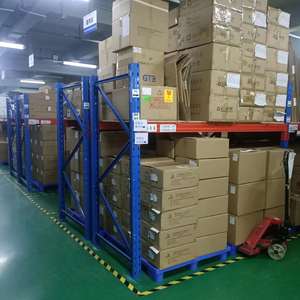
Heavy-Duty Industrial Selective Pallet Rack System Efficient 5-Layer Adjustable Bolt Structure
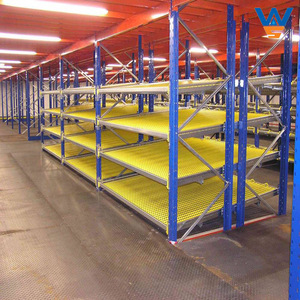
High Capacity FIFO Dynamic Storage Solution Adjustable Roller Rails Carton Flow Rack
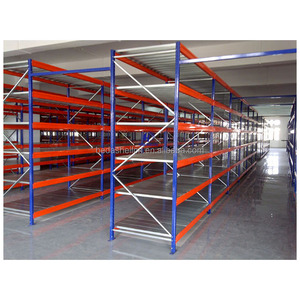
Heda Manufacture Storage Shelves Metal Boltless Warehouse Shelves System Medium Duty Racks
Structural Mechanics of Drive-In Racking: Optimizing Volumetric Utilization Without Sacrificing Stability
In modern high-throughput supply chains, warehouse real estate represents one of the largest capital and operational expenditures. Conventional selective pallet racking systems dedicate up to 60% of floor area to forklift operational aisles. A CE Certified Drive-In Racking System eliminates access aisles by permitting counterbalance or reach trucks to enter storage bays directly. By consolidating pallet positions into continuous rails supported by heavy-duty upright frames, Drive-In and Drive-Through configurations elevate storage density by 60% to 85% compared to conventional layouts.
However, from a structural engineering viewpoint, drive-in systems operate without the stabilizing horizontal cross-beams characteristic of selective racking. Because structural cross-beams cannot intersect the forklift transit corridors, the racking frame relies primarily on top-tie bracing beams, rear portal bracing towers, and heavy gauge floor anchorages to resist longitudinal and lateral sway forces. At Guangzhou Heda Shelves Co., Ltd., every drive-in project undergoes finite element analysis (FEA) compliant with EN 15512, FEM 10.2.02, and AS4084 standards, calculating dynamic load distributions, pallet rail cantilever deflection, and accidental truck impact vectors.
Critical Structural Parameters in Cold-Formed Steel Racking
Our drive-in columns utilize premium Q235B and high-yield Q355B cold-formed structural steel coils with precision continuous punching. Frame columns are engineered with complex return flanges to boost the radius of gyration, minimizing buckling tendencies under combined axial compression and torsional loading. Reinforced heavy-duty floor baseplates, anchored with M12–M16 high-tensile chemical anchors, transfer bending moments safely into the concrete floor slab.
Drive-In vs. Alternative High-Density Systems: Engineering Matrix
Logistics directors and warehouse planners must align SKU velocity, selectivity constraints, and budget realities. The following table provides an empirical engineering and total cost of ownership (TCO) comparison across high-density storage technologies:
| Storage System Type | Space Utilization Ratio | Inventory Rotation Principle | Capital Cost per Pallet (USD) | Forklift Equipment Complexity | Best Suited Application Scenarios |
|---|---|---|---|---|---|
| Drive-In Racking (HEDA) | 75% – 85% | LIFO (Last-In, First-Out) | $45 – $75 | Standard Counterbalance / Reach | Homogeneous bulk goods, seasonal batches, cold stores |
| Drive-Through Racking | 70% – 80% | FIFO (First-In, First-Out) | $55 – $85 | Standard Counterbalance / Reach | Date-sensitive bulk FMCG, ingredients, export packing |
| Radio Shuttle System | 80% – 90% | FIFO & LIFO Flexible | $140 – $220 | Standard truck + Semi-automated shuttle | High-throughput cold chain, automated staging areas |
| Push-Back Racking | 65% – 75% | LIFO (Nested Carts) | $95 – $150 | Standard Forklift | Medium batch SKUs (2 to 6 pallets deep per lane) |
| Gravity Flow Racking | 80% – 88% | Strict FIFO (Roller Beds) | $160 – $260 | Standard Forklift (Separated Load/Unload) | High turnover food, beverage packaging, pharmaceutical |
Future Procurement Trends in Industrial Storage Systems (2025–2030)
How automation integration, cold chain growth, green decarbonization mandates, and regional seismic codes are reshaping racking equipment specifications.
1. Cold Chain Expansion & Energy Density Optimization
Global frozen food logistics, pharmaceutical vaccines, and biopharma hubs are demanding hyper-dense cold storage. Operating refrigerated warehouses at -20°C to -30°C requires massive electrical energy. Sourcing teams prioritize drive-in and radio shuttle configurations that maximize pallet positions per cubic meter of refrigerated air, slashing refrigeration electricity waste per stored pallet unit.
2. Hybrid Automation & AGV-Ready Structural Design
The global shortage of licensed forklift drivers is accelerating procurement of automated guided vehicles (AGVs) and autonomous reach trucks. Traditional drive-in bays are evolving with tighter dimensional tolerances, laser-guided sensor reflectors on guide rails, and flared lead-in channels to facilitate smooth AGV entry and pallet positioning without human steering errors.
3. Seismic Ductility & Site-Specific Engineering Calculations
Procurement teams across the Pacific Rim, Southeast Asia (Indonesia, Philippines), and Latin America now mandate rigorous seismic engineering. Rather than generic off-the-shelf racking, tenders demand site-specific dynamic response spectrum analyses conforming to local building codes, requiring oversized footings, heavy-gauge bracing towers, and anchor embedments capable of dissipating ground acceleration.
4. Sustainable Finishes & Low-Carbon Steel Supply Chains
European and North American compliance mandates (such as CBAM and ESG corporate reporting) are pushing racking buyers toward environmental product declarations (EPDs). Procurement contracts increasingly specify non-toxic epoxy coatings free of heavy metals (RoHS compliant), energy-efficient zero-discharge automated powder coating lines, and certified recyclable structural carbon steel.
Next-Generation Racking Technologies: From Passive Racks to Smart Assets
The technological development of Drive-In Racking is transcending static steel structures. The industry is actively adopting structural health monitoring (SHM) systems. Because drive-in uprights face frequent close-proximity forklift operations, cumulative low-velocity column impacts represent a major risk factor. HEDA Shelves is engineering impact-resistant column guards with viscoelastic internal damping, accompanied by wireless strain-gauge sensors that transmit structural deflection warnings to the warehouse management system (WMS) when impact energy exceeds permissible thresholds.
Furthermore, advances in continuous roll-forming engineering allow the integration of customized rail geometries. HEDA’s one-piece roll-formed support arms eliminate weld fatigue points, offering higher shear capacities under uneven pallet loading while providing self-centering guide edges that reduce pallet placement friction.
Why International Buyers Partner with Guangzhou Heda Shelves Co., Ltd.
Founded in 2001, HEDA Shelves operates a state-of-the-art 30,000 square meter manufacturing base, engineering CE & ISO certified storage racks shipped to over 120 countries worldwide.
Verified Certifications & International Standards
For engineering tenders, municipal building approvals, and insurance compliance, HEDA Shelves provides third-party verified test reports and certification credentials:

Compliant with EN 1090 & EN 15512 Standards

Audited Full Quality Lifecycle Traceability

Rigorous 10-Step Quality-Controlled Manufacturing Process
From raw cold-rolled steel coils to ocean container packing, every component is manufactured in-house under strict tolerance controls:

Raw Materials
Certified Q235B/Q355B prime coils tested for tensile yield strength.

Precision Slitting
Automated uncoiling and high-speed CNC shearing to precise width.

Column Punching
Precision multi-ton CNC punching lines for 50mm/75mm hole pitches.

Cold Roll Forming
Multi-roller forming lines ensuring uniform cross-section integrity.

Profile Calibrating
Laser dimension checks and camber/sweep rectification.

Deburring & Polishing
Automated edge grinding and slag elimination for worker safety.

Robotic Welding
CO2 gas shielded robotic arms welding baseplates and connectors.

Pickling & Phosphating
Multi-stage chemical pre-treatment removing oils and scale for adhesion.

Electrostatic Coating
Swiss Gema powder guns cured at 200°C for scratch and rust resistance.

QC & Container Loading
Palletized bundle wrapping optimized for 20GP/40HQ export loading.
Frequently Asked Questions on Drive-In Racking Procurement
In-depth engineering, logistical, and commercial answers to assist warehouse directors, civil engineers, and supply chain managers.
What is the fundamental engineering difference between Drive-In and Drive-Through racking?
Drive-In racking operates on the Last-In, First-Out (LIFO) inventory principle. Forklifts enter and exit through the same front loading face, making it suitable for identical SKUs with long shelf lives or single-batch shipments. Drive-Through racking provides access at both ends—pallets are loaded from one side and retrieved from the opposite end, creating a First-In, First-Out (FIFO) flow. However, Drive-Through systems require extra aisle clearance at both ends and forfeit rear cross-bracing, necessitating stronger top horizontal portal ties to maintain structural stiffness.
How does HEDA Shelves ensure drive-in racking safety against forklift impact?
Because forklift operators drive directly inside the rack channels, collision mitigation is paramount. We engineer multi-tier safety systems: (1) Heavy-duty wraparound column protectors fabricated from 5mm thick pressed steel with shock-absorbing polyurethane inserts; (2) Continuous floor-mounted steel guide rails (either inverted angle profiles or structural channels) that mechanically steer forklift tires away from columns; (3) Pallet back-stops at lane terminations to prevent over-insertion; and (4) High-visibility safety yellow (RAL 1021) and signal orange (RAL 2004) electrostatically baked powder coatings for maximum contrast in dim warehouse conditions.
Can HEDA's Drive-In systems operate effectively in sub-zero cold room environments?
Yes. Standard steel can suffer from low-temperature embrittlement below 0°C. For cold storage and deep-freeze logistics operating at -20°C to -35°C, HEDA supplies impact-tested Q235D or Q355D structural steels with verified Charpy V-notch impact toughness values at sub-zero temperatures. Furthermore, we provide hot-dip galvanized surface finishes (conforming to ISO 1461 with zinc bath thickness up to 60–80 microns) to prevent rust caused by condensation during defrosting cycles, or specialized low-temperature flexible epoxy powders that resist chipping and micro-cracking.
What concrete floor slab specifications are required for installation?
Because drive-in racking concentrates high vertical point loads onto individual upright baseplates (often exceeding 8 to 15 metric tons per column leg), the concrete slab must possess a minimum compressive strength of 25 to 30 MPa (C25/30) and an effective slab thickness of at least 150mm to 200mm, reinforced with mesh or rebar. Floor flatness should meet DIN 18202 Table 3 Group 3 or ASTM E1155 F-min 50 standards. Severe floor elevation discrepancies cause vertical mast tilting inside deep lanes, substantially increasing the risk of forklift masts striking high pallet rails.
How does HEDA handle international export logistics, container optimization, and local installation?
HEDA exports directly from Guangzhou/Nansha ports with sea transit times of 2 to 7 days across ASEAN and direct liner services to Europe, the Americas, and the Middle East. Upright frames and beams are strapped in steel cradles with protective corner boards, maximizing 40HQ container cube volume and minimizing ocean freight costs per pallet position. Each shipment arrives with clear assembly blueprints, 3D exploded layout drawings, and sequential bolt torque instructions. For large overseas installations, we provide remote video engineering supervision or dispatch on-site bilingual erection managers.
Request a Free Engineering Layout & Project Quotation
Send our senior engineering team your warehouse dimensions, pallet specifications, and forklift parameters. We will deliver a complete CAD layout, 3D rendering, and structural load analysis within 24 hours.