High Capacity
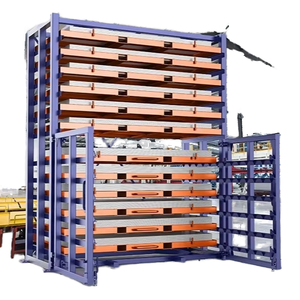
Direct factory-manufactured structural racking systems engineered to integrate seamlessly into modern automated distribution hubs and cold logistics facilities across Austria.
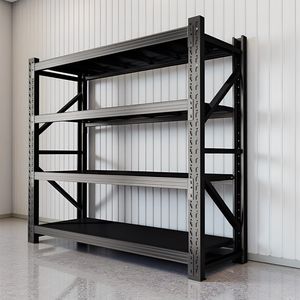
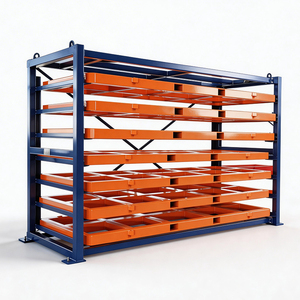
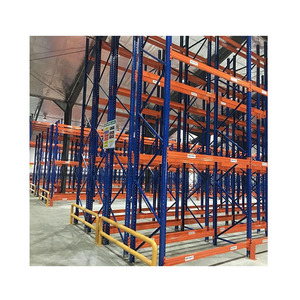
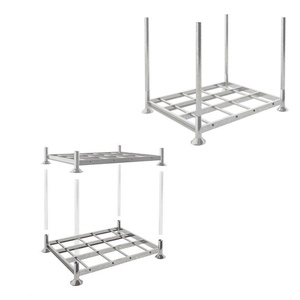
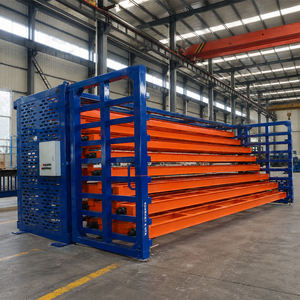
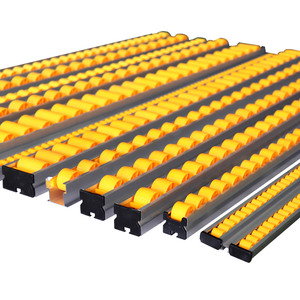
Austria's unique geographic positioning in Central Europe—serving as a critical transit corridor between Germany, Northern Italy, and Central Eastern Europe (CEE)—places stringent economic demands on warehouse square meters. With industrial real estate pricing continuing its steady upward trajectory across the Vienna logistics axis, Linz-Wels-Steyr industrial cluster, and Graz South freight terminals, facility managers face an imperative: maximise floor utilization without compromising pallet access velocity.
Within this rigorous operating framework, push back pallet racking has surfaced as the premier dynamic high-density storage solution. Unlike selective racking, which commits up to 60% of warehouse floor space to forklift maneuvering aisles, push back systems condense operations down to single access aisles per block. The system operates on an inclined rail profile (typically pitched at 2.5% to 3.0%) with nested telescopic carts. When the primary pallet is pushed back into the rack lane by a standard counterbalance or reach truck, it exposes the underlying cart for the next pallet placement, supporting configurations from 2-deep up to 6-deep configurations.
For Austrian procurement officers and logistics engineers, selecting an international manufacturing partner requires evaluating rigorous compliance with European safety legislation. Storage equipment entering Austria must comply directly with ÖNORM EN 15512 (Steel static storage systems – Requirements for structural design) and EN 15635 (Application and maintenance of storage equipment). Equipment sourced from overseas must guarantee traceable steel grades (such as certified Q235B/Q355B or European equivalent S235/S355 structural steels), full pre-treatment against humidity-induced oxidation, and verified seismic resistance tailored to Eastern Alpine tectonic patterns.
A comparative evaluation of leading international exporters and structural manufacturers delivering dynamic push-back solutions to Austrian logistics operations.
| Rank & Exporter | Origin / Hub | Structural Compliance | Cart / Roller Capabilities | Custom Design & Austrian Reach |
|---|---|---|---|---|
| 01. HEDA Shelves | Guangzhou, CN | CE (2435-CPR-8605159), ISO 9001, EN 15512 calc. | 2 to 6-deep nested carts, sealed bearing rollers | Direct factory CAD/3D engineering, delivered via Hamburg/Koper |
| 02. Stow Group | Belgium / EU | EN 15512, EN 15620, CE Marking | 2 to 5-deep push back carts & dynamic channels | Extensive DACH localized distribution networks |
| 03. Mecalux S.A. | Spain / Global | ISO 9001, CE, European Racking Federation | Push-back on carts and push-back on gravity rollers | Direct sales force and technical branches in Central Europe |
| 04. SSI Schaefer | Neunkirchen, DE | DIN EN 15512, TÜV Rheinland Verified | Heavy-duty nested pallet carriers & flow tracks | High local presence in Austria with dedicated engineering centers |
| 05. Bito-Lagertechnik | Germany | RAL-RG 614, EN 15512 structural standards | Roller-track push-back systems for euro-pallets | Specialized regional field teams covering Lower & Upper Austria |
| 06. Dexion (Gonvarri) | Europe / Global | FEM compliant, EN 15512, ISO 14001 | 2 to 4-deep heavy push back roll-in configurations | Pan-European supply chain supplying large 3PL contracts |
| 07. Jungheinrich AG | Hamburg, DE | CE certified, European Machinery Directives | Integrated cart push back aligned with truck optics | Extensive service fleet and service centers across all Austrian states |
| 08. AR Racking | Spain | EN 15512, ISO 3834-2 welding quality standard | Shuttle-compatible & multi-deep nested push-back carts | Active project presence in pharmaceutical & cold storage bids |
| 09. Nedcon B.V. | Doetinchem, NL | EN 15512, stringent European seismic codes | Custom structural steel push-back cart engineering | Specialized heavy industrial project deliveries to Central Europe |
| 10. Provost Distribution | France / EU | ISO 9001, FEM 10.2.02 standard | Modular push back racks for industrial distribution | Direct freight and distributor channels into Western Austrian regions |
Understanding how technical parameters solve specific storage bottlenecks across the country's dominant industrial sectors.
Refrigerated and sub-zero cold stores (operating at -20°C to -28°C) in Graz and Linz incur severe thermal footprint costs. Push back systems eliminate redundant access aisles, reducing cubic meter cooling loads by up to 45%. We specify specialized low-temperature sealed bearings, synthetic non-freezing lubricants, and cold-formed galvanization to avert cart seizure caused by cycle condensation.
Automotive parts manufacturers handling engine assemblies, stamped metal parts, and intermediate sub-assemblies demand high batch rotation. Nested push-back carts handle uniform bin loads of 1,200 kg to 1,500 kg per pallet position. Because forklifts never enter the racking matrix, cycle times decrease by 30% while rack collision risk is drastically reduced compared to drive-in setups.
Urban consolidation warehouses near Vienna International Airport handle high volumes of medium-velocity SKUs. Push back systems offer an ideal bridge between the selectivity of standard pallet racks and the extreme density of automated radio shuttles, allowing 3PLs to allocate individual multi-deep lanes to specific client SKUs without cross-lane contamination.
Procurement teams across Austria are shifting away from unvalidated spot purchases toward verified lifecycle engineering. Three prominent macro trends govern the contemporary material handling sector in Austria:
In accordance with Austrian Federal Climate Protection mandates and strict municipal zoning ordinances in Lower Austria and Upper Austria, greenfield logistics construction faces intense environmental review. Logistics operators must optimize vertical clearances (typically up to 12.5 meters) instead of horizontal sprawl. Push back pallet racks allow facility developers to retain compact building designs, cutting energy overhead from high-bay lighting and HVAC circulation.
While Central Europe is historically viewed as geologically stable, specific regions in Austria—such as the Vienna Basin, the Mur-Mürz Valley, and parts of Tyrol—contain designated seismic hazard zones. Engineering racking without localized ground acceleration calculations exposes facilities to legal liability and failure under warehouse safety audits. Forward-thinking exporters run finite element modeling (FEM) to compute base plate thickness, anchor bolt embedment depths, and frame vertical diagonal bracing that absorb seismic shock loads.
As labor shortages continue to affect logistics corridors around Wels and Wiener Neudorf, automated guided vehicles (AGVs) and autonomous reach trucks are frequently paired with dynamic gravity and push-back lanes. Push-back cart stops, rail tracking angles, and pallet centering guides must maintain precise millimeter tolerances to avoid sensor tripping and ensure smooth automated deposit and retrieval cycles.
From prime hot-rolled steel coil to final powder-bake finish, our Guangzhou manufacturing complex enforces strict end-to-end quality assurance.
Certified steel coil inspection with tensile testing verification.
CNC slitting and uncoiling to tight dimensional tolerances.
Automated continuous pitch punching for upright columns.
Multi-stand continuous cold profile bending for uprights & beams.
Robotic welding of nested push-back cart frames and wheel housings.
Ultrasonic weld integrity inspection per EN ISO 3834 standards.
Full 4-stage chemical pickling and phosphating for corrosion resistance.
Electrostatic powder deposition with high-temperature curing oven.
Dynamic push-cart cycle testing under 125% rated load capacity.
Container-optimized strapping and protective timber cradles for sea transit.
Clear answers addressing technical compliance, logistics routes, Euro-pallet dimensions, and on-site assembly.
Standard European logistics rely primarily on EPAL 1 (800 x 1200 mm) and EPAL 2 (1200 x 1000 mm) dimensions. Unlike American GMA pallets, EPALs utilize bottom skids that can bind if carts are improperly aligned. Our push-back carts feature precision nesting channels, integrated bottom-board catches, and flared lead-in guides specifically calibrated for EUR-pallet skid profiles to guarantee jam-free motion during both compression and return glide.
Shipments depart our Guangzhou facility directly from the Port of Nansha or Yantian. Ocean freight reaches European gateway ports (such as the Port of Koper, Slovenia in the south or Port of Hamburg, Germany in the north) within 24 to 30 days. From Koper or Hamburg, multimodal rail or direct road transport delivers container shipments directly to Vienna, Linz, or Graz in 2 to 4 days under standard Austrian import customs (DAP or DDP terms).
Yes. For every custom racking project delivered to Austria, our engineering team supplies a full structural calculation dossier, including beam deflection limits (≤ 1/200th of clear span), upright buckling analyses, and baseplate load dissipation figures verified against Eurocode static standards. These documents can be directly submitted to local Austrian labor inspectorates (Arbeitsinspektorat) and property underwriters.
While drive-in racking achieves comparable storage density, it requires forklift operators to drive physically inside the steel racking bays, significantly slowing cycle times and drastically increasing frame collision frequency. Push-back systems confine forklift operations strictly to the frontal aisle: pallets are staged on rolling carts, accelerating loading/unloading throughput by up to 40% and virtually eliminating internal frame damage.
Every export shipment arrives with complete, piece-numbered component tagging corresponding directly to 2D installation layouts and 3D assembly models. For local Austrian contractor crews, we provide step-by-step video installation workflows and direct English/German technical support via teleconference. For turn-key projects, on-site installation supervisors can be deployed to oversee commissioning.
Send our senior engineering team your warehouse CAD layout, clear ceiling heights, and pallet specifications. We will generate an optimized 2D/3D storage proposal and certified load calculations within 24 hours.