Industrial Roller & Pallet Racking Systems Engineered for High Throughput
Precision-manufactured pallet flow, carton roller tracks, and specialized heavy-duty racks designed for maximum volumetric utilization across Riyadh, Jeddah, Dammam, and NEOM distribution zones.
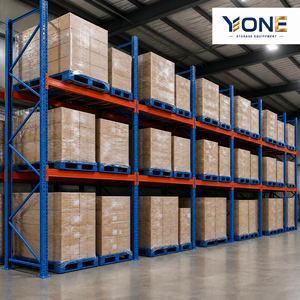
Heavy Duty Boltless 5-Tier Steel Storage Rack
Modular industrial boltless racking built for swift assembly, offering customizable beam elevations and structural stability for multi-SKU storage.
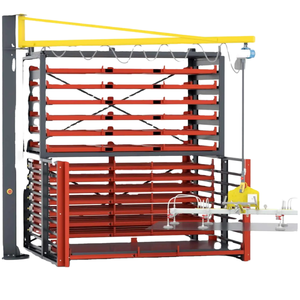
5-Layer Roll-Out Steel Plate Storage System
Engineered drawer-type roll-out sheet metal racking allowing 100% crane overhead access for dense steel plates and raw tooling stock.
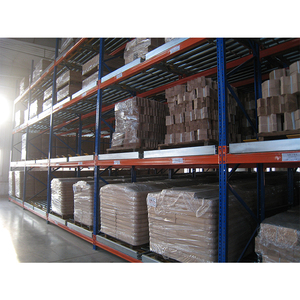
FIFO Gravity Flow Roller Pallet Racking
Dynamic roller bed live storage system utilizing gravitational gradient for autonomous pallet rotation, ideal for high-velocity FMCG and date-sensitive inventories.
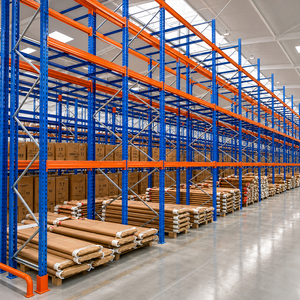
Q235B Heavy Duty Tyre & Pallet Rack
High-rigidity cold-rolled profile racking designed specifically for high-density automotive tire distribution and heavy pallet payloads up to 2000 kg.
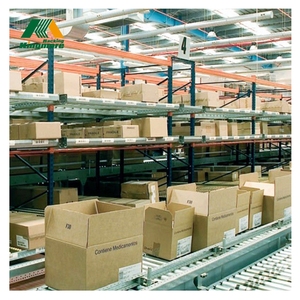
Customized Gravity Carton Flow Roller Rack
High-density ergonomic order picking lanes featuring high-durability plastic or aluminum alloy rollers for rapid, error-free carton dispatch.
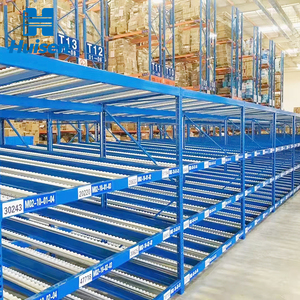
Automated Adjustable Heavy Roller Flow Rack
Heavy-duty dynamic steel flow shelves equipped with integrated speed controllers, safety separators, and impact-resistant end stops.
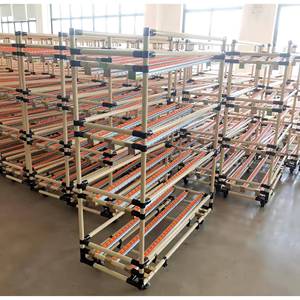
High-Strength Collapsible Roller Flow Rack
Adjustable-pitch roller system fabricated for agile factory intralogistics, dynamic staging lines, and lineside assembly feed points.
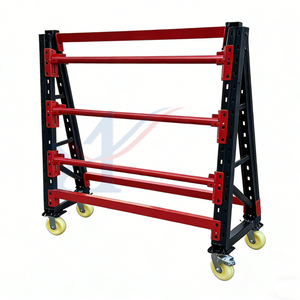
Mobile 3-Layer Adjustable Roller Rack on Wheels
Heavy-duty mobile roller staging cart fitted with industrial polyurethane locking casters for dynamic fulfillment workshops and flexible lean manufacturing.
Strategic Logistics Shift: Why Gravity Roller Racking Dominates Saudi Arabia’s Vision 2030 Infrastructure
The industrial landscape across the Kingdom of Saudi Arabia (KSA) is undergoing a monumental transformation driven by the National Industrial Development and Logistics Program (NIDLP) under the banner of Saudi Vision 2030. With Saudi Arabia positioning itself as a premier global logistics hub connecting Asia, Europe, and Africa, industrial warehousing footprints are expanding exponentially across the Special Integrated Logistics Zone (SILZ) at King Khalid International Airport in Riyadh, the Red Sea Gateway in Jeddah, and King Abdulaziz Port in Dammam. Within these massive distribution nodes, floor area optimization and thermodynamic cooling conservation have elevated roller racking systems (commonly referred to as live pallet flow racks or gravity flow racking) into mission-critical assets.
Traditional selective pallet racking, while flexible, wastes up to 60% of warehouse floor space on operational forklift aisles. In the harsh climatic conditions of the Arabian Peninsula—where outdoor ambient summer temperatures frequently surpass 48°C (118°F)—the operational cost of air-conditioned and cold-storage cubic volume is among the highest in the world. Gravity roller racking operates on a sloped roller conveyor track (typically set at an inclination of 3% to 4%) integrated within heavy-duty upright frames. Pallets are loaded from the upper charge end (rear) and automatically glide down by gravity to the discharge picking face (front). This passive mechanical system guarantees absolute First-In, First-Out (FIFO) material rotation without consuming a single kilowatt of electrical energy, providing warehouse directors with unmatched volumetric density and operating margin preservation.
Thermodynamic & Structural Realities in Saudi Distribution Hubs
Operating dynamic roller racking within the Kingdom requires specialized engineering adaptations that standard generic suppliers frequently overlook. First, ambient dust storms (shamal winds) introduce microscopic silica particles into facilities, which can penetrate standard roller ball bearings, leading to friction seizure and dangerous runaway pallet blockages. Our factory mitigates this vulnerability by utilizing precision-machined, labyrinth-sealed steel rollers with permanently lubricated, shielded bearings rated to operate seamlessly from -30°C in deep cold storage to +65°C continuous dry heat. Second, pallet variability in the Saudi market—which features an intermixture of standard ISO pallets, GMA dimensions, and local 1200x1200mm bulk plastic pallets—requires precision roller spacing and dual-or-triple track configurations calibrated to handle irregular undersides without derailment.
Zero-Energy Passive Flow
Utilizes gravitational acceleration regulated by magnetic speed retarders to transport up to 1,500 kg pallets smoothly over 30-meter lane depths without external power requirements.
Strict FIFO Compliance
Autonomous stock sequencing isolates fast-moving consumer goods and pharmaceutical batches, directly eliminating shelf-life obsolescence and satisfying SFDA audit regulations.
Aisle Footprint Slashing
Eliminates internal intermediate traffic lanes, converting dead travel space into productive storage density and boosting cubic warehouse capacity by 70% to 150% over selective racking.
Technical Performance Matrix: Comparing Storage Technologies in Saudi Facilities
Selecting the optimal intralogistics system requires balancing density against SKU accessibility, operational forklift fleet demands, and upfront capital expenditure. The table below illustrates the structural, economic, and throughput differences between gravity roller racking and conventional alternatives under typical KSA operating criteria:
| Evaluation Parameter | Selective Pallet Racking | Drive-In Racking System | FIFO Gravity Roller Flow Rack | Radio Shuttle Cart System |
|---|---|---|---|---|
| Storage Density Efficiency | Low (~40% Floor Utilization) | High (~65% Floor Utilization) | Very High (~80% Floor Utilization) | Ultra High (~85% Floor Utilization) |
| Inventory Flow Principle | Random Access (100% Selectivity) | LIFO (Last-In, First-Out) | Strict FIFO (First-In, First-Out) | Flexible (FIFO / LIFO by Program) |
| Forklift Travel & Fuel Wear | High (Operators travel every aisle) | Dangerous (Masts drive inside bays) | Minimal (Forklifts remain outside racks) | Low (Forklifts service lane face only) |
| Cold Room Thermal Conservation | Poor (High volume of cooled air lost) | Moderate (Compact but slow access) | Superior (Max air circulation + density) | Superior (Density reduces chiller size) |
| Electronic Failure Risk | Zero (Pure structural steel) | Zero (Pure structural steel) | Zero (Pure mechanical gravity physics) | Moderate (Lithium battery & sensor wear) |
| Maintenance Overhead in KSA | Negligible | High (Frequent beam impact damage) | Low (Long-life sealed roller assemblies) | Medium-High (Electronics & track cleaning) |
Localized Industrial Use Cases in the Kingdom of Saudi Arabia
Roller racking systems are not a one-size-fits-all commodity; their deployment varies based on specific industry regulations, temperature control thresholds, and supply chain velocities within the Kingdom's specialized economic zones:
1. FMCG & Dairy Supply Chains (Al-Kharj & Jeddah)
Saudi giants in dairy, beverage, and packaged bakery operate continuous production runs. Pallet roller racks provide reliable FIFO lanes where fresh output loaded at the end of the manufacturing floor slides directly to the dispatch staging area, ensuring batch traceability and zero inventory stagnation.
2. Sub-Zero Cold Storage (-25°C) in Dammam & Riyadh
Frozen poultry, meat, and imported seafood handling demands extreme compaction to lower the kilowatt-hour load per pallet position. Our cold-galvanized roller racks integrate specialized sub-zero synthetic lubricants that maintain free-spinning roller bearings without freezing or congealing.
3. SFDA-Compliant Pharmaceutical Hubs (Sudair Industrial City)
The Saudi Food and Drug Authority (SFDA) mandates rigorous temperature stability and strict batch rotation for medical supplies. Carton flow roller systems eliminate human picking errors by isolating product lanes and enabling seamless pick-to-light automation.
4. Automotive Parts & Tire Distribution (MODON Industrial Parks)
Automotive clusters in Eastern Province and Jeddah utilize high-capacity roller racks and specialized roll-out cantilever frames for oversized tires, steel stamping dies, and fragile vehicle body panels, safeguarding materials against denting and surface oxidation.
5. E-Commerce Fulfillment & 3PL Super-Hubs (Riyadh SILZ)
Processing millions of orders during peak shopping seasons (White Friday, Ramadan) requires rapid case-picking velocity. Multi-tier carton flow roller racks condense vertical warehouse clearance into multi-level picking mezzanine modules, multiplying SKU presentation faces.
6. Chemical & Petrochemical Ancillaries (Jubail & Yanbu)
For chemical compounders and lubricant packaging plants, our heavy-duty roller racking accommodates heavy 200-liter drum pallets and intermediate bulk containers (IBCs), backed by heavy galvanized spill retention sumps and spark-resistant rollers.
Factory-Direct Engineering: Why Global EPC Contractors Choose Our Factory
As a specialized manufacturer with over two decades of production mastery, our 30,000 square meter integrated facility executes every phase of fabrication under strict ISO 9001:2015 quality oversight. By eliminating middlemen and trading agents, we provide Saudi project managers, EPC consultants, and industrial warehouse operators with verifiable steel traceability, full custom structural engineering, and unmatched price-to-payload performance.
01. Premium Grade Q235B & Q355B Structural Steel
We source prime hot-rolled and cold-rolled coil steel directly from Tier-1 state mills. Our upright profiles undergo precision computerized cold-roll forming to create rigid Omega-sections that exceed European EN 15512 and American RMI safety guidelines.
02. 10-Stage Anti-Corrosion Chemical Pre-Treatment
To combat the saline coastal air of Jeddah and Dammam, every structural beam, frame, and roller bracket passes through ultrasonic degreasing, acid pickling, rust removal, and dense zinc phosphating before automated electrostatic powder coating baking at 180°C–200°C.
03. Proprietary Gravity Braking & Separator Tech
Pallet flow lanes feature internal magnetic speed retarders that regulate terminal velocity to a safe 0.25 m/s regardless of pallet load (200 kg to 1,500 kg). Robust mechanical end separators relieve pressure from the discharge pallet, allowing forklift operators to extract goods safely.
04. Free Turnkey CAD, 3D BIM & Seismic Load Calculations
Our senior engineering staff generates complete architectural CAD layouts, realistic 3D warehouse simulations, and structural load calculation certificates tailored to the seismic zonation requirements of the Saudi Building Code (SBC 301/303) at zero design charge.
Frequently Asked Questions: Sourcing Roller Racking Systems in Saudi Arabia
Clear, direct technical and regulatory guidance for procurement directors, logistics engineers, and warehouse managers operating across the Kingdom:
All our industrial steel storage and roller flow systems are fully documented for Saudi customs clearance. We assist importers in registering technical files, obtaining Certificate of Conformity (CoC), and securing SABER platform approvals under the relevant SASO technical regulations for steel structures and machinery components.
Our manufacturing facility operates near major shipping ports with dedicated container freight infrastructure. Standard factory production takes 15 to 25 days depending on system volume. Ocean transit time is approximately 14 to 18 days directly to Jeddah Islamic Port (Western Province) and 18 to 22 days to King Abdulaziz Port in Dammam (Eastern Province).
Standard unsealed plastic or open-bearing rollers often fail in high-temperature, dusty desert environments. We engineer our Saudi-bound systems with heavy-duty galvanized steel rollers, zinc-chromate coated axles, and double-lip labyrinth sealed bearings that prevent fine silica ingress and remain operational at temperatures over +50°C.
Yes. High-density roller storage lanes are engineered with required transverse and longitudinal flue spaces in full accordance with NFPA 13 and Saudi Civil Defense regulations. We provide specialized intermediate steel mesh decks and vertical drop-channel clearances for ceiling sprinkler water penetration throughout multi-tier roller levels.
Absolutely. While standard Euro pallets (800x1200mm) and ISO pallets (1000x1200mm) are widely used, many Saudi factories employ four-way 1200x1200mm chemical pallets or perimeter-base plastic bins. We engineer custom roller track pitches, dual/triple track split configurations, and load ratings up to 1,500 kg per pallet position.
Every international order is dispatched with comprehensive color-coded mechanical assembly schematics, component manifests, and high-definition video walkthroughs. For major industrial installations across MODON cities or NEOM, we deploy senior site supervisors to oversee local assembly teams, conduct plumbness laser testing, and issue final commissioning load sign-offs.
Optimize Your Warehouse Density with Factory-Direct Engineering
Connect with our structural engineers today to receive a complete facility layout design, 3D CAD proposal, and comprehensive price schedule tailored for your Saudi industrial storage facility.