Featured Push Back & Heavy-Duty Pallet Racking Assemblies
Precision-machined nested carts, cold-formed structural steel profiles, and low-profile incline channel rails custom-fabricated for British standard 1200x1000mm pallets and Euro pallets.
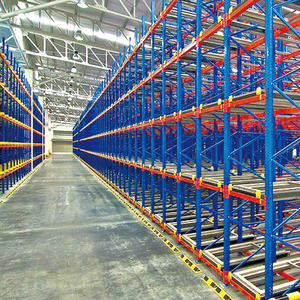 5-Deep LIFO
Reinforced Steel 5 Layer Push Back Pallet Racking Heavy Duty Efficient Goods Picking
Multi-tier nested cart dynamic push-back system engineered with heavy-duty structural steel to withstand demanding pallet throughput in bulk storage hubs.
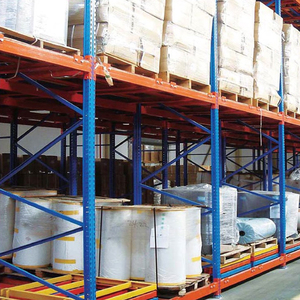 Epoxy Coated
Durable Metal Push-back Pallet Rack with Powder Coating for Warehouse Storage
Electrostatic epoxy-polyester thermoset powder-finished push-back racking featuring low-profile flanged rolling channels and high-precision steel bearings.
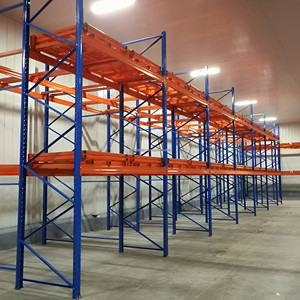 Ultra Density
High Density Storage System Vertical Racking Heavy Duty Push Back Pallet Rack
Engineered for maximizing cubic ceiling heights in UK logistics facilities, eliminating aisle congestion while guaranteeing continuous front-face accessibility.
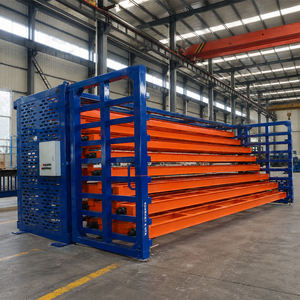 Heavy Structural
Heavy Duty Durable 6-Layer Carbon Steel Push-Back Pallet Rack Industrial Storage
Reinforced structural channel construction designed for heavy industrial palletization, automotive stamping tooling, and rigid container storage.
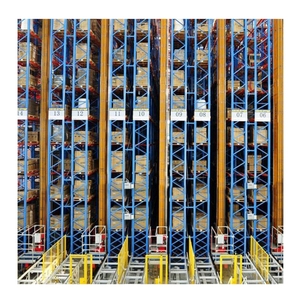 Hybrid Automation
ASRS Heavy Duty Storage Racking System with Push Back Pallet Buffers
Automated stacker crane integration featuring gravity and nested cart push-back intake lanes for high-velocity staging and cross-docking operations.
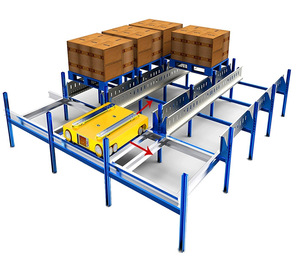 High Throughput
Automatic 5-Layer Selective Pallet Rack Steel Radio Shuttle Storage System
Ultra-deep lane automated pallet runner storage complementing push-back systems for massive volume SKU runs in cold storage and food manufacturing.
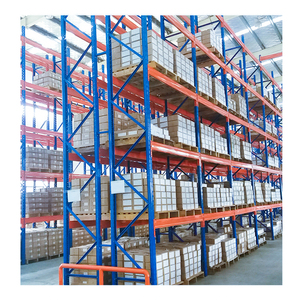 Structural Versatility
Factory Heavy Duty Selective Steel Pallet Racking System Integration
High-tensile structural pallet racking uprights and step beams configured as foundational infrastructure for push-back retrofits and picking integration.
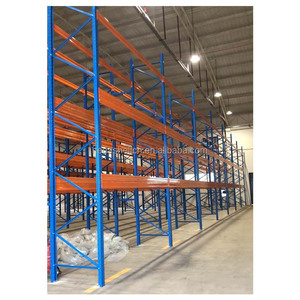 Universal Layout
Standard Heavy Duty Industrial Steel Pallet Racking Storage System
Certified cold-formed steel racking manufactured to precise dimensional tolerances, ensuring seamless integration with multi-lane dynamic push back carts.
Kinematic Principles & Structural Mechanics of Push Back Systems
An engineering breakdown of nested cart kinematics, gravitational incline ratios, low-temperature bearing dynamics, and compliance with British structural racking standards.
Low-Friction Nested Cart Mechanics
Push back pallet rack systems operate on an inclined structural rail system (typically graded between 1.5% and 2.5% slope). A series of interlocking, telescoping carts roll on heavy-duty flanged steel wheels across structural channels. When the forklift operator inserts the first pallet, it rests on the topmost nesting cart. The second pallet gently pushes the first cart backward along the incline, exposing the secondary cart beneath it.
This gravity-assisted kinetic storage eliminates the need for forklift trucks to physically enter the storage rack structure, drastically cutting structural collision risk and cycle times when compared to standard drive-in racking.
Cold-Formed & Structural Steel Integrity
Our export-grade systems utilize high-tensile Q235B and Q355B hot-rolled micro-alloyed carbon structural steel, compliant with European equivalent standards S235JR and S355JR. Upright frames are roll-formed through automated 24-station continuous rolling mills to guarantee profile precision, notch accuracy, and minimal residual stress.
Every connection point, welded cart runner, and seismic cross-brace undergoes finite element analysis (FEA) to confirm minimum safety factors under full working loads, accounting for torsional moments and impact forces generated during pallet deceleration at stopping gates.
SEMA Codes & BS EN 15512 Compliance
For British logistics operations, structural safety is strictly regulated by the Storage Equipment Manufacturers' Association (SEMA) Codes of Practice and British Standard BS EN 15512:2020 (Racking Static Design). Our systems are factory-engineered to these precise criteria, incorporating robust beam safety locks, column baseplates with double anchor bolts, and pallet safety end-stops.
Calculations explicitly define beam deflection limits (≤ L/200 as specified by BS EN 15620) under maximum rated loads, guaranteeing safe mechanical clearance between carts across long-term warehouse lifecycles.
Technical Comparison: Push Back vs. Alternative High-Density Racking Systems
Understanding the operational trade-offs between dynamic gravity-assisted systems and static or automated configurations under UK warehouse conditions.
| Racking Topology | Storage Density Index | Handling Protocol | Pallet Selectivity | Forklift Travel & Rack Damage Risk | Average UK Floor Space Utilization |
|---|---|---|---|---|---|
| Push Back Pallet Rack | High (Up to 75% increase) | LIFO (Per Lane) | High (Every lane is a discrete SKU) | Extremely Low (Forklift stays in aisle) | 65% – 75% Cubic Volume |
| Drive-In / Drive-Through | Very High (Up to 85% increase) | LIFO / FIFO | Low (Full bay tied to single SKU) | High (Truck enters narrow structure) | 60% – 70% Cubic Volume |
| Pallet Live Flow (Gravity) | Maximum (Up to 90% increase) | Strict FIFO | Moderate (Dedicated lane picking) | Extremely Low (Separate load/pick aisles) | 70% – 80% Cubic Volume |
| Radio Shuttle System | Maximum (Up to 90% increase) | FIFO or LIFO | Moderate to High | Zero Rack Collision Risk | 75% – 85% Cubic Volume |
| Wide Aisle Selective Racking | Baseline (Standard benchmark) | Universal FIFO/LIFO | 100% Immediate Direct Access | Moderate (Dependent on driver clearance) | 35% – 45% Cubic Volume |
Localized Application Scenarios Across the UK Supply Chain
From high-velocity e-commerce consolidation hubs in the Midlands to temperature-controlled seafood cold stores in Humberside, our push back systems deliver tangible operational returns.
National 3PL Logistics & FMCG Hubs
In logistics clusters spanning Daventry (DIRFT), Rugby, Northampton, and Magna Park Lutterworth, pallet velocity and rapid trailer turnarounds dictate operational viability. Push back racking allows multi-temperature 3PL operators to dedicate specific lanes to high-turnover fast-moving consumer goods (FMCG).
Because trucks pick and replenish from a single face, cross-dock cycle times are reduced by up to 35% compared to wide-aisle configurations, while lane-level SKU independence avoids stock burial.
Sub-Zero Freezer Storage (-25°C)
Operating refrigerated and frozen warehouses in Grimsby, Thorne, Wisbech, and Peterborough involves soaring electrical tariffs per cubic metre cooled. Storing air in wide aisles is financially prohibitive. Push back systems compress footprint requirements by consolidating 2 to 6 pallets deep.
Our export specifications for UK cold stores incorporate low-temperature synthetic lubricants, stainless steel sealed bearing races, and hot-dip galvanized or cryogenic-rated powder finishes to eliminate condensation corrosion.
High-Rent Urban Last-Mile Depots
Industrial land costs across Park Royal, Dartford, Heathrow, and Enfield command the highest rent per square foot in the United Kingdom. Last-mile parcel consolidators and food distribution hubs must extract maximum cubic yield from restricted building envelopes.
Push back racking allows ceiling-height integration up to 11 metres, providing maximum pallet density adjacent to dispatch bays without requiring specialized narrow-aisle turret trucks.
Brewery, Spirits & Bottling Plants
In Scotland, Yorkshire, and the North West, beverage producers manage high-tonnage pallet loads of bottled ales, spirits, and aluminium cans. Push back systems with reinforced structural channel guide rails ensure smooth rolling of heavy 1,200kg to 1,500kg pallets without cart frame deformation.
The controlled gravity descent ensures fragile glass goods arrive gently at the picking face against integrated polyurethane buffer dampers.
MHRA Regulated Bulk Staging
Pharmaceutical distribution facilities operating under MHRA Good Distribution Practice (GDP) guidelines require batch-controlled staging with full traceability. Push back racking allows single-batch dedication per lane with zero pallet overhang risk.
Closed nested cart designs prevent wooden splinters from falling into lower inventory tiers, maintaining clean-room standards required in medical-grade supply lines.
Key Development Trends Reshaping UK Racking Procurement
Navigating industrial lease inflation, post-Brexit regulatory compliance, ESG decarbonization, and intralogistics automation integration across British supply chains.
Prime Industrial Rent Inflation
UK warehouse prime rents have escalated significantly across London, the South East, and the Midlands, surpassing £15 to £25 per square foot in strategic nodes. Rather than undertaking high-capital property acquisitions or lease relocations, facility directors are turning to dynamic push-back retrofits to unlock 40% to 75% more pallet capacity within existing floorplans.
UKCA & Post-Brexit Structural Standards
Following the transition from the CE mark to the UKCA (UK Conformity Assessed) framework for structural components used in permanent construction, tier-one UK importers demand verifiable factory certifications. Our direct-export production lines operate strictly under verified ISO 9001:2015 and CE EN 1090-1 execution standards, simplifying British building control approvals.
Net Zero & Embodied Carbon Scrutiny
British institutional developers and REITs (such as Segro, Tritax, and Prologis) increasingly mandate low-carbon supply chains. We utilize scrap-recycled electric arc furnace (EAF) steel feedstocks and lead-free thermoset powder coatings, lowering the cradle-to-gate embodied carbon footprint per installed pallet position.
AMR & AGV Pick Tunnel Integration
Modern UK intralogistics blends automated guided vehicles (AGVs) with high-density push-back storage. By mounting push-back upper tiers over ground-level autonomous mobile robot (AMR) picking tunnels, facilities maintain massive reserve pallet inventory above active goods-to-person picking lines.
Factory-Direct Production & Export Infrastructure
Guangzhou HEDA Shelves Co., Ltd. provides UK project contractors, distributors, and logistics clients with direct manufacturing transparency, rapid engineering design, and guaranteed container delivery.
Bespoke CAD & 3D Modeling Within 24-48h
Our dedicated structural engineering desk takes your British building architectural DWG drawings and generates full SEMA-compliant layout proposals, beam loading load charts, and realistic 3D render walkthroughs free of charge prior to commercial commitment.
Rigorous In-House 10-Stage QC Process
From raw coil ultrasonic inspection, automated column punching, CNC roll profiling, to robotic carbon-dioxide shielded welding and multi-tank pickling and phosphating pre-treatment, every component is manufactured in-house to ensure zero tolerance deviation on job sites.
Seamless UK Freight to Felixstowe & Southampton
Direct multimodal container loading from Guangzhou/Nansha ports directly to Port of Felixstowe, Southampton, and London Gateway. We provide container packing schemes engineered to eliminate rail bending and powder-coat scratching, shipping with complete Bill of Lading, Certificate of Origin, and UK customs compliance dossiers.
Frequently Asked Questions by UK Warehouse Operators & Importers
Detailed technical, structural, regulatory, and logistics answers addressing British pallet racking procurement challenges.
Optimize Your British Warehouse Footprint with Certified Factory-Direct Engineering
Share your facility layout, pallet load profiles, and target throughput metrics. Our structural racking engineering team will calculate optimal dynamic lane configurations, prepare SEMA-compliant CAD drawings, and provide a competitive factory-direct CIF quotation within 24 to 48 hours.