Industrial Heavy-Duty Rack Portfolio Engineered for Maximum Density
Direct factory-manufactured steel racking systems engineered for high-throughput distribution hubs, manufacturing plants, and maritime terminals across Seattle, Kent, Renton, and Tacoma.
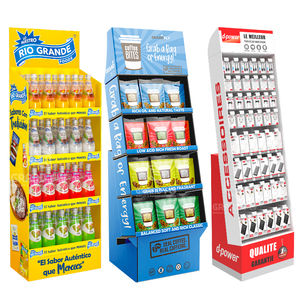
Custom POP Floor Cardboard Display Stand Supermarket Rack
Versatile, fold-flat corrugated product display engineered for quick floor deployment across grocery distribution and supermarket operations in the Pacific Northwest.
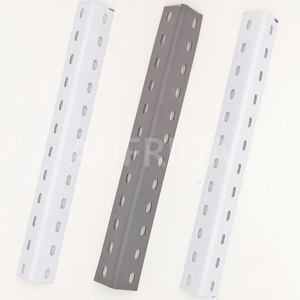
Steel Angle Bar Shelves Storage Racks Slotted Angle Rack
Modular bolted and boltless slotted angle framing systems providing adjustable light-to-medium utility picking shelves for hardware and assembly tools.
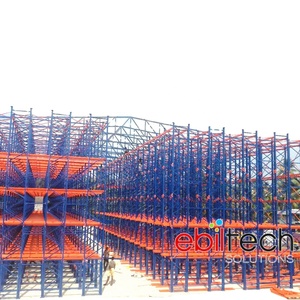
EBILTECH Clad-rack Warehouse Construction Rack Clad System
Civil-engineered rack-supported building system where rack uprights serve as the main roof and wall support, reducing overall footprint construction expenditure.
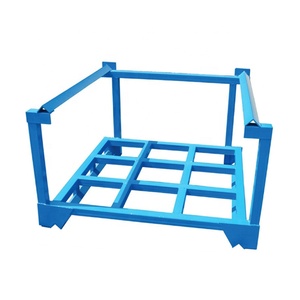
Heavy Duty Industrial Stacking Steel Shelf Storage Post Rack
Portable tubular steel stacking racks delivering dynamic multi-tier vertical storage without fixed floor anchors; ideal for seasonal Seattle shipping spikes.
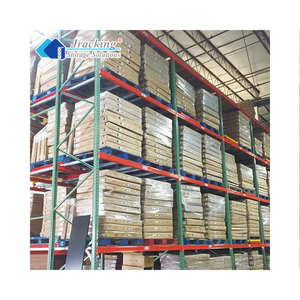
US Standard Heavy Duty Teardrop Pallet Racking System
Fully compatible US standard 2-inch teardrop punch hole connection, enabling seamless beam level adjustments, interchangeable replacement, and high load integrity.
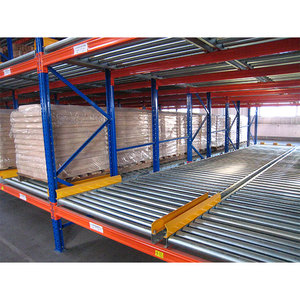
Q235 Steel 2000kg Capacity FIFO Gravity Pallet Flow Rack
Engineered inclined dynamic roller bed racking ensuring strict first-in, first-out rotation for perishable grocery, pharmaceutical, and beverage staging centers.
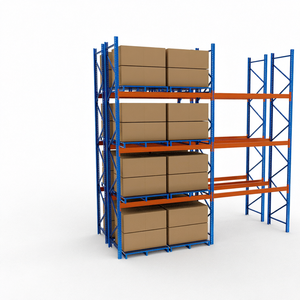
Metal Heavy Duty Selective Pallet Beam Racking System
The workhorse of Pacific maritime terminals and general e-commerce warehousing, providing immediate 100% selective accessibility to every stored unit load.
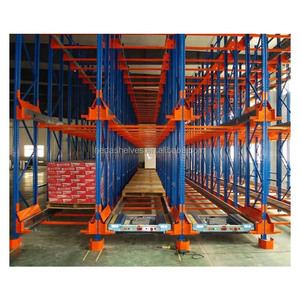
Auto Pallet Shuttle Cold Storage Racking System
Sub-zero semi-automated radio shuttle pallet systems designed for cold storage facilities in Puget Sound, slashing refrigeration cubic loss and operational run costs.
Heavy Duty Racking Engineering Tailored for Greater Seattle
Warehousing in the Puget Sound region faces unique architectural, seismic, and economic demands. From coastal maritime air to high lease costs in King and Pierce counties, our systems provide structural longevity and space optimization.
Puget Sound Cold Chain & Seafood
Processing plants and cold distribution hubs in Seattle, Bellingham, and Tacoma demand dense, temperature-resilient racking capable of running in down to -25°C environments without structural embrittlement.
- Sub-zero automated radio shuttle lanes eliminating forklift fuel exhaust in cold rooms
- Hot-dip galvanized uprights resisting moisture, ice melt, and saltwater corrosion
- High-density drive-in storage optimizing costly refrigerated cubic footage
Aerospace & Precision Tech Spares
Supporting aerospace supply vendors, precision fabricators, and robotics facilities along the Everett and Renton industrial belts with certified, heavy-capacity selective and cantilever frameworks.
- Heavy-duty cantilever racks supporting long composite extrusions and aircraft alloys
- Rack-supported multi-tier catwalk picking mezzanines for high SKU count parts
- Engineered load configurations exceeding standard RMI specifications for heavy molds
Port of Seattle Intermodal 3PL Hubs
High-turnover freight consolidators and omnichannel 3PL centers along the Kent Valley logistics corridor require rapid selectivity and scalable configurations.
- Teardrop interchangeable framing allowing fast reconfiguration as tenants change
- Reinforced lower column crash guards and heavy post protectors against forklift impacts
- Pallet flow gravity dynamic beds providing smooth FIFO buffering for dispatch
Pacific Northwest Logistics Infrastructure Trends
Warehouse design in Western Washington is shaped by strict municipal building regulations, aggressive land valuation, and Cascadia Subduction Zone seismic constraints.
Stringent Seismic Design Category D/E Compliance
Because King, Pierce, and Snohomish counties sit along seismically active fault lines, standard warehouse racking will not pass city engineering permits. Facilities must satisfy IBC 2021/2024 and ASCE 7 seismic standards. Industrial racking supplied to Seattle requires enlarged heavy-gauge baseplates, heavy duty slab anchors, and engineered horizontal and cross-diagonal bracing arrays to resist torsional seismic moments.
Kent Valley Space Constraints & Vertical Expansion
Industrial land throughout the Seattle-Tacoma metropolitan area commands some of the highest lease rates on the West Coast. Operators can no longer expand footprints outward; they must scale upward. We are seeing a sharp transition toward Very Narrow Aisle (VNA) selective configurations and multi-tier rack-supported mezzanines that unlock full 32-to-40-foot building clear heights.
Direct Factory Procurement & Lead Time Mitigation
Supply chain leaders across the Pacific Northwest are bypassing intermediate middlemen markups to source structural warehouse racking directly from specialized manufacturing factories. Factory-direct engineering ensures full customization of upright profiles, steel thickness (Q235B/Q355B certified steel), and direct PE engineering calculations tailored to local municipality requirements.
Frequently Asked Questions by Seattle Warehouse Managers
Get clear answers regarding building permits, seismic calcs, environmental coating protection, and direct factory freight to Puget Sound ports.
Do racking installations in Seattle require seismic structural permits?
Yes. The City of Seattle Department of Construction and Inspections (SDCI), along with jurisdictions in King and Pierce counties, requires building permits for pallet racking over 8 feet in height or systems carrying significant unit loads. Our engineering team provides complete PE-stamped structural calculations, anchor bolt pullout certifications, and CAD layout plans compliant with IBC and RMI specifications.
How do your coatings resist the humid Pacific Northwest coastal climate?
All structural steel components undergo a multi-stage pre-treatment bath featuring ultrasonic degreasing, acid pickling, and phosphating before receiving an automated electrostatic thermoset powder coat cured at 200°C. For unconditioned port warehouses or coastal yards, we supply hot-dip galvanized finishes that prevent rust even in high-salinity ambient air.
Are your teardrop beam and upright components compatible with existing US systems?
Yes. Our US Standard Teardrop Pallet Racking uses standard 2-inch pitch keyhole teardrop column punchings, making it completely interchangeable with mainstream North American systems. This allows easy integration into existing selective racking layouts across Kent Valley facilities.
What data is needed for a customized layout and quote?
We simply require your facility CAD layout or slab dimensions (including clear ceiling height and column locations), pallet dimensions and gross weight per unit, forklift model with mast lift height, and your operational picking profile (FIFO vs. LIFO). Our design team returns a 2D floor plan, 3D render, and capacity quote in 24–48 hours.
What are the logistics lead times for delivery directly to Seattle / Tacoma ports?
Direct ocean vessels depart regularly with containerized racking arriving at the Port of Seattle or Port of Tacoma terminals within 14–18 days port-to-port. We pack every shipping container with numbered bundles and pre-sorted hardware kits to ensure efficient unloading and assembly.
Can you supply heavy-duty structural steel rather than roll-formed profiles?
Yes. While roll-formed steel is the preferred cost-effective choice for most e-commerce setups, we manufacture structural C-channel and I-beam racking systems specifically suited for heavy industrial, lumber, manufacturing dies, and extreme impact-prone warehouse bays.
Why Industrial Operators Partner Directly With Us
Operating 30,000 square meters of precision fabrication floor space with certified quality management, we deliver factory pricing and precision structural engineering worldwide.
Dedicated to cold roll-forming, robotic welding, and automated warehouse system engineering since 2001.
Massive monthly manufacturing throughput ensuring reliable delivery schedules for large commercial distribution centers.
Complete end-to-end control from uncoiling high-tensile steel to CNC punching, forming, pickling, coating, and QA packing.
In-house structural engineers, CAD draftspersons, and intralogistics system technicians supporting your design from concept to installation.
Request an Engineered Layout & Factory Quote
Planning a new distribution footprint in Kent, renovating an intermodal warehouse near the Port of Seattle, or upgrading seismic capacity? Connect with our project engineering team for complimentary CAD layouts, capacity calculations, and factory-direct pricing.