Specialized Warehouse Systems & Engineered Configurations
Compare our heavy-duty storage matrices and custom steel frameworks engineered for New Zealand primary industries, cold distribution networks, and automated intralogistics centres.
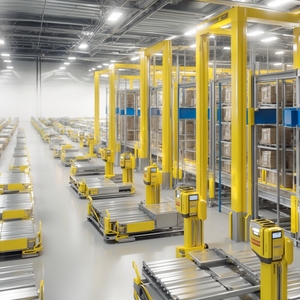
Pteris Smart Warehouse ASRS Pallet Shuttle System Automated Radio Control
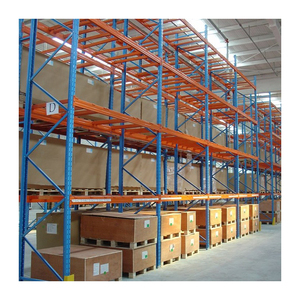
Industrial 5-Layer Heavy Duty Corrosion Protected Pallet Rack 2000kg Capacity
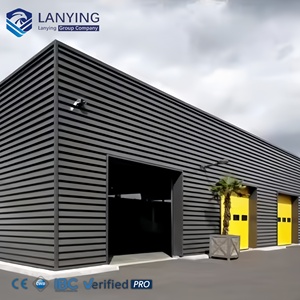
Prefabricated Steel Structure Logistics Warehouse Workshop Industrial Building
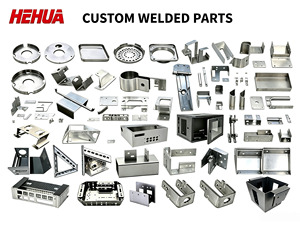
ISO 9001 Certified Stainless Steel Welded Cabinet Enclosure For Data Racks
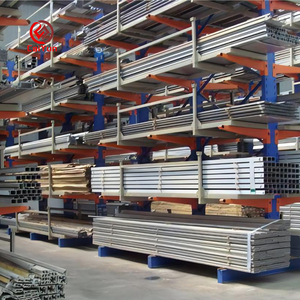
Low-Profile Cantilever Shelves for Low-Ceiling Small Parts Industrial Storage
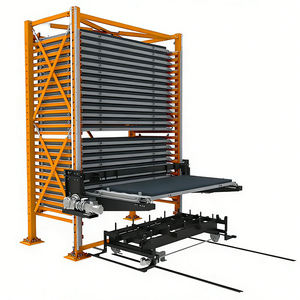
Heavy Duty Steel Sheet Metal Rack Intelligent Vertical Panel Storage Shelving
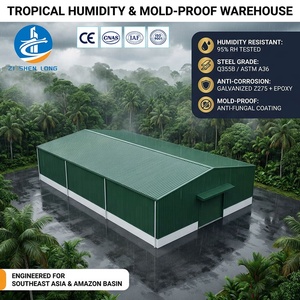
Custom Designed Prefab Warehouse Steel Structure Commercial Building
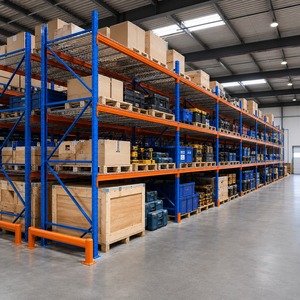
Factory Pallet Racks Q235B High Grade Steel Schwerlastregal for Logistics Hubs
Whitepaper: Engineering Dynamic Gravity Flow Pallet Racking for New Zealand Logistics
In modern high-throughput logistics, supply chains are constantly pressured to balance storage density with rapid fulfillment velocity. In New Zealand, this operational demand is intensified by distinctive geographical realities: high land acquisition costs in prime industrial precincts like Auckland's Highbrook and Christchurch's Hornby, coupled with strict structural demands dictated by the New Zealand Building Code (NZBC Clause B1 Structure) and stringent seismic standards (NZS 1170.5).
Gravity Flow Pallet Racking—commonly referred to in Australasia as pallet live storage or dynamic roller racking—provides the highest footprint utilization rate among non-automated or semi-automated systems. Operating entirely via physical gravitational forces along sloped roller tracks, the system enforces a strict First-In, First-Out (FIFO) stock rotation without requiring energy consumption or operating electronics within the deep lanes.
1. Mechanics of Dynamic Incline, Centrifugal Speed Control, and Pallet Separation
A high-performance gravity flow lane is not merely an inclined shelf; it is an engineered deceleration and kinematic system. When loaded pallets weighing between 500 kg and 1,500 kg move down an incline, potential energy converts into kinetic energy. Without precise mechanical moderation, acceleration leads to impact shock at the discharge face, risking goods damage, timber pallet splintering, and rack frame deformation.
Gradient Calibration (3.0% to 3.5%)
Precisely pitched roller tracks maintain steady descent across standard 1200x1000mm pallets and CHEP/Loscam 1200x1200mm four-way New Zealand hardwood pallets without stalling.
Centrifugal Brake Rollers
Indirect-driven internal brake rollers engage progressively with descending speed, governing pallet velocity to a safe terminal velocity of ≤ 0.3 meters per second regardless of payload variance.
Mechanical Safety Separator
An automatic end stop physically disengages line backpressure, separating the first pallet at the pick face from trailing pallets so the forklift driver can extract pallets effortlessly without binding.
The structural framework produced in our Guangzhou manufacturing base employs cold-formed Q235B and high-tensile Q355B steel grades, specifically configured to resist axial buckling under dynamic load shifts. Upright frames feature continuous omega-profile cold roll-forming with automated precision CNC punching, allowing beam adjustments at precise 50mm or 75mm increments while preserving lateral stiffness.
2. Structural Specifications & Operational Comparison
When engineering gravity flow solutions against alternative warehouse configurations such as Drive-In or Standard Selective Racking, facility engineers must analyze both space volume efficiency and labor throughput metrics. The table below outlines technical characteristics verified under our factory engineering certifications:
| Performance Parameter | HEDA Gravity Flow Racking | Drive-In Pallet Racking | Selective Pallet Racking |
|---|---|---|---|
| Inventory Movement Principle | Strict FIFO (First-In, First-Out) | LIFO (Last-In, First-Out) | Random Access / Mixed |
| Warehouse Floor Footprint Utilization | Up to 75% – 85% Active Area | 60% – 70% Active Area | 35% – 45% Active Area |
| Forklift Travel & Loading Cycle Time | Minimal (Loading / Unloading Aisle Separated) | High (Forklift drives inside storage bays) | Moderate (Travel required across every aisle) |
| Damage & Impact Risk to Frame Uprights | Extremely Low (Forklifts never enter lanes) | High (Frequent upright collisions) | Low to Moderate |
| Standard Seismic Ductility Class | Category 1 & 2 Structural Redundancy | Low Torsional Redundancy | High Torsional Flexibility |
| Suitability for Cold Chain / Temperature Controlled | Optimal (Reduces cubic refrigeration volume) | High density, slower retrieval | Low density, high refrigeration waste |
Localized Application Scenarios in New Zealand
New Zealand's export-driven economy and isolated island supply chain topology create distinct functional operating environments. Racking supplied to this market must operate reliably in varied climatic zones—from the humid maritime conditions of the upper North Island to the sub-zero chillers of South Island agricultural heartlands.
Dairy, Meat & Seafood Cold Stores
Installed extensively across Canterbury and Waikato cold hubs. Gravity flow eliminates unnecessary access aisles inside massive blast freezers operating at -25°C. The reduction in cooled cubic volume directly reduces multi-megawatt refrigeration power bills, while automated FIFO maintains strict compliance with Ministry for Primary Industries (MPI) dairy and meat shelf-life documentation.
Horticulture & Kiwifruit Packing
Operating throughout the Bay of Plenty (Tauranga / Te Puke) and Hawke's Bay fruit sectors. Gravity flow lanes provide smooth, non-crushing accumulation for high-turnover palletized fruit cartons awaiting prompt transshipment to the Port of Tauranga or Napier Port during peak autumn export windows.
FMCG & E-Commerce DC Consolidation
Situated in Auckland industrial parks (Wiri, Drury, Airport Oaks). Gravity lanes serve as active dispatch buffers directly facing outbound dock doors. Picking teams load pallets on the rear replenishment face while staging crews dispatch from the pick face simultaneously without cross-traffic or pedestrian hazards.
New Zealand Market Dynamics & Structural Compliance
Procuring warehouse racking in New Zealand is bound to the country's unique tectonic environment. Warehouses built along the Alpine Fault zone, Wellington Fault system, or Canterbury Basin cannot install standard global catalog racking without localized structural verification.
Seismic Engineering Under NZS 1170.5 & AS/NZS 4084:2023
Racking systems in New Zealand are legally classified as structural building elements under the New Zealand Building Code. Engineering calculations must account for the site-specific spectral acceleration coefficient C(T), ductility class (typically chosen between elastic response μ=1.0 or nominally ductile μ=1.25 to 1.5), and floor connection anchors drilled into concrete slabs with verified crack-incurring concrete ratings.
Our engineering design team provides complete FEA (Finite Element Analysis) modeling and documentation to support your local Chartered Professional Engineer (CPEng) in completing Producer Statements (PS1 Design):
Reinforced Base Plates
Oversized 12mm-16mm heavy steel footplates spread seismic overturning moments across post-tensioned or industrial slabs, preventing edge breakout.
High-Grade Anchoring
Supplied with ETA-certified, seismically-approved M12-M16 screw bolts or mechanical expansion studs engineered for non-cracked and cracked concrete.
X-Bracing Systems
Robust vertical and horizontal plan bracing stabilizes multi-tier gravity runs against transverse shear forces during seismic oscillations.
Roller Track Locking
Patented roller channel retaining clips prevent gravity beds from bouncing or jumping off support cross-beams during high peak ground accelerations (PGA).
Escalating Auckland Land Costs & Carbon Neutrality
With prime industrial land lease rates in Auckland exceeding $200–$260+ per square meter annually, horizontal warehouse expansion has become economically prohibitive. New Zealand logistics directors are converting standard 4-high selective racking installations into 6-high gravity flow live storage corridors, increasing volumetric density by up to 60% within existing building envelopes. Moreover, because gravity flow racking functions completely on natural gravity with zero electrical consumption for pallet conveyance, it directly aligns with corporate carbon reduction initiatives governed by New Zealand's Climate Change Response Act.
Guangzhou HEDA Shelves: Global Authority in Racking Systems
Combining 25+ years of production experience with world-class quality management, supplying turnkey storage solutions directly from our 30,000 m² factory.
Verified International Certifications
Full conformance with CE Certificate No. 2435-CPR-8605159, ISO 9001:2015 Quality Management No. 18624Q00169R0M, and RoHS environmental standards. All structural steel complies with strict mechanical yield criteria.
30,000 m² Production Capacity
Equipped with 10 automated cold roll-forming lines, automated punching machines, robotic beam welders, and dual high-speed powder coating loops generating up to 30,000 tons of structural steel storage equipment per month.
Advanced Anti-Corrosion Treatment
Every frame, beam, and bracket goes through an automated 8-stage pickling and phosphating pre-treatment bath before electrostatic powder coating, providing superior resin bonding for high-humidity coastal and coolstore environments.
Container-Optimized Sea Freight
Precision bundling, custom pallet bracing, and component numbering tailored to maximize 40ft High Cube container cube volume. Direct ocean sailings from South China ports to Ports of Auckland, Tauranga, and Lyttelton.
Complimentary 3D & CAD Engineering
Our dedicated engineering department supplies complete AutoCAD warehouse floor plans, clearance calculations, forklift turn-radius studies, and 3D realistic rendering visualization prior to capital commitment.
10,000+ Installations Worldwide
Over two decades of OEM and ODM engineering delivery for multinational 3PL corporations, retail giants, FMCG distributors, and government agricultural warehouses across 120+ destination countries.
Frequently Asked Questions by New Zealand Buyers
Essential technical, regulatory, and logistics answers for operations directors, facility engineers, and warehouse builders across New Zealand.
ComplianceDoes your gravity flow racking comply with New Zealand standard AS/NZS 4084:2023?
Yes. All structural calculations, upright section profiles, and beam connector tolerances are designed to meet or exceed AS/NZS 4084:2023 (Steel Storage Racking) specifications. Furthermore, our design calculations take into account the site seismic hazard coefficient Z and subsoil classification in accordance with NZS 1170.5, allowing local structural engineering consultants to verify the PS1 application seamlessly.
Pallet TypesCan your roller tracks accommodate standard CHEP and Loscam pallets used in NZ?
Yes. The standard New Zealand pallet format is 1200mm x 1200mm four-way entry, contrasting with standard European 1200x800mm or Asian 1100x1100mm dimensions. We engineer our roller lane widths, wheel pitch, and triple-track roller spacing specifically for the bottom runner configuration of 1200x1200mm CHEP and Loscam wooden pallets, preventing sag, runner binding, or roller deflection.
CorrosionWhat surface protection options are recommended for maritime or sub-zero coolstores?
For standard dry ambient warehousing, our 8-stage pickling and phosphating pre-treatment followed by high-adhesion electrostatic powder coating provides superior durability. For coolstores, blast freezers (-25°C), and coastal facilities within 5km of New Zealand's coastline, we provide continuous hot-dip galvanized (HDG) steel components that offer permanent protection against zinc-depleting condensation.
ShippingWhat are the standard shipping routes and transit times to New Zealand ports?
Ocean freight dispatches directly from Guangzhou/Nansha or Shenzhen container terminals. Typical port-to-port maritime transit times are approximately 14 to 18 days to Ports of Auckland, 16 to 20 days to Port of Tauranga, and 18 to 22 days to Lyttelton (Christchurch). We provide complete CIF or DDU terms, including Phytosanitary steel packing certification ensuring clean clearance through New Zealand Biosecurity (MPI).
MaintenanceHow are brake rollers and speed controllers serviced over long operational lifespans?
Our gravity flow lanes utilize heavy-duty internal centrifugal brake rollers equipped with sealed, maintenance-free precision ball bearings. They require zero pneumatic piping or power cables. Regular maintenance is limited to scheduled visual inspections of the track for debris and ensuring rollers spin freely without dirt buildup, keeping lifecycle maintenance costs exceptionally low.
InstallationDo you provide installation engineering and on-site assembly guidance in NZ?
Every shipment is packed with detailed CAD elevation diagrams, color-coded component tagging, step-by-step 3D assembly guides, and high-definition installation videos. For large-scale projects in Auckland, Waikato, or Canterbury, our technical directors can provide remote video engineering support or arrange on-site installation supervision to coordinate with your local certified riggers.