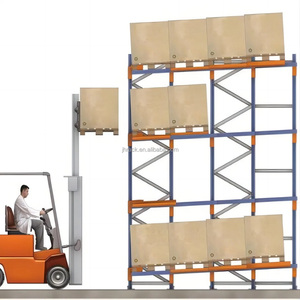
 LIFO Dynamic
Slide System Warehouse Push-Back Push Pallet Racking
2 to 6 deep nested cart dynamic storage balancing density and fast lane access without forklift tunnel entry.
Direct factory configurations manufactured under ISO 9001:2015 and CE EN 15512 standards. Custom engineered for standard European EUR-1 (800x1200mm) and EUR-2 (1000x1200mm) pallet profiles.
LIFO Dynamic
2 to 6 deep nested cart dynamic storage balancing density and fast lane access without forklift tunnel entry.
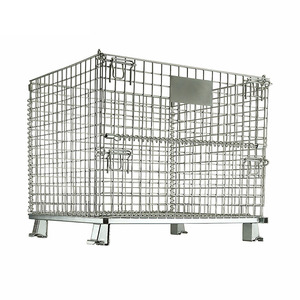 Manual Picking
Quick-assembly modular shelving for carton staging, spare parts storage, and fulfillment workstations.
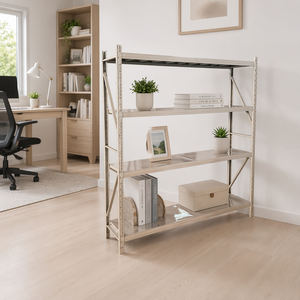 Retail Staging
Economical modular light-duty steel shelving system ideal for backroom storage and commercial retail display.
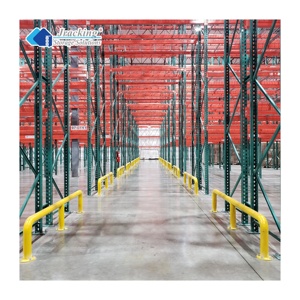 Logistics Grade
High-bay structural steel uprights engineered for intensive 3PL distribution networks and rapid turnover.
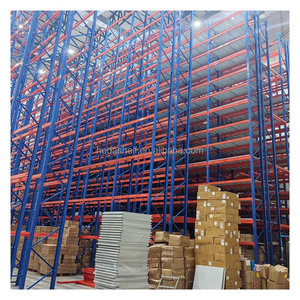 CE Certified
100% individual pallet selectivity with multi-pitch adjustability, compliant with European safety norms.
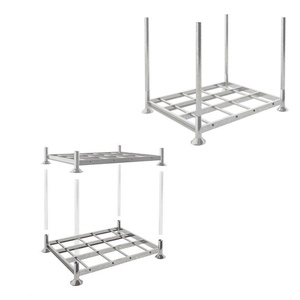 Custom Metalwork
Flexible stacking stillages and post pallets suited for non-standard machinery parts, tires, and irregular loads.
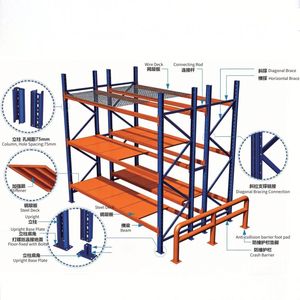 1000–5000 kg
High-strength Q235B/Q355B cold-rolled steel profile with epoxy powder finish resisting industrial degradation.
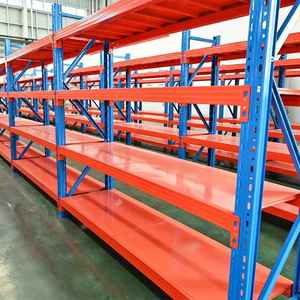 Heavy Duty Deck
Integrated steel decking units preventing point-load collapse for carton-loaded or fragmented cargo bays.
Gravity flow racking systems—widely known across European engineering circles as Pallet Flow or Live Storage racking—represent the premier mechanical solution for high-density warehousing requiring strict First-In, First-Out (FIFO) batch turnover. Operating purely on the physical principles of gravity, inertia dissipation, and mechanical friction, a gravity flow lane eliminates the energy consumption and complex maintenance cycles typical of automated automated storage and retrieval systems (ASRS), while achieving up to a 60% reduction in warehouse floor footprint compared to selective racking layouts.
In a standard gravity flow channel engineered by Guangzhou Heda Shelves Co., Ltd., palletized merchandise is loaded into dedicated feeding lanes inclined at an angle precisely calibrated between 3% and 4% (approximately 1.7° to 2.3°). The pallet glides forward smoothly toward the pick face on heavy-duty, galvanized cylindrical rollers mounted on heavy gauge structural steel frames. Crucial engineering variables define the system's operational safety and durability:
To prevent heavy pallets from exerting dynamic hydrostatic pressure on the retrieval position, our systems incorporate mechanical End-Stop Pallet Separators. When the first pallet docks at the exit stop, a robust mechanical linkage pivots upward to physically lock the second pallet in line approximately 300 mm behind the lead pallet. Only after the forklift operator safely extracts the primary pallet does the separator release the subsequent unit load. This eliminates pallet pinching, protects structural uprights, and guarantees zero load pushback on the forklift carriage.
| Storage System Type | Stock Rotation Logic | Floor Space Utilization | Selectivity Level | Forklift Travel Time | Energy / Automation Reliance |
|---|---|---|---|---|---|
| HEDA Gravity Flow Racking | 100% Strict FIFO | 80% – 85% (High Density) | High per lane (Lane dedicated) | Minimized (Dedicated load/unload aisles) | Zero electricity (Gravity-driven) |
| Selective Pallet Racking | FIFO or LIFO | 35% – 45% (Low Density) | 100% Direct Selectivity | High (Aisles between every rack line) | Manual operation |
| Drive-In Pallet Racking | Strict LIFO | 65% – 75% (High Density) | Poor (Blocked SKUs) | High (Forklift drives deep into tunnels) | Manual operation (Higher rack collision risk) |
| Push-Back Cart Racking | LIFO | 70% – 75% (Medium-High) | Moderate (By channel depth) | Moderate (Front loading only) | Gravity nested cart slide |
| Radio Shuttle Racking | FIFO or LIFO | 80% – 88% (Ultra High) | High per lane | Low (Shuttle handles internal lane) | High (Lithium-ion batteries & PLCs) |
Bulgaria’s strategic geographic position as the Southeastern gateway of the European Union demands rigorous warehouse density and high-throughput material handling.
The concentration of modern logistics developments around Sofia (Elin Pelin, Bozhurishte, Ravno Pole) serves national and cross-border Balkan fulfillment. Gravity flow systems create ultra-dense buffer lanes between receiving docks and sorting conveyors, handling high velocity FMCG SKUs without aisle congestion.
Plovdiv's booming automotive components manufacturing corridor operates on synchronized Just-In-Time (JIT) and Just-In-Sequence (JIS) supply models. Gravity flow racks facilitate zero-error FIFO flow of sub-assemblies, wiring harnesses, and stamped metal components directly into production dispatch docks.
Port-centric multi-modal temperature-controlled warehouses handling imported food goods and bulk agricultural commodities leverage live storage pallet beds. By eliminating forklift travel inside refrigerated rooms, facility owners slash thermal exchange and cubic meter refrigeration costs.
Ruse functions as Bulgaria's primary river hub connecting through Corridor VII into Romania and Central Europe. Gravity racking installed in intermodal transshipment cross-docks streamlines transshipment pallet staging, keeping freight organized by dispatch destination.
With Bulgaria’s historical leadership in dairy, sunflower oil, and wine fermentation, product aging and freshness controls are mandatory. Gravity flow channels guarantee strict expiry-date adherence (FEFO - First Expired, First Out) without manual stock audits.
Strict GDP (Good Distribution Practice) compliance requires rigorous batch trace tracking. Gravity flow pick faces integrated with pick-to-light indicators ensure zero human error in carton and pallet retrieval for domestic hospital and pharmacy delivery runs.
The industrial real estate market in Bulgaria has experienced dramatic structural transformation over the past five years. Driven by Western European nearshoring policies and supply chain resilience initiatives, speculative Class-A logistics stock in Sofia and Plovdiv has expanded continuously. However, warehouse operators face intense pressure from two concurrent headwinds: spiraling prime warehouse rental rates (exceeding €5.50 - €6.00/m² in prime Sofia logistics zones) and an acute shortage of certified forklift operators.
In response, Bulgarian logistics leaders are shifting away from basic selective racking toward automated and passive-dynamic solutions. Gravity flow racking occupies the ultimate sweet spot: it delivers dynamic automated throughput behavior without requiring expensive robotic software integration, specialized programmable logic controllers (PLCs), or dedicated electrical infrastructure.
Unlike Central European markets, warehouse projects throughout Bulgaria must strictly account for elevated seismic acceleration. The Bulgarian territory is categorized into critical seismic zones with design peak ground acceleration ($a_g$) values ranging from $0.16g$ up to $0.32g$, particularly around the Sofia Basin, Maritsa tectonic fault line (Plovdiv), and the high-intensity Kresna-Struma corridor.
Guangzhou Heda Shelves Co., Ltd. works directly with European structural calculations compliant with EN 15512:2020 (Steel static storage systems – Specification of beam-column connections), EN 15620 (Tolerances, deformations and clearances), and Eurocode 8 (EN 1998) (Design of structures for earthquake resistance). Upright column profiles are manufactured from certified structural steel (Q235B / Q355B equivalent to S235JR and S355JR under EN 10025). Frame configurations serving Bulgaria feature widened base plates, heavy-duty floor anchor studs (chemical or wedge anchors with minimum 120-160mm embedment depths), and reinforced diagonal bracing patterns designed to absorb horizontal harmonic seismic loads without brittle connection failures.
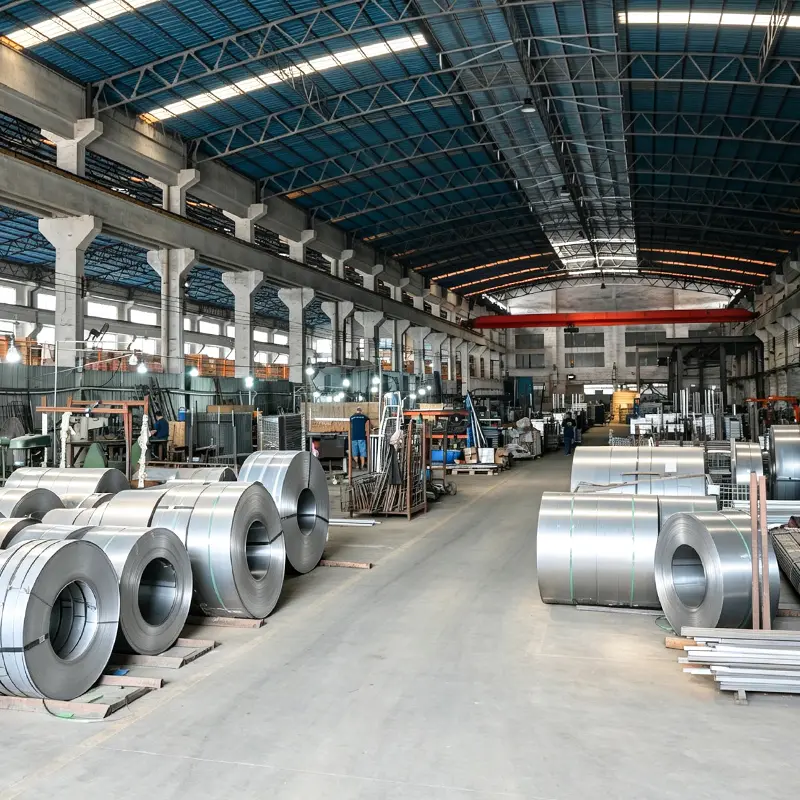
Founded in 2001, HEDA provides complete design, production, and installation engineering proven in over 120 nations.
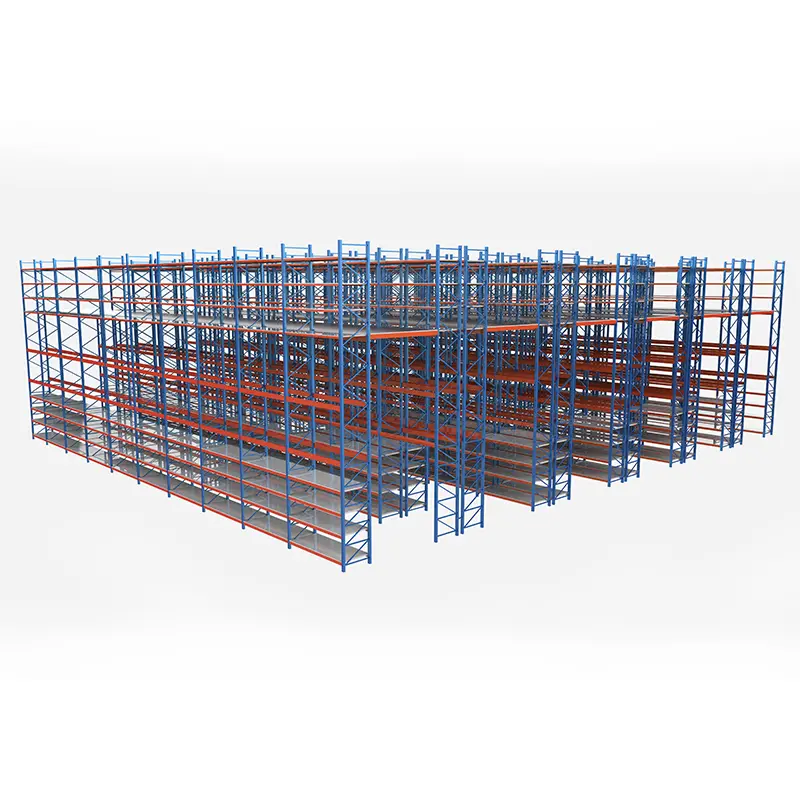
Our structural engineering office generates layout drawings, 3D visualizations, and static load verification at zero upfront cost.
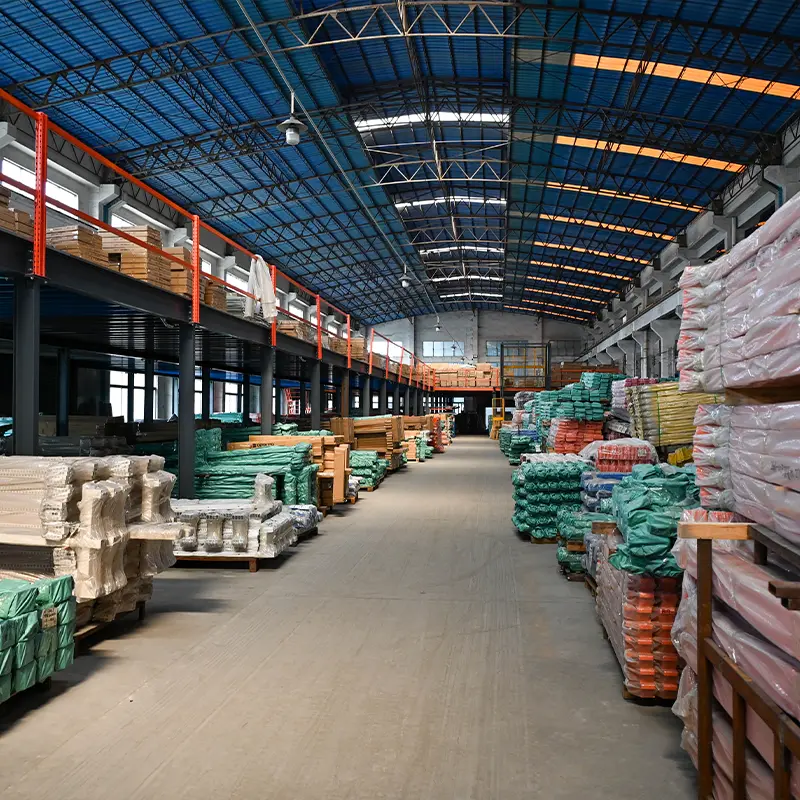
Certified CE Factory Production Control (FPC No. 2435-CPR-8605159), ISO 9001:2015, and non-toxic powder coating finishes.
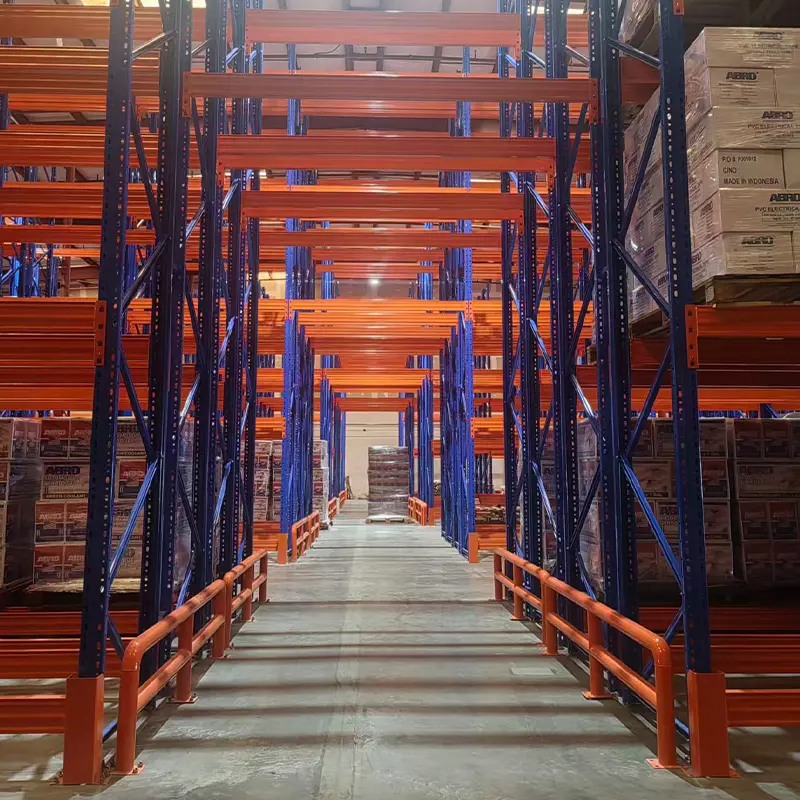
Complete component fabrication in Guangzhou with container packaging optimized for sea and rail freight savings to Bulgaria.
From raw certified steel coil slitting to automated roll forming, multi-stage surface chemical treatment, and electrostatic polymer baking.

Steel Sourcing

Precision Slitting

Auto Punching

Cold Roll Bending

Profile Forming

De-burring

Robotic Welding

Phosphating Wash

Epoxy Coating

Full QC & Pack
Purchasing warehouse structural systems direct from a manufacturer in China delivers significant financial advantages, typically yielding between 25% and 40% in total capital expenditure savings compared to domestic European intermediaries. However, successful execution requires a thorough understanding of sea freight corridors, port handling options, and European customs clearance procedures.
HEDA Shelves manages international shipping on FOB (Nansha/Shekou/Huangpu), CIF, or complete DAP (Delivered at Place) terms directly to your warehouse gate in Sofia, Plovdiv, Varna, Burgas, or Ruse. The primary maritime shipping corridors include:
| Routing Channel | Discharge Port | Transit Time (Port-to-Port) | Overland Final Leg to Destination | Ideal Project Fit |
|---|---|---|---|---|
| Direct Black Sea Route | Port of Varna / Port of Burgas | 28 – 35 Days | Local road haulage (50 – 150 km) | Eastern Bulgarian logistics centers, agribusiness, maritime cold chain. |
| Mediterranean / Aegean Hub Route | Port of Piraeus / Port of Thessaloniki (Greece) | 22 – 28 Days | Bonded cross-border road transit via Kulata border to Sofia (290 km) | Sofia Basin & Central/Western Bulgaria projects requiring fastest transit. |
| Adriatic / Intermodal Route | Port of Koper / Rijeka | 30 – 35 Days | Rail freight / Heavy road haulage | Consolidated multi-country European shipments. |
All structural steel racking components imported into Bulgaria are categorized under EU Combined Nomenclature code HS 7308.90 (Structures and parts of structures of iron or steel). Shipments from HEDA include all documentation demanded by Bulgarian National Customs Agency (Агенция „Митници“) and building inspection regulators: Factory CE Declaration of Performance (DoP), EN 10204 3.1 Mill Test Certificates for cold-rolled steel coils, detailed structural loading diagrams, and component numbering matching 3D assembly shop drawings.
Clear technical, structural, and regulatory answers addressing commercial procurement from China to Bulgaria.
Send us your warehouse CAD floor plan, ceiling clear heights, and pallet specifications. Our European engineering project desk will return a full 3D layout rendering, static capacity calculation, and detailed quotation within 24 hours.