Engineered Dynamic Roller & Industrial Racking Portfolios
Manufactured under strict ISO 9001:2015 and CE standards, our industrial roller systems deliver continuous First-In, First-Out (FIFO) material rotation, optimal volumetric density, and heavy-duty load bearing for modern warehouses in the Greater Mexico City metropolitan area.
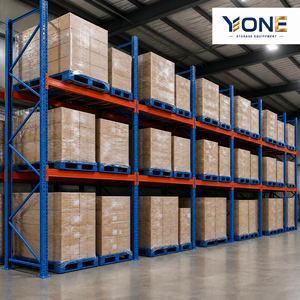
Storage Rack System Heavy Duty Installation Free Pallet Racking Steel Warehouse Adjustable Boltless 5-Tier
- Structure: Boltless Interlock
- Material: Q235B Cold Rolled
- Capacity: Up to 1,000 kg/tier
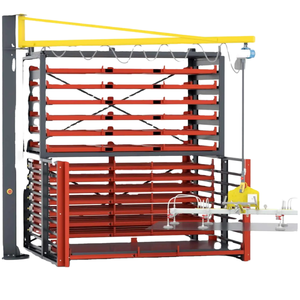
Heavy Duty Foldable 5-Layer Roll-Out Steel Plate Storage Rack Industrial Warehouse Racking System
- Roll-out Drawers: 100% Full Extension
- Handling: Overhead Crane / Hoist
- Safety Lock: Automatic Dual Latch
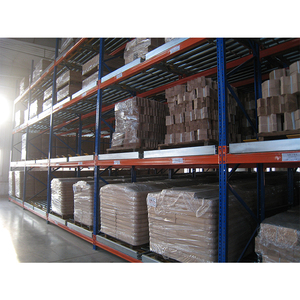
Factory Made FIFO Gravity Flow Roller Racking System Gravity Flow Rack Systems
- Flow Gradient: 3.0% – 3.5% Engineered
- Speed Control: Centrifugal Brake Rollers
- Separators: Time-delay Mechanical
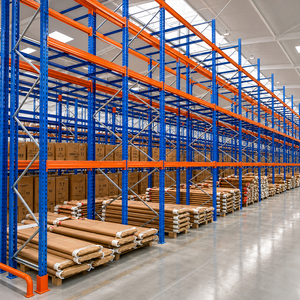
Heavy Duty Warehouse Storage Rack 1000KG 2000KG Q235B Cold Rolled Pallet Rack Schwerlastregal For Tyre Racking System
- Load Class: 1,000kg – 2,000kg/beam
- Beam Section: Custom Box Beam Profile
- Coating: Electrostatic Epoxy 80µm
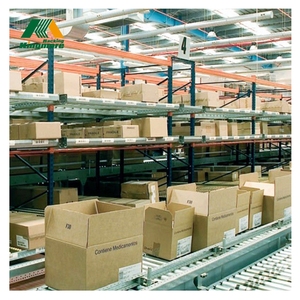
Customized Gravity Carton Flow Pallet Roller Rack System
- Track Type: Aluminum / Sheet Rollers
- Ergonomics: Integrated Tilt Shelf
- Application: Split-Case Order Picking
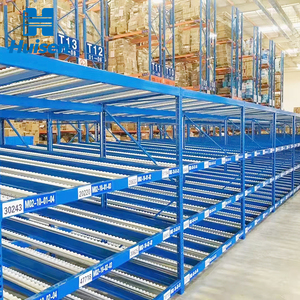
Automated Adjustable Durable Heavy Duty High Density Gravity Roller Shelves Steel Flow Rack Shelving System for Warehouse
- Upright Pitch: 50mm / 75mm Adjustable
- Lane Depth: Up to 20 Pallets Deep
- End Stops: Shock-Absorbing Steel
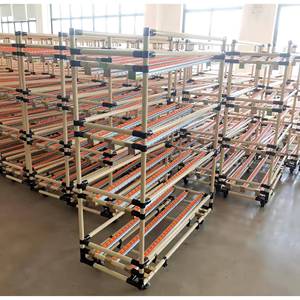
AOCHEN Industrial Collapsible Adjustable Gravity Roller Shelves Steel Flow Rack Shelving System High-Strength
- Framework: Reinforced Structural Ribs
- Roller Diameter: Ø38mm / Ø50mm Solid Steel
- Safety Factor: 1.5 Design Limit Ratio
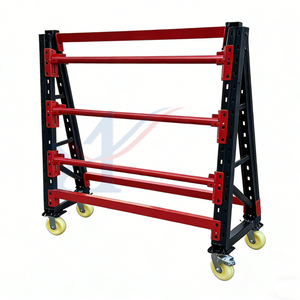
Customized Medium Duty Metallic Roller Rack with Wheels 3-Layer Adjustable Height Storage Rack for Industrial Use
- Configuration: 3-Tier Flow with Casters
- Mobility: Industrial Polyurethane Wheels
- Function: Line-side Kanban Feed
Kinetic Mechanics and Precision Engineering of Roller Racking Systems
Dynamic storage systems, commonly classified as gravity flow or pallet live storage, rely on natural gravitational forces to propel palletized unit loads or small-format cartons down an inclined wheel or roller track. Operating on an engineered decline gradient ranging between 2.5% and 3.5% (approximately 1.5° to 2.0° from horizontal), these systems eliminate the requirement for powered mechanical drive chains, internal conveyance motors, or intrusive forklift truck transit within deep storage corridors.
For supply chain operators, logistics directors, and industrial engineers serving Mexico City (CDMX) and the wider State of Mexico (Edoméx), achieving an optimized balance between rolling inertia, continuous descent stability, and pallet integrity demands rigorous mechanical calibration.
A high-performance dynamic flow bed integrates three mission-critical mechanical subsystems:
Centrifugal Brake Rollers
Directly mounted along the roller bed track at predetermined intervals, centrifugal speed controllers counter continuous acceleration. Without braking, a 1,200 kg standard GMA or CP-1 pallet traveling along a 15-meter lane would reach catastrophic terminal velocities. Our braking rollers govern terminal rolling speeds at an invariant, controlled rate of 0.25 to 0.30 meters per second.
Mechanical Pallet Separators
At the extraction/pick face, tremendous line pressure accumulates as trailing pallets press downward against the leading unit. Our automated, zero-energy mechanical separation device mechanically disengages the second pallet in line by a buffer gap of 450 mm. This isolates the discharge pallet, eliminating extraction back-pressure and permitting safe forklift clearance.
Triple-Roller Impact Entry Beds
Pallet placement by standard counterbalance or reach trucks generates substantial impact shock loads. The entry loading zone utilizes heavy-duty cold-formed triple steel roller assemblies with external shock dampeners and reinforced guide brackets to absorb drop impacts, preventing track deflection and ensuring instantaneous pallet self-centering.
From a metallurgical perspective, our structural profiles are fabricated using high-yield-strength Q235B cold-rolled structural steel (yielding an ultimate tensile strength exceeding 375–500 MPa). Upright frames are continuous cold roll-formed into closed-omega configurations with precision 50mm or 75mm tear-drop or beam connection slots, providing exceptional torsional rigidity against asymmetric dynamic rolling loads.
Mexico City Industrial Dynamics: Density Demands in the CTT Corridor and Vallejo
The macroeconomic phenomenon of nearshoring—accelerated by the USMCA (T-MEC) trade framework and international supply chain relocation—has produced unprecedented industrial real estate pressures across the Metropolitan Area of the Valley of Mexico (ZMVM). Industrial vacancy rates across prime submarkets have compressed to historical lows below 1.5%, while land acquisition costs in established logistics nodes have surpassed record thresholds.
Modern distribution operators can no longer expand horizontally. Efficiency requires volumetric cubic optimization. Roller racking configurations (gravity pallet flow and carton flow) solve this exact challenge by condensing deep storage tracks, eliminating multiple intermediate forklift access aisles, and yielding a 60% to 75% footprint reduction compared to conventional selective pallet racking layouts.
| Logistics Submarket (CDMX / Edoméx) | Dominant Industry Sector | Predominant Pain Point | Engineered Solution Implemented | Spatial Efficiency Gain |
|---|---|---|---|---|
| Cuautitlán Izcalli & Tepotzotlán (CTT) | Omnichannel Retail & Big-Box 3PL | Extreme throughput requirements & pallet bottlenecking | High-density 12-to-18 deep FIFO pallet roller lanes with safety stops | +68% Cubic Utilization |
| Vallejo (Azcapotzalco, CDMX) | Urban Last-Mile Fulfillment & FMCG | Micro-fulfillment constraints, high cost per square meter | Multi-tier carton flow racking combined with conveyor line feeds | +120% Pick Locations |
| Tlalnepantla & Naucalpan | Pharmaceutical & Medical Devices | Strict COFEPRIS expiration compliance & batch control | FIFO gravity lanes preventing batch mixing and human handling error | 100% Expiry Rotation |
| Toluca / Lerma Corridor | Automotive Tier-1 & Tier-2 Suppliers | Just-in-Time (JIT) line-side delivery, fluctuating SKU sizes | Heavy-duty carton roller tracks with custom width dividers & return lines | -45% Cycle Time |
Seismic Engineering Compliance under NTC-CDMX 2023 Regulations
Nowhere is structural integrity more critical than in Mexico City. The metropolitan basin rests over an ancient lacustrine bed characterized by unconsolidated clay deposits (Zone III - Lacustrine/Soft Soil). During high-magnitude subduction earthquakes along the Pacific trench (Guerrero and Michoacán gaps), long-period seismic wave resonance triggers severe ground motion amplification.
Racking systems inside CDMX cannot be treated as static furniture; they behave as dynamic, highly loaded, top-heavy steel structures. Under the newly enacted Normas Técnicas Complementarias para Diseño por Sismo del Reglamento de Construcciones para el Distrito Federal (NTC-CDMX 2023), alongside seismic racking directives from the Rack Manufacturers Institute (RMI MH16.1) and European Standards EN 15512, our engineering team implements specialized seismic structural enhancements:
High-Ductility Seismic Baseplates
Standard 100x100mm floor baseplates are replaced with enlarged, hot-forged structural plates (up to 200x200mm, thickness ≥ 12mm) featuring dual-anchoring slots. This dissipates concentrated base moments into post-tensioned floor slabs without shearing concrete anchor studs under cyclic dynamic loading.
Dynamic Sloshing & Pallet Inertia Dampening
During seismic excitation, gravity flow pallets can rock or break track contact. Our tracks feature heavy-duty steel side containment flanges (≥ 65mm height) and bidirectional anti-jump mechanical retainers that physically prevent rolling pallets from dislodging from the roller bed during peak lateral accelerations.
Structural K-Bracing & Portal Frames
To resist torsional racking deformation along deep flow tunnels, cross-aisle bracing utilizes robust cold-formed tubular K-bracing and top horizontal portal ties. Structural connection joints utilize Class 8.8 and 10.9 high-tensile structural bolts, ensuring certified non-linear ductility ratios (Q ≥ 2.0).
High-Density Warehouse Racking Systems: Architecture Trade-Offs
Selecting the optimal warehouse racking topology requires evaluating space utilization, inventory rotation protocols, operational velocity, and total lifecycle investment. The matrix below benchmarks our CE-certified Gravity Roller Flow Racking against legacy storage formats common across Mexican supply chain facilities.
| Performance Metric | Gravity Roller Flow (FIFO) | Selective Pallet Rack | Drive-In Racking (LIFO) | Radio Shuttle Racking |
|---|---|---|---|---|
| Floor Space Utilization | High (≥ 75%) | Low (35% – 40%) | High (65% – 70%) | Very High (75% – 85%) |
| Stock Rotation Protocol | Strict FIFO (Continuous Flow) | Selective Access | Strict LIFO | Configurable FIFO / LIFO |
| Forklift Aisle Demand | Only 2 Aisles (Load / Unload) | Aisle between every rack row | One access face (Shared) | Only 2 Aisles (Load / Unload) |
| Forklift Impact Exposure | Negligible (External only) | Moderate (Continuous transit) | High (Trucks enter rack structure) | Low (External transfer face) |
| Throughput Velocity | Immediate gravity indexing | Limited by forklift travel | Slow; multi-pallet reversing | High automated transit |
| Power / Battery Dependence | Zero (Pure Gravitational Physics) | Zero | Zero | High (Lithium batteries / electronics) |
| Seismic Performance in CDMX | High (Continuous internal damping) | Standard | Critical (Low lateral stability) | High (Integrated guide rails) |
| Payback Horizon (ROI in CDMX) | 12 to 18 Months | Baseline Reference | 18 to 24 Months | 30 to 48 Months |
Global Engineering Prowess • Guangzhou Heda Shelves Co., Ltd.
With an unbroken manufacturing legacy originating in 2001, Guangzhou Heda Shelves Co., Ltd. stands as a premier global manufacturer and exporter of heavy-duty warehouse storage solutions, industrial shelving, dynamic roller racking, and structural mezzanine architectures. Our specialized engineering supply chain directly serves contractors, multi-national logistics developers, and commercial distributors throughout Mexico City, Guadalajara, Monterrey, and Querétaro.
Certified Quality Verification: Independent Regulatory Proof
When procurement officers and licensed structural engineers (Peritos en Desarrollo Urbano y Seguridad Estructural) in Mexico City approve large-scale logistics infrastructure, unverified claims are unacceptable. Our systems hold internationally recognized, verifiable credentials:
CE Certification (EN 1090 / CPR)
Certificate No. 2435-CPR-8605159: Confirms strict compliance with European structural steel execution standards (EN 1090-1 / EN 1090-2), authorizing factory production control, load rating compliance, and European Conformity traceability.
ISO 9001:2015 Quality System
Registration No. 18624Q00169R0M: Third-party verified quality management protocol governing raw material spectrometer inspection, automated laser cutting tolerances, robotic weld testing, and defect prevention.
RoHS Environmental & Safety Compliance
Ensures all powder finishes, electro-galvanized roller coatings, and polymer components are free from toxic heavy metals (lead, hexavalent chromium, cadmium), meeting stringent international pharmaceutical and food-grade safety standards.
The 10-Step Controlled In-House Manufacturing Sequence
To eliminate metallurgical inconsistency and structural vulnerabilities, 100% of our upright columns, load beams, roller track profiles, and accessory brackets undergo a continuous 10-step quality assurance manufacturing flow before containerized consolidation:
Direct Mill Sourcing
Certified Q235B / Q355B hot-rolled strip steel coils tested for yield, elongation, and chemistry.
Precision CNC Slitting
High-speed automated coil slitting and longitudinal cutting to sub-millimeter dimensional tolerances.
Column Slot Punching
Multi-ton mechanical presses produce 50mm/75mm slot patterns with precision pitch calibration.
Continuous Cold Rolling
18-to-24 station roll-forming lines progressively shape closed-omega and step-beam profiles.
Flying Hydraulic Shearing
Synchronized flying cut-off units cut structural members to exact warehouse ceiling heights.
Mechanical Polishing
Automatic edge deburring and automated orbital polishing remove burrs, weld spatter, and sharp corners.
CO₂ Shielded Welding
Robotic multi-axis welding of beam end connectors ensures continuous weld penetration and zero voids.
Pickling & Phosphating
Full 7-stage chemical immersion cleans oil, removes scale, and deposits an iron-phosphate anti-corrosion barrier.
Electrostatic Powder Coat
Automated Swiss Gema powder application guns deposit 70–90µm polyester coating, cured at 200°C.
QC & Ocean Bundling
Thickness verification, cross-hatch adhesion testing, wooden-cradle palletizing, and container packing.
Pacific Ocean Route Optimization • Port of Manzanillo to CDMX Dry Ports
Exporting structural steel systems across the Pacific to Mexico City requires freight containment engineering and meticulous customs planning under Mexican SAT / Aduanas regulations. Having shipped thousands of TEUs internationally, our global trade operations team guarantees end-to-end containerized integrity.
Maritime Pacific Corridors
Direct ocean vessels depart from Guangzhou / Nansha / Shenzhen ports with direct calls at the Port of Manzanillo (Colima) or Lázaro Cárdenas (Michoacán). Direct Pacific transit spans 18 to 24 calendar days, offering substantial time savings compared to Atlantic shipping channels.
Intermodal Rail & Highway to CDMX
From Manzanillo, shipments transfer to bonded rail (Ferromex) directly to the Pantaco Intermodal Dry Port in Azcapotzalco, CDMX, or move via specialized double-trailer flatbed road carriers over the Toluca-Mexico Highway into the CTT corridor (Cuautitlán, Tepotzotlán, Tultitlán).
Customs Documentation & Tariffs
We supply complete, audited documentation for your Mexican Customs Broker (Agente Aduanal): compliant commercial invoices, packing lists with net/gross weights per structural bundle, Mill Test Certificates (MTC), CE Declaration of Performance, and certified Certificates of Origin under HS Code 7308.90.
Frequently Asked Questions from Procurement Engineers in Mexico
Clear, authoritative answers addressing import tariffs, seismic structural verifications, floor slab considerations, and custom configurations for warehouse projects throughout Mexico.
Q1 How do our engineers adapt roller racking designs to Mexico City's soft subsoil zones?
Every engineering layout destined for Mexico City undergoes seismic dynamic modeling under NTC-CDMX standards. We adjust member thicknesses, incorporate heavy-duty baseplates, calibrate the seismic force coefficient (Cs) according to your specific borough (e.g., Azcapotzalco lakebed vs. Tlalnepantla transition zone), and provide structural calculation packages verified for seismic resistance.
Q2 What are the import procedures, tariffs, and HS classifications for Mexican entry?
Steel warehouse racking falls under Harmonized Tariff Schedule (HTS) Code 7308.90.99. Your company or nominated customs agency will utilize your active Padrón de Importadores. We supply complete commercial documentation, packing lists detailing individual item numbering, and mill material test certificates (MTC) to facilitate streamlined clearance through Manzanillo or Lázaro Cárdenas.
Q3 Can your roller racking systems accommodate non-standard Mexican pallet dimensions?
Yes. While standard 48x40-inch (1,016x1,219mm) GMA and CP-1 wooden pallets predominate in Mexican consumer distribution, our gravity roller tracks are custom-engineered. We adjust track centerlines, customize cylindrical roller face lengths, and vary wheel spacing to accommodate plastic pallets, metal tubs, wire cages, and European 1,200x800mm formats within the same facility.
Q4 How does gravity flow compare to Radio Shuttle systems regarding operational cost in CDMX?
While Radio Shuttle systems deliver high density, they rely on complex electrical shuttles, sensitive lithium battery units, and dedicated electronic sensors vulnerable to dust, vibration, and component failure. Gravity roller racking utilizes zero electricity, operates continuously without maintenance shutdowns, and achieves equivalent density at a 40% to 50% lower initial capital expenditure.
Q5 What slab thickness and concrete compressive strength (f'c) are required?
For standard gravity roller rack installations (beam heights ≤ 8 meters), a concrete floor slab of 150mm to 200mm thickness with a minimum compressive strength of f'c ≥ 250 kg/cm² is typically sufficient. For taller, multi-tier flow configurations in high-seismic zones, we coordinate with your general contractor to calculate exact anchor bolt pull-out and shear stresses.
Q6 Do you provide installation supervision and technical documentation in Mexico?
Yes. Every overseas shipment is accompanied by detailed CAD shop drawings, piece-marked assembly diagrams, and step-by-step video installation protocols. For major distribution centers across the CTT corridor, we provide on-site technical installation supervisors or work directly with local Mexican racking installation contractors to oversee alignment and safety certification.
Design Your High-Density Logistics System with Certified Engineers
Transform your warehouse storage density across Mexico City and the State of Mexico. Send us your architectural floor plans, clear building ceiling heights, and pallet load profiles. Our engineering office delivers comprehensive CAD layouts, 3D structural renderings, and budgetary proposals within 24 hours.
Inquire Now