Featured Industrial Racking & High-Density Storage Solutions
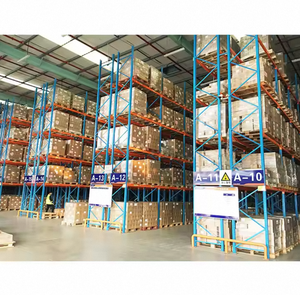
Engineered for strict European mechanical standards, our comprehensive warehouse racking portfolio accommodates heavy structural payloads, narrow aisle operations, and high-density gravitational push back configurations.
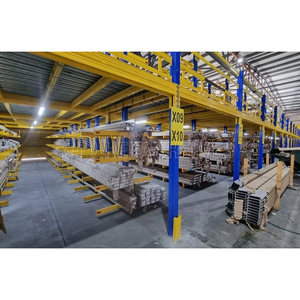
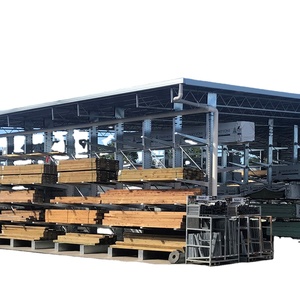
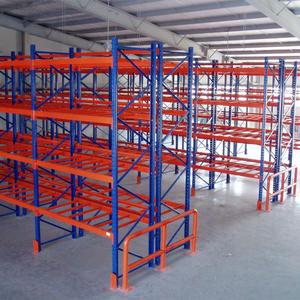
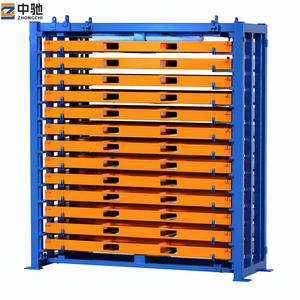
Structural Principles of Push Back Racking Systems
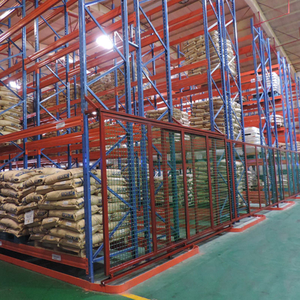
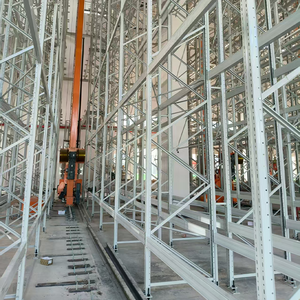
Push back pallet racking is an advanced, high-density accumulator storage system engineered on a dynamic inclined rail track. Pallets are deposited via conventional lift trucks onto nested steel carts running on heavy-duty low-friction bearings. As subsequent pallets are introduced into the lane, the lift truck operator gently pushes the preceding pallets back along the inclined channel, revealing the next nested cart.
Operating under the Last-In, First-Out (LIFO) inventory cycle, unloading utilizes gravitational kinetics: when the front pallet is retrieved, the nested carts behind gently glide downward to the pick face at a controlled speed. This architecture eliminates the need for lift trucks to physically enter the storage bay—mitigating structural impact hazards while increasing pallet space utilization by up to 75% compared with conventional selective rack layouts.
Mechanical Engineering Advantages
Our push back systems feature structural hot-rolled channel frames and precision laser-cut nesting cradles designed for maximum stability and minimal maintenance:
- 2 to 6 Pallet Deep Lanes: Configurable depths up to 1,500 kg per pallet payload capacity.
- Encapsulated Flanged Wheels: Solid machined steel wheels fitted with sealed industrial bearings prevent derailment.
- Low Overall Profile: Nested carriage stack height under 150mm optimizes vertical warehouse clearance.
- Self-Centering Guide Rails: Integral guides ensure balanced pallet alignment throughout descent.
Localized Application Scenarios Across Switzerland
Industrial real estate in Switzerland is constrained by strict zoning laws, topographical boundaries, and premium leasing rates. From the Mittelland logistics corridor to the pharmaceutical valleys of Basel, our CE-certified push back racking maximizes warehouse cubic capacity without physical footprint expansion.
Basel & Muttenz Life Sciences & Pharma Hubs
Pharmaceutical clusters throughout Canton Basel-Stadt and Basel-Landschaft demand cold storage optimization between -20°C and 4°C. Push back racking reduces refrigerated cubic air space requirements while sustaining isolated lot storage for active pharmaceutical ingredients (APIs) and finished packaging.
- Cold-grade structural steel resisting low-temperature embrittlement.
- Non-shedding sealed bearing systems compliant with cleanroom environments.
Mittelland (Olten, Hägendorf & Aarau) Logistics Nodes
As the central distribution spine connecting Zurich, Bern, and Basel, Mittelland 3PL hubs handle continuous consumer goods turnover. Multi-lane push back racking allows fast replenishment of identical SKUs per lane without obstructing high-velocity throughput aisles.
- 3 to 5 deep carts optimizing standard Euro Pallets (800x1200mm).
- Heavy impact column footers mitigating forklift approach damage.
Watchmaking & Precision Micro-Mechanics (Jura Arc)
Precision micro-technique, watch component manufacturers, and surgical instrument producers across Neuchâtel, Biel/Bienne, and Le Locle require high-density storage for standardized raw brass bar crates, stainless steel blanks, and precision stamped sub-assemblies.
- Tailored cart profiles accommodating heavy steel bin totes and mini-pallets.
- Electrostatic powder coating free from volatile residues or toxic outgassing.
Full Compliance with EN 15512 & Swiss SIA 261 Codes
Deploying racking infrastructure in the Swiss Confederation requires adherence to strict structural integrity, seismic stability, and workplace safety directives overseen by SUVA (Schweizerische Unfallversicherungsanstalt).
CE Mark: 2435-CPR-8605159
Certified in accordance with EN 1090-1 execution of steel structures. Complete material traceability 3.1 mill test certificates, factory production control (FPC), and third-party notified body auditing.
SN EN 15512 & EN 15620
Finite element structural calculations governing upright deflection limits, connection stiffness, and dynamic gravitational slope engineering, preventing cart runaway or pallet binding under continuous duty.
SIA 261 Seismic Design
Engineered to Swiss seismic zone requirements (specifically Valais, Basel, and Central Switzerland). Reinforced base plates, high-tensile Hilti anchors, and vertical bracing frames counteract dynamic seismic acceleration.
SUVA Safety Integration
Integrated backstops, pallet stop barriers, side safety guide rails, and high-visibility load warning plaques calibrated in accordance with SN EN 15635 warehouse user safety mandates.
| Storage System Type | Floor Space Utilization | Access Selectivity | SKU Specialization | Handling Cycle Speed | Forklift Impact Risk |
|---|---|---|---|---|---|
| Push Back Racking (Nested Carts) | 70% – 75% High Density | Lane-Level Selectivity (LIFO) | Moderate to High SKUs (2-6 pallets/SKU) | Fast (No rack entry required) | Minimal (Outer bay operation) |
| Selective Pallet Racking | 40% – 45% Low Density | 100% Immediate Direct Access | Infinite SKUs (Single pallet lots) | Standard | Moderate (Frequent aisle travel) |
| Drive-In Racking | 75% – 80% Maximum Density | Block-Level Selectivity (LIFO) | Very Low SKUs (Homogeneous lots) | Slow (Mast travel inside bay) | High (Frequent vehicle mast impacts) |
| Radio Shuttle Racking | 80% – 85% High Density | Channel Selectivity (FIFO/LIFO) | Medium to High Batch Lots | Automated Fast | Negligible (Shuttle carrier inside) |
Logistics Trends Reshaping Swiss Warehousing
Switzerland’s strategic position as the heart of European rail and road freight corridors (Trans-European Transport Network - TEN-T) combines with severe commercial land scarcity to mandate innovative storage engineering.
Compaction Driven by High Land Values
With industrial land costs in the Zurich, Geneva, and Lake Geneva (Vaud) basins ranking among the highest in Europe, warehouse operators are retrofitting existing facilities. Push back racking transforms legacy standard-aisle buildings into high-density storage engines without structural expansion.
Sustainability & Swiss Minergie Standards
Swiss enterprises commit to aggressive decarbonization targets. Push back racking is a 100% passive kinetic mechanism: it consumes zero electrical power during operation, requiring no batteries or cables while reducing heated or cooled warehouse building volume by up to 35%.
AGV & Reach Truck Hybrid Operations
Modern Swiss facilities are transitioning to Autonomous Guided Vehicles (AGVs) and precision reach trucks. Our push back push faces are engineered with rigid laser alignment stops and optical sensors to facilitate automatic pallet deposit and retrieval by robotic mast systems.
Engineered Precision: Guangzhou Heda Shelves Co., Ltd.
Founded in 2001, Guangzhou Heda Shelves Co., Ltd. is a premier global racking manufacturer operating a specialized 30,000 m² automated production base with over 300 experienced engineers and skilled technicians. We deliver over 30,000 tons of structural steel storage systems each month, serving EPC contractors, distribution logistics operators, and retail enterprises across 120+ nations.
- High-Strength Certified Steel: High-tensile Q235B and Q355B structural coil steel strictly verified by continuous batch spectrometry and physical elongation stress testing.
- 10-Stage Surface Anti-Corrosion Treatment: Automated ultrasonic degreasing, acid pickling, phosphating, and electrostatic powder coating cured at 200°C ensures scratch and corrosion resistance under demanding conditions.
- Free Engineering CAD & 3D Calculations: Dedicated structural engineering team provides complete Swiss SIA 261 load calculations, beam deflection checks, and 3D architectural models at no charge prior to procurement.
- Comprehensive Export Protocols to Switzerland: Experienced with multimodal sea-rail logistics via Hamburg, Rotterdam, or Antwerp into inland Swiss dry ports (Basel, Zurich, Chiasso) under DAP/DDP incoterms with complete EUR.1 support.
Accredited Quality Management
Our manufacturing and structural engineering systems undergo continuous auditing by accredited European testing bodies:
Frequently Asked Questions for Swiss Buyers
Direct answers concerning structural calculations, Swiss import protocols, customs tariffs, SIA standards, and installation supervision.
Does your racking meet Swiss building code SIA 261 seismic requirements?
Yes. Although Switzerland is in an intraplate earthquake region, Cantons such as Valais, Basel, and sections of the Alpine foothills carry strict seismic requirements under Swiss Standard SIA 261 (Actions on Structures). Our structural team supplies project-specific static calculations, incorporating enlarged floor footplates, dual-anchoring arrays, and heavy X-bracing tailored to local ground acceleration (ag) factors.
Can push back systems handle non-standard Swiss or industrial pallets?
Our push back carts are custom-engineered to handle both standard Euro Pallets (EPAL 1: 800 x 1200 mm), ISO Pallets (EPAL 2 / EPAL 3: 1000 x 1200 mm / 1200 x 1200 mm), and specialized metal containers or stillages. Each nested cart features interior support cross-members and anti-skew lips to prevent uneven load distributions or defective bottom boards from causing pallet hang-ups.
How are freight customs, VAT, and Swiss import clearances handled?
Switzerland is not part of the EU Customs Union, meaning imports require customs clearance through the Federal Office for Customs and Border Security (FOCBS / BAZG). We deliver under flexible Incoterms including CIF (Rotterdam/Basel port) or DDP (direct to warehouse door in Zurich, Bern, Lausanne, etc.), providing full commercial invoices, packing lists with net/gross weights, and preferential origin documentation for smooth Swiss MWST (VAT) processing.
What is the required maintenance protocol for push back nested carts?
Because our push back systems rely on mechanical gravity without electric motors, pneumatic compressors, or hydraulic pumps, maintenance is minimal. Annual inspections following SUVA guidelines and SN EN 15635 simply involve checking wheel bearings for smooth rotation, verifying clear track channels, checking anchor bolt torque, and ensuring pallet safety stops are unbent.
Can push back racking operate efficiently in cold storage freezers?
Yes. Push back racking is an ideal solution for low-temperature applications down to -30°C in Swiss food distribution and life science deep freeze storage. We equip cold store units with low-temperature synthetic lubricants inside the sealed bearings and specify special structural steel grades tested for Charpy impact toughness at sub-zero temperatures.
Do you provide professional assembly support within Switzerland?
Every racking system shipment is accompanied by sequential numbered component tags, comprehensive CAD assembly blueprints, and 3D installation videos. For large Swiss commercial logistics installations, we can dispatch factory site managers for on-site supervision or collaborate with certified local Swiss installation contractors to guarantee SUVA inspection sign-off.