Featured Heavy-Duty Pallet, Shuttle & Dynamic Flow Racks
Precision-engineered cold-rolled Q235B steel frameworks, dynamic roller rails, and multi-tier picking architectures compliant with ISO 9001 and CE EN 15512 safety protocols.
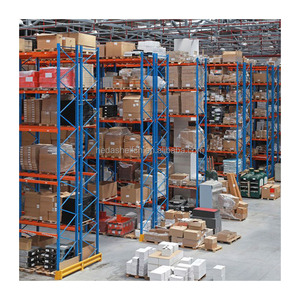
CE Industrial Selective Pallet Racking System
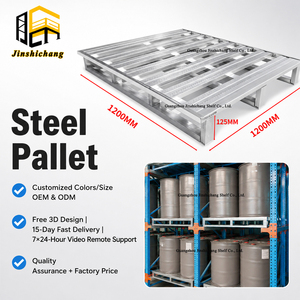
Heavy Duty 1200x1200mm Structural Metal Pallet
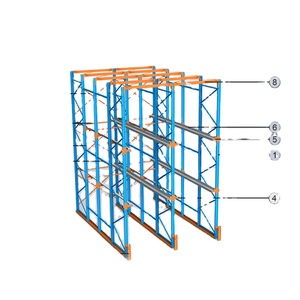
Drive-In / Drive-Through High Density Racking
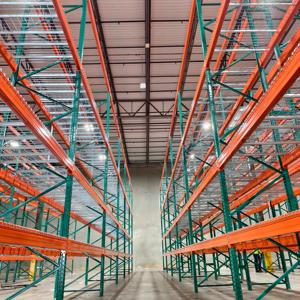
Universal Heavy Duty Teardrop Pallet Rack
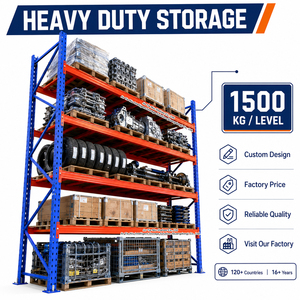
1500KG Heavy-Duty Automotive Mechanical Parts Rack
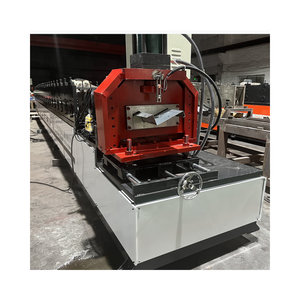
Semi-Automated Pallet Shuttle & Dynamic Rail System
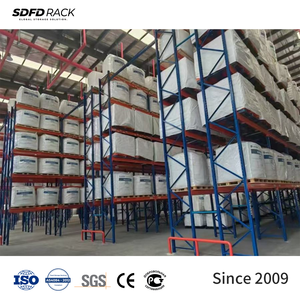
Conventional Industrial Pallet Racking System
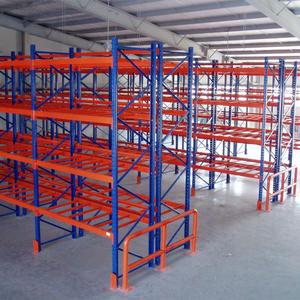
Q235 High-Density Building Materials Heavy Rack
The Mechanics of Warehouse Roller (Gravity Flow) Racking Systems
Dynamic warehouse roller racking—frequently designated as Pallet Flow Racking or Gravity Roller Racking—represents an advanced high-density storage methodology that uses inclined wheel or cylindrical roller tracks to drive palletized loads under natural gravitational acceleration. Unlike static selective configurations requiring expansive forklift aisles between every bay, roller flow systems operate on a segregated aisle philosophy: dedicated replenishment loading faces (induction side) and separate retrieval picking faces (discharge side). This design enables continuous First-In, First-Out (FIFO) stock rotation, making it indispensable for perishables, cold-chain distribution, pharmaceuticals, and fast-moving consumer goods (FMCG) distribution centers.
The operational physics of industrial roller racking hinge on precision inclination balancing. Racks are engineered with an incline angle calculated strictly between 3.0% and 4.0% (approximately 1.7° to 2.3°), contingent upon pallet material composition (molded virgin HDPE, solid hardwood, or perimeter-base steel runners) and payload weight variability (typically ranging from 300 kg to 1,500 kg per pallet position). If the slope angle deviates below 3.0%, static friction can cause pallet hang-ups midway down the channel; conversely, exceeding 4.2% risks excessive terminal kinetic energy, endangering picking operators and structural upright uprights at the picking stop.
Critical Engineering Principle: Safe gravity roller lane design relies on integrated centrifugal speed-controller rollers. Positioned at calculated intervals (typically every two pallet depths), these internal brake rollers govern the descent speed of payloads to a safe velocity of 0.2 to 0.3 meters per second, irrespective of pallet weight variations.
To ensure operational safety and prevent line jams, modern high-depth roller lanes incorporate automatic pallet separators (load isolators) directly behind the leading pallet at the discharge face. When a forklift operator extracts the lead pallet, the mechanical separator momentarily holds back the hydrostatic pressure of the queue behind it. Once the lead bay is cleared, the separator disengages smoothly, allowing the secondary load to index forward into the pick position without impacting the mast or forks of the handling equipment.
| System Classification | Storage Density Index | Throughput Kinematics | Inventory Principle | Floor Footprint Savings | Handling Equipment Wear |
|---|---|---|---|---|---|
| Gravity Roller Flow Racking | Very High (Up to 85%) | Continuous Gravity Assisted | Strict FIFO | 60% vs. Selective | Extremely Low (Zero Aisle Travel) |
| Selective Pallet Racking | Low (40% - 50%) | Manual Forklift Dispatched | Variable (FIFO/LIFO) | Baseline Standard | High (Constant Aisle Maneuvering) |
| Radio Shuttle Rail System | Maximum (Up to 90%) | Semi-Automated AGV Carrier | Configurable (FIFO/LIFO) | 65% vs. Selective | Low (External Aisle Access Only) |
| Drive-In / Drive-Through Rack | High (65% - 75%) | Intermittent Deep-Aisle Driving | LIFO (Drive-In) / FIFO | 50% vs. Selective | Severe (High Upright Impact Risk) |
| Push-Back Cart Racking | Moderate-High (60% - 70%) | Dynamic Nested Cart Return | Strict LIFO | 40% vs. Selective | Moderate (Mast Pushing Resistance) |
Future Procurement Trends for Warehouse Roller Racking (2025–2030)
How supply chain executives, warehouse developers, and international logistics directors are reshaping equipment tenders to lower Total Cost of Ownership (TCO).
Modular & Hybrid Dynamic Architectures
Procurement teams are moving away from monolithic, single-purpose rack layouts. The emerging global standard pairs lower-level pallet flow gravity beds (for high-speed pallet picking) with overhead carton live-flow and selective buffer tiers. These hybrid modular lanes adapt rapidly to fluctuating seasonal SKUs without requiring structural torching, welding, or rack decommission.
Zero-Energy Passive Automation (ESG Audits)
With corporate carbon disclosure mandates (CSRD in Europe and ESG frameworks across ASEAN and North America), warehouse roller racking provides a proven path to non-electric automated throughput. Because pallets translate down-lane purely via potential gravity energy, facilities achieve semi-automated indexing without consuming kilowatt-hours or needing high-voltage three-phase track infrastructure.
Nearshore Supply Chain Regionalization
Global fulfillment hubs prioritize suppliers capable of rapid container dispatch with minimal sea transit variance. Sourcing direct from deep-water port manufacturing nodes—such as Guangzhou and Nansha—allows ASEAN, Middle Eastern, and Oceanic buyers to bypass 45-day trans-Pacific delays, securing delivery schedules within 2 to 10 days for mission-critical industrial expansions.
Technological & Material Advancements in Roller Track Engineering
State-of-the-art metallurgical treatments, telemetry monitoring, and seismic damping paradigms transforming modern gravity rack durability.
Polymer Composite & Dual-Galvanized Rollers
Traditional raw carbon steel rollers are prone to surface corrosion, bearing seizure, and debris binding in humid or maritime environments. Next-generation installations employ continuous electro-galvanized zinc coatings combined with self-lubricating, sealed precision cartridge bearings and high-impact Ultra-High Molecular Weight Polyethylene (UHMW-PE) sleeves that dampen acoustic chatter below 65 dB.
Sub-Zero Cryogenic Cold Chain Metallurgy
In deep-freeze warehouses (-25°C to -30°C) storing seafood, meat, and pharmaceutical vaccines, standard structural steel risks brittle fracture along micro-crystalline grain boundaries. Modern certified manufacturers formulate cold-rolled Q235B/Q355B low-carbon alloys paired with low-temperature synthetic lubricants inside brake rollers, preventing grease crystallization and ensuring reliable roller rotation without sticking.
FEM-Simulated Seismic Energy Dissipation
Deploying tall gravity roller racking in seismically active geographic zones (such as Indonesia, the Philippines, Japan, and the Pacific Rim) requires sophisticated finite element modeling (FEM) based on EN 15512 and RMI MH16.1 codes. Heavy-duty back-to-back portal ties, ductile baseplate anchors, and vertical diagonal spine bracing ensure the dynamic momentum of stored pallets does not induce catastrophic shear failure during horizontal earth accelerations.
Why Global Logistics Engineers Partner with HEDA Shelves
Direct-from-factory engineering authority, verifiable international compliance, and end-to-end bespoke supply chain stewardship.
30,000 m² Advanced Production Hub
Equipped with automated continuous roll-forming lines, computerized multi-axis column punching, high-precision CNC tube laser profiling, and robotic welding cells operating under ISO 9001:2015 quality surveillance.
Verified CE & ISO Global Certification
All structural uprights and beam profiles carry legitimate, independently auditable CE Certificate No. 2435-CPR-8605159, alongside full compliance with RoHS and international steel structural standard testing benchmarks.
Complimentary Engineering & 3D Modeling
Our senior technical staff of over 300 engineering professionals prepares complete architectural CAD floor drawings, static & dynamic load calculations, and photorealistic 3D warehouse simulations at zero preliminary charge.
Industrial Multi-Stage Pre-Treatment
Every steel component undergoes automated acid pickling and immersion phosphating before electrostatic polyester powder application. This achieves unmatched coating adhesion and corrosion defense in tropical 80%+ humidity.
Frequently Asked Questions on Roller Racking Engineering
Direct, rigorous answers addressing load calculations, climate defense, structural clearances, and installation protocols.
What pallet criteria are mandatory for trouble-free gravity flow tracking?
Pallet bottom construction is critical. Pallets must feature uniform, continuous bottom runners aligned in the direction of roller flow. Defective timber, broken bottom boards, protruding nails, or non-rigid soft plastics will snag between rollers. For mixed or irregular plastic pallets, full-width heavy cylindrical rollers or specialized multi-wheel roller tracks are specified to maintain level surface contact throughout the channel run.
How is runaway pallet acceleration prevented in deep-lane roller systems?
Deep-lane configurations (ranging from 5 to 25 pallets deep) rely on centrifugal speed controller rollers installed flush within the roller beds. Operating purely via mechanical internal planetary gearboxes and friction pads, these speed controllers self-modulate: faster-turning rollers experience higher braking resistance, maintaining payload descent speeds consistently between 0.2 and 0.35 m/s without requiring external electrical power.
What happens when a pallet gets stuck inside a deep gravity flow channel?
HEDA Shelves incorporates manual or mechanical "beam-unloading release" assists and back-feed maintenance walkways along long runs. Operators can safely free a stuck load without entering the rack bay by using secondary pallet bump indexing or disengaging the load separator pedal. During commissioning, lane slopes and brake roller intervals are tuned with sample client pallets to minimize hang-ups.
Can roller flow systems withstand tropical humidity, salt air, or sub-zero freezers?
Yes. For coastal, tropical, or cold-storage environments, we supply hot-dip galvanized (HDG) or pre-galvanized frame uprights and structural beams, supplemented by 304 stainless steel roller axles, sealed water-tight bearings, and cold-resistant synthetic lubrication rated down to -35°C. For standard operations, our 10-step pickling, phosphating, and electrostatic powder coating process guarantees lasting anti-corrosion protection.
What parameters are required to generate an accurate architectural CAD quote?
To produce an exact structural engineering proposal, our design office requires: (1) Warehouse clear height below roof purlins, (2) Floor slab concrete thickness, reinforcement details, and compressive strength (e.g., C25/30), (3) Pallet dimensions (W x D x H) including overall overhang, (4) Minimum and maximum load weights, (5) Forklift model, turning radius, and maximum reach height, and (6) Required throughput pallets per hour.
What is the typical shipping lead time and on-site assembly framework?
Production cycles at our Guangzhou facility typically run 15 to 25 calendar days depending on tonnage. Port-to-port maritime shipping from Nansha or Guangzhou deep-water terminals requires 2 to 5 days to Vietnam, 3 to 5 days to Manila, 5 to 7 days to Singapore and Bangkok, and 6 to 9 days to Port Klang or Jakarta. Every shipment includes step-by-step CAD installation schematics, piece-tagged steel bundles, video guides, and optional on-site engineering supervision.
Request an Engineered Layout & Direct Factory Tender
Submit your facility dimensions and pallet specifications. Our senior structural engineers deliver comprehensive CAD floor layouts, dynamic load calculations, and competitive FOB/CIF quotation proposals within 24 operational hours.