Engineered Storage & Heavy-Duty Cantilever Solutions
Explore our certified industrial storage systems designed for high-density warehouse efficiency. Each system integrates certified Q235B/Q355B structural steel, rigorous deflection testing, and tailored load capacities.
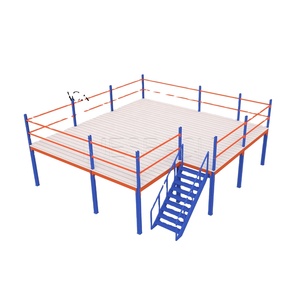
Customized Heavy Duty Steel Mezzanine Floor Platform
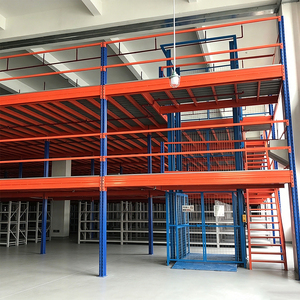
Heavy Duty Mezzanine Storage System with Pallet Rack
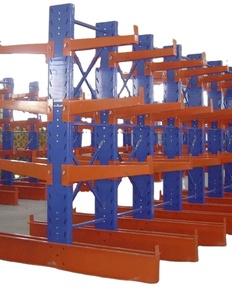
High Load Cantilever Storage Rack for Long Materials
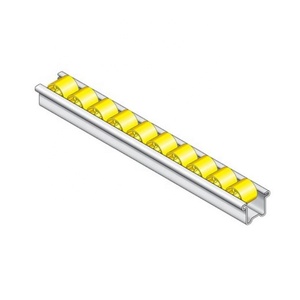
Customized Warehouse Flow Racks & Roller Rail System
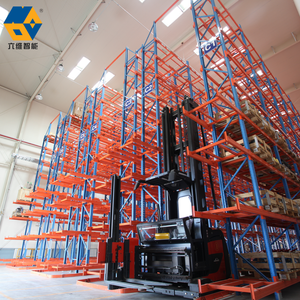
Industrial Heavy Duty Very Narrow Aisle (VNA) Rack
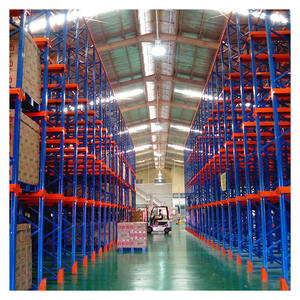
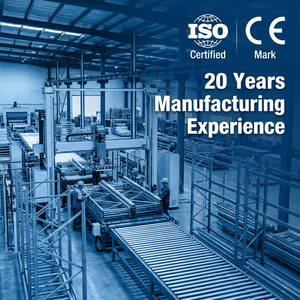
Carton Flow Rack with Heavy Duty Roller Tracks
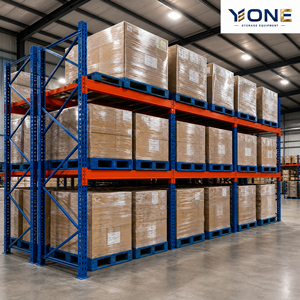
Adjustable 90x70x2.0mm Upright for Logistics Racks
Structural Mechanics of High-Capacity Cantilever Racking
Unlike standard pallet racks constrained by front vertical columns, cantilever systems operate as a series of statically determinate cantilevered beams loaded under combined bending, shear, and torsion. Mastering their mechanical dynamics is critical to eliminating arm deflection hazards and structural collapse.
Column Bending Moments
The cantilever column functions as a vertical beam subjected to severe eccentric moments ($M = P \times e$). Our uprights are manufactured using heavy-gauge tapered profiles or structural hot-rolled H-beams (HEA/HEB/UB series) ensuring resistance against buckling under asymmetric arm loading conditions across multi-tier elevations.
Arm Deflection Tolerances
In accordance with EN 15512 and ANSI MH16.1 specifications, arm deflection is engineered within strict thresholds of $L/250$ to $L/300$. Arm connection sockets integrate engineered safety pins and proprietary multi-lug hooks that introduce an upward pre-camber of 1.5° to 2.0° to counteract natural load sag under maximum rated capacities.
Base Anchorage & Dynamic Torque
Cantilever bases must anchor directly into concrete slab substrates (minimum C25/30 compressive strength) via high-tensile chemical or wedge anchor studs. The base length strictly matches or exceeds the cantilever arm projection length to prevent overturning moments during uneven loading and side impact.
| Structural Parameter | Roll-Formed Light/Medium System | Structural Hot-Rolled I-Beam Heavy System | ASEAN / Coastal Marine Spec |
|---|---|---|---|
| Steel Grade | Cold-Rolled Q235B / S235JR | Hot-Rolled Q355B / S355JR Heavy Profile | Galvanized ASTM A123 / High Zinc Q355B |
| Load Capacity Per Arm | 250 kg – 800 kg | 1,000 kg – 3,500 kg+ | Customized Engineered to 4,000 kg |
| Impact Resistance | Moderate; suited for light forklift/reach truck | Maximum; withstands side-loader/counterbalance | Heavy-duty with reinforced column wrap guards |
| Finish Protection | 60-80μm Electrostatic Powder Coat | 70-90μm Thermosetting Epoxy Polyester | Hot-Dip Galvanizing ≥ 85μm or 500h Salt Spray |
| Typical Product Applications | Plastic conduit, light lumber, molding trims | Steel pipes, sheet metal, structural beams, marble | Outdoor lumber yards, cold stores, fertilizer docks |
Future Procurement & Technological Trends in Cantilever Storage
Global intralogistics is shifting from static, manually retrieved arm storage to high-density, automated handling ecosystems. Procurement managers and structural engineers must align facility planning with these strategic advancements.
ASRS & Automated Cranes
Traditional cantilever racks are being replaced by automated stacker crane-serviced cantilever towers. Automated Guided Vehicles (AGVs) and four-way multidirectional side-loaders interface with computer-guided arm coordinates, reducing aisle requirements from 4.5m down to 2.1m and accelerating cycle throughput by 40%.
Hybrid Cantilever Mezzanines
Rising industrial land valuations in Southeast Asia and Europe are forcing operators to maximize vertical cubes. Integrating a multi-tier catwalk directly on cantilever uprights allows high-density structural arm storage on the ground floor with high-volume manual sorting decks above—zero footprint expansion required.
Digital Twins & Deflection Telemetry
Next-generation logistics facilities are integrating strain gauge telemetry within cantilever joints. Real-time sensory data measures dynamic beam twist and localized stresses during loading, feeding predictive maintenance platforms before steel fatigue triggers structural deformation.
Guangzhou HEDA Shelves: 25+ Years of Manufacturing Leadership
Founded in 2001, Guangzhou HEDA Shelves Co., Ltd. operates as a vertically integrated manufacturer supplying certified warehouse racking, structural cantilever racks, and mezzanine systems to more than 120 countries worldwide.
10-Step In-House Production & Quality Control Pipeline
From initial coil unrolling to container-optimized bundling, our end-to-end Guangzhou manufacturing line eliminates outsourced subcontracting risks.
Certified Raw Materials
Strict spectral and tensile testing of mill-direct Q235B & Q355B coils before shearing.
CNC Precision Cutting
High-tolerance automated shearing ensuring clean geometric edges and accurate arm cut-offs.
Automated Punching
Continuous heavy-tonnage CNC punching machines execute accurate 75mm/100mm connector pitches.
Cold Bending Forming
Multiple-pass roll forming presses shape high-strength columns with uniform wall gauge distribution.
Profile Roll Forming
Engineered cold profile rolling imparts exceptional moment of inertia to columns and arms.
Surface Polishing
Mechanical de-burring and micro-polishing eliminate welding spatter, creating smooth contact faces.
Robotic Arc Welding
CO₂ shielded automated robotic welding fixtures deliver consistent, deep weld penetration.
Pickling & Phosphating
Multi-stage chemical immersion cleans oxides and deposits zinc phosphate for extreme coating adhesion.
Electrostatic Coating
Automated powder spray booths apply 70-90μm polymer thermoset finish, cured at 180°C-200°C.
QC Load Test & Pack
Full dimensional inspection, deflection stress verification, and ocean-freight steel banding.
Cantilever Racking Procurement FAQ
Authoritative answers to common structural engineering, logistics, and compliance questions faced by facility directors and global procurement managers.
How do I calculate required arm length and capacity for non-uniform long goods?
Arm length must equal or slightly exceed the maximum load depth to ensure full product support without excessive overhang. Arm capacity is calculated by dividing total bundle weight by the number of supporting arms, assuming evenly distributed loading ($UDL$). Crucially, load center of gravity must sit at arm midpoint ($L/2$). Never design for concentrated tip loading without factoring dynamic safety coefficients of at least 1.5.
When should a facility specify structural I-beams instead of roll-formed profiles?
Roll-formed cantilever racking is cost-effective for medium-duty handling (under 800 kg/arm) with manual picking or light reach trucks. Structural hot-rolled I-beam systems (Q355B structural steel) are required when arm capacities exceed 1,000 kg, when handling extreme high-impact materials such as raw steel billets or cast pipe, or in unheated outdoor/coastal distribution centers exposed to high wind and heavy forklift impacts.
What concrete floor slab specifications are needed for heavy cantilever uprights?
Due to intense overturning bending moments concentrated at the base plates, cantilever systems require reinforced concrete floor slabs with minimum 150mm to 250mm thickness, rated at compressive strengths of C20/25 to C30/37. Anchor embedment depth typically ranges between 120mm to 180mm using M12–M20 mechanical wedge or vinyl ester chemical anchors verified against seismic pull-out ratings.
How does HEDA protect cantilever racking systems against tropical humidity and coastal salt spray?
All HEDA racking components undergo an automated pre-treatment line featuring ultrasonic degreasing, acid pickling, and immersion zinc phosphating. This forms an anti-corrosive chemical bond before electrostatic powder spraying. For high-humidity ASEAN locations, cold storage freezers, or coastal open yards, we supply hot-dip galvanized finishes and formulations tested up to 500 hours in neutral salt spray (ASTM B117) chambers.
Can cantilever racking be configured for outdoor storage with roof covers?
Yes. Outdoor cantilever racks can be engineered with overhead canopy roof arms (single-pitch or double-pitch) to protect materials from direct monsoon rain and UV degradation. In such configurations, our structural calculations include localized wind load ratings ($q_p$), snow loads, and wind suction dynamics in accordance with regional building codes.
What are the shipping transit schedules and container packaging standards from Guangzhou?
HEDA utilizes direct vessel connections from Guangzhou/Nansha/Shenzhen ports. Transit times are approximately 2–5 days to Vietnam, 3–5 days to Manila, 5–7 days to Singapore/Laem Chabang, 6–8 days to Port Klang, and 7–10 days to Jakarta. Components are bundled using high-tensile steel straps, foam edge protectors, and waterproof plastic shrink wrap, packed strategically to maximize container cubic weight limits.
Request Your Custom Warehouse CAD Layout & Structural Calculation
Send your building blueprints, beam clearance heights, and material load specifications. Our senior engineering team in Guangzhou will deliver a complete 2D/3D CAD layout, load-stress analysis, and transparent factory quotation within 24 hours.