Enterprise Inventory
High-Density Teardrop & Industrial Storage Solutions
Manufactured using high-tensile cold-rolled steel (Q235B / Q355B), engineered under CE & ISO 9001:2015 strict compliance to ensure superior vertical storage capacity, optimal seismic deflection, and long-term operating durability.
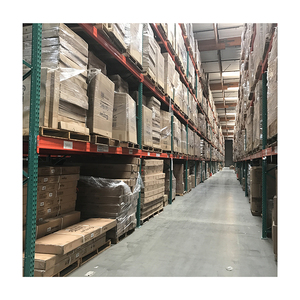
24' High Teardrop Frame Step Beam RMI Pallet Rack
Technical Data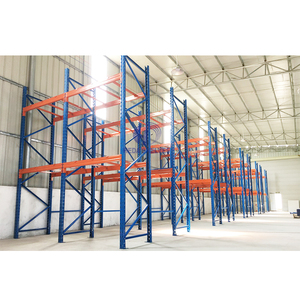
Heavy Duty Pallet Rack System (1000kg-5000kg / Level)
Technical Data
Narrow Aisle Galvanized Steel High Capacity Frame
Technical Data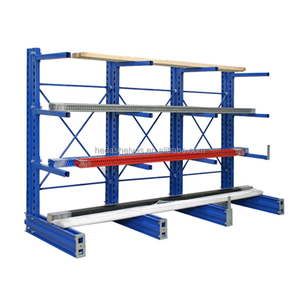
Cantilever Storage Rack Single Sided H Steel Frame
Technical Data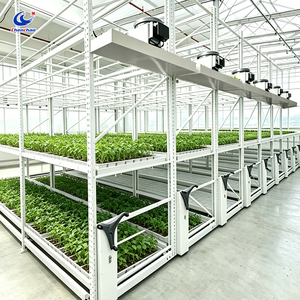
Multi-Layer Vertical Farm Grow Rack Mobile System
Technical Data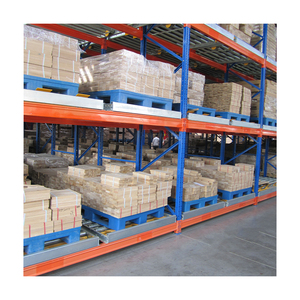
Selective Heavy Duty Steel Pallet Racking
Technical Data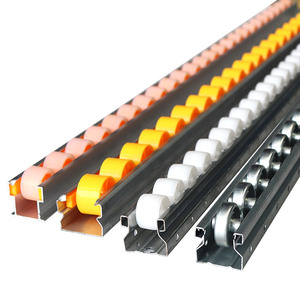
Industrial Aluminium Roller Track Fluent Flow Rack
Technical Data
Engineering Whitepaper
Structural Integrity, Standards & Mechanical Dynamics
A technical evaluation of teardrop rack manufacturing standards, connection mechanics, and metallurgy considerations for safety-critical intralogistics facilities.
Interchangeable Teardrop Geometry
Teardrop racking has become the de facto standard across North American and international supply chains. The proprietary punch pattern utilizes an inverted keyhole profile spaced on 2-inch vertical increments. This design allows pins on the step beam connector to drop smoothly into place, utilizing gravity and dead weight to wedge the connector into a rigid, non-slip friction union.
RMI & ANSI MH16.1 Compliance
Factory fabrication strictly conforms to Rack Manufacturers Institute (RMI) standards. The column design accounts for cold-formed structural steel members under bending and axial compression. Finite element modeling (FEM) validates that local buckling, torsional-flexural deformations, and beam deflection limits (≤ L/180) satisfy international structural codes.
Auto-Engaging Safety Pin Systems
Structural reliability hinges on fail-safe beam-to-column connections. Our manufacturing embeds pre-installed, high-strength spring-lock or gravity-activated auto pins. These prevent accidental beam disengagement caused by upward forklift mast collisions, drastically reducing warehouse collapse incidents and meeting OSHA compliance standards.
Cold-Roll Forming Precision
Our continuous automated roll-forming production lines process Q235B and Q355B coil steel through progressive profiling stages. This maintains tight cross-sectional tolerances, prevents micro-cracking in the bend radiuses, and guarantees consistent hole center-to-center distances along the entire vertical height of up to 40-foot uprights.
Seismic Baseplate Engineering
For installations in high-seismic zones (such as Southeast Asia, Japan, or the US West Coast), baseplates undergo critical shear and anchor uplift engineering. Heavy-gauge structural baseplates distribute dynamic seismic energy directly into warehouse concrete slabs, reinforced with certified wedge or chemical expansion bolts.
Advanced Chemical Pre-Treatment
Long-term rust defense requires more than superficial painting. Racking sections undergo a multi-stage pre-treatment process: alkaline degreasing, acid pickling, rinsing, and zirconium/iron phosphating before automated electrostatic thermoset powder curing. This provides over 500 hours of continuous salt-spray corrosion resistance.
Enterprise Credentials
Why Partner Directly With Our Guangzhou Factory
Combining 25+ years of structural steel fabrication with end-to-end direct export logistics to deliver cost-effective, high-reliability storage systems globally.
2001
Year Established
30,000 m²
Factory Facility
30,000 t
Monthly Production
10,000+
Completed Projects
Guangzhou HEDA Shelves Co., Ltd.
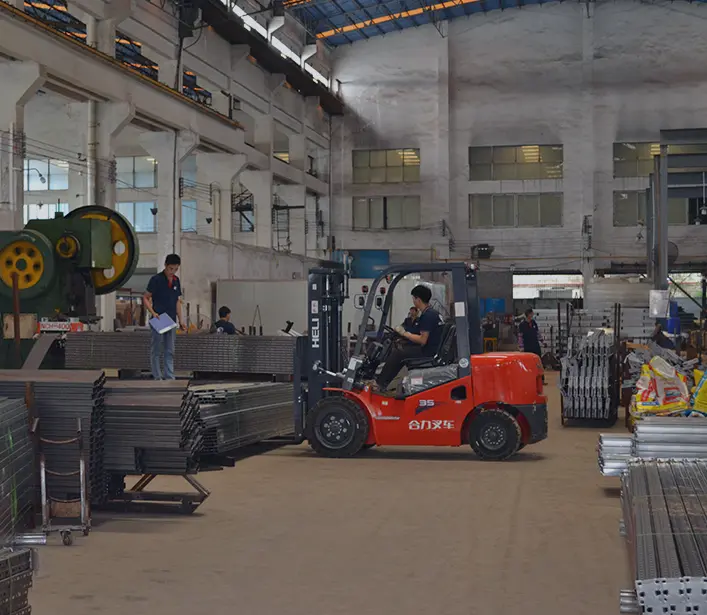
Founded in 2001, Guangzhou HEDA Shelves Co., Ltd. has grown into a world-class manufacturing authority for heavy-duty industrial teardrop racking, high-density shuttle racking, cantilever systems, and multi-tier mezzanines. Our engineering group delivers direct technical consultations, CAD drawings, static and dynamic structural loading analyses, and custom OEM/ODM roll-forming.
- Certified Compliance: CE (No. 2435-CPR-8605159) & ISO 9001:2015 (No. 18624Q00169R0M)
- 300+ Skilled Technicians and Dedicated Production Engineers
- Free Structural 3D Modeling, Pallet Density Layouts, & CAD Design Services
- Proximity to Nansha & Huangpu Ports: Direct 2–10 Days Maritime Transit Across Asia-Pacific
Strategic Sourcing
Future Procurement Trends in Industrial Storage
Market dynamics, supply chain nearshoring, and changing supply conditions dictate how enterprise operators procure teardrop racking infrastructure.
Standardization
Modular Universal Compatibility
Global procurement teams are moving away from proprietary slotted or hook connections toward standard teardrop systems. Choosing universal teardrop profiles prevents vendor lock-in, shortens procurement cycles, and enables facilities to source beams, uprights, and wire decks from multiple qualified manufacturers without costly custom tooling.
ESG & Carbon Footprint
Low-Carbon Recycled Steel Procurement
Enterprise sustainability mandates are changing steel procurement criteria. Leading buyers now require Mill Test Certificates (MTC) certifying scrap ratios in Electric Arc Furnace (EAF) production, alongside solvent-free electrostatic powder coatings that comply with strict global RoHS and environmental directives.
Total Cost of Ownership
Direct-from-Factory Factory Alliances
To hedge against local distributor markups (often exceeding 35-50%), large 3PL logistics networks, cold storage developers, and big-box retailers increasingly source directly from tier-1 manufacturers. This factory-direct approach yields customized upright heights, optimized container nesting, and faster engineering review turnarounds.
Innovation Roadmap
Evolutionary Trends: Next-Gen Teardrop Racking Systems
How the convergence of robotics, automated guided vehicles (AGVs), and smart sensors is transforming traditional structural steel storage.
Automation
Automation-Ready Hybrid Profiles
Standard teardrop racking is evolving to interface with Autonomous Mobile Robots (AMRs) and AS/RS shuttles. Columns now feature dual punching patterns: standard teardrop holes on the front face for manual pallet loading, paired with precision side-slots to mount guide rails, positioning reflectors, and cable raceways.
Material Science
Ultra-High-Strength Structural Thinning
Metallurgical advances in micro-alloyed steels enable manufacturers to reduce column profile thickness while matching or exceeding historical load limits. Moving to high-yield Q355B and specialized cold-rolled alloys lowers total steel tonnage, reducing overseas ocean freight charges without sacrificing safety margins.
Structural IoT
Embedded Deflection & Impact Monitoring
Modern distribution facilities are beginning to install embedded IoT strain sensors and baseplate accelerometers on key aisle uprights. These smart nodes detect structural impacts from high-capacity forklifts in real-time, providing immediate safety alerts and simplifying mandatory annual warehouse safety inspections.
Surface Engineering
Hybrid Protective Finishes
Combining continuous hot-dip galvanization with hard-wearing powder topcoats creates specialized composite finishes. This dual protection stands up to both severe coastal humidity and extreme sub-zero condensation in automated deep-freeze cold storage facilities down to -30°C.
Procurement FAQ
Frequently Asked Questions: Teardrop Racking Sourcing
Comprehensive engineering and logistical guidance to streamline your factory-direct warehouse storage acquisition.
What makes teardrop racking the most widely specified system globally?
Teardrop racking's popularity stems from its universal boltless connection design. The tapered keyhole geometry allows beam pins to drop into position quickly, seating securely under gravity and pallet weight. This reduces assembly time compared to bolted structures, allows beam heights to adjust on 2-inch increments without special tools, and makes it easy to source interoperable components from different manufacturers over time.
How do you calculate safe beam load capacities and structural deflection limits?
Load calculations follow ANSI MH16.1 / RMI standards based on uniformly distributed loads (UDL). The maximum vertical beam deflection must not exceed L/180 (the clear span length divided by 180). For example, a standard 96-inch (2438 mm) step beam allows a maximum deflection of 0.53 inches (13.5 mm) at full design capacity. Our engineers use finite element analysis (FEA) to specify beam step heights and steel thicknesses that match your exact unit-load requirements.
Can your factory supply customized uprights for seismic zones and extreme climates?
Yes. We engineer seismic-rated racking systems for active regions across Southeast Asia, North America, and the Pacific Rim. Using site coordinates, soil categories, and local building codes, we design enlarged baseplates, heavy back-to-back row spacers, and reinforced diagonal bracing. For humid or sub-zero environments, components receive hot-dip galvanization or a multi-stage phosphate and electrostatic powder coat that prevents rust and corrosion.
What parameters are required to produce a complimentary CAD layout and price quotation?
To prepare an accurate proposal, our engineering team needs: (1) Architectural floor plan showing column grids, building obstacles, and clear ceiling heights; (2) Pallet specifications including width, depth, overall height, and maximum loaded weight; (3) Forklift model details, specifically mast type, maximum fork height, and minimum turning aisle clearance; (4) Desired throughput requirements (FIFO vs. LIFO). We typically return CAD drawings, 3D renderings, and structural estimates within 24 to 48 hours.
How are components packed to prevent damage during international ocean transport?
We follow container-optimized packing procedures to protect powder-coated finishes and maximize container space. Uprights are bundled with protective dunnage and heavy steel strapping; step beams are stacked on wood blocks with corrugated separators between painted contact points; and small hardware is crated in reinforced wooden boxes. Clear color-coded labels correspond to assembly blueprints, speeding up unloading and installation at your site.
Require detailed structural calculations, factory test reports, or tender documentation?
Get Catalog