Industrial Small-Warehouse Storage Racks & Systems
Every system is designed specifically to resolve spatial bottlenecks in small and mid-sized warehouses (100 m² to 3,000 m²). Built to international CE, ISO 9001:2015, and FEM 10.2.02 racking standards.
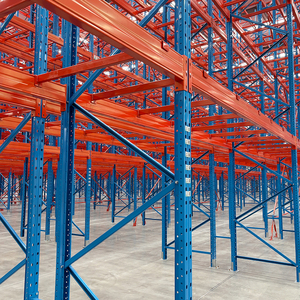
Modular Heavy Duty Cold Room Pallet Racking System
- Load Rating: 1,000–3,500 kg / level
- Environment: -30°C to Ambient
- Finish: Hot-dip Galvanized / Epoxy
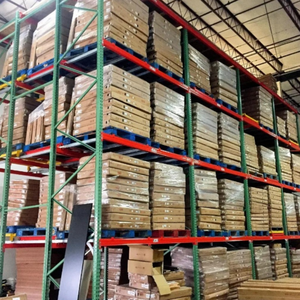
Push Back Racking LIFO Inventory Management
- Pallet Depth: 2 to 5 Pallets Deep
- Floor Gain: +75% Storage Density
- Mechanism: Nested Gravity Carts
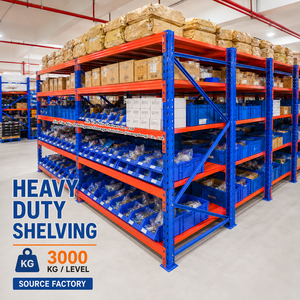
3000KG Custom Steel Deck Storage Rack System
- Shelf Deck: Ribbed Heavy Gauge Steel
- Application: Plastic Bins & Hardware
- Pitch Adjust: 50mm Incremental Pitch
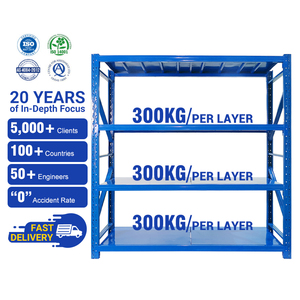
Compact Powder Coated Adjustable Light-Duty Rack
- Assembly: 100% Boltless Interlock
- Capacity: 150–300 kg / level
- Usage: E-Commerce SKU Picking
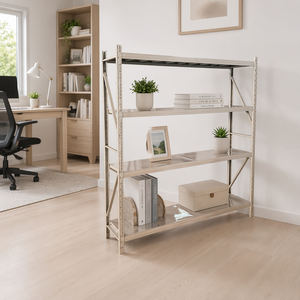
Dual Display & Tiered Backroom Storage Shelving
- Modularity: Gondola & Racking Hybrid
- Footprint: Ultra-slim Frontage Profile
- Coating: Scratch-resistant Powder
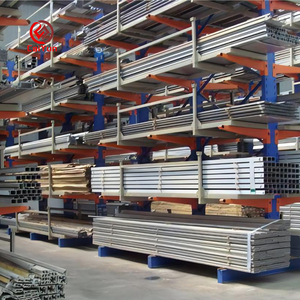
Low-Profile Cantilever Shelves for Low Ceilings
- Handling: Pipes, Timber, Bars
- Clearance: Unobstructed Horizontal Front
- Arm Capacity: 200–800 kg / arm
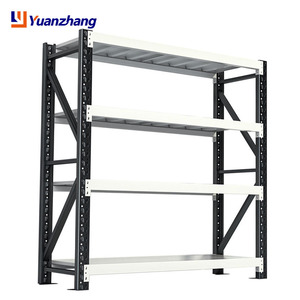
Light Duty Bolted & Adjustable Workshop Metal Shelves
- Construction: Cold-formed Angle Steel
- Adjustment: Tool-free Bay Elevation
- Corrosion: Phosphated Salt-Spray Pass
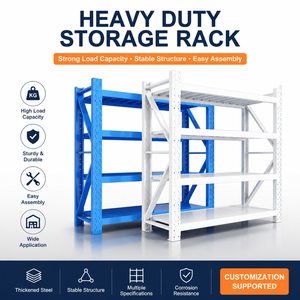
Medium Duty Shelving with Vertical Separator Boards
- Organization: Segregated SKU Partitioning
- Capacity: 300–800 kg / layer
- Protection: Electrostatically Sprayed
Engineering the Compact Footprint: Structural Physics of Small Warehouse Racking
Managing storage space under 2,500 square meters (27,000 square feet) presents distinct mechanical challenges that large logistics distribution centers rarely face. In expansive mega-warehouses, layout engineers prioritize long linear runs and wide transit lanes to accommodate high-speed reach trucks. However, in small urban warehouses, light industrial workshops, and micro-fulfillment nodes, floor space is constrained, clear ceiling heights typically range from only 3.5 to 6.5 meters, and building structural columns frequently break up usable bays.
As an internationally trusted racking manufacturer with 25+ years of specialized engineering (founding member Guangzhou Heda Shelves Co., Ltd.), we approach small warehouse racking not merely as metal fabrication, but as Cubic Utilization Ratio (CUR) Optimization. When ground surface area cannot expand horizontally, warehouse throughput relies entirely on the structural load rigidity of upright frames and deflection-engineered horizontal load beams.
The Mathematical Reality of Small Warehouses: Transitioning from unassisted floor-stacking to a customized 4-tier selective or push-back racking system directly elevates usable volumetric capacity by 240% to 380%, while simultaneously cutting SKU cycle-counting time by more than 62%.
Aisle Geometry & Material Handling Equipment (MHE) Matching
A frequent failure mode in small warehouse procurement is purchasing racking systems without calculating the exact turning radius ($Wa$) of the facility's forklift fleet. Standard counterbalance forklifts mandate clear aisle widths of 3,500mm to 3,800mm, effectively consuming over 60% of total floor space purely for transit aisles. For tight urban spaces, our structural layout engineers redesign storage arrays around Narrow Aisle (2,200mm to 2,600mm) or Walkie-Stacker / Articulated Reach Truck profiles (1,800mm to 2,000mm).
| Racking Architecture | Aisle Width Required | Volumetric Efficiency | Selectivity Profile | Best-Fit Industry Application |
|---|---|---|---|---|
| Selective Pallet Racking | 3.0m – 3.6m (Std Forklift) | 40% – 50% | 100% Direct Access | High-SKU Retail, General 3PL, FMCG |
| Push Back Racking (2-5 Deep) | 2.6m – 3.0m | 70% – 85% | LIFO (Batch Picking) | Cold Storage, Food Distribution, Chemical |
| Steel Deck Multi-Tier Shelving | 0.9m – 1.2m (Manual / Cart) | 80% – 90% | 100% Manual Hand Pick | Automotive Spare Parts, Hardware, E-Com |
| Cantilever (Low Profile) | Varies by Material Length | 60% – 70% | Continuous Linear Face | Extrusions, PVC Piping, Timber Yards |
| Rack-Supported Mezzanine | Integrated Vertical Catwalk | 180% – 200% Gain | Tiered Dual Access | Garments, Pharmaceuticals, Assembly Hubs |
By pairing low-profile baseplates with high-tensile anchor studs rated for concrete slabs down to 150mm depth, our factory delivers reliable systems that eliminate the need for costly foundational modifications.
Why Global Importers & Contractors Trust Our Factory
Rooted in 25+ years of dedicated storage equipment engineering in Guangzhou, China. We combine European standard certification with integrated raw-material-to-container manufacturing.
30,000 m² Integrated Manufacturing
Unlike trading companies or regional brokers, our Guangzhou production facility operates continuous automated roll-forming lines, computerized column-punching presses, and automated robotic welding rigs. We convert certified prime steel coils into finished systems under one roof with a capacity exceeding 30,000 tons per month.
CE & ISO 9001:2015 Verified Compliance
Every rack section complies with strict structural load criteria, backed by verifiable third-party certification: CE Certificate No. 2435-CPR-8605159, ISO 9001:2015 No. 18624Q00169R0M, and RoHS safety compliance. We guarantee structural calculations conform to EN 15512 and RMI MH16.1 specifications.
Anti-Corrosive Chemical Pre-treatment
To prevent rust in humid, tropical, and cold-storage environments (such as Southeast Asian, Middle Eastern, and Latin American coastal facilities), our steel undergoes thorough chemical pickling and phosphating pre-treatment before electrostatic powder coating. This delivers exceptional salt-spray resistance and paint adhesion.
Free 2D CAD Layouts & 3D Visual Rendering
Eliminate design uncertainty. Our dedicated team of 30+ layout engineers reviews your warehouse drawings, column spans, and forklift turning radiuses, delivering full CAD floorplans, 3D photorealistic renderings, and FEA beam deflection load calculations free of charge within 24 to 48 hours.
Direct Port Logistics & Packing Optimization
Positioned minutes from major South China shipping gateways (Nansha, Huangpu, Shenzhen, Hong Kong). Rapid shipping schedules connect to regional hubs: 2–5 days to Vietnam, 3–5 days to Manila, 5–7 days to Singapore and Bangkok, 6–8 days to Port Klang, and direct sailings to North America and Europe. Bundles are systematically coded for straightforward job-site assembly.
10 Steps from Raw Steel Coil to Certified Installation
Quality control is embedded at every manufacturing step, ensuring tight column tolerances, clean weld seams, and consistent powder-coat adhesion.
Steel Inspection
High-yield Q235B & Q355B coils verified via spectrometer.
Precision Slitting
High-speed slitting to exact upright strip dimensions.
CNC Punching
Multi-station automated punching for 50mm/75mm pitches.
Cold Roll Forming
Continuous 16-roller profiling preserving steel elasticity.
Laser Beam Sizing
Automated cutting ensuring square, clean joint faces.
Robotic Welding
Argon-shielded robotic welding for beam end connectors.
Surface Polishing
Mechanical de-burring and weld-spatter surface prep.
Pickling Bath
Chemical immersion for complete rust removal & phosphating.
Powder Coating
Electrostatic thermoset polyester baked at 180°C–200°C.
Export QC Pack
Thickness & load tests with reinforced export strapping.
Future Procurement Trends in Small Warehouse Racking (2025–2030)
Structural and technological shifts are transforming how operations managers and supply chain directors procure, configure, and maintain compact racking assets.
1. Rise of Urban Micro-Fulfillment
As end customers demand same-day delivery, logistics networks are increasingly establishing 300 m² to 1,500 m² micro-fulfillment centers within urban cores. These installations move away from deep bulk storage toward high-velocity, multi-tier manual pick towers and carton-flow systems that handle hundreds of daily transactions within small city footprints.
2. AMR & AGV-Ready Modular Racking
Autonomous Mobile Robots (AMRs) are no longer reserved for Tier-1 mega-facilities. Modern small warehouses are increasingly deploying compact shelf-lifting AMRs. Racking buyers now actively specify ground-level clearance clearances, reinforced floor anchor plates, and magnetic navigation pathway accommodations directly into baseline system specifications.
3. High-Durability Modular Reusability
Fluctuating commercial warehouse lease cycles mean facilities frequently relocate or reconfigure every 3 to 5 years. Procurement teams increasingly reject rigid welded structures in favor of modular, cold-bent interlock frames. Systems utilizing standard 50mm pitch connections can be quickly dismantled, expanded, and reassembled without damaging primary structural members.
4. Compact Cold Chain Optimization
Chilled and sub-zero storage facilities incur significant refrigeration costs per cubic meter. Small cold rooms cannot afford wasted overhead air space. High-density push-back and compact radio-shuttle systems provide dense, reliable storage that limits thermal losses, protects pallet integrity, and lowers overall facility refrigeration bills.
5. Factory-Direct Disintermediation
Global supply chain pressures are driving warehouse operators to source directly from qualified OEM manufacturers over local distributors. Bypassing intermediary markups yields 25% to 40% capital savings, while giving warehouse engineering teams direct access to the factory CAD designers who produce and certify their storage equipment.
Frequently Asked Questions by Industrial Buyers
Key considerations covering structural engineering, floor loading, surface corrosion, and global logistics for small warehouse operations.
Small industrial units typically feature concrete floor slabs between 120mm and 200mm thick, with load limits from 1,500 to 3,500 kg/m². Our engineering team calculates concentrated footplate point loads ($P$) and baseplate dimensions ($A_b$) to ensure pressure transferred to the subgrade remains well within local building code limits, preventing concrete punching shear failure.
Q235B steel offers a minimum yield strength of 235 MPa, serving as the industry benchmark for light-to-medium pallet uprights and shelving panels. Q355B (355 MPa yield strength) provides higher load performance with less mass, ideal for heavily loaded lower upright frames, mezzanine primary structural columns, and cold room environments where structural stiffness is paramount.
Yes. Custom factory fabrication allows us to vary bay widths, column spacing, and shelf heights around your building's physical obstructions. Our engineers incorporate building columns cleanly into rack flues, maintaining code-mandated fire egress clearances without sacrificing available pallet positions.
Our multi-stage pre-treatment cleans away surface mill oils, followed by chemical pickling and an iron/zinc phosphating rinse. This leaves an etched conversion layer that forms a durable bond with the electrostatically applied polyester powder. When cured at 180°C–200°C, the finish delivers superior resistance to peeling, chipping, and rust creep under high humidity.
To generate a complete 2D layout and 3D visualization, please provide: (1) Warehouse architectural boundaries and clear height to ceiling obstructions, (2) Door, column, and utility positions, (3) Pallet dimensions ($W \times D \times H$) including maximum load weight, and (4) Forklift model details and maximum reach height.
Uprights and long beams are bundled on dedicated heavy-duty timber dunnage and protected with multi-layer bubble wrap, edge corner guards, and steel tension straps. Small components—such as baseplates, beam locks, and concrete expansion anchors—ship securely in reinforced, labeled wooden crates for efficient inventorying and site handling.
Optimize Your Small Warehouse Footprint Today
Connect directly with our Guangzhou factory engineering team. Receive customized 2D CAD layouts, structural FEA load evaluations, and direct manufacturing quotations within 24 to 48 hours.