High-Capacity Industrial Storage & Pallet Handling Series
Custom-engineered structural warehouse systems tailored for maximum cubic volume utilization, extreme loading integrity, and rapid SKU fulfillment cycles.
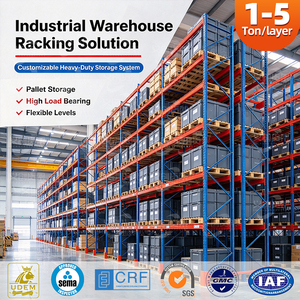
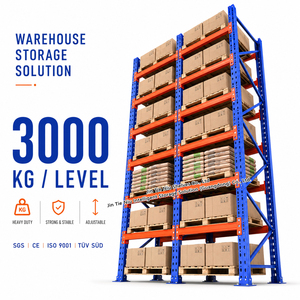
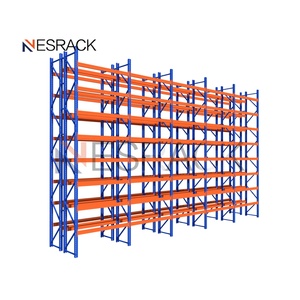
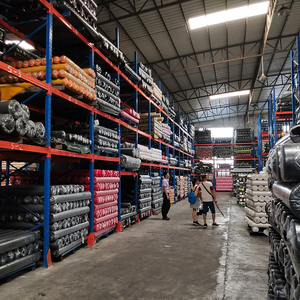
Engineering Authority: The Architectural Mechanics of High-Density Shuttle Racking Systems
Modern distribution facilities, third-party logistics (3PL) conglomerates, and high-velocity cold storage hubs operate under unrelenting real estate cost pressures. Conventional selective storage architectures often waste up to 60% of horizontal floor area on operator transit lanes. Drive-In racking improves volumetric density but exacerbates forklift structural impact risks and enforces strict LIFO access. The modern industrial Radio Shuttle Racking System resolves this operational friction by decoupling material transport within deep storage lanes from exterior forklift mast handling.
Operating as a semi-automated deep-lane storage system, the shuttle carrier travels along specialized continuous cold-formed galvanized guide rails inside the rack channels. An optical sensor array paired with continuous RF signal communication directs the motorized shuttle cart to elevate, translate, and deposit unitized pallet loads up to 1,500 kg per position across depths exceeding 40 to 60 meters. By eliminating forklift entry into structural channels, material handling operators preserve structural column integrity, reduce turnaround cycle times by upwards of 40%, and achieve volumetric warehouse volume utilization ratings exceeding 85%.
Comparative Structural Performance: Storage Density vs Operational Velocity
When engineering high-volume distribution centers, supply chain consultants must evaluate system trade-offs across capital expense (CapEx), SKU turnover velocity, and structural resilience. The data below outlines performance profiles across contemporary industrial pallet warehousing designs:
| Storage System Type | Space Utilization | Pallet Retrieval Speed | Access Principle | Forklift Impact Risk | Cold Room Suitability |
|---|---|---|---|---|---|
| Radio Shuttle Racking | 80% – 90% (Maximum) | Fast (Autonomous in-lane) | LIFO & FIFO Configurable | Virtually Zero (External only) | Optimal (-30°C to +45°C) |
| Selective Pallet Racking | 35% – 45% (Low) | Fast (100% Selectivity) | Pure FIFO Access | Moderate (Frequent turns) | Inefficient (High Energy/m³) |
| Drive-In Pallet Racking | 65% – 75% (High) | Slow (Mast travel inside) | Strict LIFO (FIFO costly) | Extremely High Danger | Acceptable (Space savings) |
| Push-Back Cart Racking | 60% – 70% (Medium) | Moderate (Push force limited) | Strict LIFO | Moderate to Low | Moderate (Mechanical limit) |
| Automated AS/RS Crane System | 90% – 95% (Maximum) | Continuous High Volume | Automated Matrix | Zero (Fully automated) | High (High CapEx barrier) |
Technological Evolution & Future Development Trends in Shuttle Logistics
The global materials handling sector is transitioning from stand-alone, radio-controlled units to deeply integrated, digitalized fulfillment infrastructure. The most critical technological shifts defining the next procurement decade include:
1. The Transition from 2-Way to 4-Way Multi-Directional Shuttles: While traditional 2-way shuttle systems navigate forward and backward down dedicated linear channels requiring forklift hoisting between structural levels, modern intralogistics favors 4-way omnidirectional shuttles. These systems cross track junctions longitudinally and latitudinally, interacting with integrated vertical reciprocating lifts (VRCs) to traverse elevations autonomously without manual operator intervention.
2. Advanced Power Infrastructure & Supercapacitor Integration: Next-generation shuttles eliminate lead-acid and standard ternary lithium battery banks in favor of high-stability Lithium Iron Phosphate (LiFePO4) systems and industrial supercapacitors. Supercapacitor arrays achieve rapid opportunity charging at transfer stations in 15 to 45 seconds, unlocking non-stop 24/7 continuous operations while eliminating hazardous chemical outgassing in sub-zero food distribution centers.
3. Seamless WMS/WCS Edge Computing: Early shuttle generations relied on hand-held RF remote controllers prone to drop damage and line-of-sight signal attenuation. Advanced installations now feature embedded industrial microcontrollers integrated via 5G private networks or industrial Wi-Fi directly to enterprise Warehouse Management Systems (WMS) and Warehouse Control Systems (WCS). Pallet allocation, FIFO batch sequencing, cycle counts, and battery status reporting execute in real time without human data entry.
Global Procurement Strategies & Strategic Sourcing Matrix
Procuring industrial racking from an international manufacturer requires a rigorous technical vetting process. Procurement leaders must look beyond raw tonnage pricing and calculate Total Cost of Ownership (TCO), accounting for seismic engineering validations, chemical pre-treatment standards, and container freight packing efficiency:
Metallurgical Integrity (Q235B vs Q355B)
Structural reliability hinges on high-yield structural steel coils sourced from verified tier-one mills. High-stress upright posts and horizontal load rails require cold-roll forming without micro-fracturing along bend radiuses to guarantee zero deflection under dynamic loads.
Multi-Stage Anti-Corrosion Finishing
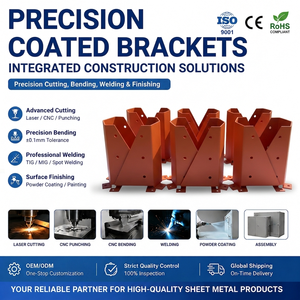
Tropical climates across Southeast Asia and sub-zero cold stores accelerate steel oxidation. Our 10-stage processing incorporates comprehensive acid pickling, phosphating baths, and electrostatic thermoset epoxy powder coating cured at 200°C for exceptional adhesion and scratch resistance.
Seismic Resistance & Load Verification
For installations located in seismically active circum-Pacific regions (such as Indonesia, the Philippines, or Japan), finite element analysis (FEA) must calculate horizontal ground acceleration to engineer heavy-duty baseplates, reinforced anchor studs, and bespoke cross-bracing assemblies.
Why Enterprise Importers Partner with Guangzhou Heda Shelves Co., Ltd.
Founded in 2001, Guangzhou Heda Shelves Co., Ltd. has evolved from a specialized precision metal workshop into an internationally recognized manufacturer of high-density warehouse storage systems. Operating out of an expansive 30,000-square-meter advanced manufacturing facility powered by continuous roll-forming lines, automated laser cutting centers, and robotic welding cells, HEDA Shelves engineers and exports upwards of 30,000 metric tons of certified racking infrastructure every month.
With an active engineering footprint extending across more than 120 countries and over 10,000 completed industrial warehouse installations, our technical teams possess comprehensive expertise in complex storage challenges. We deliver end-to-end support—from initial structural floor plan CAD drafting, 3D visualization rendering, and static/dynamic load calculation reports to customized packaging optimized for 40HQ ocean shipping containers, accompanied by complete engineering installation drawings.
Our quality control management systems are fully certified according to ISO 9001:2015 (Registration No. 18624Q00169R0M), our structural components carry official CE Certifications (Certificate No. 2435-CPR-8605159), and all surface treatments comply strictly with environmental RoHS standards. Headquartered in Guangzhou with direct proximity to primary deep-water sea hubs (Nansha, Huangpu, Shenzhen, and Hong Kong), we ensure rapid sea freight transit times across Southeast Asia (2 to 8 days), the Middle East (14 to 18 days), Europe, and the Americas.
Frequently Asked Questions: Industrial Shuttle Racking Procurement
Direct technical answers addressing engineering parameters, operational requirements, structural safety limits, and commissioning workflows.
Shuttle racking concentrates substantial point loads through upright frame baseplates due to deep-lane density. Typically, a reinforced concrete slab thickness of 200 mm to 300 mm with a minimum compressive strength of 25 to 30 MPa (C25/C30 grade) is required. Floor flatness should meet DIN 18202 Table 3 Line 3 or ASTM E1155 (FF 35 to FF 45) standards to prevent localized rail slope variations that could trigger cart emergency braking.
Our cold-chain shuttle units are purpose-built for sub-zero freezer warehouses down to -30°C. They incorporate internal heating pads for key electronic components, sealed IP65-rated micro-switches, condensation-resistant optical sensors, low-temperature synthetic lubricants, and high-density thermal lithium or supercapacitor power systems that prevent thermal-shock battery degradation.
Yes. A standard standard counterbalance or reach forklift transfers the radio shuttle cart between different lane channels and vertical beam elevations via integrated forklift entry channels. Depending on SKU throughput velocity, operations typically deploy one shuttle cart per 200 to 400 pallet locations.
The shuttle cart is engineered with multiple fail-safe redundancies: dual forward-and-rear photoelectric obstacle sensors, non-contact mechanical bump stops, magnetic rail end-stop detectors, and continuous pallet centering guide brackets. The cold-formed guide rail profile features a raised lip preventing pallet derailment during high-speed transit cycles up to 1.0 m/s.
To maximize ocean freight efficiency and eliminate transit damage, upright frames are shipped flat-packed for on-site bolting, beams and rails are custom-bundled with heavy-duty steel banding, and precision shuttle carts ship in protective export-grade fumigated wooden crates. Detailed loading drawings accompany each 40HQ container, ensuring parts unload sequentially to match your site erection schedule.