Engineered Uprights & Heavy-Duty Pallet Racking Systems
Explore our factory-machined cold-rolled steel upright frames, modular multi-tier storage assemblies, and certified warehouse collision protection hardware built to international engineering standards.
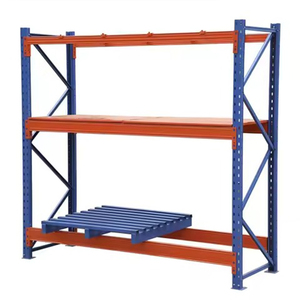
Multi-Level Industrial Pallet Racking With Q235 Steel Upright Frame
Continuous cold-rolled omega-profile upright posts engineered for high-bay multi-level distribution hubs with precision laser-punched connection slots.
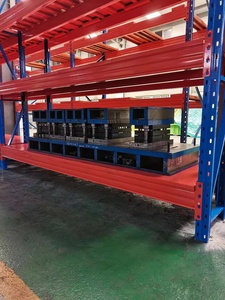
Heavy Duty Pallet Rack with Triple-Upright Frame Spray-Coated Steel Decks
Custom triple-post upright configuration specifically calculated to eliminate middle-frame deflection across ultra-deep industrial picking platforms.
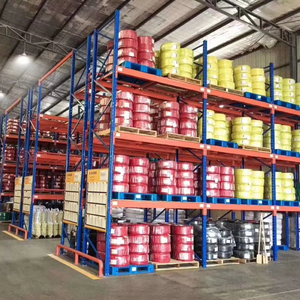
Boltless Stacking Steel Pallet Shelf Freestanding Powder Coated
Interlocking wedge-lock post uprights that maximize assembly velocity without compromising structural torsional stability or lateral stiffness.
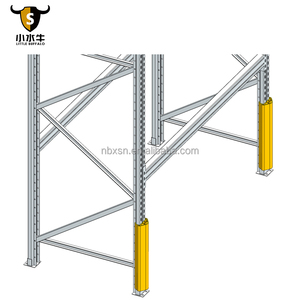
Polymer Anti-Collision Upright Protector Guardrail TUV Certified
High-molecular polymer wrap engineered to absorb forklift impacts and dissipate kinetic forces away from the load-bearing upright column steel.
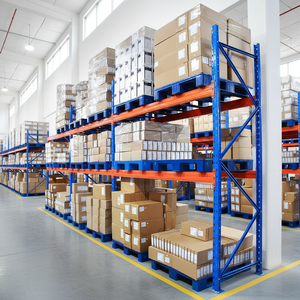
Heavy Duty Pallet Racking System Blue Upright Orange Beam Storage
Classic high-visibility logistics rack with cold-rolled upright profiles pickled, phosphated, and coated with wear-resistant electrostatic thermo-set powder.
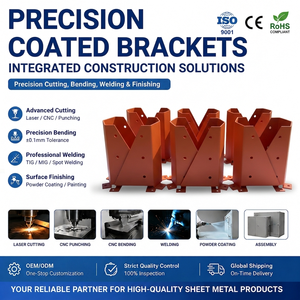
Structural Steel Pallet Rack Safety Upright Post Protector
Heavy gauge steel floor-anchored perimeter deflectors preventing catastrophic lower-column buckling from turning forklifts and pallet misalignments.
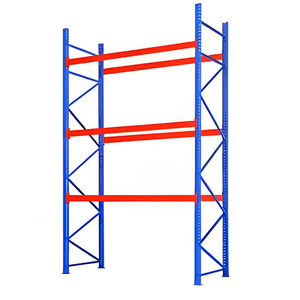
Push-Back High-Density Pallet Racking with Reinforced Uprights
Engineered for nested cart gravity movement where upright columns absorb combined eccentric dead weights and dynamic trolley braking stresses.
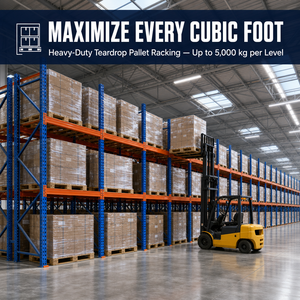
Large-Scale E-Commerce Logistics Upright Pallet Racking System
Ultra-tall upright profiles rolled under stringent deflection tolerances (±1mm over 12m), ideal for fast-paced omnichannel fulfilment facilities.
The Mechanics of High-Performance Pallet Rack Uprights
An engineering analysis of cross-sectional geometries, cold-work hardening phenomena, and global structural compliance standards (EN 15512, ANSI MH16.1, and AS 4084).
1. Cross-Sectional Optimization: Omega vs. Open-C Profiles
In modern industrial storage design, the pallet rack upright is subjected to complex multi-axial stress states comprising concentric axial compression, bi-axial bending moments induced by beam deflection, and torsional-flexural buckling. A standard cold-formed channel (C-section) exhibits low torsional rigidity due to the shear center being located outside the profile geometry. Consequently, premier racking manufacturers employ multi-flanged Omega (Ω) or modified Sigma profiles with continuous interior return lips.
By engineering up to 12 cold-formed bends within a single cross-section, the effective second moment of area (Ix, Iy) and Saint-Venant torsion constant (J) are substantially heightened. This geometric stabilization forces the failure mode away from sudden catastrophic torsional buckling toward controlled inelastic local buckling at significantly higher ultimate limit loads.
| Profile Dimension (Web × Flange) | Nominal Steel Grade | Material Thickness | Cross-Sectional Area (mm²) | Yield Strength (fy MPa) | Max Bay Axial Load (kg) | Punching Pattern Standard |
|---|---|---|---|---|---|---|
| 80mm × 60mm (Ω-Profile) | Q235B Cold-Rolled | 1.8 mm - 2.0 mm | 382.4 | ≥ 235 | 8,500 - 11,000 | 50mm / 75mm Pitch Teardrop / Hex |
| 90mm × 70mm (Ω-Profile) | Q235B / Q355B | 2.0 mm - 2.3 mm | 512.6 | ≥ 355 | 12,500 - 16,500 | 50mm / 75mm / 76.2mm Keyhole |
| 100mm × 70mm (Reinforced Ω) | Q355B High-Yield | 2.0 mm - 2.5 mm | 618.2 | ≥ 355 | 16,000 - 21,000 | Continuous CNC Slotting Pitch |
| 120mm × 95mm (Heavy Duty AS/RS) | Q355B / Micro-Alloy | 2.5 mm - 3.2 mm | 894.0 | ≥ 355 | 22,000 - 32,000 | Precision Automation Interlock |
2. Cold-Forming Plastic Deformation and Yield Stress Enhancement
During the multi-stage cold-roll-forming process executed at HEDA Shelves' automated production facility, high-strength structural strip coils (conforming to EN 10025-2 or GB/T 700) pass through 18 to 24 consecutive roller stations. The plastic deformation induced around the corner radii causes strain hardening (the Bauschinger effect in reverse), yielding a localized increase in yield strength of up to 15% to 25% along the longitudinal corner segments compared to the unworked parent coil.
In our finite element analysis (FEA) and stub column test regimes (conforming to EN 15512:2020), this localized strength boost is integrated into the gross cross-sectional efficiency calculation, providing exceptional strength-to-weight ratios that translate directly into reduced container shipping tare and lower total procurement expenditures for international buyers.
3. Seismic and Dynamic Load Verification
In seismic risk areas such as the Ring of Fire (Philippines, Indonesia, Japan, New Zealand, West Coast Americas), standard vertical gravity calculations are insufficient. Uprights must withstand cyclic horizontal base shear, P-Delta dynamic amplification, and accidental forklift mast contact. Our engineering department develops finite element computer simulations calibrated with dynamic shake-table test data, delivering reinforced welded baseplates, ductile anchor bolting sets, and custom K- or X-bracing truss layouts that absorb and dissipate ground acceleration energy without brittle structural failure.
Key Trends Transforming Global Pallet Rack Sourcing
How tier-one logistics operators, 3PL giants, and industrial supply managers are reshaping their storage asset procurement models.
1. Automation-Ready Standardized Profiles
Supply chain hubs are shifting away from bespoke manual racks toward universal upright slot profiles capable of retrofitting Autonomous Mobile Robots (AMR), AGVs, and Automated Storage and Retrieval Systems (AS/RS) without frame teardown.
2. Decarbonization & EPD Environmental Audits
Global enterprises demand verifiable Environmental Product Declarations (EPD). Steel coil origins, electric arc furnace (EAF) recycling percentages, and low-VOC powder coating chemistries now directly influence commercial contract awards.
3. Factory-Direct Modular Scalability
Middlemen and third-party brokers are being bypassed in favor of direct relationships with certified high-volume Chinese manufacturing plants to cut 18-25% in commission markups while securing dedicated engineering cadences.
4. Pre-Engineered Seismic Resilience
Cross-regional operators demand unified baseline upright specifications that fulfill strict structural seismic codes (such as EN 15512 or AS 4084) natively, simplifying future cross-facility inventory relocation.
5. Total Lifecycle Cost (TCO) vs Initial Price
Procurement teams evaluate total cost of ownership over 15-20 years, focusing on protective pre-treatment corrosion metrics, upright impact deflector durability, and modular replacement part accessibility.
6. Digital Twin & BIM Model Deliverables
Modern engineering contracts require standard IFC/Revit 3D digital twins alongside manufactured steel components, enabling computerized warehouse management software (WMS) mapping before physical handover.
Technological Advancements in Pallet Rack Upright Production
Breakthroughs in high-tensile metallurgy, automated cold-roll punch synchronicity, and smart sensor integration.
Continuous High-Speed Optical CNC Punching
Modern production lines replace mechanical press stops with continuous laser-guided multi-station hydraulic punches. Slot positioning accuracy is maintained within ±0.15mm across a 15-meter single-piece post, ensuring flawless interlock engagement.
Micro-Alloyed Steels (Vanadium/Niobium Doping)
By micro-alloying steel melt with minute traces of niobium, titanium, and vanadium, grain boundary refinement yields structural steel sheets with 450+ MPa yield strength without sacrificing low-temperature ductility required in sub-zero freezer applications.
IoT Structural Health Deflection Sensors
Next-generation upright prototypes incorporate embedded micro-strain gauges and RFID tags at bottom brace intersections, transmitting real-time column stress and out-of-plumb deflection alerts directly to the warehouse control dashboard.
Why Global Logistics Leaders Partner with HEDA Shelves
Over two decades of precision racking manufacturing, heavy structural engineering, and verified export reliability across 120+ countries.
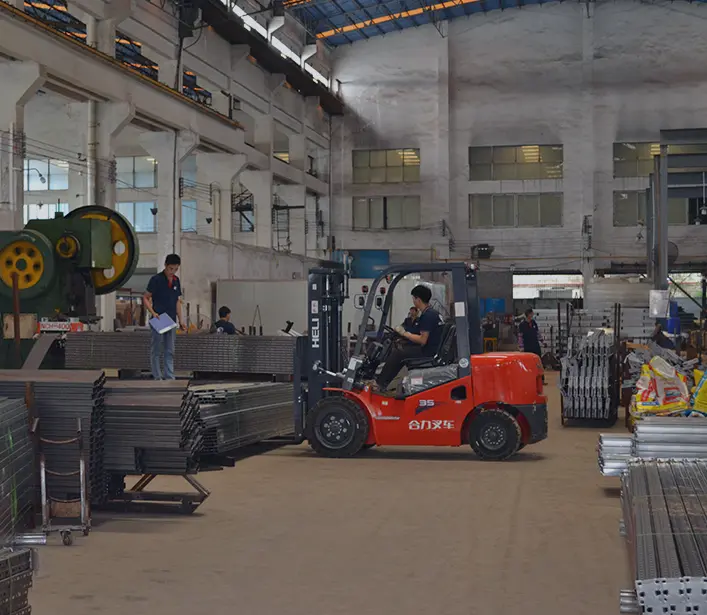
Guangzhou Manufacturing Hub: Speed, Precision, Integrity
Strategically situated in Guangzhou with immediate direct access to Nansha and Huangpu international deep-water container ports, Guangzhou Heda Shelves Co., Ltd. offers overseas clients uncompromised factory-direct pricing, guaranteed metallurgical compliance, and unmatched transit timelines.
- End-to-End Vertical Manufacturing: Slitting, roll-forming, laser-punching, robotic welding, and automated powder coating all contained in-house.
- Free Structural Engineering: Complete 2D AutoCAD floor layouts, 3D realistic project renders, and static load calculations provided free of charge before production.
- Tropical & Harsh Environment Coating: Multi-stage chemical pickling and phosphating pre-treatments guarantee 1,000+ hour salt-spray resistance in high-humidity ASEAN regions.
- Rapid Direct Port Shipping: Ocean transit schedules as fast as 2-5 days to Vietnam, 3-5 days to Manila, 5-7 days to Singapore/Thailand, and 6-10 days across Malaysia and Indonesia.
10 Certified Steps: From Prime Steel Coil to Container Seal
 STEP 01
Certified Steel
Spectrometer verified Q235B/Q355B prime coil stock.
 STEP 02
Strip Slitting
High-precision uncoiling and laser edge trimming.
 STEP 03
CNC Punching
Automated synchronized pitch perforation.
 STEP 04
Roll Forming
Continuous 22-station gradual cold-profile shaping.
 STEP 05
Flying Cut-Off
Optical laser flying shear to custom length (+/-1mm).
 STEP 06
Edge Deburring
Mechanical de-flashing and seam rounding.
 STEP 07
Baseplate Weld
Robotic MIG welding of structural footing plates.
 STEP 08
Chemical Dip
Acid pickling, degreasing, and zinc phosphating.
 STEP 09
Electrostatic Coat
Epoxy-polyester hybrid powder curing at 200 deg C.
 STEP 10
QC & Bundling
Thickness ultrasound check and export strapping.
Frequently Asked Questions on Pallet Rack Uprights
Clear, authoritative technical answers addressing load sizing, hole pitch interoperability, corrosion protection, and international project certifications.
What is the decisive factor when selecting upright post profile dimensions?
Upright column selection depends primarily on the unbraced length (the vertical distance between the floor and the first beam level, or between subsequent beam levels) and the total accumulated bay load. A taller first beam level (e.g., 2,200mm vs. 1,400mm) drastically decreases column buckling capacity due to increased slenderness ratio (λ). Our engineering team performs Euler buckling and torsional moment checks per EN 15512 to specify the exact profile width (80mm, 90mm, 100mm, or 120mm) and steel gauge (1.8mm to 3.0mm).
Can HEDA Shelves upright frames integrate with existing third-party racks?
Yes. We manufacture upright frames with international pitch standards: standard 50mm pitch (European/Global standard), 75mm pitch (widely utilized in Australia and Southeast Asia), and 76.2mm (3-inch teardrop, predominant across North and South America). When provided with a sample, technical drawing, or high-resolution rubbing of your existing hole pattern, we can precision-match the punching geometry and connector taper angle for full modular integration.
How does HEDA prevent upright corrosion in coastal and high-humidity climates?
Standard commercial spray lines often fail in humid coastal zones because oil residue impedes powder adhesion. Every HEDA Shelves component undergoes an automated immersion pre-treatment: high-temperature alkaline degreasing, clean-water cascade rinsing, acid pickling to eliminate mill scale, and chemical zinc phosphating. This forms an inorganic crystalline barrier that mechanically locks the electrostatic epoxy-polyester powder layer, rated for over 1,000 hours of continuous salt-spray exposure.
What structural certifications and audit reports accompany overseas shipments?
We supply verifiable testing and compliance documentation with every project: official CE Certification (No. 2435-CPR-8605159) for structural steel products under EN 1090 / EN 15512, ISO 9001:2015 Quality Management (No. 18624Q00169R0M), raw material mill test certificates (MTC 3.1) stating chemical composition and yield limits, and project-specific static calculation books signed by structural engineers.
What are the requirements for seismic anchoring in active earthquake zones?
In seismic regions, upright baseplates are enlarged and fabricated from 6mm to 10mm high-yield plate with dual wedge-anchor or chemical epoxy capsule drillings. The anchor specification is determined by calculating combined tension pull-out (due to overturning moments) and concrete slab edge shear. In addition, horizontal and diagonal frame bracing is upgraded to closed tubular sections to prevent web crumpling under cyclic lateral loads.
How does container packing maximize ocean freight utilization for uprights?
Because upright frames contain substantial empty volume between posts when assembled, HEDA Shelves ships long-distance export orders as knocked-down (KD) pre-punched components. Upright posts are tightly nested with protective composite strapping and lumber dunnage, while bracing channels and baseplates are palletized separately. This packing methodology fits up to 24-26 metric tons into a single 40ft High Cube (40HQ) container, slashing ocean freight cost per pallet position by up to 45% compared to pre-welded frames.
Request Your Custom Upright Load Calculation & Layout Proposal
Send our senior engineering team your warehouse dimensions, clear ceiling heights, pallet weights, and forklift specifications. We will calculate structural frame capacities and return an AutoCAD layout with 3D model renderings free of charge within 24 hours.