Engineered Warehouse Racking & Structural Solutions
Manufactured factory-direct by Guangzhou Heda Shelves Co., Ltd. for seamless deployment with precision row spacers, frame bracing, and custom heavy-duty storage configurations.
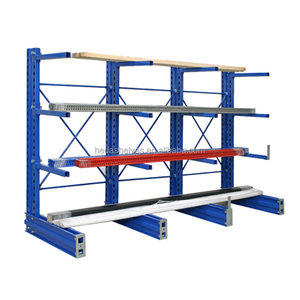
Cantilever Storage Rack Heavy Duty Single Sided H Steel
Hot-rolled H-beam cantilever system tailored for timber, steel tubing, and high-load architectural stock with high moment capacity.
View Specifications
Carton Flow Rack with Roller Tracks Gravity FIFO
Integrated gravity roller tracks enabling split-case order picking with strict First-In, First-Out (FIFO) stock replenishment control.
View Specifications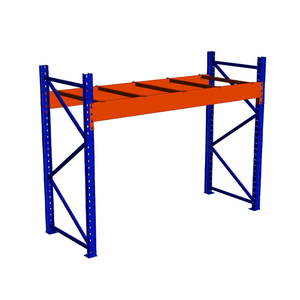
Easily Assemble Steel Heavy Duty Durable 5-Layer Long Span
Boltless adjustable modular shelving with structural beam clips, engineered for multi-tier fulfillment centers and manual bin picking.
View Specifications
Heavy Duty High Bay Warehouse Racking System
Engineered high-bay selective pallet racking supporting heavy unit loads up to 4,000 kg per beam pair with integrated row tie arrays.
View Specifications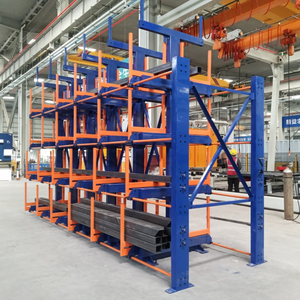
Industrial Heavy Duty Cantilever Rack with Telescopic Arms
Mechanically extendable cantilever arms designed for overhead crane accessibility and dense storage of industrial bar and pipe bundles.
View Specifications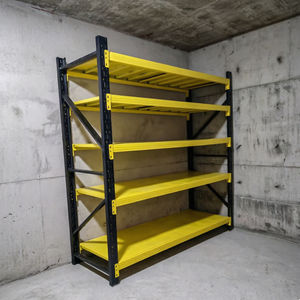
Steel Mezzanine Rack Warehouse Mezzanine Shelving System
Multi-tier structural mezzanine platform rated from 300 to 1,000 kg/m² for vertical spatial expansion without building expansion.
View Specifications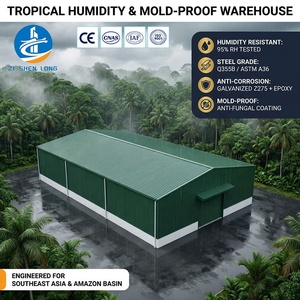
Custom Designed Prefab Steel Structure Warehouse Workshop
Engineered prefabricated industrial steel building solutions optimized for high-clearance intralogistics distribution centers.
View Specifications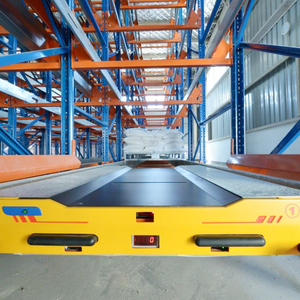
Heavy-Duty ASRS Radio Shuttle Pallet Rack System
Ultra-dense semi-automated pallet storage system deploying robotic radio shuttles within deep lanes for cold chain and high-velocity goods.
View SpecificationsThe Critical Role of Row Spacers in Industrial Pallet Racking Stability
Why secondary structural ties dictate overall building safety, seismic resistance, and longitudinal flue compliance in modern high-density distribution centers.
In modern structural warehouse engineering, pallet rack row spacers (frequently designated as structural row ties or back-to-back connectors) are routinely misconstrued as minor accessory components. In structural reality, row spacers serve as indispensable load-transfer bridges that transform two slender, isolated, single-row upright frames into an interconnected, robust, double-row structural diaphragm.
According to ANSI MH16.1: Specification for the Design, Testing and Utilization of Industrial Steel Storage Racks and European standard EN 15512, the effective unbraced length ($KL$) of an upright column along the cross-aisle direction directly determines its critical buckling load ($P_{cr}$). By physically linking back-to-back upright frames at calculated vertical intervals, row spacers dramatically diminish the column slenderness ratio ($\lambda = KL/r$), increasing the cross-aisle tipping resistance and preventing localized frame torsional buckling under asymmetric pallet loads.
Code Mandate: NFPA 13 (Standard for the Installation of Sprinkler Systems) dictates an unobstructed longitudinal flue space—typically 6 inches (152 mm) or larger—between back-to-back pallet loads. Precision-manufactured row spacers guarantee this critical flue clearance remains completely uniform across thousands of linear rack bays.
Critical Engineering Functions of Row Ties
- ✔ Flue Space Uniformity: Prevents inventory creep from closing the longitudinal flue, ensuring compliance with fire marshal and ESFR sprinkler specifications.
- ✔ Moment & Shear Load Sharing: Balances transient dynamic impacts from warehouse material handling equipment (MHE) across twin frames.
- ✔ Seismic Ground Motion Damping: Transmits cyclic horizontal shear stresses during seismic ground acceleration (ASCE 7-22 / FEMA 460).
- ✔ Deflection Control: Inhibits out-of-plumb progressive tilt in tall high-bay rack rows exceeding an 8:1 height-to-depth ratio.
Comparative Engineering Matrix: Row Spacer Mechanical Topologies
| Spacer Configuration | Standard Clearances | Material Specification | Fastener Topology | Recommended Application Environment |
|---|---|---|---|---|
| Heavy-Duty Structural C-Channel | 200 mm – 600 mm (8"–24") | Q235B / Q355B Hot-Rolled Steel | Grade 8.8 M10/M12 Through-Bolts | High-throughput DC, seismic zones (PGA > 0.2g), heavy manufacturing. |
| Rigid Formed Tubular Spacer | 150 mm – 450 mm (6"–18") | Hollow Structural Steel (HSS) | Double Flange Clamping Plates | Standard selective pallet racking, retail fulfillment, ambient 3PL hubs. |
| Deep Offset / Overhead Flue Strut | 450 mm – 1000 mm (18"–40") | Reinforced Structural Angle / Truss | Dual Column Direct Anchor Bracket | In-rack building columns, fire sprinkler riser pass-through conduits. |
| ASRS Precision Micrometric Tie | 250 mm – 500 mm (±1.5mm) | Laser-Cut Precision Stamped Plate | Torque-Controlled High-Tensile Bolts | Automated high-bay warehouses, automated guided vehicle (AGV) aisles. |
Future Procurement & Technological Trends in Row Spacers (2025–2030)
How automation tolerances, seismic building safety, and sustainable metallurgy are reshaping the specifications of industrial pallet rack hardware.
Micron-Tolerance Automation Ready
As Automated Storage and Retrieval Systems (AS/RS) and autonomous mobile robots (AMRs) dominate new intralogistics deployments, rack row spacers must transition from loose clearance punch holes to CNC-milled, robotic laser-cut hole arrays. A cumulative out-of-plumb deviation of merely 3 mm across a 20-meter bay can cause shuttle laser misreads; tomorrow's procurement requires strict ±0.5 mm dimensional repeatability.
Dynamic Seismic Energy Dissipation
With heightened seismic compliance mandates under IBC 2024 and updated Eurocode 8 seismic provisions, rigid row spacers in high-hazard zones (such as the Pacific Rim and Southeast Asian volcanic arcs) are adopting slotted energy-dissipating friction dampers. These engineered dynamic ties absorb lateral kinetic energy during earthquake events rather than snapping under sudden cross-frame shear loads.
Eco-Friendly & Corrosion-Proof Finishes
Global procurement teams are shifting away from toxic hexavalent chromate electro-galvanizing toward continuous hot-dip zinc-aluminum-magnesium (ZM) alloy coatings and thermoset hybrid epoxy-polyester electrostatic powder coats. This switch guarantees over 720 hours of ASTM B117 salt spray resistance without rusting, satisfying rigorous tropical cold-storage and fertilizer depot humidity constraints.
Precision Manufacturing Standards: From Steel Coil to Container
A look inside Guangzhou Heda Shelves Co., Ltd.'s 30,000 m² automated fabrication facility, detailing our 10-stage quality-controlled production workflow.
Every heavy-duty row spacer fabricated at our manufacturing plant originates from certified hot-rolled structural steel coils (grades Q235B and Q355B, equivalent to ASTM A36 and ASTM A572 Grade 50). Structural components are processed through high-precision automated CNC stamping presses, progressive multi-stage cold roll-forming units, and robotic multi-axis welding cells.
To combat harsh coastal air, extreme monsoon humidity, and sub-zero freezer condensation in overseas markets, every steel spacer undergoes a rigorous chemical surface preparation process: ultrasonic degreasing, industrial pickling, phosphating passivation, and continuous pure-water cascading rinses. This ensures optimal chemical keying prior to electrostatic powder deposition at 200°C curing temperatures.
Our 10-Stage Controlled Quality Protocol
- Certified Raw Coil Testing: Spectrometer chemical composition & tensile verification.
- Precision High-Speed Slitting: Narrow coil shearing with zero edge burr tolerance.
- Automated CNC Stamping: Consistent hole pitch spacing compliant with teardrop/universal patterns.
- Cold Bending & Roll Forming: High-rigidity profiles preserving steel grain structure.
- Automated Robotic Welding: CO₂ gas-shielded seamless robotic seams.
- Shot Blasting & Surface Polishing: Elimination of scale, slag, and micro-imperfections.
- Pickling & Phosphating: Multi-tank chemical pre-treatment for oxide stripping.
- Electrostatic Powder Coating: Automated reciprocal spray guns achieving 60–80 µm dry film.
- Curing & Thermal Cross-Linking: High-bake oven ensuring impact resilience.
- Container-Optimized Palletization: Steel strapping, moisture barrier film, and corner protectors.
Frequently Asked Questions: Pallet Rack Row Spacers Procurement
Authoritative answers addressing load calculations, seismic anchor requirements, fire codes, and installation protocols.
How many row spacers are required per upright frame in a back-to-back rack bay?
The quantity and elevation of row spacers are dictated by total upright frame height, bottom beam elevation, and seismic design parameters (ANSI MH16.1). As a fundamental engineering standard: frames up to 12 feet (3.66 m) require a minimum of two row spacers; frames between 12 and 20 feet (3.66 m to 6.1 m) mandate three row spacers; and tall frames exceeding 20 feet (6.1 m) require four or more spacers. Vertically, one spacer should be anchored near the lowest beam level (above floor level), one near the top of the frame, and intermediate spacers spaced evenly at intervals no greater than 8 to 10 feet (2.4 m to 3.0 m) along the height, positioned directly adjacent to frame panel horizontal/diagonal bracing nodes.
What is the standard row spacer length to satisfy NFPA 13 longitudinal flue requirements?
Standard pallet rack flue clearances typically require an unobstructed opening of 6 inches (152 mm) between back-to-back pallets. Because pallets routinely overhang the front and rear rack beams by 3 inches (76 mm) on each side (totaling a 6-inch load overhang toward the center aisle flue), the row spacer length must be equal to: Desired Longitudinal Flue Clear Opening + (2 × Pallet Rear Overhang). Consequently, standard warehouse storage designs utilizing 48-inch deep pallets on 42-inch deep frames commonly deploy 12-inch (305 mm), 14-inch (355 mm), or 18-inch (457 mm) row spacers depending on pallet overhang specifications and in-rack sprinkler pipe installation clearances.
Can row spacers be bolted into any perforation along the upright column?
No. To optimize load transmission and avoid local web crippling of cold-formed steel uprights, row spacers must be bolted as close as practicable to the horizontal and diagonal node panel joints of the frame bracing. Bolting a rigid spacer into an unbraced, unsupported span of the upright column column flange can induce localized secondary bending moments when the rack experiences asymmetric dynamic loading or seismic ground vibrations. Always follow the factory CAD engineering submittal drawing for specified connection elevations.
What is the mechanical difference between stamped sheet spacers and structural C-channel ties?
Stamped sheet steel spacers (typically 2.0 mm to 2.5 mm thickness) rely on folded flanges for dimensional rigidity and are appropriate for light-to-medium ambient selective storage. Structural C-channel row spacers are fabricated from heavy-gauge hot-rolled structural steel (3.0 mm to 4.5 mm thickness, Q235B/Q355B) and offer substantially superior moment, shear, and compressive yield strength. For seismic zones (IBC Seismic Design Category C, D, E, or F), high-bay installations exceeding 8 meters, or heavy manufacturing warehouses storing casting dies or steel coils, structural C-channel or tubular box ties are strictly mandated to resist lateral buckling.
How does HEDA Shelves ensure quality and corrosion protection for overseas sea freight?
Guangzhou Heda Shelves Co., Ltd. enforces an ISO 9001:2015 certified quality inspection workflow covering incoming raw material spectrometry, robotic weld seam integrity, and multi-stage pickling and phosphating pre-treatment. Our row spacers and racking components are electrostatically coated with UV-resistant, non-toxic pure polyester thermosetting powder cured at 200°C. Finished products undergo 500+ hours of continuous salt-fog testing and are securely wrapped with edge guards, steel bands, and desiccated vapor-corrosion-inhibitor (VCI) maritime stretch film inside shipping containers.
Can you manufacture custom row spacer lengths to accommodate building columns or sprinkler risers?
Yes. As an OEM and ODM primary manufacturer, we custom-engineer row spacers ranging from 100 mm to over 1,500 mm in length. When building columns or in-rack fire suppression pipes penetrate the flue space between back-to-back rack runs, our engineering department designs split offset spacers, step-down bridge struts, or trussed flue ties to preserve building clearance while maintaining cross-aisle frame stabilization.
Optimize Your Warehouse Stability with Certified Structural Racking Hardware
Connect directly with Guangzhou Heda Shelves Co., Ltd.'s project engineering desk for complimentary warehouse layout optimization, seismic load calculations, and competitive factory-direct container pricing.