Featured Heavy-Duty & High-Density Racking Solutions
Precision-engineered industrial racking and warehouse automation components produced under ISO 9001:2015 and CE quality assurance. Select an engineering module below to explore detailed specifications.
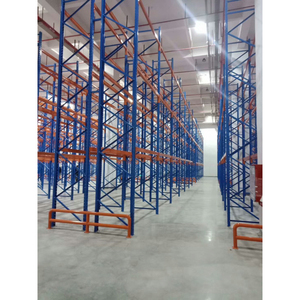
Easy Assemble Light Duty Steel Shelving Rack Shelves Shelving Warehouse Storage Rack High Bay Racking Heavy Duty Shelves
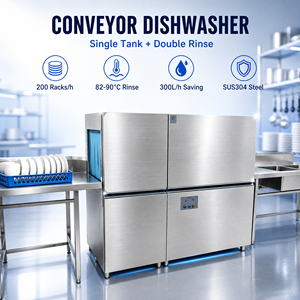
Commercial Heavy Duty 200 Racks Per Hour 420mm Washing Height Conveyor Dishwasher For Hotel Employee Canteen Catering Company
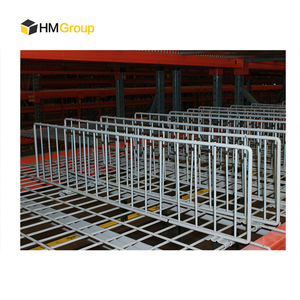
Warehouse Metal Steel Wire Shelves Divider For Racking System
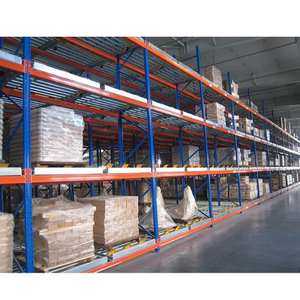
Warehouse FIFO Storage Racking System Flow Through Pallet Roller Racking
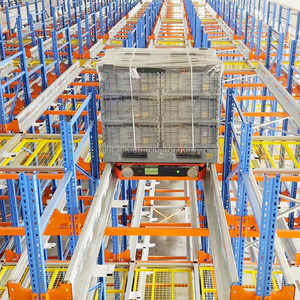
Heavy Duty 4 Way Shuttle Racking System Steel Radio Shuttle Pallet Rack High Density Automated Warehouse Storage Manufacturer
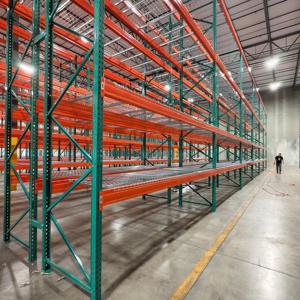
Jracking US Inventory Warehouse Stacking Shelves Racks Heavy Duty Teardrop Pallet Racking System for Logistics Hub
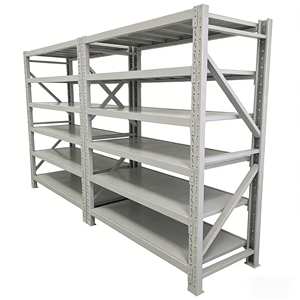
Industrial Warehouse Storage Rack Heavy Duty Steel Shelving Unit Adjustable Boltless Metal Shelf Garage Workshop OEM
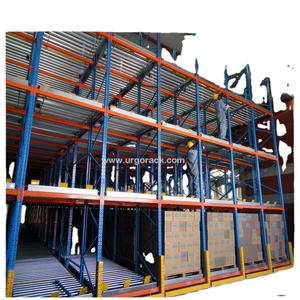
High Efficiency Order Picking Racking System, Gravity Flow Roller Racking System
The Physics and Mechanics of Very Narrow Aisle (VNA) Storage
In modern supply chain architecture, floor real estate commands a premium. Very Narrow Aisle (VNA) racking compresses operational aisle widths down to 1,500 mm – 1,800 mm, recapturing up to 50% of unused volumetric cube space while preserving 100% immediate SKU selectivity.
Volumetric Cube Optimization
Conventional counterbalance forklift aisles demand 3.5 to 4.2 meters of turning clearance. By transitioning to specialized man-up or man-down VNA turret trucks, floor footprint dedicated to access corridors drops from 60% to under 25%. System verticality expands safely up to 18+ meters, maximizing ceiling clearance without structural compromise.
Rigid Structural Deflection Control
High-bay narrow pallet racking demands minimal lateral deflection under full dynamic braking and retrieval loads. Our structural engineers utilize high-tensile hot-rolled strip steel (Grade Q235B & Q355B) rolled into proprietary Omega-profile upright columns. Upright punchings allow 50mm or 75mm beam pitch increments, minimizing dead airspace above pallet loads.
Advanced Floor Guidance Synergies
VNA material handling equipment requires automated lateral stabilization. We design custom low-profile mechanical structural steel guide rails (angle profiles L100x75x8 or C-channels) bolted directly to the slab, as well as flush inductive wire-guidance floor routing configurations that eliminate mechanical floor obstacles while accelerating truck transit speeds up to 12 km/h.
Structural System Performance Analysis
Comprehensive technical assessment showing how Narrow Pallet Racking compares directly against conventional selective, drive-in, and automated shuttle systems across core architectural benchmarks.
| Storage Topology | Aisle Width Req. | Floor Space Utilization | Direct SKU Selectivity | Max Usable Height | Throughput Velocity | Forklift Equipment Match |
|---|---|---|---|---|---|---|
| Very Narrow Aisle (VNA) | 1.5m – 1.8m | 65% – 75% | 100% (Instant) | Up to 18.0 Meters | High (High-bay Turret) | Man-Up / Man-Down Turret Truck, Articulated Truck |
| Standard Selective Rack | 3.2m – 4.0m | 35% – 45% | 100% (Instant) | Up to 11.5 Meters | Medium to High | Standard Counterbalance, Reach Truck |
| Double Deep Racking | 2.8m – 3.2m | 50% – 58% | 50% (Secondary Deep) | Up to 10.0 Meters | Medium | Pantograph / Telescopic Deep Reach Forklift |
| Drive-In / Drive-Through | Continuous Lane | 70% – 80% | <15% (LIFO/FIFO Batch) | Up to 12.0 Meters | Low to Moderate | Narrow-Chassis Counterbalance / Reach Truck |
| Radio Shuttle Automation | Aisle-Free Bay | 80% – 90% | Batch / Channel FIFO | Up to 24.0 Meters | Very High | Integrated Semi-Automated 4-Way Radio Carrier |
Future Procurement Trends in High-Density Logistics
Structural storage procurement has evolved from commodity steel purchases into strategic engineering investments. High-velocity operations must align rack specifications with robotic material handlers, stringent seismic regulations, and carbon accounting.
Autonomous VNA Truck & AGV Integration
The rapid deployment of automated guided narrow-aisle turret trucks and vision-guided AGVs requires zero-tolerance rack fabrication. Punch pitch accuracy must remain within ±0.5 mm over a 12-meter vertical section, while aisle rail entry funnels must incorporate optical target markers and physical damper stops to support 24/7 dark-warehouse automation.
Sub-Zero Cold Chain High-Density Mandates
Refrigerated cubic meters carry 400% higher operational energy expenditure than dry ambient warehousing. In temperature-controlled distribution hubs, narrow pallet racking and radio shuttle systems eliminate thermal losses by minimizing internal aisle volumes. Structural components are treated with low-temperature cold-rolled alloys that resist sub-zero embrittlement at -25°C to -35°C.
Dynamic Seismic Resistance Engineering
Across the Pacific Rim seismic belt and seismically active zones in the Philippines, Indonesia, and Japan, procurement officers mandate finite element analysis (FEA) compliant with EN 16681 and FEM 10.2.08. Calculations dictate oversized ductile footplates, specialized floor chemical anchoring with minimum M16 embedment, and reinforced multi-bay horizontal/vertical portal bracing.
Guangzhou HEDA Shelves Co., Ltd. – Engineered Reliability Since 2001
Over 25 years of relentless manufacturing refinement. Backed by a 30,000 m² heavy industrial facility, 30,000 tons of monthly throughput, and 300+ structural engineers, precision machinists, and export specialists.
Certified Quality Credentials
HEDA operates under fully auditable international accreditations, holding CE Certificate No. 2435-CPR-8605159, ISO 9001:2015 Certification No. 18624Q00169R0M, and continuous RoHS environmental compliance. Every production batch is certified to withstand static beam deflection ratios within 1/200th to 1/300th of the clear span.
Optimized Maritime Logistics
Strategically based adjacent to Guangzhou and Nansha ports, HEDA guarantees expedited maritime transit schedules across Southeast Asia: 2-5 days to Haiphong/Cat Lai (Vietnam), 3-5 days to Manila (Philippines), 5-7 days to Laem Chabang (Thailand) and Singapore, 6-8 days to Port Klang (Malaysia), and 7-10 days to Jakarta (Indonesia).
End-to-End Engineering Support
From building architectural assessments to DWG AutoCAD masterplans, 3D parametric renderings, seismic anchor pullout validation, and container packaging optimization, our project engineering team operates as your direct technical extension from structural inception to final commissioning.
10 Controlled Steps: From Prime Steel Coil to Containerized Export
In-house vertical integration guarantees traceability, surface adhesion durability, and structural dimensional accuracy across every component.

Raw Materials

Precision Cutting

Column Punching

Cold Bending

Profile Forming

Surface Polishing

Robotic Welding

Pickling & Phosphating

Powder Coating

QC & Export Shipping
Frequently Asked Engineering & Procurement Questions
Comprehensive technical clarifications addressing floor tolerances, anti-corrosion chemistry, structural calculations, and global supply logistics for warehouse consultants and project developers.
Transform Your Warehouse Cube Into High-Density Asset Value
Partner directly with Guangzhou HEDA Shelves Co., Ltd. for factory-direct narrow aisle engineering, certified seismic frame calculations, and global turnkey logistics support.