Flagship Industrial Shelving & Warehouse Storage Systems
Engineered with certified high-yield steel, specialized pre-treatment coating, and boltless modular configurability. Select factory-certified storage solutions tailored for high-volume distribution centers, manufacturing hubs, and cold-chain facilities.
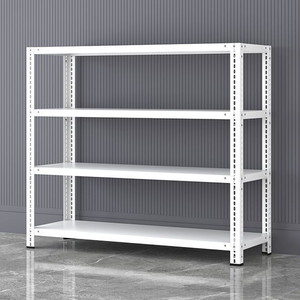
Adjustable Warehouse Storage Rack Metal Industrial Shelving for Diverse Goods
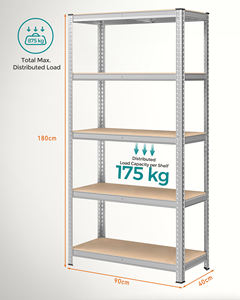
Heavy Duty 5-Layer Metal Shelf 180x90x40cm Galvanized Rust Resistant | Modular Storage Rack
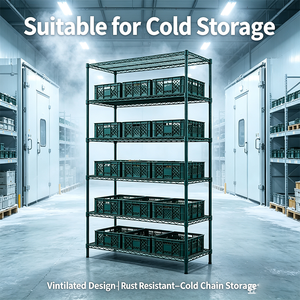
Heavy Duty Rust Resistant Steel Shelves Warehouse Unit 6 Tier Wire Shelving Rack for Cold Storage
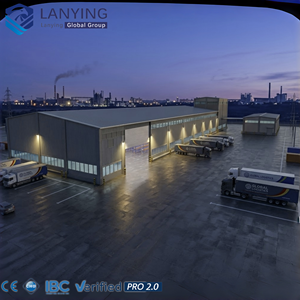
Prefabricated Industrial Steel Structure Warehouse Workshop With Integrated Racking System
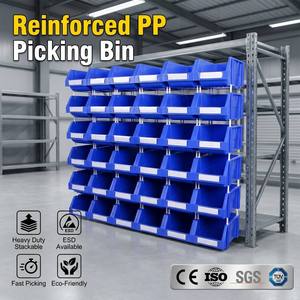
Semi-Open Stacking Warehouse Bin Spare Parts Picking Storage Organizer for Hardware Sorting
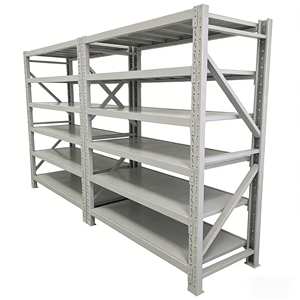
Industrial Warehouse Storage Rack Heavy Duty Steel Shelving Unit Adjustable Boltless Metal Shelf
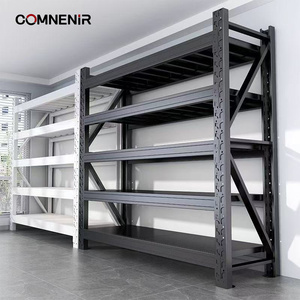
Industrial Shelving Warehouse Rack Heavy Duty Pallet Racking System for Distribution Centers
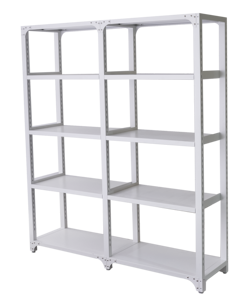
Heavy Duty 5 Tier Lab Storage Rack Adjustable Corrosion Resistant Epoxy Coated Metal Shelving
Engineering Authority: Vertically Integrated Industrial Racking Manufacturing
As a globally certified equipment manufacturer and turnkey exporter headquartered in Guangzhou, China, our structural fabrication ecosystem has delivered over 10,000 high-density intralogistics and industrial racking installations worldwide since 2001. Industrial storage systems are load-bearing, life-safety-critical steel structures. In an era of intense supply-chain velocity and automated high-bay facilities, procurement teams cannot treat heavy-duty shelving as generic commodities. Structural stability, steel grain direction, cold-bending precision, and anti-corrosive chemical passivation define the operational lifespan of industrial warehousing.
Our dedicated 30,000 m² production facility controls every step of structural fabrication from prime steel coil slitting to automated cold roll-forming, computerized multi-station punching, robotic MIG welding, and continuous electrostatic powder coating. Operating under ISO 9001:2015 Quality Management standards (Certification No. 18624Q00169R0M) and European CE conformity (Certificate No. 2435-CPR-8605159), our heavy-duty shelving and pallet racking frames satisfy the exacting structural requirements of EN 15512, EN 15620, and RMI (Rack Manufacturers Institute) standards.
Certified Structural Metallurgy
We source certified prime Q235B and high-yield Q355B structural steel directly from premier domestic mills. Chemical and tensile certifications accompany every heat number, guaranteeing consistent yield thresholds and uncompromised moment-load distribution under maximum static and dynamic capacities.
10-Stage Surface Passivation
Every profile undergoes continuous immersion degreasing, ultrasonic rust removal, acid pickling, and dual zinc-phosphate pre-treatment before receiving automated electrostatic thermoset epoxy-polyester powder coating. This prevents micro-delamination and passes stringent 500-hour ASTM B117 salt-spray tests.
Free Layouts & Load Simulations
Our in-house design institute provides free engineering services including AutoCAD floor-plan layouts, 3D photorealistic renderings, finite element analysis (FEA), and seismic deflection modeling. Our engineers optimize aisle clearance, turning radii, and cubic utilization before manufacturing begins.
Global Procurement Trends: The Next Era of Industrial Shelving & Racking
Modern industrial supply chains face unprecedented macroeconomic disruptions, rapid e-commerce SKU diversification, rising warehouse real-estate leases, and strict ESG compliance demands. B2B procurement directors and intralogistics planners are fundamentally restructuring their capital expenditure strategies. The following trends represent the decisive vectors shaping industrial shelving acquisitions over the coming five years:
1. Vertical Cubic Maximization Over Real-Estate Expansion
With industrial land acquisition costs escalating across Tier-1 logistics corridors, progressive enterprises are abandoning sprawling single-tier floor plans. The procurement trend favors multi-tier rack-supported mezzanines, narrow-aisle (VNA) systems, and multi-story catwalk shelving that leverage warehouse clear heights up to 14 meters. By transforming dormant cubic airspace into dense order-picking zones, operators multiply storage footprints by 200% to 300% without acquiring additional square footage or triggering municipal commercial building tax hikes.
2. Hybrid Automation-Ready Structural Infrastructure
Warehouses are increasingly transitioning toward brownfield automation. Procurement teams now specify industrial shelving systems capable of accommodating autonomous mobile robots (AMRs), automated guided vehicles (AGVs), and carton-handling mini-load cranes. This requires tighter manufacturing tolerances: beam elevation variances must stay within ±1.0 mm, and floor-level anchor base plates must withstand localized point-load shears generated by continuous robotic wheel paths.
3. Climate-Resilient & Anti-Corrosive Metallurgy for Tropical & Coastal Hubs
Global logistics expansion into high-humidity maritime regions (such as Southeast Asian ASEAN markets, Latin American trade ports, and the Middle East) has exposed the vulnerability of substandard commercial paint finishes. Procurement tenders now mandate continuous hot-dip galvanization (HDG) conforming to ISO 1461 or marine-grade epoxy coatings with high scratch resistance for cold storage down to -30°C and unconditioned tropical transit hubs with humidity exceeding 85%.
4. Containerized Logistics Density Optimization
Global ocean freight volatility requires equipment manufacturers to design modular components optimized for 40HQ container stuffing. By engineering standardized beam-nesting geometries, detachable frame bracing, and custom steel-pallet strapping cradles, our Guangzhou factory achieves over 95% volumetric packing efficiency. This decreases the landed freight cost per pallet position by 18% to 27% compared to traditional non-optimized racking exporters.
| System Category | Typical Load Capacity | Optimal SKU Density | Stock Rotation Strategy | Target Industrial Application |
|---|---|---|---|---|
| Selective Pallet Racking | 1,000 – 4,500 kg / level | Medium (40% floor area) | 100% Immediate Direct Access | FMCG, 3PL Distribution, Multi-SKU Hubs |
| Heavy Duty Longspan Shelving | 300 – 1,000 kg / shelf | High (Hand-loaded items) | Manual Batch Picking / FIFO | Automotive Spares, Hardware, Workshop OEM |
| Radio Shuttle High-Density | 500 – 2,000 kg / pallet | Maximum (Up to 85% volume) | Configurable FIFO / LIFO | Cold Storage, Beverage Bottling, Raw Materials |
| Multi-Tier Mezzanine Platform | 300 – 1,200 kg / m² deck | Very High (Vertical stacking) | Zone Picking / Conveyor Ready | E-commerce Fulfillment, Apparel, Archival |
| Corrosion-Resistant Lab / Wire Rack | 150 – 450 kg / tier | Medium-High (Airflow open) | Direct Selective Visual Inspection | Pharmaceutical Cleanrooms, Food Prep, Chemicals |
Material Science & Structural Engineering Evolutions in Industrial Storage
The transition from structural steel I-beams to cold-formed thin-walled steel profiles represents one of the most critical structural engineering milestones in modern intralogistics. Understanding this structural mechanics evolution empowers industrial purchasing teams to verify certified calculations rather than relying solely on nominal sheet-metal gauge thicknesses:
High-Tensile Micro-Alloyed Steel vs. Heavy Commercial Gauges
Historically, manufacturers compensated for lower-quality steel by increasing wall thickness (e.g., using heavy 2.5 mm low-carbon iron). Today, advanced metallurgy utilizes micro-alloyed high-tensile steel grades (such as Q355B with additions of niobium and vanadium), delivering yield strengths ($f_y$) exceeding 355 MPa. This allows cold-roll formers to shape complex 12-bend to 16-bend upright column cross-sections with 1.8 mm to 2.0 mm wall thicknesses that exhibit higher section modulus ($Z_x$) and greater torsional rigidity while significantly lowering raw dead-weight structural burdens on facility concrete slabs.
FEA-Driven Hole Pattern Geometry
The punching pattern along vertical uprights (teardrop, hex-slot, butterfly, or diamond punch) directly influences the net cross-sectional area under axial compression. By applying Finite Element Analysis (FEA) and continuous strain-gauge validation, our engineering department designs hole geometries that eliminate localized stress concentrations. This design maintains maximum residual cross-sectional steel area, offering robust safety margins against buckling under asymmetrical tier loading.
Automated Roll-Forming Without Internal Residual Stress
Rapid roll-forming can introduce severe residual tension along profile bend radii, leaving steel vulnerable to stress-corrosion cracking and unexpected embrittlement in cold-storage sub-zero environments. Our Guangzhou factory utilizes gradual 18-to-24 pass cold roll-forming lines. The steel strip is incrementally shaped at controlled speeds, preserving the microcrystalline structure of the alloy and ensuring exact cross-sectional dimensional tolerance along lengths up to 12 meters.
Frequently Asked Questions: Global Industrial Shelving Procurement
Direct technical answers addressing the structural, commercial, and freight concerns of warehouse managers, operations directors, and overseas equipment importers:
What documentation is required to verify load ratings and structural compliance?
We supply verified mill test certificates (MTC) detailing steel chemical composition and tensile elongation, CE factory production control conformity records (EN 1090 / EN 15512), and structural load calculation sheets signed by qualified structural engineers for all customer-specific bay configurations.
Can your shelving systems be customized for seismic zone installations?
Yes. In seismic regions such as Indonesia, the Philippines, Japan, and the Western United States, our engineering calculations incorporate ground motion parameters ($S_s$ and $S_1$). We adjust upright column thicknesses, integrate heavy-duty floor anchor footplates, and install engineered back and horizontal cross-bracing systems to satisfy strict seismic displacement limits.
What is the typical ocean freight transit time from your Guangzhou plant?
Our proximity to Guangzhou and Nansha export terminals ensures rapid port-to-port sea transit: 2–5 days to Vietnam; 3–5 days to Manila; 5–7 days to Singapore and Bangkok; 6–8 days to Port Klang; 14–18 days to Australia; and 22–30 days to European and North American base ports. We support FOB, CIF, CFR, and DDU delivery terms.
How do you safeguard shelving against tropical humidity and coastal corrosion?
All mild-steel parts undergo a complete 10-stage pre-treatment line, including acid wash, water rinses, and zinc phosphate conversion coating before automated electrostatic powder spraying. For marine yards or sub-zero refrigeration, we provide hot-dip galvanized finishes (65–85 μm thickness) or 304/316 grade stainless-steel fabrications.
What details are needed to generate an engineered layout and price quotation?
To produce an optimized CAD proposal, our team requires your warehouse architectural drawings (clear height under beams, floor flatness, column grid), pallet or carton dimensions ($W \times D \times H$), unit weights, handling equipment models (forklift aisle clearance / mast lift limit), and operational temperature parameters.
How are components packed to prevent in-transit scratching and mechanical damage?
Beams and uprights are packaged in reinforced bundles cushioned with corrugated buffer cards and shrink-wrapped in moisture-barrier film. Small accessories (safety pins, footplates, bolts) are boxed in heavy-duty wooden crates. Bundles are systematically palletized on steel skids for rapid forklift unloading at project sites.
Factory-Direct Export Value Proposition & Project Engineering Lifecycle
Sourcing large-scale industrial shelving directly from a premier Chinese manufacturing exporter provides substantial capital advantages without sacrificing engineering support. By eliminating intermediaries, trading brokers, and third-party markup channels, our direct client partnerships deliver tangible project benefits:
| Project Phase | Direct Factory Deliverable | Customer Operational Value |
|---|---|---|
| Phase 1: Initial Discovery | Dedicated bilingual structural engineer assignment; clear height & forklift path audit | Eliminates miscommunications and identifies dead space early in the design stage |
| Phase 2: 3D CAD Simulation | Precise 2D CAD architectural plans, dynamic 3D virtual walkthroughs, capacity schedules | Validates exact pallet count, aisle clearance, and throughput capacity before ordering |
| Phase 3: Automated Production | Precision CNC cold roll-forming, automated punching, ISO-standard multi-stage coating | Guarantees dimensional consistency across thousands of uprights, beams, and shelf tiers |
| Phase 4: Factory Quality Control | Weld ultrasonic testing, coating dry-film thickness inspection, static load deflection test | Independent internal audits guarantee compliance with ISO 9001 and CE execution classes |
| Phase 5: Logistics & Shipping | Container loading optimization, custom anti-scratch crating, complete export documentation | Maximizes freight efficiency and facilitates fast customs clearance at international ports |
| Phase 6: Assembly & Support | Numbered component labeling, step-by-step 3D manuals, video guides, site supervision options | Minimizes installation errors and accelerates warehouse commissioning times |
Whether configuring a 50,000 m² automated e-commerce distribution hub, expanding regional auto-parts replenishment racks, or outfitting a cleanroom pharmaceutical warehouse, Guangzhou Heda Shelves delivers verified structural integrity, dependable capacity, and competitive factory-direct economics.
Request Your Custom Warehouse Layout & Engineering Quotation
Consult with our senior intralogistics structural engineers. We provide complimentary AutoCAD layouts, finite element load calculations, and competitive factory-direct CIF/FOB pricing for international storage projects.
Get a Quote