Featured Industrial Pallet Racking & Material Handling Equipment
Explore certified industrial pallet racks, narrow aisle configurations, automated shuttle racking, and heavy storage equipment manufactured directly from our Guangzhou production facilities to meet rigorous CE and ISO 9001:2015 engineering benchmarks.
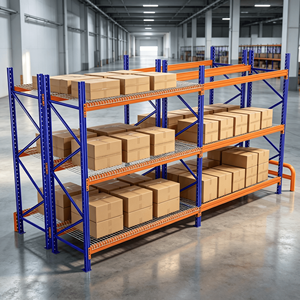 Heavy Duty
Custom Heavy Duty Industrial Steel Pallet Racking System Adjustable Storage Rack
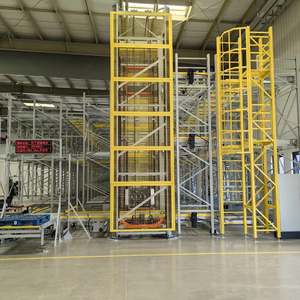 AS/RS Integrated
Advanced Intelligent Library Selective Pallet Rack With Efficient Conveying System
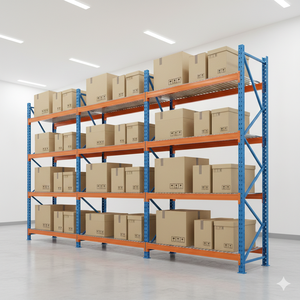 High Capacity
Long Span Shelving Rack Heavy Duty Industrial Storage System Adjustable Steel Shelves
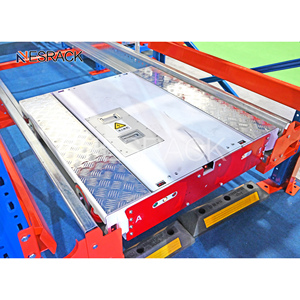 Semi-Automated
High Quality Customized Warehouse Storage Pallet Shuttle Rack Heavy Duty System
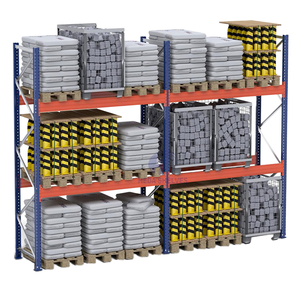 Anti-Corrosion
Peterack PT-HD Heavy Duty Corrosion Protected Selective Pallet Rack System
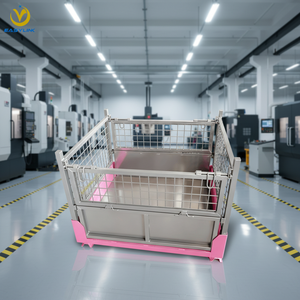 Collapsible
Foldable Steel Mesh Powder Coated Heavy Duty Stackable Storage Bin for Warehousing
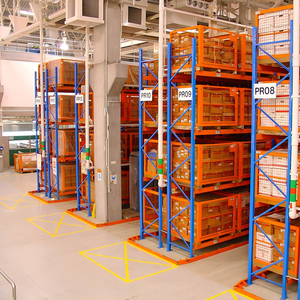 Space Optimizer
Factory Direct Very Narrow Aisle VNA Pallet Racking Selective System 500-4000kg/Level
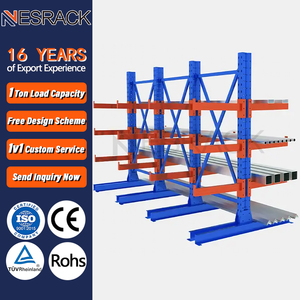 Long Goods
Heavy Duty Adjustable Cantilever Racks CE Certification High Load Capacity
Direct-From-Manufacturer Authority: The Guangzhou Fabrication Facility
When sourcing industrial steel storage systems, direct collaboration with premier erecting pallet racking factories is the critical determinant of structural integrity, precision cold-roll tolerances, and life-cycle economics. Operating out of Guangzhou, China, Guangzhou Heda Shelves Co., Ltd. has stood as a benchmark heavy storage manufacturer since 2001. Encompassing a specialized 30,000 square meter intelligent manufacturing base staffed by over 300 certified engineers, metallurgical technicians, and fabrication specialists, our monthly production capability surpasses 30,000 tons of high-yield cold-rolled steel profiles.
Racking components are not simple steel commodities; they represent load-bearing structural skeletons subject to compound dynamic stresses, continuous forklift impacts, and seismic harmonics. Every structural component leaving our fabrication floor complies strictly with the European Racking Federation (FEM 10.2.02), European Standard EN 15512:2020, and American Rack Manufacturers Institute (RMI ANSI MH16.1) standards. Holding accredited CE Certification No. 2435-CPR-8605159, comprehensive ISO 9001:2015 Quality Management certification (No. 18624Q00169R0M), and verified RoHS environmental compliance, our engineering outputs protect capital investments and personnel safety across 120+ destination countries.
Our Controlled 10-Step In-House Manufacturing Sequence
Raw Uncoiling & QC
Certified Q235B/Q355B coil steel with verified tensile & chemical melt analysis.
Automated Punching
Precision multi-stage mechanical CNC hole piercing for 50mm/75mm adjustment pitch.
Cold Roll Profile Forming
Gradual 18-to-24 station roll forming to maintain steel yield strength without micro-fractures.
Robotic Welding
Automated TIG/MAG 3-point connector beam welding with 100% seam penetration inspection.
Phosphating & Powder Coat
Pickling, silane pre-treatment, and electrostatic powder coating cured at 200°C.
Structural Erecting Protocols, Slabs, and Mechanical Physics
Understanding the physics of static upright columns, horizontal cross-beam torque, seismic baseplate distribution, and geometric erection alignment.
1. Geometric Erecting Tolerances & Plumbness Verification
The structural longevity of any heavy-duty pallet racking system is decided during the initial erection phase. Even the highest-grade micro-alloy steel will experience catastrophic buckling if vertical out-of-plumb deviations exceed critical engineering thresholds. In accordance with EN 15635 guidelines, the out-of-plumb ratio ($\Delta$) for erected pallet racking uprights under both unloaded and loaded states must never exceed 1/500th of the overall upright height ($H$) in either down-aisle or cross-aisle directions ($\Delta \le H/500$). For a 12-meter high-bay installation, the cumulative lateral drift cannot exceed 24mm across the vertical profile.
During structural assembly by certified erectors, optical laser transit systems and high-precision electronic theodolites must monitor every master bay prior to the anchoring of intermediate runs. Baseplate shimming requires calibrated structural carbon-steel alignment packers matching the exact surface geometry of the footplate to ensure compressive force transfer directly into the concrete floor without inducing bending moments into the anchor studs.
2. Slab Engineering, Anchoring Dynamics, and Punching Shear Resistance
Industrial rack design must always account for slab mechanics. Heavy selective, drive-in, or Very Narrow Aisle (VNA) systems generate concentrated post loads ranging from 40 kN to over 150 kN per baseplate. When evaluating the warehouse superstructure, geotechnical engineers must confirm that the warehouse concrete slab satisfies ACI 360R standards with a characteristic compressive cylinder strength ($f'c$) of at least 25 to 30 MPa.
Anchorage mechanics require heavy-duty mechanical wedge anchors or chemical capsule resin anchors (M12 to M20 grades) embedded to depths exceeding 100mm to 160mm. This avoids shallow cone breakouts under horizontal seismic shear stresses ($V_{Ed}$). In regions prone to seismic excitation, such as the circum-Pacific seismic belt (e.g., Indonesia, the Philippines, Western Americas), anchor assemblies are designed with high-ductility steel to allow seismic energy dissipation without sudden anchor cleavage.
| Racking Topology | Storage Density Metric | Selectivity Factor | Forklift Equipment Match | Average Load per Bay (Max) | Capital Expenditure Profile |
|---|---|---|---|---|---|
| Selective Pallet Racking | 40% - 50% Floor Utilization | 100% Direct Access | Standard Counterbalance / Reach | Up to 15,000 kg | Lowest / Most Economical |
| Very Narrow Aisle (VNA) | 65% - 75% Floor Utilization | 100% Direct Access | Specialized VNA Man-up/Man-down | Up to 18,000 kg | Moderate / High ROI on Space |
| Drive-In / Drive-Through | 70% - 80% Floor Utilization | Poor (Batch LIFO / FIFO) | Standard Counterbalance | Per Channel Spec | Moderate |
| Radio Pallet Shuttle | 80% - 90% Ultra-High | High Throughput Automation | Standard + Intelligent Carrier | Up to 40,000 kg/Block | Higher / Rapid Labor Payback |
| Heavy Duty Cantilever | Custom Linear Capacity | 100% Linear Access | Side Loader / Counterbalance | 3,000 kg per Arm | Specialized for Long Profiles |
3. Beam-to-Column Locking Connectors and Safety Shear Analysis
A common point of structural failure during erratic forklift loading is the accidental upward dislodgement of pallet beams. Modern professional erecting practices utilize 3-to-5 tooth cold-forged locking claws with high-grade spring safety pins. These pins provide an upward shear resistance exceeding 10.0 kN per connector, satisfying FEM 10.2.02 load parameters. When an operator misjudges mast elevation, the safety pin prevents the beam end connector from disengaging from the teardrop or diamond slot punching, stopping potential progressive collapse along the entire racking run.
Future Procurement & Technological Trends in Pallet Racking
Strategic market shifts dictate how global supply chain directors, contract logistics firms, and industrial builders plan racking procurement over the coming decade.
1. Transition to AS/RS & Shuttle-Ready Modular Racks
Procurement trends show a move away from static storage toward dynamic, shuttle-compatible systems. Warehouses are now procuring hybrid selective frames pre-punched to accept automated shuttle rails, vertical reciprocating conveyors (VRC), and autonomous mobile robot (AMR) interface brackets, future-proofing facilities for automation without teardowns.
2. Micro-Alloy Lightweighting with Q355B Steel
Raw material inflation and maritime freight costs are accelerating the adoption of high-tensile, micro-alloyed steel grades such as Q355B and ASTM A1011. By using high-yield steels, our factory can engineer thinner-gauge profiles that match or exceed the load capacity of standard Q235B steel while reducing structural deadweight by 12% to 18%, significantly lowering oceanic shipping expenses.
3. Extreme Climate Corrosion Engineering (C4/C5 Coatings)
With modern logistics expanding in tropical and cold-chain sectors, procurement specifications demand advanced surface passivation. Standard paints degrade rapidly under high humidity and sub-zero condensation. Future tenders require pickling, zinc-iron phosphating, and thermo-hardened epoxy coatings, or pre-galvanized structural steel that resists 500+ hours of continuous salt-spray testing.
Procurement Economics: Factory-Direct vs. Intermediary Channel Sourcing
Procuring racking through local trading intermediaries or third-party resellers often adds 25% to 40% in distributor markups without contributing structural engineering value. Working directly with our Guangzhou manufacturing plant removes broker margins and connects project managers directly with our CAD/BIM structural engineers.
Our in-house design team provides free 3D modeling, dynamic finite element analysis (FEA), and certified load calculations before production begins. By shipping direct from the Port of Guangzhou or Shenzhen (Nansha/Yantian) via FOB, CIF, or DDP terms, global buyers gain complete traceability from steel heat batches to on-site container unloading.
HEDA Shelves Engineering & Strategic Advantages
Combining deep manufacturing scale with specialized logistics corridors, customized design capabilities, and complete quality certifications.
25+ Years Industrial Heritage
Established in 2001, our engineering team brings over two decades of technical experience to complex warehouse designs, structural mezzanines, and multi-tier distribution hubs worldwide.
Certified Testing & Compliance
Our structural lines carry verified CE certification (No. 2435-CPR-8605159), ISO 9001:2015 quality credentials, and RoHS-compliant coatings suitable for sensitive pharmaceutical and food applications.
Direct Port Transit Corridors
Located near Guangzhou and Nansha ports, we maintain rapid ocean transit times: 2-5 days to Vietnam, 3-5 days to Manila, 5-7 days to Singapore/Laem Chabang, and 6-8 days to Port Klang.
Free Layout & Seismic Design
We generate full CAD floor plans, realistic 3D renderings, and localized seismic calculations that match regional building codes without upfront fees.
Frequently Asked Questions on Pallet Racking Procurement & Erection
Clear answers to common questions about structural specifications, seismic load ratings, installation logistics, and international trade terms.
Plan Your Warehouse Storage Layout with Direct Factory Engineers
Share your building drawings, ceiling heights, pallet dimensions, and operational goals. Our structural engineers will generate a complimentary CAD layout, 3D rendering, and detailed factory proposal within 24 to 48 hours.