Engineered Heavy-Duty Industrial Racking & Modular Shelving
Precision cold-roll formed from high-tensile Q235B and Q355B structural steel coils. Every configuration below represents proven modular architecture engineered for optimal cubing efficiency, seismic resilience, and extreme pallet weight compliance.
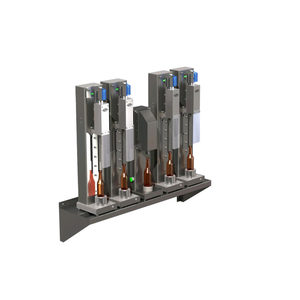
Wall Shelf With Drainage Groove
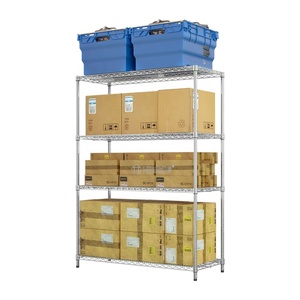
Modular Adjustable 4-Tier Chrome Wire Racking Unit
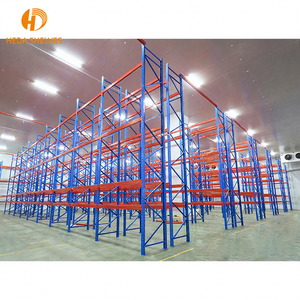
Heavy-Duty 5-Layer Corrosion-Resistant Industrial Rack
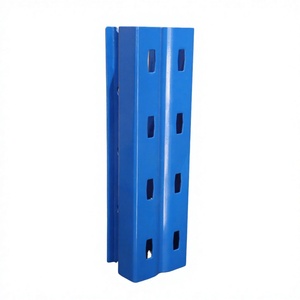
Dexion-Compatible Heavy-Duty Upright Frame Profile
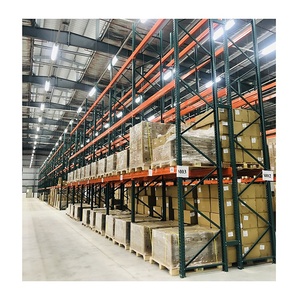
Heavy-Duty Logistics Center Pallet Racking Shelves
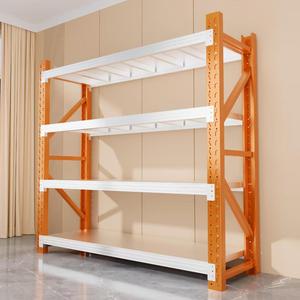
Modular Boltless High-Capacity Pallet Storage Rack
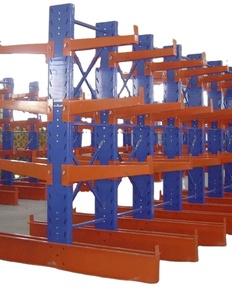
High-Load Single/Double Arm Cantilever Racking
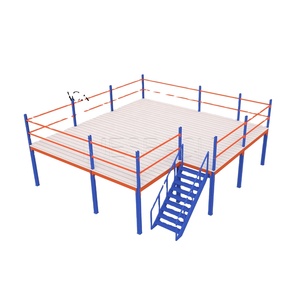
Heavy-Duty Structural Steel Warehouse Mezzanine Floor
Engineering Verification: Why Global Logistics Leaders Partner with Guangzhou HEDA Shelves
Operating from our flagship 30,000 m² automated production facility in Guangzhou, China, Guangzhou Heda Shelves Co., Ltd. (HEDA Shelves) bridges the gap between cost-effective Chinese steel processing and strict Western structural standards.
Verifiable Global Compliance
Unlike regional brokers, HEDA products are certified by strict international bodies. We operate under CE Certification No. 2435-CPR-8605159, comprehensive ISO 9001:2015 Certification No. 18624Q00169R0M, and full RoHS environmental compliance. Every calculation conforms to EN 15512, FEM 10.2.02, and RMI standards.
Tropical-Grade Anti-Corrosion
Humidity and coastal marine salts rapidly compromise substandard paint coatings. HEDA incorporates an industrial pickling and phosphating pre-treatment bath followed by automatic 80μm electrostatic powder curing. For freezing or coastal climates, full hot-dip galvanizing to ISO 1461 is available.
Free Turnkey CAD & FEA Layouts
Our 30+ full-time structural engineers configure building CAD drawings, 3D photorealistic renderings, and Finite Element Analysis (FEA) deflection calculations completely free of charge. We calculate concrete slab load-bearing, seismic zone forces, and aisle clearance for specialized forklifts.
The 10-Stage Precision Manufacturing Protocol
To eliminate structural variance, our Guangzhou automated factory controls all metallurgical processing in-house—from cold coil decoiling to container loading.
Certified Steel Coils
Direct mill sourcing of certified Q235B & Q355B low-carbon structural carbon coils.
Precision CNC Slitting
High-speed longitudinal shearing tolerances within ±0.1mm for consistent beam walls.
Automatic Punching
Continuous hydraulic stamping of tear-drop, diamond, or hex pitch hole patterns.
Multi-Stage Roll Forming
24-station roll-forming lines guarantee upright profiles resist torsional deformation.
Automated Cold Bending
Precision edge-crimping and interlock folding for step-beam and box-beam structural sections.
Robotic CO2 Welding
Panasonic robotic seam welders connect beam connectors without slag inclusions.
Shot Blasting & Acid Wash
Chemical pickling removes scale; phosphating lays a zinc chemical adhesion matrix.
Electrostatic Coating
GEMA automatic spray booths apply uniform epoxy powder baked at 180°C to 200°C.
Ultrasonic & Load QC
Batch weld checks, cross-cut adhesion tests, and destructive static weight tests.
Cubed Export Packing
Custom steel dunnage framing prevents transit friction inside 40ft HQ containers.
Future Procurement & Technology Trends in Industrial Racking
Global supply chain disruptions, rising warehouse real-estate lease costs, and labor shortages are reshaping how multi-national 3PLs and logistics managers procure storage infrastructure from China.
1. Convergence of Static Racking into Automated Shuttle (AS/RS) Systems
Traditional static selective pallet racking is experiencing rapid obsolescence in high-density facilities. Logistics operations are pivoting toward semi-automated four-way radio shuttle systems and Crane-based Automated Storage and Retrieval Systems (AS/RS). These designs eliminate interior forklift travel aisles, condensing footprint requirements by up to 60% while speeding pallet handling speeds. China manufacturers now routinely integrate sensor-guided guide rails and anti-collision buffer stops directly onto cold-formed upright profiles.
2. "Green Steel" Standards & Low-Carbon Supply Chain Auditing
Driven by the European Union's Carbon Border Adjustment Mechanism (CBAM) and North American ESG reporting mandates, racking procurement now evaluates Scope 1, 2, and 3 manufacturing emissions. Leading Chinese suppliers are shifting from coal-fired blast furnaces to Electric Arc Furnace (EAF) recycled scrap steel processing. Powder coating lines are likewise phasing out solvents in favor of zero-VOC, heavy-metal-free polyester formulations that meet rigorous global eco-assessments.
3. Vertical Density via Rack-Supported Multi-Tier Mezzanines
As per-square-meter urban land rates skyrocket across Southeast Asia, North America, and Europe, distribution hubs are prioritizing vertical cubing. Modern industrial procurement favors rack-supported multi-tier platforms that combine pallet warehousing on ground levels with picking catwalks and automated sorting conveyors across 2nd and 3rd tiers. These platforms eliminate the capital expense and planning permissions required for constructing new physical buildings.
4. Seismic Resiliency and Dynamic Ductility Engineering
In earthquake-prone regions such as Japan, the Philippines, Indonesia, and the Western United States, procurement specifications mandate rigorous dynamic seismic engineering. Advanced Chinese manufacturers now execute Finite Element Analysis simulating severe lateral ground accelerations. Uprights incorporate enlarged high-tensile footplates, heavier horizontal-to-diagonal bracing cross-sections, and heavy-duty seismic anchors ensuring racks flex without structural rupture during seismic episodes.
| System Architecture | Space Utilization | Pallet Access Type | Average Investment | Primary Industrial Use Case |
|---|---|---|---|---|
| Selective Pallet Racking | 40% – 50% | 100% Immediate (FIFO) | Baseline ($) | Retail DC, 3PL Warehouses, Multi-SKU Distribution |
| Drive-In / Drive-Through | 65% – 75% | Batch LIFO / FIFO | Moderate ($$) | Cold Storage, Beverage Bottlers, Seasonal Agricultural Crops |
| Radio Shuttle High-Density | 80% – 85% | Automated FIFO / LIFO | Advanced ($$$) | Seafood Exporters, Sub-Zero Freezers, Fast FMCG |
| Heavy-Duty Cantilever | Variable (Open Front) | Unobstructed Length Access | Moderate ($$) | Structural Steel, PVC Pipework, Timber, Aluminum Profiles |
| Rack-Supported Mezzanine | 100% – 200% Floor Multiplier | Multi-Level Picking / Pallets | High ROI ($$$) | E-Commerce Fulfilment, Automotive Spares, Garment Hanging |
Factory-Direct Export Logistics from South China Hubs
Shipping large steel components demands precise container cubing calculations to minimize ocean freight costs. Our proximity to Guangzhou, Nansha, and Shenzhen ports grants international buyers unrivaled maritime shipping access.
Vietnam (Haiphong / HCMC)
Transit: 2 – 5 Days
Direct coastal feeders ensure rapid delivery for expanding manufacturing plants and electronics assembly hubs.
Philippines (Manila / Cebu)
Transit: 3 – 5 Days
Frequent sailings accommodate rapid customs turnaround for FMCG distributions and industrial expansions.
Thailand (Laem Chabang)
Transit: 5 – 7 Days
Seamless multi-modal delivery to the Eastern Economic Corridor (EEC) for automotive and industrial logistics.
Singapore & Malaysia
Transit: 5 – 8 Days
High-frequency sailings connecting straight to Port Klang, Penang, and PSA Singapore for regional distribution.
Frequently Asked Questions for B2B Racking Procurement
Direct, engineering-backed answers addressing structural calculations, material specifications, customs clearances, and factory audit verifications.
What steel grades does HEDA Shelves utilize for heavy-duty systems?
We source certified structural carbon steel from leading domestic mills. Upright columns and heavy structural profiles utilize high-yield Q355B steel (equivalent to European S355JR or ASTM A572 Grade 50) for superior compressive strength and lateral rigidity. Load-bearing cross beams, tie bars, and accessories use Q235B steel (comparable to S235JR or ASTM A36), offering optimal ductility, clean automated weldability, and structural deflection compliance under maximum static loads.
How do you calculate structural load-bearing and safety factors?
Structural modeling strictly adheres to EN 15512 and FEM 10.2.02 principles. The standard design safety factor for beam failure is typically 1.5, with maximum permitted vertical deflection constrained to L/200 (length divided by 200). Frame column capacities are determined through Finite Element Analysis considering dead load, live pallet loads, dynamic forklift placement impact, wind shear (for exterior racks), and local seismic acceleration coefficients.
How does HEDA prevent container transit damage and freight inflation?
Storage racking components present unusual shipping geometry: uprights are long and slender, while beams are heavy and dense. Our packing engineers calculate 3D container cubing before loading. Beams are bundled with timber dunnage and heavy strapping; upright frames are nested with protective cardboard corner buffers and corrugated wrapping. This container optimization ensures full 26-ton weight loading in 40ft High Cube containers while eliminating abrasive paint chipping.
What data must the buyer provide to receive a layout proposal?
To produce an engineered proposal within 24–48 hours, our team requires: (1) Architectural floor plan in DWG or PDF showing building columns, clear ceiling heights, and door locations; (2) Pallet dimensions (Width × Depth × Total Height including goods); (3) Gross weight per loaded pallet; (4) Operating model and maximum lift height of your forklifts; and (5) Ambient operating temperature (ambient, cold room, or -30°C deep freezer).
Can HEDA racking be installed in active seismic zones?
Yes. We have extensive engineering project history supplying seismic installations across the Pacific Rim, Southeast Asia, and Latin America. We calculate dynamic seismic load vectors based on localized Soil Site Classes and Spectral Acceleration parameters provided by local site engineers. We reinforce the system utilizing high-gauge base plates, additional anchor bolts, heavy-gauge horizontal-diagonal bracing, and frame spine ties.
Do you support third-party factory quality audits before shipment?
Absolutely. We regularly host certified third-party inspection agencies such as SGS, TÜV Rheinland, Bureau Veritas, and Intertek at our Guangzhou manufacturing facility. Third-party auditors can inspect raw mill steel test certificates (MTC), verify weld integrity via non-destructive testing, measure dry film paint thickness (DFT), check dimensional punching pitch, and witness live static load deflection testing prior to container dispatch.
Request an Engineered Layout & Direct Factory Quotation
Connect directly with HEDA Shelves' Guangzhou engineering department. Receive complete 2D CAD floor plans, 3D structural visual models, and itemized bill-of-materials pricing within 24 hours.