[email protected] Serving Malaysia · Thailand · Vietnam · Indonesia · Philippines · Singapore
English
ISO 9001:2015 & CE Certified Racking Manufacturer
Top China Pallet Shuttle Racking System Manufacturer & Factory
Global OEM/ODM supplier of heavy-duty, high-density radio shuttle, 4-way automated racking, and sub-zero cold chain storage architectures engineered to FEM 10.2.02 and EN 15512 structural standards.
Engineered Warehousing Solutions
Featured Industrial Pallet Shuttle & High-Density Storage Systems
Manufactured in our 30,000 m² Guangzhou production facility, our smart pallet shuttle systems maximize warehouse volumetric efficiency up to 85%, cut forklift travel distance by 60%, and provide reliable semi-automated operations across ambient, chilled, and sub-zero storage facilities.
Next-Gen 3D
3D Dense Matrix
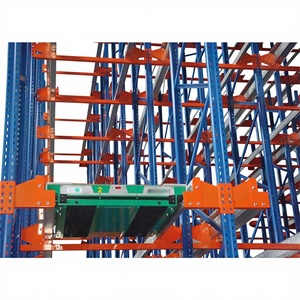
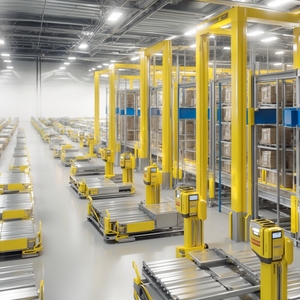
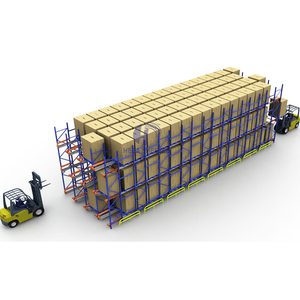
Automatic 4-Way Shuttle Pallet Racking System
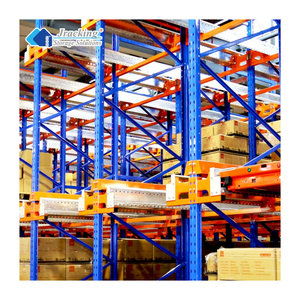
Multi-directional autonomous carrier traversing longitudinal rails and cross-aisles with vertical lifters, eliminating aisle dead zones for 100% automated storage.
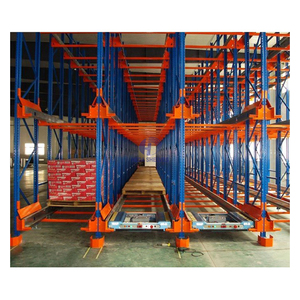
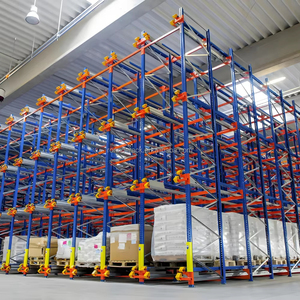
CE Certified High Density Radio Shuttle Pallet Rack
Two-way radio controlled semi-automated carrier system supporting FIFO and LIFO modes. High throughput design reducing forklift transit within storage tunnels.
Intelligent Cold Storage Auto Shuttle Racking System
Specialized cryogenic mechanical construction with insulated internal electronics and high-capacity low-temperature batteries for cold stores and frozen food hubs.
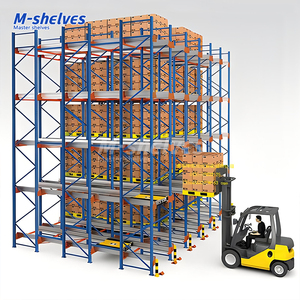
High Density Double Deep Steel Pallet Shuttle Rack
Combines double-deep accessibility with deep-lane continuous shuttle tracks, balancing direct SKU selectivity with maximum pallet volume in tight industrial facilities.
Equipped with 2.4 GHz wireless handheld transmitters and industrial PLC control boards, guaranteeing rapid loading and retrieval cycles for high-turnover logistics.
Kinematics & Structural Mechanics of High-Density Pallet Shuttle Systems
Pallet shuttle racking systems represent an evolutionary leap beyond conventional high-density static configurations such as Drive-In or Push-Back racks. In standard drive-in configurations, forklift trucks must physically enter deep storage lanes. This operational dynamic introduces severe safety hazards, increases structural rack collision incidents by up to 85%, and imposes structural cycle-time bottlenecks. By contrast, a semi-automated radio pallet shuttle system decouples material handling equipment (MHE) from the interior storage lanes. Forklifts interface only at the lane face, depositing a self-propelled, battery-powered shuttle carrier and its payload directly onto specialized heavy-gauge galvanised guide rails.
The internal architecture of modern shuttle platforms integrates brushless DC (BLDC) high-torque drive motors, precision optical encoder wheel assemblies, and photoelectric distance sensors. When the operator issues a wireless command via industrial radio remote or warehouse management system (WMS) interface, the shuttle elevates its dynamic carriage via an electromechanical scissor or hydraulic cam mechanism, lifting the pallet 25–40 mm above the rail surface. The carrier then transits the lane at speeds up to 1.2 m/s unloaded (0.8 m/s loaded), positioning pallets at pre-programmed spacing increments with millimeter repeatability (±1.5 mm).
Storage Methodology
Volumetric Space Utilization
Throughput Velocity
Forklift Impact Hazard
SKU Selectivity Index
Operating Strategy
HEDA Radio Pallet Shuttle
80% – 88%
High (35–50 pallets/hr)
Minimal (Face-only handling)
Lane-based (Moderate)
FIFO or LIFO Selectable
HEDA 4-Way Shuttle ASRS
85% – 92%
Extreme (Automated Lifters)
Zero (Fully Automated)
100% SKU Access
FIFO Continuous Matrix
Conventional Drive-In Racking
60% – 70%
Low (12–18 pallets/hr)
Severe (Truck enters rack)
Strictly LIFO (Lane block)
LIFO Only
Standard Selective Pallet Rack
40% – 48%
Moderate (100% Direct)
Moderate (Aisle driving)
100% Single Pallet Access
FIFO Manual
From a structural engineering standpoint, our shuttle rails are cold-rolled from high-tensile Q235B or Q355B structural steel with an optimized profile geometry that serves dual functional duties: it supports the high wheel loads of the moving vehicle while safely capturing the structural pallet blocks or skids. Flared lead-in funnels at the tunnel mouths compensate for standard forklift entry misalignments, shielding the main rack columns from damaging horizontal shear shocks.
Strategic Capital Allocation
Global Procurement Trends & 10-Year Lifecycle Cost Analysis
Enterprise supply chains, third-party logistics (3PL) providers, and pharmaceutical cold storage facilities are systematically retiring drive-in systems in favor of autonomous pallet shuttle platforms.
Rapid Capital Payback (ROI < 24 Mo.)
By transforming unusable cubic volume into dense, usable pallet positions, shuttle systems negate costly warehouse extensions or outside leasing. A 2,000-pallet installation routinely recovers its automation premium within 18 to 24 months through reduced labor, fewer forklift leases, and zero rack repair downtime.
Cryogenic Cold Chain Energy Conservation
In cold stores operating between -18°C and -30°C, refrigeration power represents up to 60% of total operating overhead. Shuttle racking reduces the total refrigerated volume required per stored pallet by up to 40%, generating measurable power savings throughout the life of the installation.
WMS Integration & Fleet Scalability
Unlike rigid automated storage and retrieval systems (ASRS) that require multimillion-dollar capital commitments upfront, radio shuttle racking is modular. Facilities can begin with 2 shuttle carts across 2,500 pallet positions and add additional carriers as throughput requirements increase.
Future Technological Evolutions in Pallet Shuttle Logistics
The automation sector is experiencing rapid convergence between smart robotics and structural storage hardware. Key technological trajectories shaping future warehouse procurements include:
1. 4-Way Autonomous Matrix Mobility
Traditional shuttle systems operate along a single horizontal linear axis (X-axis), relying on forklifts to change levels or bays. Next-generation 4-way shuttles incorporate dual wheel sets configured at 90-degree offsets. When combined with integrated high-speed pallet lifts, they enable dynamic multi-level navigation across both aisles and lanes without manual intervention.
2. Busbar & Inductive Supercapacitor Power
While high-discharge Lithium Iron Phosphate (LiFePO4) batteries remain the industry workhorse for 8–10 hour continuous duty cycles, cutting-edge facilities are adopting wireless continuous power busbars and fast-charging supercapacitors integrated directly into transfer tracks, enabling non-stop 24/7/365 lights-out automation.
3. Edge AI Diagnostics & Pallet Health Telemetry
Equipped with onboard LiDAR, multi-angle 3D time-of-flight (ToF) cameras, and vibration sensors, modern shuttle carriers detect warped, sagging, or cracked wooden pallets before they cause deep-lane blockages, automatically flagging compromised loads to the WCS dispatch console.
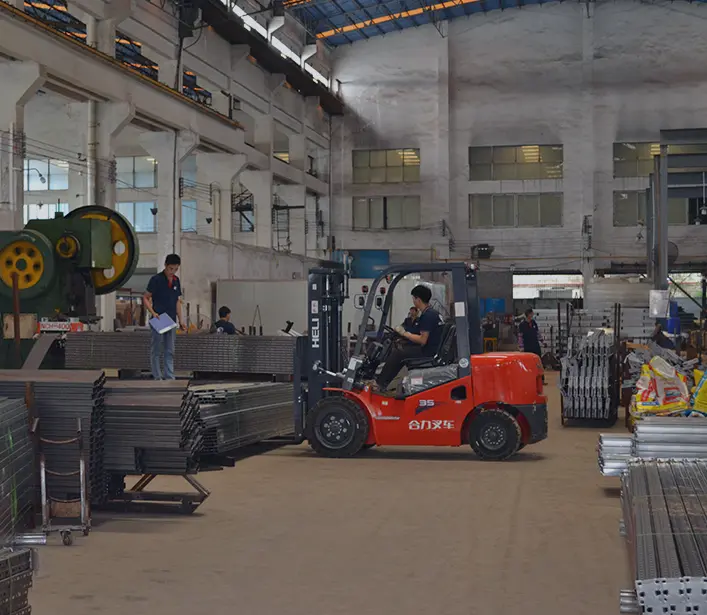
Established in 2001 in Guangzhou, China, Guangzhou HEDA Shelves Co., Ltd. has grown into an international leader in structural storage and high-density warehouse solutions. With an integrated manufacturing complex covering over 30,000 square meters and an expert workforce of over 300 engineering and production specialists, our monthly fabrication capacity reaches 30,000 metric tons of structural steel racking.
Strict Certifications: Fully certified under CE (Certificate No. 2435-CPR-8605159), ISO 9001:2015 Quality Management System (No. 18624Q00169R0M), and RoHS environmental standards.
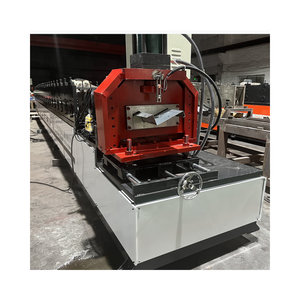
10-Stage Precision Production: Advanced coil uncoiling, automatic multi-point column punching, 24-stand progressive roll-forming, robotic laser welding, 7-tank chemical pickling and phosphating, and heavy-duty electrostatic powder coating (80–120 µm dry film thickness).
Seismic & Climate Adaptation: Every structural design undergoes finite element analysis (FEA) compliant with FEM 10.2.02, EN 15512, and RMI MH16.1 specifications, including custom seismic engineering for seismic zones in the Philippines, Indonesia, and the Americas.
Turnkey Engineering Deliverables: Free AutoCAD floor layouts, 3D structural visual renders, static load stress calculations, and full shipping-to-installation engineering support.
Procurement Due Diligence
Frequently Asked Questions for Shuttle Racking Procurement
Comprehensive answers to common technical, structural, and logistical questions encountered by supply chain directors, warehouse operations heads, and structural consultants.
Q: What pallet types and dimensional variations are compatible with HEDA shuttle rails?
Our heavy-duty rails accommodate Euro pallets (1200x800mm), Industrial/Standard pallets (1200x1000mm), and North American GMA pallets (48x40in). Custom runner spacing accommodates four-way entry wooden pallets, plastic skid bases, and steel container frames. Consistent pallet base quality is essential: bottom runners must maintain a minimum 85% continuous surface contact to allow reliable optical detection and smooth travel.
Q: How do your cold storage shuttle carriers operate at -30°C without condensation failure?
HEDA cold-store shuttles are built with hermetically sealed electronics cabinets (IP65/IP67 rated), internal micro-thermostatic heating elements to prevent moisture condensation during battery swaps, specialized low-temperature lithium iron phosphate chemistry, and aerospace-grade synthetic lubricants that retain optimal kinematic viscosity down to -35°C.
Q: What are the concrete slab and floor flatness tolerances required for installation?
While shuttle racks place less stringent demands on floor flatness than VNA wire-guided turret trucks, the base concrete slab must satisfy DIN 18202 Table 3 Line 3 or ACI 117 F-min 50 tolerances. Level base plates and precision steel shims under upright footplates ensure the guide rails maintain a horizontal slope within ±1.5 mm per 10 meters, preventing uneven shuttle motor drag.
Q: How many pallets can one radio shuttle cart service per hour?
Operational throughput ranges between 35 and 50 pallet moves per hour per shuttle, dependent on lane storage depth (typically 20 to 40 pallets deep) and vertical lift height. In high-turnover logistics centers, multiple shuttle carts can operate simultaneously across different bay levels, coordinated via our multi-channel radio remotes or automated WCS integration.
Q: Can our warehouse switch between FIFO and LIFO modes using the same racking setup?
Yes. If the rack structure is planned with aisle access at both the front loading face and rear discharge face, the system can toggle between First-In First-Out (FIFO) and First-In Last-Out (LIFO) through the operator's handheld interface. For operations backed against building perimeter walls, the system functions efficiently in deep-lane LIFO mode.
Q: What is the battery runtime, charging speed, and expected operational lifespan?
Our high-density Lithium Iron Phosphate (LiFePO4) power packs deliver 8 to 10 hours of continuous heavy-cycle operation per charge. Recharge time via industrial smart chargers is approximately 3 hours. Each shuttle includes two battery packs for quick hot-swapping (under 60 seconds), supporting continuous 24-hour operations. Pack lifespan exceeds 2,500 full charge-discharge cycles before dropping below 80% capacity.
Q: What export packaging, containerization, and sea freight logistics are provided?
All upright frames, load beams, and rail tracks are nested and bundled with protective steel strapping, corner edge protectors, and vapor-barrier moisture wraps to prevent transit damage in marine environments. Shipped direct from Guangzhou port under FOB, CIF, or DDU terms, our container loading plans maximize 40HQ volume, lowering freight cost per pallet position.
Q: How are safety and collision protection addressed in case of hardware or sensor fault?
HEDA shuttle carriers feature three redundant safety layers: front and rear ultrasonic/optical obstacle sensors that detect obstructions up to 3 meters away and trigger controlled deceleration, physical polyurethane emergency limit bumpers on all four corners, and rail-end mechanical stop brackets that arrest the carrier even under full-speed failure scenarios.
Plan Your High-Density Pallet Shuttle Warehouse Project
Collaborate directly with HEDA Shelves' senior structural design and automation engineering team. Submit your building dimensions, pallet specifications, and throughput targets to receive an AutoCAD layout plan, 3D visualization render, and a formal structural quotation.
 Next-Gen 3D