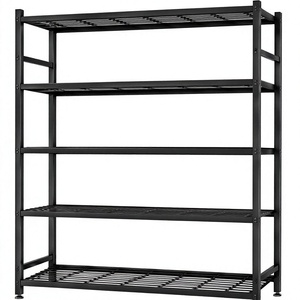
Factory-Engineered Catalog
Heavy-Duty Warehouse Storage & Material Handling Systems
Engineered using premium Q235B high-tensile structural steel, validated under FEM 10.2.02 and certified to ISO 9001 and CE compliance standards for international warehouse operators.
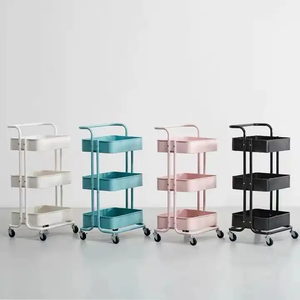
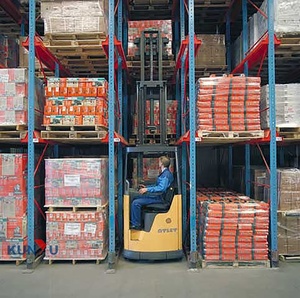
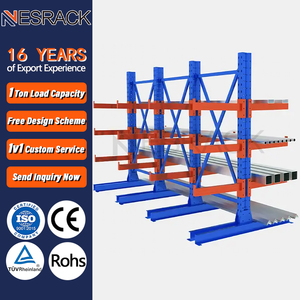
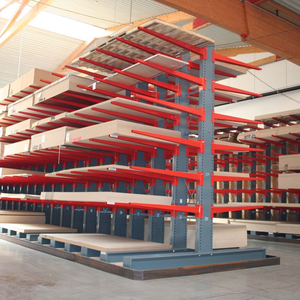
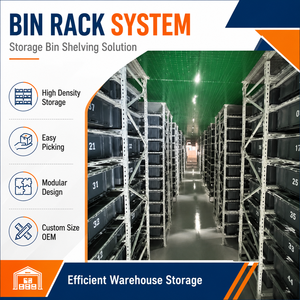
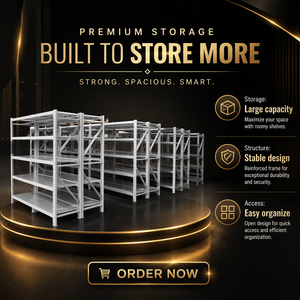
Direct Manufacturer Advantage
End-to-End Precision Engineering & Export Infrastructure
From metallurgical verification and automated roll-forming to structural layout simulation, our production lines eliminate supply chain friction for global distributors, EPC contractors, and fulfillment center operators.
⚙
Full In-House Industrial Manufacturing
Every structural profile is processed entirely in our Guangzhou manufacturing hub through ten rigorous fabrication stages. By avoiding outsourced semi-finished roll forming, we enforce micron-level dimensional tolerances across upright columns, boxed-step beams, and bracing components.
- Certified hot-rolled Q235B and Q355B high-yield structural steel coils.
- Fully automated continuous roll-forming lines with multi-point punching accuracy.
- Submerged arc and robotic CO2 shielded welding ensuring structural seam integrity.
- Multi-stage immersion: ultrasonic cleaning, pickling, and phosphating surface pre-treatment.
🛡
Certified Compliance & Severe Climate Finishes
We solve the critical challenges of long-distance marine transport, dynamic seismic loading, and tropical warehousing conditions. Our engineering department designs systems to meet strict European FEM, British SEMA, and Australian AS4084 building regulations.
- Verified compliance: CE Certification (No. 2435-CPR-8605159) and ISO 9001:2015.
- Severe-environment coating: Electrostatic polyester powder finish tested against 500+ hrs salt-spray.
- Hot-dip galvanizing options specifically developed for high-humidity and sub-zero (-30°C) cold stores.
- Container packing optimization: Engineered flat bundles reducing ocean freight volume per pallet space.
Strategic Procurement Analysis
Industry Forecast: Procurement & Technological Trends in Intralogistics
Strategic warehouse infrastructure planning requires navigating the convergence of soaring commercial real estate costs, labor shortages, and aggressive automation timelines.
Transition to High-Density Semi-Automation
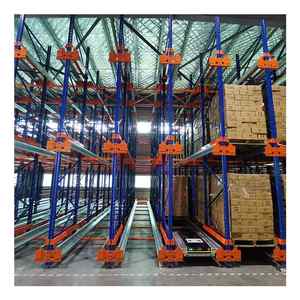
Traditional wide-aisle selective racking is increasingly being upgraded to Radio Shuttle and Mobile Racking systems. Procurement teams are reducing costly forklift aisles to increase storage volume by 40% to 70% within existing building perimeters, substantially postponing new warehouse construction capital expenditures.
Cold Chain Logistics Expansion
Rising global cold-chain requirements for pharmaceutical distribution and fresh food retail have driven severe operating constraints. Procurement specifications now emphasize galvanized steel uprights and high-capacity radio shuttles certified for continuous operations down to -30°C without battery or mechanical failure.
ASRS-Ready Hybrid Upright Engineering
Future-ready distribution centers are demanding racking frameworks designed for retrofitting. Static multi-tier pallet and shelving systems are engineered from day one to integrate automated guided vehicles (AGVs), Autonomous Mobile Robots (AMRs), and mini-load tote cranes without structural rework.
Buyer Knowledge Base
Frequently Asked Questions for Industrial Pallet Racking Procurement
Actionable answers to help engineering consultants, procurement leads, and supply chain managers mitigate operational, seismic, and logistical risks when importing racking systems from China.
Q. What structural engineering parameters are required to calculate warehouse rack capacity?
To produce an engineering-approved CAD layout and static load report, we analyze the slab load-bearing rating, finished clear roof height, forklift turning radii, pallet dimensions (width, depth, overall load height including pallet base), and the maximum uniform distributed load (UDL) per pallet tier.
Q. How are our racking systems designed to withstand seismic activity?
For seismic active territories across Southeast Asia, Oceania, and the Americas, our structural engineers calculate dynamic seismic coefficients according to FEM 10.2.02 and local standards. We implement oversized anchored base plates, reinforced column gussets, and continuous spine bracing arrays to guarantee non-collapse safety margins.
Q. How does your pretreatment and powder coating prevent rust in coastal and tropical climates?
Prior to coating, steel components undergo an automatic pickling and phosphating acid wash to strip rolling oxides and deposit a microscopic corrosion-inhibiting phosphate layer. We then apply thermoset polyester powder baked at 200°C, producing a dense, pinhole-free barrier resistant to 85%+ relative humidity.
Q. What is the transit lead time and ocean packaging standard for export orders?
Production cycles typically range from 15 to 25 days depending on tonnage. Port-to-port ocean transit from South China ports (Nansha/Shenzhen) to Southeast Asia is 3–10 days, to Europe 25–35 days, and to North America 18–28 days. Uprights and beams are bundled with steel strapping, angle corner protectors, and non-slip dunnage to prevent transport friction and damage.
Plan Your High-Density Storage Solution With Expert Engineers
Submit your warehouse floor plan, ceiling clear height, and pallet parameters to receive a complimentary 2D CAD layout, 3D structural rendering, and engineering load specification within 24 hours.