Featured Warehouse Pallet Racking Cross Beams & Systems
Direct from China's premier racking production lines. Explore heavy-duty box beams, interlocking stepped beams, and corrosion-resistant cross-members designed to meet FEM 10.2.02 and RMI specifications.
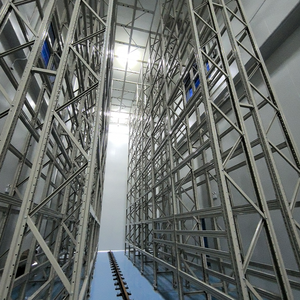
Adjustable Beam Rack System for Palletized Goods Storage Pallet Handling
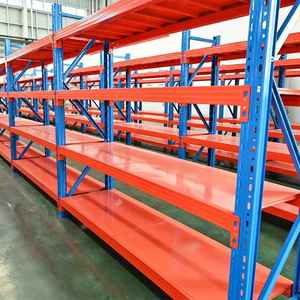
Heavy Duty Pallet Rack, Powder Coated Steel Shelf Panels with Cross Beams
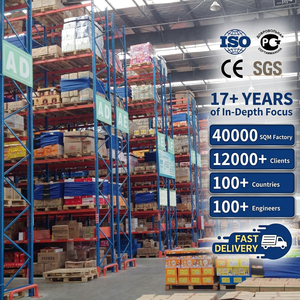
SDFD Heavy Duty Pallet Racking System Steel Durable Adjustable Box Beam
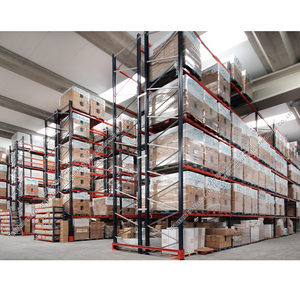
Industrial Storage Rack Heavy Duty Cross Beam Rack for Automotive Parts
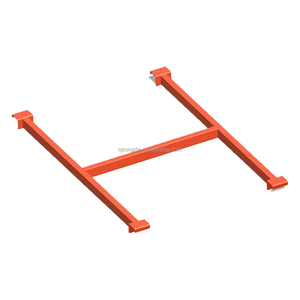
Customized Corrosion Resistant Heavy Duty Pallet Rack Cross Beam & Support Bar
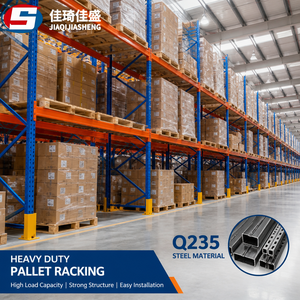
Heavy Multi-Level Steel Storage Rack Blue Vertical Orange Cross Beam
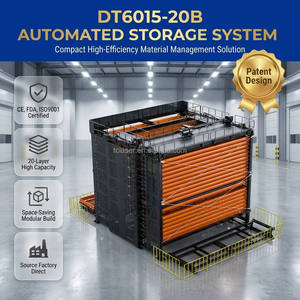
TIANCHEN Automatic Vertical SL Series Cold Rolled Steel Plug-In Cross Rack
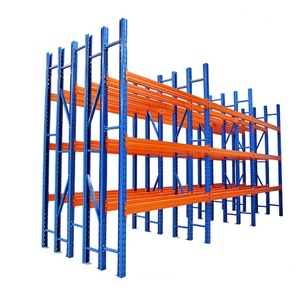
Industrial Heavy-Duty Cross-Beam Thickened High-Level Shelving System
Critical Engineering Standards for Pallet Racking Cross Beams
Pallet racking cross beams serve as the primary horizontal structural members in any unit-load warehouse framework. When calculating warehouse safety factors, cross beams must not merely bear static vertical weights; they must resist dynamic impact during forklift placement, mitigate eccentric torsional stress caused by misaligned pallet skids, and maintain rigid longitudinal stability across the entire racking bay.
At Guangzhou Heda Shelves Co., Ltd., every batch of pallet rack cross beams is cold-formed from high-tensile certified structural steel coils (primarily certified Q235B and high-yield Q355B). Structural cross sections are continuously roll-formed into interlocking twin-C profiles that undergo robotic automated seam welding to create true hermetic box sections. This design achieves up to 28% higher torsional rigidity compared to conventional open step beams of equivalent gauge thickness.
Furthermore, connection integrity between the cross beam and the upright frame determines the frame's overall sway prevention. We utilize multi-tooth connector claws (available in 3-prong, 4-prong, and 5-prong cold-stamped configurations) integrated with high-visibility spring safety lock pins. Under dynamic load shifts, the connector claw wedges mechanically into the column teardrop or diamond punching, generating positive moment resistance that eliminates beam unseating risks even during accidental vertical lift strikes from mast carriages.
HEDA Engineering Checkpoints
-
Continuous Robotic Shielded Welding: CO2 gas-metal arc welding guaranteeing zero porosity along beam end-plate connections.
-
Automated Pickling & Phosphating: 8-stage surface pre-treatment baths eradicating mill scale, oil, and micro-rust before powder adhesion.
-
Thermosetting Epoxy Polyester Powder: 70–90 micron electrostatic cured finish resisting harsh warehouse chemicals and tropical humidity.
-
Independent Connector Claw Stamping: 3.5mm–4.5mm thick low-alloy structural steel claws resisting shearing shear forces.
Standard Box Beam Dimension & Load Capacity Reference Matrix (Q235B Steel)
| Profile Specification (H × W mm) | Wall Thickness (mm) | Standard Span Length (mm) | Moment of Inertia Ix (cm⁴) | Max Uniform Load / Pair (kg) | Deflection Limit @ Max Load |
|---|---|---|---|---|---|
| 80 × 50 Interlocking Box | 1.5 mm | 2300 mm (2 Pallets) | 38.4 | 1,800 kg | < L/250 (9.2 mm) |
| 100 × 50 Interlocking Box | 1.5 mm | 2700 mm (Standard 2 Pallets) | 72.6 | 2,200 kg | < L/220 (12.2 mm) |
| 120 × 50 Continuous Weld Box | 1.5 mm | 2700 mm (Heavy Euro Pallets) | 118.2 | 3,000 kg | < L/250 (10.8 mm) |
| 140 × 50 Reinforced Dual-C Box | 1.8 mm | 3300 mm (3 Standard Pallets) | 194.5 | 3,500 kg | < L/230 (14.3 mm) |
| 160 × 50 Super Heavy Duty Box | 2.0 mm | 3600 mm (3 Heavy US Pallets) | 295.1 | 4,500 kg | < L/260 (13.8 mm) |
*Data calculated on uniform distributed load (UDL) compliant with AS4084-2023, FEM 10.2.02, and ANSI MH16.1. Custom dimensions, step-beam profiles for wire decking, and Q355B high-strength alloy configurations are available upon engineering request.
Future Procurement Trends for Warehouse Pallet Racking Beams
Global supply chain pressures, automated fulfillment, and carbon neutrality directives are reshaping how international buyers specify and purchase pallet racking cross members. Here are the 4 fundamental transitions dominating 2025–2030 sourcing.
High-Strength Micro-Alloy Steel (Q355B/S355)
Buyers are moving away from traditional thick, heavy mild steel towards micro-alloyed, high-yield steels. By elevating yield point strength, beam wall thicknesses can be reduced by 12–18% without diminishing safety factors. This significantly reduces tare dead-load on slab foundations, minimizes sea container shipping weight, and lowers overall carbon footprint per pallet position.
AS/RS & Shuttle-Ready Precision Tolerances
With high-density radio shuttle racking and mini-load crane automated warehouses escalating across Southeast Asia, Europe, and the Middle East, standard mill rolling tolerances are no longer acceptable. Next-generation procurement specs demand strict laser-cut connector claw spacing (±0.3mm tolerance) and automated robotic welding to eliminate longitudinal camber and twist.
Tropicalized Anti-Corrosion Formulations
Supply chains expanding rapidly across coastal hubs (such as Malaysia, the Philippines, Indonesia, and Vietnam) encounter ambient relative humidity routinely exceeding 85%. Sourcing trends show skyrocketing specifications for specialized zinc-phosphate dual-passivation treatments, anti-microbial epoxy coatings for cold chains, and pre-galvanized cross beam options.
Container Nesting & Freight Optimization
Global sea-freight volatility forces procurement directors to demand intelligent freight packaging. Advanced Chinese factories utilize modular nesting software that groups cross-beam connector claws into opposing interlocking packages. This increases volumetric container loading efficiency in 40HQ maritime containers from 65% to an astonishing 92%, substantially cutting per-pallet landed costs.
10 Controlled Steps in Manufacturing Pallet Rack Cross Beams
Quality assurance cannot be inspected into a beam at the final packaging stage—it must be engineered into every manufacturing phase. Here is HEDA Shelves' end-to-end production protocol.
Raw Steel Inspection
Spectrometric chemical analysis & tensile testing of hot-rolled coils from premier mills.
Precision Slitting
Automated high-speed coil slitting ensuring burr-free edges and width consistency (±0.1mm).
Multi-Roll Forming
Continuous 16-station cold roll-forming lines creating flawless C-sections with uniform radii.
Robotic Twin-C Seaming
Interlocking the twin C-profiles through automated continuous seam welding into rigid box beams.
Claw Connector Stamping
Heavy tonnage hydraulic stamping of multi-hook connectors from 4.0mm structural steel plates.
Robotic End-Plate Welding
Multi-axis Panasonic robotic arms executing deep-penetration CO2 shielded fillet welds.
Ultrasonic Weld Testing
Rigorous non-destructive testing (NDT) to verify full weld fusion and eradicate stress risers.
8-Bath Pre-treatment
Automated alkaline degreasing, ultrasonic water rinsing, acid pickling, and zinc phosphating.
Electrostatic Coating
GEMA automatic powder spray guns delivering 80+ micron coats cured in a 200°C tunnel kiln.
Nesting & Bundling
Protective foam cushioning, steel strappings, and heavy-duty wooden skids for container stuffing.
Guangzhou Heda Shelves Co., Ltd.
Operating since 2001, HEDA Shelves stands as an internationally recognized leader in heavy-duty racking, industrial mezzanine platforms, and automated logistics integration. Our 30,000 square meter Guangzhou production plant exports directly to over 120 nations worldwide, holding verifiable CE, ISO, and RoHS credentials.
Export Advantage: Port Proximity
Located right within the Greater Bay Area logistics cluster, our factory is minutes from Guangzhou Nansha and Shenzhen Yantian maritime terminals. Port-to-port sea freight times average only 2–5 days to Vietnam, 3–5 days to Manila, 5–7 days to Singapore / Thailand, and 6–8 days to Port Klang, Malaysia.
Inquire NowPallet Racking Cross Beams Procurement FAQ
Technical, commercial, and structural considerations answered directly by HEDA Shelves' Senior Structural Engineering Division.
How do you calculate the correct beam section for a specific pallet weight?
Beam dimensioning is governed by maximum uniform distributed load (UDL) and bending moment calculations. We determine the clear bay width (e.g., 2,700mm for two standard 1,200 × 1,000mm pallets), add the total payload weight including pallet skids (e.g., 2 × 1,200 kg = 2,400 kg total), and check the section modulus (Wz) and moment of inertia (Ix) against the maximum permissible deflection limit (typically L/200 = 13.5mm). For 2,400 kg at 2,700mm, a 120 × 50 × 1.5mm box beam provides optimal safety factor > 1.65.
What is the structural difference between Box Beams and Step Beams?
Box beams consist of two interlocking C-profiles welded seamlessly into a rectangular cross section; they provide supreme torsional stiffness and are ideal for standard wooden pallets sitting directly on beam flanges. Step beams have a recessed 20mm–25mm inner step designed specifically to support drop-in wire mesh decks, steel drop-in shelves, or particle board flush with the top of the beam, which is essential for hand-stacking or mixed picking bays.
Can HEDA Shelves manufacture replacement beams compatible with existing OEM racks?
Yes. We frequently supply OEM-compatible replacement cross beams for major international profiles (including teardrop styles common in the USA, 50mm pitch European European styles, and 75mm / 76.2mm pitch Australian styles). Simply send us a physical sample, an engineering stamping drawing, or accurate digital photos of the upright hole pattern and beam end connector, and our tooling division will manufacture an exact match.
How are cross beams protected during ocean transit against moisture and salt air?
Standard export packaging includes heavy polyethylene moisture-barrier wrap, corrugated cardboard corner guards, and tight high-tensile steel strapping over dedicated wood dunnage skids. For breakbulk shipments or sea routes crossing high-humidity equatorial zones, we add desiccant bags inside shrink-wrapped bundles to absorb container condensation and prevent powder-coat blister degradation.
What is the role and regulation regarding beam safety locking pins?
Under OSHA, ANSI MH16.1, and EN 15512 standards, every beam-to-column connector must incorporate a mechanical locking device capable of resisting an upward vertical dislodging force of at least 5,000 Newtons (approx. 510 kg). HEDA Shelves installs bright-galvanized or safety-yellow spring pins that pop automatically into place upon beam engagement, giving safety managers quick visual confirmation during audits.
What documentation accompanies an export order of HEDA pallet racking beams?
Every commercial export order includes an engineering Certificate of Conformance (CoC), Mill Test Certificates (MTC 3.1) detailing steel chemical composition and tensile limits, static load calculation reports, comprehensive packing lists specifying bundle component numbers, and an installation manual with CAD layout diagrams.
Request Custom Pallet Racking Cross Beam Pricing & Engineering Layout
Whether you require standard 2,700mm box beams, heavy-duty 4,500kg automotive profiles, or customized anti-corrosion OEM replacement cross members, our engineering design team provides free CAD layout drawings, 3D renderings, and precise FOB/CIF ocean freight quotes within 24 hours.