Standard & Custom Racking System Configurations
Engineered for extreme loading capacities, seismic resistance, and maximum floor-space utilization. All systems are fabricated from certified Q235B/Q355B high-tensile structural steel.
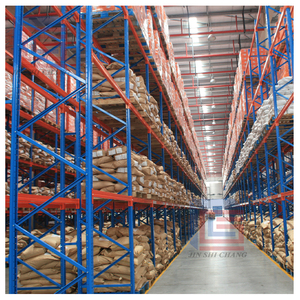
Manufacturer Steel Selective Pallet Rack For Warehouse Storage
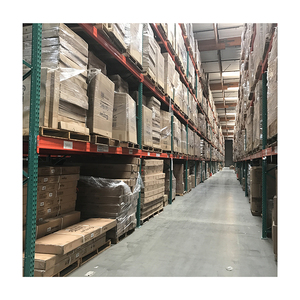
24' Feet High Teardrop Frame Step Beam RMI Warehouse Storage Pallet Rack
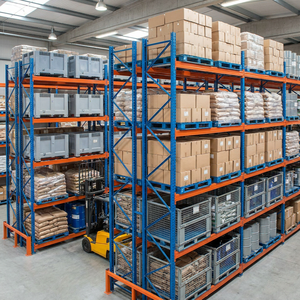
Selective Rack Heavy Duty Pallet Racking Industrial Q235B Steel For Freight Distribution
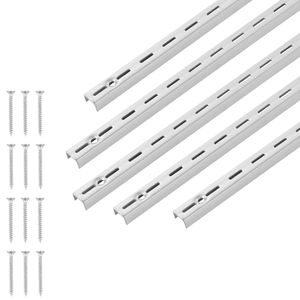
10 Pack 39 Inch Heavy Duty Upright Wall Shelving System with Single Slot Rails
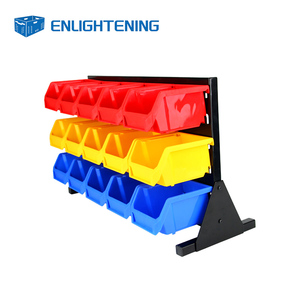
Warehouse Shelf Storage Bin 455x300x170mm with Compartment Dividers
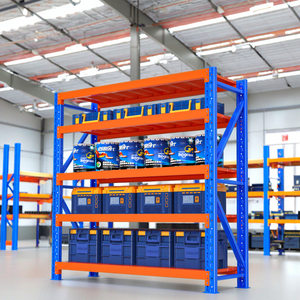
Industrial Heavy Duty Storage Shelves System Stacking Units Metal Rack
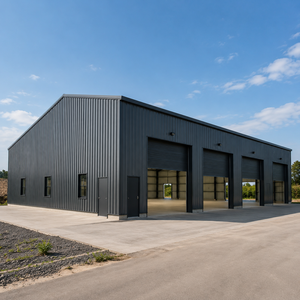
Prefabricated Steel Structure Warehouse Building Large Span Industrial Solution
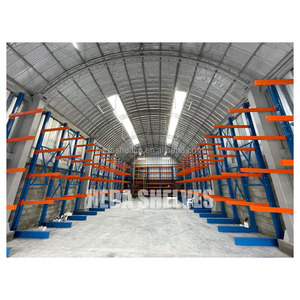
Industrial Cantilever Racking System Warehouse Heavy Duty Cantilever Rack
Authoritative Industrial Manufacturing from Guangzhou, China
Since 2001, Guangzhou Heda Shelves Co., Ltd. has operated at the nexus of metallurgical precision, automated roll-forming, and rigorous international structural compliance.
Modern warehouse logistics demands structural fixtures capable of enduring static gravity loads, continuous cyclic forklift impacts, dynamic seismic displacements, and aggressive environmental conditions. As a premier Chinese manufacturer and global exporter, our operational framework integrates heavy structural engineering with cost-optimized mass fabrication. Operating a 30,000 m² state-of-the-art production base staffed by over 300 certified metallurgists, cold-forming technicians, and structural designers, we sustain a monthly production capability exceeding 30,000 metric tons of finished industrial racking.
Certified Metallurgical Integrity
Every production run utilizes prime-grade cold-rolled structural steel coils (Q235B and Q355B). Incoming coils undergo spectral analysis, yield stress testing (≥ 235–355 MPa), and elongation verification before entering the profiling lines.
Automated Continuous Cold Roll-Forming
Our plant operates 18 automated roll-forming lines featuring up to 24 progressive bending stations. This multi-pass precision ensures micro-tolerances along upright profiles, eliminating internal shear stress and torsional twisting.
Triple-Standard Global Compliance
Racking structures are calculated and verified to conform concurrently with European EN 15512:2020 standards, American RMI ANSI MH16.1 specifications, and Australian AS 4084 guidelines, supporting frictionless local building approvals.
Direct Export Infrastructure & Regional Proximity
Positioned within the Greater Bay Area logistical corridor in Guangzhou, our factory is minutes from the Nansha and Shenzhen deep-water container terminals. This provides profound sea transit advantages to major global trade routes:
- Southeast Asia Shipping: 2–5 days to Vietnam, 3–5 days to Manila, 5–7 days to Singapore & Bangkok.
- Ocean Freight to Oceania: 12–16 days direct voyage to Melbourne, Sydney, and Brisbane.
- Middle East & Europe: 15–20 days to Jebel Ali (UAE); 26–30 days to Rotterdam, Hamburg, & Felixstowe.
- Containerization Optimization: Automated nested packing schedules maximize 40ft HQ cube utilization past 92%.
Engineering Architecture & Selection Criteria
Selecting an optimal pallet racking topology requires evaluating pallet accessibility, SKU density, warehouse ceiling clearances, and automated material handling interfaces.
Industrial procurement managers must balance volumetric cubic efficiency against material handling throughput. While Standard Selective Pallet Racking provides 100% pallet selectivity, it consumes up to 60% of floor area in working aisles. Conversely, dynamic configurations such as Drive-In Racking and automated Radio Shuttle Systems slash aisle footprints to achieve up to 85% volumetric utilization, though they dictate Last-In-First-Out (LIFO) or batched First-In-First-Out (FIFO) inventory logic.
| Racking Topology | Pallet Selectivity | Volumetric Efficiency | Typical Beam Section | Maximum Span Limit | Floor Utilization |
|---|---|---|---|---|---|
| Selective Pallet Rack | 100% Direct Access | 40% – 50% | Box Beam 80x50 to 160x50mm | 3,900 mm | Low (Aisles 3.0m - 3.5m) |
| Teardrop Style (US Standard) | 100% Direct Access | 40% – 50% | Step Beam with Safety Pins | 144 in (3,657 mm) | Standard Counterbalance Aisle |
| Drive-In / Drive-Through | Low (Batched SKUs) | 70% – 85% | Continuous Guide Rails | Lane Depth 12+ Pallets | Extremely High (Few Aisles) |
| Radio Shuttle Automation | High (Per Level / Channel) | 80% – 90% | Galvanized Running Rails | Channel Depth 40+ Pallets | Maximum (One Aisle Operation) |
| Heavy Duty Cantilever | 100% for Long Stock | 60% – 70% | Tapered Arm (100–160mm) | Arm Reach up to 2,000mm | Linear Free-Span Loading |
| Rack-Supported Mezzanine | Hybrid Pallet / Manual | 150% – 250% (Multi-Tier) | Integrated Racking Uprights | Span 3,000 - 6,000mm | Vertical Space Multiplication |
Structural integrity hinges on the geometric section of cold-formed uprights. Heda systems utilize an engineered 11-fold to 13-fold Omega (Ω) cross-section profile. These compound bends shift the cross-sectional centroid and radically increase the radius of gyration, yielding exceptional buckling resistance under extreme vertical loading without adding superfluous, expensive steel deadweight.
Strategic Sourcing & Procurement Trends (2025–2030)
Analysis of shifting supply chains, tariff mitigation, automated guided vehicle (AGV) integration, and sustainable metallurgical lifecycle modeling.
1. Structural Readiness for AMR & AGV Swarms
Logistics operations are transitioning rapidly from human-driven reach trucks to autonomous mobile robots (AMRs) and automated high-bay reach vehicles. Modern procurement contracts now mandate rigid installation tolerances (±1.0mm plumb line deviation) and impact-engineered guide plinths that withstand autonomous navigation loads without interfering with optical LiDAR paths.
2. Cold-Chain & High-Humidity Resilience
Global food security and biological supply chains are driving explosive growth in sub-zero freezer hubs (-25°C to -30°C). Racking specified for these environments requires specialized steel grades with Charpy V-notch impact toughness tested to prevent brittle fracture, coupled with dual-phase pre-treatment to survive condensation-induced corrosion.
3. Total Cost of Ownership (TCO) vs. Land Scarcity
With industrial real estate lease prices escalating globally by 6-11% annually, procurement leaders are shifting metrics from "cost per metric ton of steel" to "cost per pallet storage position over a 15-year lifecycle." High-density systems and rack-supported multi-tier catwalks lower the effective amortized footprint cost per SKU dramatically.
Procurement professionals are moving away from fragmented, multi-vendor sourcing. The prevailing trend favors single-source OEM/ODM manufacturers capable of delivering the entire vertical package: engineering layout simulations, structural FEA calculations, continuous precision fabrication, international shipping coordination, and turnkey installation support with verifiable QA/QC documentation.
10-Stage Precision Manufacturing Protocol
Quality is built into every step through robotic repeatability and continuous metallurgy inspection, rather than verified only at end-of-line packaging.
Raw Steel Coils
Strict spectral and tensile testing of certified Baosteel Q235B/Q355B coils.
Precision Slitting
Automated uncoiling and laser-guided slitting to precise blank widths.
CNC Punching
Continuous mechanical progression punching for 50mm/75mm upright slots.
Cold Roll-Forming
24-station roll-forming lines shaping high-inertia Omega uprights.
Beam Profiling
Seam-locked closed box-beam and step-beam continuous forming.
Robotic Welding
Multi-axis robotic GMAW welding of connectors with zero spatter.
Pre-Treatment
9-stage chemical degreasing, acid pickling, and zirconium-phosphating bath.
Powder Coating
Electrostatic thermoset polyester powder cure at 200°C (60–90μm thickness).
Load Proof Testing
Hydraulic destructive and non-destructive beam deflection testing.
Export Packaging
Steel strapping, shock protection, and automated container cube packing.
Frequently Asked Questions for Industrial Buyers
Detailed answers addressing engineering parameters, seismic considerations, international logistics, and structural compliance.
Accelerate Your Warehouse Project with Certified Engineers
Submit your architectural CAD drawings or facility dimensions. Our structural design team will deliver complete 2D layout schematics, 3D spatial renders, and itemized load calculations within 48 hours.
Send an Inquiry