Industrial Storage Systems & Heavy-Duty Pallet Racking
Browse our precision-manufactured storage equipment designed for multi-tier fulfillment centers, e-commerce distribution hubs, automotive staging facilities, and high-density industrial warehouses.
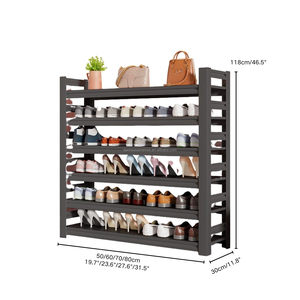
Tianhaida Adjustable Steel Freestanding Light Duty Corrosion Protection Shelf Rack
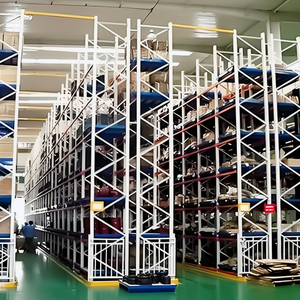
Space Saving Narrow Aisle Storage Racks VNA Racking System For Ecommerce
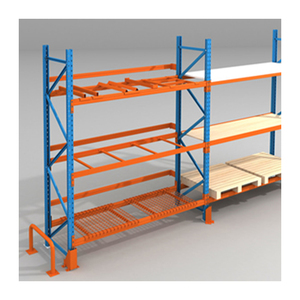
Dual-Purpose Industrial Warehouse Racking System 5-Layer Heavy Duty Rack
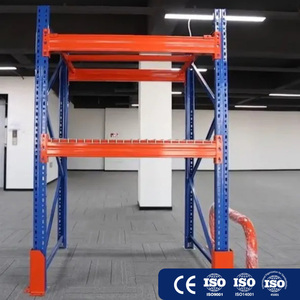
Steel Storage Rack Heavy Duty Double-sided Selective Pallet Racking
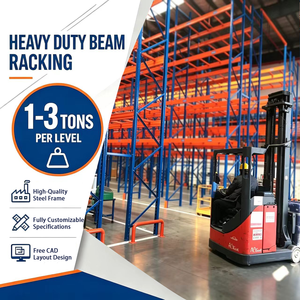
Custom Heavy Duty Steel Pallet Rack Industrial Storage Rack System
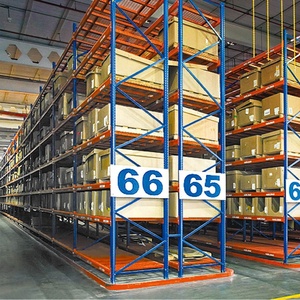
Narrow Aisle VNA Pallet Racking System Cold Rolled Steel High-Density
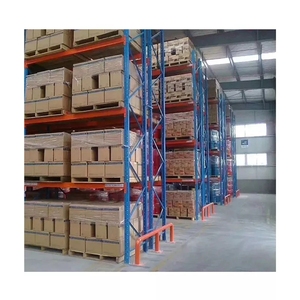
Wholesale Shelves Industrial Pallet Racking Heavy Duty Storage
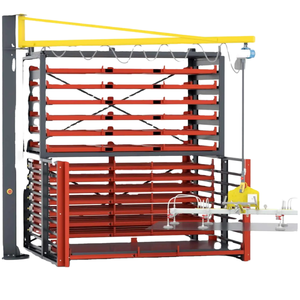
Heavy Duty Foldable 5-Layer Roll-Out Steel Plate Storage Rack
1. The Strategic Imperative of Multi-Tier Pallet Racking in Modern Logistics
In modern industrial warehousing, commercial real estate constraints and escalating land acquisition costs have transformed vertical space utilization from an operational advantage into a core financial necessity. As global third-party logistics (3PL) providers, e-commerce giants, and cold chain distribution hubs face higher per-square-meter facility costs, the deployment of multi-tier pallet racking systems and rack-supported mezzanine platforms has become the preferred engineering solution to double, triple, or quadruple usable storage volume without altering building exterior footprints.
A multi-tier pallet racking system is not merely standard selective racking stacked higher; it is an integrated structural matrix combining heavy-duty cold-formed upright columns, specialized boxed or stepped load beams, intermediate structural catwalks, integrated staircases, pallet drop gates, and sophisticated load dissipation engineering. Unlike freestanding structural steel mezzanines that rely on heavy rolled structural I-beams and wide-flange universal columns (UC), rack-supported multi-tier installations use the continuous vertical upright frames as the direct structural load-bearing members for both upper-level palletized inventory and suspended personnel walkways. This structural dual-purpose approach reduces raw material tonnage by 25% to 40% while preserving exceptional rigidity, structural elasticity, and dynamic seismic stability.
Structural Mechanics: Rack-Supported Multi-Tier vs. Structural Mezzanines
When engineering multi-level storage, international facility managers frequently evaluate the trade-offs between rack-supported multi-tier platforms and freestanding structural steel mezzanines. Structural steel mezzanines provide wide-open unobstructed floor space beneath high-capacity primary beams, but require substantial foundation civil works, thick concrete pad footings, and significantly higher initial steel expenditures. Conversely, a rack-supported multi-tier configuration engineered by Tier-1 Chinese manufacturers distributes dead loads, live loads, and operational dynamic impacts across dozens of anchoring base plates directly into standard 150mm–200mm warehouse floor slabs. By spreading point loads across multi-point contact arrays, civil floor reinforcement costs are drastically reduced or eliminated entirely.
Furthermore, multi-tier racking can be outfitted with various decking media depending on fire safety codes, operational wheel traffic, and pallet weights. Solid 2.0mm to 3.0mm embossed anti-skid galvanized steel panels, perforated fire-safety steel grating (engineered to provide 50% or higher water penetration rates for ceiling NFPA sprinkler conformance), and heavy-duty composite resin-faced high-density fiberboard (HDF) with galvanized underlayment represent the prevailing industry choices. Each tier can operate as an autonomous picking zone linked to other tiers via vertical reciprocating conveyors (VRC), spiral carton chutes, or autonomous mobile robot (AMR) drop-off stations.
2. Engineering Benchmark Matrix: Industrial Racking Architectures
Selecting the optimal storage layout requires balancing floor space utilization, SKU selectivity, forklift cycle times, and capital expenditure. The table below provides an empirical engineering benchmark comparing multi-tier rack systems against selective, drive-in, and very narrow aisle (VNA) configurations manufactured under EN 15512 and RMI MH16.1 design codes.
| Storage System Type | Floor Cube Utilization | SKU Selectivity Ratio | Typical Load Capacity | Aisle Clearances | NFPA Sprinkler Integration | TCO Capital Ratio |
|---|---|---|---|---|---|---|
| Multi-Tier Pallet Racking | 85% – 95% | 100% Direct (Catwalk Tiers) | 300 – 1,000 kg/m² Deck; 4,000 kg/Beam | 900mm – 1,400mm Walkways | Intermediate Levels Mandatory | Moderate / High ROI |
| Selective Pallet Racking | 35% – 45% | 100% Direct Access | 1,000 – 4,500 kg per Bay Level | 3,000mm – 3,800mm Standard | Ceiling Grid Only (<10m) | Lowest Baseline |
| Very Narrow Aisle (VNA) | 65% – 75% | 100% Direct Access | 1,500 – 4,000 kg per Bay Level | 1,600mm – 1,850mm Guided | In-Rack Sprinklers Recommended | Moderate (High Forklift Cost) |
| Drive-In / Drive-Through | 70% – 85% | Low (LIFO / FIFO Bulk SKU) | 1,000 – 2,000 kg per Pallet Position | Forklift Drives Inside Bays | High Complexity Top/Back | Low / Medium |
| Radio Shuttle High-Density | 80% – 90% | Batch / Automated FIFO-LIFO | 1,500 – 2,000 kg per Shuttle Pallet | Loading Aisle Only (3,000mm) | Dedicated In-Lane Suppression | High (Automated System) |
*Note: Data derived from empirical warehouse design standards compliant with ISO 9001:2015, CE EN 15512:2020, and RMI design tolerances. Realized values vary based on clear building height and structural seismic coefficient (Ss/S1) values.
3. Future Procurement Trends: Sourcing Multi-Tier Racking from China
The global intralogistics supply chain has moved past basic transactional purchasing. Today, international engineering firms, industrial real estate developers (e.g., Prologis, Goodman), and procurement leaders leverage factory-direct relationships with certified Chinese manufacturers. As China's manufacturing sector integrates robotic automated welding, automated continuous roll-forming lines, and intelligent 3D BIM engineering workflows, five major technological trends are reshaping how multi-tier pallet racking systems are specified, manufactured, and deployed worldwide.
1. Automation & AMR-Catwalk Hybridization
Multi-tier installations are transitioning from pure manual pick catwalks into hybrid robotic ecosystems. Intermediate mezzanine decks are now engineered with structural point-load reinforcements, dynamic vibration damping, and zero-deflection tolerances to support fleets of Autonomous Mobile Robots (AMRs) and automated sorting bots operating seamlessly alongside warehouse picking personnel.
2. Sub-Zero Metallurgy for Cold-Chain Hubs
With global cold-chain storage expanding rapidly, multi-tier platforms must withstand continuous -25°C to -30°C freezer environments without suffering from low-temperature hydrogen embrittlement. Leading manufacturers formulate premium Q235B and Q355B structural steel with strict silicon-manganese ratios and hot-dip galvanizing to maintain high impact toughness and structural ductility under severe thermal cycling.
3. Pre-Treatment & Tropical-Grade Coating
High-humidity environments (such as Southeast Asia, coastal Americas, and the Middle East) demand superior anti-corrosion protection. Progressive Chinese manufacturers have upgraded from basic degreasing to automated 10-stage pickling, phosphating, and deoxidation pre-treatments, followed by electrostatic thermosetting polyester powder coatings that pass 500+ hour ASTM B117 salt spray testing with zero peeling.
4. Non-Linear FEA & Dynamic Seismic Design
Global procurement standards now enforce finite element modeling (FEA) to verify second-order structural effects (P-Delta effects) and beam-to-column semi-rigid joint stiffness. In high-seismic zones across the Pacific Rim, upright baseplates are engineered with slotted structural anchor points, reinforced channel bracing, and enhanced moment-resisting connections compliant with Eurocode 3, EN 15512, and AS 4084.
5. Containerized Freight Engineering & Fast Modular Assembly
Ocean freight economics demand that structural multi-tier racking components be digitally nested for optimal container stuffing ratios. High-precision CNC punching allows teardrop or diamond slot modularity on 50mm, 75mm, or 76.2mm increments, enabling toolless height reconfigurability and reducing overseas installation hours by over 35% compared to welded frames.
4. Enterprise Excellence: Guangzhou Heda Shelves Co., Ltd.
Founded in 2001 and headquartered in Guangzhou, China, Guangzhou Heda Shelves Co., Ltd. has grown into an international leader in the engineering, design, and precision manufacturing of industrial multi-tier pallet racking, heavy-duty industrial shelving, and structural mezzanine systems. Operating an expansive 30,000 square meter modernized manufacturing complex backed by over 300 technical engineers and production specialists, HEDA Shelves maintains an industry-leading production capacity of 30,000 metric tons per month.
Engineering Rigor & Global Compliance
Every racking system engineered by HEDA Shelves is designed to withstand rigorous dynamic and static load criteria. We operate dedicated parametric 3D CAD and BIM engineering departments that provide clients worldwide with complimentary warehouse layout optimization, structural finite element calculations, and 3D realistic rendering previews prior to production commitment.
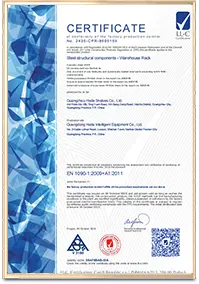
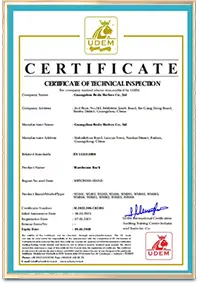
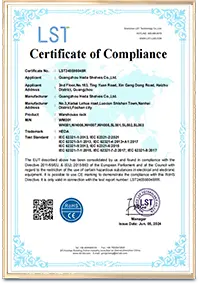
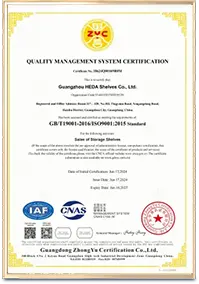
Our facility operates under rigorous quality assurance regimes holding official CE Certification (No. 2435-CPR-8605159), ISO 9001:2015 Quality Management Accreditation (No. 18624Q00169R0M), and complete RoHS Environmental Compliance. Having successfully delivered over 10,000 warehouse projects across more than 120 countries, HEDA Shelves is the preferred OEM/ODM structural racking partner for Fortune 500 corporations, regional 3PL logistics networks, and international engineering contractors.
10-Step Controlled In-House Manufacturing Process
Quality integrity is maintained by executing 100% of steel processing in-house—from cold-rolled steel coil slitting to high-temperature powder curing. This eliminates third-party outsourcing defects and guarantees full dimensional traceability.

Prime Raw Materials

Precision CNC Cutting

Automated Punching

Cold Bending

Roll Profile Forming

Polishing & Deburring

Robotic Gas Shield Welding

Pickling & Phosphating

Electrostatic Coating

Rigorous QC & Shipping
5. Geographic Logistics & Strategic Maritime Connectivity
Situated in the Pearl River Delta logistics corridor in Guangzhou, HEDA Shelves operates direct factory dispatch access to major international deep-water seaports including Nansha Port, Shenzhen (Yantian/Shekou), and Hong Kong. This strategic geographic position translates into rapid ocean container booking, minimal drayage costs, and unparalleled shipping schedules to global industrial markets.
| Destination Region | Primary Receiving Seaports | Ocean Sea Transit (Days) | Standard Incoterms Available | Customs Documentation Provided |
|---|---|---|---|---|
| Southeast Asia (ASEAN) | Haiphong, Cat Lai (HCMC), Manila, Singapore, Laem Chabang, Port Klang, Jakarta | 2 – 10 Days Direct | FOB, CIF, DDU, DDP | Form E (Duty-Free ASEAN), CE, CO, MTR |
| Middle East & Gulf (GCC) | Jebel Ali (Dubai), Dammam, Jeddah, Doha, Hamad Port | 12 – 18 Days | FOB, CIF, CFR | Certificate of Origin, SASO/SABER, Mill Test |
| Europe & United Kingdom | Rotterdam, Antwerp, Hamburg, Felixstowe, Southampton | 24 – 32 Days | FOB, CIF | CE DoP, EN 10204 Type 3.1, Packing Lists |
| North & South America | Long Beach, Oakland, Manzanillo, Santos, Callao, Houston | 16 – 35 Days | FOB, CIF, DDP | RMI Compliance Dossier, Fumigation Cert, BL |
| Oceania | Sydney, Melbourne, Brisbane, Auckland | 12 – 16 Days | FOB, CIF | AS 4084 Structural Calculation Dossier |
*Sea transit durations reflect normal direct container service departures from Guangzhou/Nansha/Shenzhen. HEDA Shelves provides complete container optimization schematics to maximize weight and volume utilization inside 40ft High Cube (40HQ) containers.
6. Comprehensive Industrial Procurement FAQ
Technical guidance and definitive answers addressing structural calculations, building code compliance, fire suppression integration, and international procurement protocols for multi-tier pallet racking systems.
What concrete slab specifications are required for multi-tier pallet racking?
Multi-tier installations typically require a reinforced concrete slab thickness between 150mm and 250mm with a minimum compressive strength rating of 25 to 30 MPa (C25/C30). Floor flatness should adhere to DIN 18202 Table 3 Group 3 or ASTM E1155 F-min 50 standards. For facilities with lower slab capacities, HEDA engineers custom oversized baseplates and load-spreading spreader beams to maintain ground pressure well within the geotechnical safety threshold.
How are NFPA fire protection sprinklers integrated into multi-tier mezzanines?
Under NFPA 13 regulations, solid decking surfaces over 1.2 meters in width obstruct overhead sprinkler water patterns. For these configurations, HEDA Shelves engineers perforated galvanized steel grating with an open area exceeding 50%, allowing overhead fire deluge suppression to penetrate lower tiers. Alternatively, our layout includes integrated pipe bracket cutouts to mount secondary in-rack sprinkler lines directly beneath intermediate catwalk channels.
Can your multi-tier racking withstand seismic activity in earthquake zones?
Yes. Our structural engineering department carries out dynamic modal analysis and equivalent lateral force procedures compliant with ASCE 7, Eurocode 8, and local seismic requirements (e.g., in Indonesia, the Philippines, Japan, and the Americas). We incorporate heavy-gauge steel uprights, reinforced horizontal and diagonal back-bracing trusses, floor anchor arrays, and heavy-duty beam connector brackets to safely dissipate seismic energy.
What is the standard production lead time and container packing efficiency?
Standard fabrication lead times average 15 to 25 business days depending on total project tonnage. Components are bundled using high-tensile steel strapping and protective plastic edge guards, with upright frames pre-nested and beam tiers palletized for high-density container loading. A single 40ft High Cube container typically holds between 20 to 24 metric tons of precision racking components, minimizing sea freight cost per storage location.
How do you verify structural steel yield strength and coating adherence?
Every batch of cold-rolled steel is sourced from premier Chinese steel mills (e.g., Baosteel, Shougang) and comes with certified Mill Test Reports (MTR) confirming chemical composition and mechanical yield strength (≥ 235 MPa for Q235B; ≥ 355 MPa for Q355B). In-house quality checks include tensile pull-testing, beam deflection testing under 1.5x design load, cross-cut coating adhesion testing (ISO 2409), and coating thickness checks (averaging 60–80 microns).
What on-site installation support do you provide for international projects?
Every shipment is accompanied by complete 3D assembly shop drawings, component piece-mark schedules, and high-definition instructional video walkthroughs. For large-scale multi-tier installations across Southeast Asia, the Middle East, and beyond, HEDA Shelves dispatches senior structural installation supervisors to oversee local labor teams, ensure laser-aligned verticality, and certify anchor torque compliance.
Ready to Maximize Your Warehouse Cubic Capacity?
Submit your architectural layout, building clear heights, and load requirements. HEDA Shelves' structural engineering team will deliver a comprehensive 3D CAD layout, load capacity calculation report, and direct factory price quotation within 24 hours.