Industrial Storage Systems & Heavy-Duty Structural Solutions
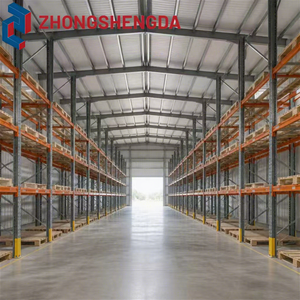
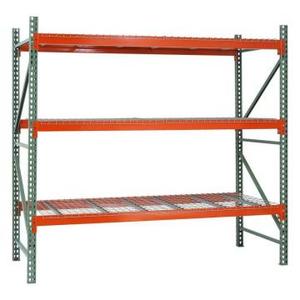
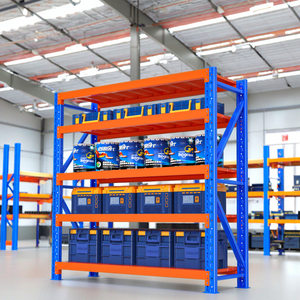
Certified heavy-duty storage configurations designed for logistics consolidation hubs, manufacturing buffer stores, cold-chain operations, and e-commerce picking lines.
Why Tier-1 Global Integrators Partner with Our Manufacturing Base
Combining vertically integrated Chinese metallurgical manufacturing with international structural compliance standards (EN 15512, RMI, AS4084).
Modern supply chains are confronting unprecedented volatility in throughput, land procurement capital expenditures, and warehouse labor availability. Sourcing heavy-duty storage racking from China is no longer merely a low-cost procurement decision; it is a structural engineering exercise where seismic dampening, cold-formed metallurgical yield strength, electrostatic powder molecular adhesion, and volumetric optimization intersect. As an authoritative manufacturer established in 2001, Guangzhou Heda Shelves Co., Ltd. operates a centralized 30,000 square-meter production facility, employing over 300 experienced fabrication personnel, structural calculation engineers, and dedicated quality assurance specialists. We maintain an in-house monthly production throughput exceeding 30,000 metric tons, shipping fully engineered, container-optimized storage systems to logistics companies, automotive plants, cold-storage developers, and agricultural consortiums across 120+ countries.
Certified Structural Steel (Q235B / Q355B)
Every structural profile is roll-formed from mill-certified, cold-rolled steel coils with guaranteed yield strengths of 235 to 355 MPa, ensuring strict elastic deflection limits.
Verified Global Compliance (CE & ISO)
Third-party validated CE Construction Products Regulation (No. 2435-CPR-8605159), ISO 9001:2015 Quality Management, and RoHS-compliant non-toxic coatings.
Tropical & Coastal Pre-treatment
Comprehensive 8-stage pre-treatment incorporating chemical pickling and phosphating prior to electrostatic powder coating, exceeding 500-hour salt spray durability tests.
BIM & Finite Element Calculations
In-house engineering provides complimentary structural analysis, Finite Element Analysis (FEA) for non-standard configurations, and seismic base-plate anchor sizing.
End-to-End In-House Manufacturing Quality Lifecycle
A rigorous 10-step metallurgical workflow ensuring that every beam connector, welded upright truss, and decking panel meets strict tolerances.
Raw Steel Assay
Spectrochemical analysis and mechanical tensile testing of steel coils.
Precision Slitting
Automated uncoiling and high-speed longitudinal slitting within ±0.1mm tolerance.
CNC Column Punching
Consecutive CNC pressing for pitch consistency (50mm/75mm/teardrop).
Cold-Roll Forming
Multi-stand continuous roll forming creating rigid multi-bend omega uprights.
Robotic MIG Welding
CO2 gas-shielded automated robotic arm welding for beam-end connector plates.
Mechanical Polishing
De-burring and mechanical seam finishing to eliminate micro-fractures.
Pickling & Phosphating
Acid immersion bath neutralizing rust and generating crystalline phosphate bonds.
Electrostatic Coating
Automated powder spray deposition cured at 200°C for uniform film thickness (60-80μm).
Load Deflection QC
Hydraulic testing for structural load deflection under 1.5x working capacity.
Container Packing
Bundled steel-strapped protective packaging maximizing 40HQ volume utilization.
Structural Racking Trends: Automation Readiness & Dynamic Densification
Strategic perspectives on how warehouse footprint economics, automation, and ESG mandates are transforming modern racking topologies.
The international supply chain is observing a decisive migration away from traditional low-density static shelving toward dynamic high-density topologies and multi-tier structural mezzanine integrations. With urban prime logistics real-estate leasing costs climbing globally, logistics executives are leveraging building cubic volume rather than expanding square footprint. Automated Storage and Retrieval Systems (AS/RS), Radio Shuttle systems, and Autonomous Mobile Robot (AMR)-assisted racking are replacing standard wide-aisle configurations. This paradigm transition dictates much tighter deflection margins on cold-formed uprights: horizontal displacement tolerances have compressed from classical 1/200 thresholds to 1/500 or tighter to prevent automated shuttle misalignment or optical sensor faulting.
Pallet Shuttle Densification
Integrating semi-automated radio shuttles within deep lanes achieves 80%+ warehouse volume utilization while eliminating forklift transit inside structural channels.
Seismic Dissipation Architecture
Dynamic base isolators, customized heavy-gauge baseplates, and engineered cross-braced frame towers compensate for complex cyclical ground accelerations.
Cold-Chain & Sub-Zero Metallurgical Stability
Micro-alloyed steel compositions that mitigate low-temperature embrittlement down to -30°C, matched with hot-dip galvanization for continuous condensation resilience.
| Racking Topology | Space Efficiency | Selectivity | Optimum SKU Profile | Handling Machinery |
|---|---|---|---|---|
| Selective Pallet Racking | Moderate (35-40% floor occupancy) | 100% Direct Immediate Access | High SKU variety, fast SKU churn, e-commerce DCs | Standard Counterbalance, Reach Trucks |
| Radio Shuttle System | Ultra-High (75-85% floor occupancy) | LIFO or FIFO by Channel | Low-to-medium SKU counts, bulk food, cold stores | Standard Forklift + Automated Shuttle |
| Drive-In / Drive-Through | High (60-70% floor occupancy) | LIFO (Drive-in) / FIFO (Through) | Homogeneous bulk goods, seasonal consumer products | Specialized Narrow Counterbalance Trucks |
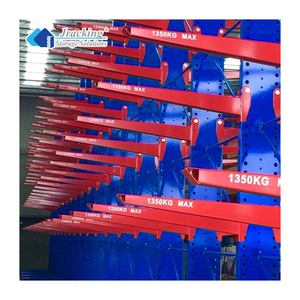
| Heavy Duty Cantilever | Variable / Vertical Maximization | 100% Unobstructed Lengthwise | Pipes, extrusions, timber packs, structural steel | Side-loaders, Multi-directional Reach Trucks |
| Multi-Tier Mezzanine | Doubles / Triples Floor Area | 100% Manual Floor Picking | Automotive spare parts, apparel sorting, fulfillment hubs | Vertical Reciprocating Conveyors, Hand Carts |
Strategic Direct-from-China Sourcing & Procurement Insights
Essential guidance for warehouse operations managers, procurement directors, and EPC contractors to de-risk international racking supply chains.
Navigating overseas structural procurement requires comprehensive oversight beyond FOB unit metrics. Structural steel racking constitutes the load-bearing spine of a distribution facility; under-specified vertical frame gauges or non-certified weld joints carry catastrophic inventory and operational liabilities. When planning international project lifecycles, institutional buyers should mandate raw material mill certificates verifying tensile yield curves, cold-bend springback tolerances, and minimum coating dry film thickness (DFT). Crucially, logistical planning must account for maritime container stowage factors. Optimized nesting of beam connectors, step-beam profiles, and knocked-down frame trusses dramatically reduces ocean freight expenses per storage location.
Floor Slab Dynamic Load Verification
Prior to finalizing frame footplate designs, evaluate concrete slab thickness, sub-base compaction (k-value), and compressive strength (e.g., C25/30) to specify correct expansion anchor embedding depths.
Pallet Dimensional Deflection Profiles
Ensure that structural beam calculations accommodate specific wooden, plastic, or steel pallet bottom configurations (two-way, four-way, perimeter base) with required wire-mesh deck reinforcements.
Transit Logistics from South China Ports
Direct maritime container dispatch from Guangzhou or Nansha deepwater ports ensures swift port-to-port connections (2-7 days across Asian hubs; 18-28 days to European and American terminals).
Frequently Asked Questions on Heavy-Duty Racking Procurement
In-depth structural, logistical, and commercial answers addressing key criteria raised by international engineering and operations buyers.
What primary data inputs are necessary for structural layout calculation?
Our engineering department requires: detailed architectural CAD drawings indicating building columns, clear heights to the lowest overhead obstruction (HVAC, sprinklers), slab load limits, pallet outer dimensions (W x D x H including overhang), maximum loaded weight per unit, forklift model operational turn-radius, and fire sprinkler clearance requirements.
How do you guarantee load capacity ratings and safety deflection limits?
All structural calculations follow standard European FEM 10.2.02 / EN 15512 or American RMI specifications. Maximum allowable vertical beam deflection under fully distributed safe working load is governed by L/200 (or L/300 for sensitive automated systems). Physical compression tests and weld coupon testing are conducted regularly on production batches.
Can your rack uprights and frame footings be configured for seismic zones?
Yes. Our engineering department models ground acceleration coefficients according to local building codes (such as UBC, IBC, or Eurocode 8). Upright steel wall thicknesses (up to 2.5mm or 3.0mm), expanded baseplate footprints, oversized structural floor anchors, and enhanced frame bracing patterns are engineered to resist lateral shear stresses.
What finish systems are recommended for humid, coastal, or cold-store environments?
For standard ambient warehouses, our multi-stage phosphate conversion wash coupled with thermosetting polyester electrostatic powder coating provides robust mechanical resistance. For walk-in freezers down to -30°C, high condensation environments, or outdoor coastal storage, we offer continuous pre-galvanized components or full hot-dip galvanized (HDG) steel baths.
What is your typical production lead time and ocean shipping transit schedule?
Standard custom manufacturing runs take approximately 15 to 25 working days depending on tonnage and project complexity. Located in Guangzhou, South China, maritime transit times are notably swift: 2–5 days to Vietnam, 5–7 days to Singapore and Thailand, 6–8 days to Malaysia, and roughly 20–28 days to the West Coast of North America or main European ports.
How is on-site installation supported for international turn-key projects?
Every shipment is packed with systematic color-coded bundle markings corresponding directly to CAD piece-mark drawings and 3D step-by-step assembly guides. For large installations or complex multi-tier mezzanines, we supply on-site senior installation engineers to manage local labor crews, or provide dedicated live video engineering supervision.
Transform Your Warehouse Volume Into High-Density Throughput
Consult directly with our senior structural engineers to obtain tailored architectural CAD layouts, 3D renderings, and certified load-deflection calculation proposals free of charge.
Send an Inquiry