Premier High-Density Heavy-Duty Racking Series
Direct factory production lines engineered to FEM 10.2.02, EN 15512, and AS 4084-2023 structural standards. Select a turnkey storage system or request verified CAD specifications.
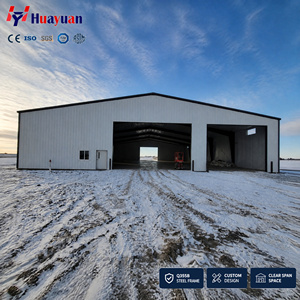
Prefabricated Metal Warehouse Building Steel Structure Industrial Storage Workshop Logistics Hub Steel Frame AISC CE ISO
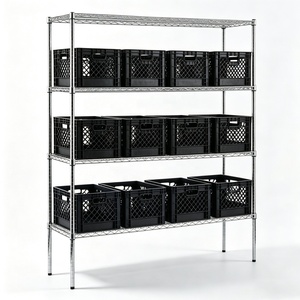
Commercial Warehouse Storage Rack Adjustable 4 Tiers Industrial Heavy Duty Galvanized Metal Wire Shelving
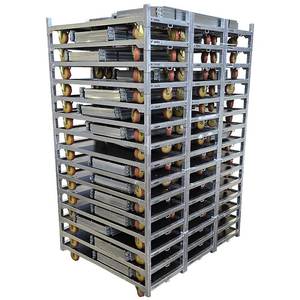
DC Trolley And Shelf Set By CUBE-Stacking Racks & Shelves
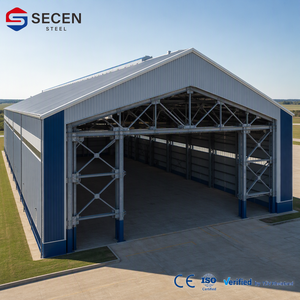
Factory Direct High Quality Steel Structure Warehouse Industrial Storage Warehouse Logistics Workshop Free Design Service
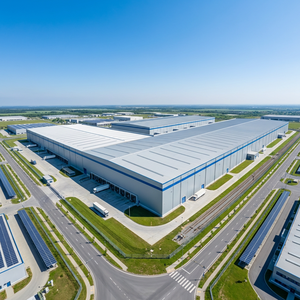
Professional Pre-Engineered Steel Structure Warehouse Industrial Building Modular Prefabricated Warehouse Manufacturer
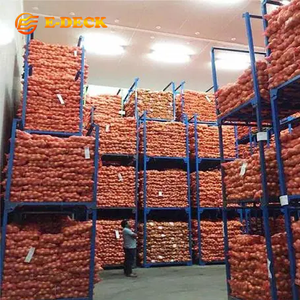
Warehouse Storage Durable Steel Stacking Metal Frame Pallet
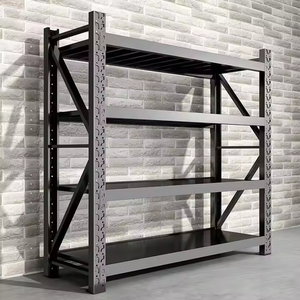
Light-Duty Steel 5-Layer Drive-In Pallet Storage Rack Warehouse Storage Shelf
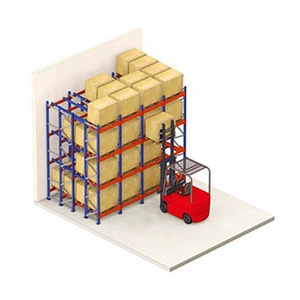
Warehouse Pallet Push Back Rack System, Durable Racking/Metal Shelving /Storage Racking/Warehouse Push Back Storage Racks
Engineering Fundamentals of Double Deep Warehouse Racking Systems
In modern industrial logistics, distribution hub designers are continually challenged to reconcile two diametrically opposed objectives: volumetric storage density and SKU selective accessibility. Standard selective pallet racking offers 100% immediate selectivity but dedicates up to 65% of the total warehouse floor footprint strictly to operating aisles. High-density systems such as Drive-In or Gravity Flow drastically reduce aisle consumption but either compromise throughput velocity or introduce mechanical complexity with high capital expenditure.
Double Deep Racking (DDR) operates as the mathematical sweet spot. By configuring pallet racks back-to-back in two rows of two deep (totalling four pallet depths between operating aisles), DDR eliminates 50% of the access aisles required by conventional single-deep layouts. This spatial configuration drives an immediate 30% to 60% volumetric density increase over selective setups while preserving 50% direct pallet accessibility on a First-In, Last-Out (FILO) or batched First-In, First-Out (FIFO) operational cadence.
Structural Insight: Successful deployment of Double Deep Racking requires specialized reach trucks equipped with pantograph scissor extensions or double-reach telescopic forks. Because horizontal deflection increases non-linearly when handling pallets at full cantilever reach, the steel uprights, beam connectors, and floor anchorage must be engineered to withstand heightened torsional, dynamic, and eccentricity loads under FEM 10.2.02 and EN 15512 standards.
Double Deep System Mechanics & Load Vectors
Top China double deep warehouse racking factories engineer structural components with distinct load-bearing adaptations that distinguish them from standard single-selective systems:
- Dual-Depth Support Rail Integration: Unlike single-reach racks where pallets rest directly on standard load beams, deep-reach bays frequently integrate structural pallet support bars, wire mesh decks, or guide channels to assist fork operators in accurately seating rear pallets where line-of-sight is obstructed.
- Elevated Column Modulus of Elasticity: With cantilevered mast physics exerting eccentric lateral moments on the upper beam levels, upright frames utilize high-tensile cold-rolled steel coils (Q235B and Q355B grades) with wall thicknesses ranging between 2.0mm and 2.5mm, paired with omega-profile geometric roll designs for torsional rigidity.
- Structural Deflection Ratios: Standard European and American specifications dictate that beam deflection under safe working load (SWL) must not exceed L/200 (where L is the clear distance between uprights). For Double Deep configurations carrying extreme concentrated weights (e.g., 1,000kg to 1,500kg per pallet), top manufacturers calculate designs strictly under L/250 to preserve reach-mechanism clearances during high-elevation retrieval.
| Storage System Architecture | Volumetric Density Index | Pallet Accessibility (Selectivity) | MHE (Forklift) Capital Cost | Inventory Rotation Protocol | Optimal SKU Profile |
|---|---|---|---|---|---|
| Selective Pallet Racking | Baseline (40% - 45% Cube Use) | 100% Direct Immediate | Low (Standard Counterbalance) | FIFO Strict | High SKU Variety, Fast Turns |
| Double Deep Pallet Racking | High (60% - 70% Cube Use) | 50% Immediate (2 Pallets/Lot) | Medium (Pantograph Reach Truck) | Batched FIFO / FILO | Medium SKU Variety, 2-10 Pallets/SKU |
| Drive-In Racking | Very High (75% - 85% Cube Use) | Low (15% - 20% Direct) | Low-Medium (Narrow Truck Entry) | Strict FILO | Low SKU Diversity, Bulk Homogeneous |
| Push-Back Racking | High (65% - 75% Cube Use) | Medium (One SKU Per Lane) | Low (Standard Counterbalance) | Strict FILO | 2-6 Pallets per Lane Batches |
| Radio Shuttle Automation | Ultra-High (85% - 90% Cube Use) | Programmable (Deep Lane Access) | High (Automated Shuttle Units) | FIFO or FILO Dynamic | FMCG, Cold Storage, High Volume |
Why Global Supply Chains Source From HEDA Shelves
Operating from Guangzhou, China, Guangzhou Heda Shelves Co., Ltd. delivers engineered racking frameworks backed by end-to-end quality validation, certified steel chemistry, and international logistics efficiency.
Fully Certified Structural Integrity
Our heavy-duty uprights and beams comply with European CE Certification (No. 2435-CPR-8605159) and ISO 9001:2015 Quality Management standards (Cert No. 18624Q00169R0M). Raw coils are sourced from tier-one mills with verified mill test certificates (MTC).
Tropical & Coastal Pre-Treatment
All fabricated components undergo automated pickling, phosphating, and multi-stage silane pre-treatment before electrostatic polyester powder baking (70-100µm DFT). Systems installed in humid ASEAN zones or coastal ports resist delamination and corrosion.
Complimentary 3D CAD & FEA Calculations
Our internal structural engineering department models pallet footprint clearances, aisle turning radiuses (AST), and seismic shear load distributions using advanced Finite Element Analysis (FEA) prior to rolling a single meter of steel.
10-Step Quality Controlled Line
From initial slit coil uncoiling, automatic punch matrixing, and computer-controlled roll forming, through high-precision beam welding and final container nesting, each fabrication step is monitored to preserve dimensional tolerances under ±1.0mm.
Direct Multi-Modal Ocean Dispatch
Positioned close to the Pearl River Delta maritime nexus (Guangzhou, Nansha, and Shenzhen), shipments depart directly on premier carriers: 2–5 days to Vietnam, 3–5 days to Manila, 5–7 days to Singapore/Thailand, and reliable routes to Europe and the Americas.
Complete Installation Support & OEM Supply
Every international container includes CAD component numbering schematics, 3D exploded assembly diagrams, and high-definition video walkthroughs. On-site installation supervision and third-party commissioning are available worldwide.
Future Procurement & Technological Trends in High-Density Warehousing
The industrial warehousing sector is experiencing a paradigm shift driven by e-commerce SKUs fragmentation, urban land cost inflation, and cold-chain infrastructure investment. Global supply chain procurement directors sourcing Double Deep systems from top China factories are prioritizing modern engineering adaptations to future-proof their operations:
1. Vision-Guided AGVs & Reach Automation
Traditional Double Deep operations required skilled operators to guide pantograph forks into the secondary depth blind zone. Procurement is rapidly shifting toward reach-trucks integrated with onboard mast cameras and LiDAR-guided Automated Guided Vehicles (AGVs). These automated systems require tighter rack manufacturing tolerances (±1.5mm) and integrated floor guide rails.
2. IoT Structural Health Monitoring
Modern distribution facilities in seismic zones (e.g., Indonesia, Philippines, Western Americas) are mandating IoT strain gauges and impact sensors embedded directly into upright baseplates and row spacers. These telemetric nodes provide real-time alerts on forklift collisions, accidental overload shifts, and seismic ground accelerations.
3. Decarbonized Steel & Cold-Chain Coating
ESG compliance in multinational tenders is driving demand for lower-carbon electric arc furnace (EAF) structural steel. Simultaneously, cold-storage operators (down to -30°C) demand specialized low-temperature impact resistant steels (avoiding brittle fractures) paired with antimicrobial powder formulations.
Double Deep Racking Procurement & Engineering FAQ
Critical engineering specifications, operating clearances, reach truck compatibility, and import logistics answered by HEDA Shelves' technical directorate.
Aisle widths depend directly on the chosen deep-reach material handling equipment. A standard pantograph scissor-reach truck or telescopic double-deep mast reach truck typically requires a minimum aisle width of 2,800mm to 3,200mm for standard 1000x1200mm or 1200x1200mm pallets. While this aisle is wider than a Very Narrow Aisle (VNA) system (1,600mm–1,800mm), Double Deep eliminates every second aisle entirely, resulting in net floor space savings of up to 35% compared to selective racking using standard 3,600mm counterbalanced aisles.
Because rear pallets are loaded and unloaded at full scissor extension, operator vision is partially obscured. HEDA Shelves incorporates three critical engineering safeguards: First, heavy-gauge dual pallet support bars or welded steel wire mesh decks bridge the depth of each bay, preventing misplaced pallets from falling through beams. Second, heavy-duty backstop beams prevent over-pushing into the opposing rack run. Third, reinforced row spacers maintain an engineered 200mm–300mm fire flue space compliant with NFPA 13 sprinkler penetration standards.
Our Double Deep upright columns and step/box load beams are cold-roll formed from certified Q235B and Q355B structural carbon steel (equivalent to European S235JR and S355JR / ASTM A36 and A572 Grade 50). All coils undergo incoming spectroscopic chemistry analysis and tensile strength tests. Complete certified Mill Test Certificates (MTC) detailing yield strength, elongation percentages, and chemical compositions are archived and delivered with every export shipping manifest.
Yes. Seismic calculation is an essential part of our project-tailored service. Utilizing site data—including spectral acceleration factors (Ss, S1), ground soil classification, and building occupancy categories—our engineering team calculates dynamic seismic lateral loads according to IBC 2021, Eurocode 8, or AS 1170.4. Structural reinforcements include enlarged 10mm–16mm thick baseplates, dual floor wedge anchors per leg, heavy-duty K-type vertical back bracings, and reinforced beam-to-column connector pins.
Standard fabrication lead time for custom-engineered Double Deep systems (ranging from 1,000 to 10,000 pallet positions) is 15 to 25 calendar days following technical drawing sign-off. Ocean transit from Guangzhou/Shenzhen port averages 2–5 days to Vietnam, 3–5 days to Manila, 5–7 days to Singapore/Bangkok, 7–10 days to Jakarta, 14–18 days to Australia/Middle East, and 20–28 days to the US West Coast or main European ports. We ship on EXW, FOB, CFR, CIF, and DDP terms.
Double Deep provides 70–80% of the volumetric efficiency of a semi-automated Radio Shuttle system at approximately 30%–40% of the initial capital expenditure. Radio Shuttle racking excels when you have 10 to 50 pallets per identical SKU (deep lane bulk storage). Double Deep is ideal when your inventory profile consists of 2 to 6 pallets per SKU, providing better operational flexibility without the battery charging, radio frequency controls, or mechanical maintenance associated with automated shuttle fleets.
Engineering Your High-Density Storage Transformation
Send our Guangzhou engineering team your warehouse architectural floor plan, clear ceiling heights, and pallet specifications. We deliver a comprehensive 3D layout, CAD drawing, and structural load calculation proposal within 24 hours.