Heavy-Duty Storage Architecture for Modern Global Supply Chains
Back to back pallet racking represents the foundational configuration of high-throughput warehousing worldwide. By coupling two single selective runs with heavy-duty structural row spacers, enterprise operators unlock unrestricted 100% SKU selectivity, elevated floor area utilization, and reinforced seismic moment rigidity. As a premier Chinese manufacturer with direct port connectivity in Guangzhou, we supply turnkey intralogistics frameworks tested against extreme dynamic and static load spectra.
Featured Industrial Pallet Racking & Logistics Systems
Browse our proven, factory-direct storage units engineered for standard pallet interfaces, automated shuttle lanes, cold-chain storage, and long-span bulk commodities.
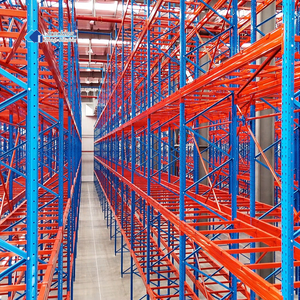 EU Compliant
- Load: 1,000 – 4,500 kg / beam tier
- Pitch adjustment: 50mm / 75mm slotted
- Steel Grade: Certified Q235B / Q355B
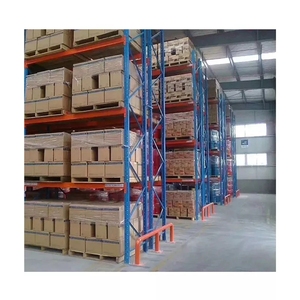 Heavy Duty
- Configuration: Single / Double back-to-back
- Finish: Anti-scratch epoxy electrostatic
- Connector: 3-5 claw hook safety pins
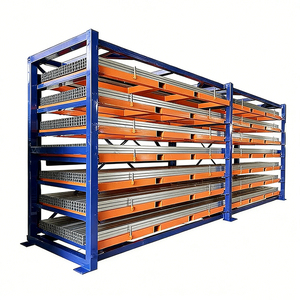 Modular Grid
- Application: Carton picking + pallet tiers
- Upright Section: 80x60, 90x70, 100x70mm
- Decking: Steel panels or wire mesh decks
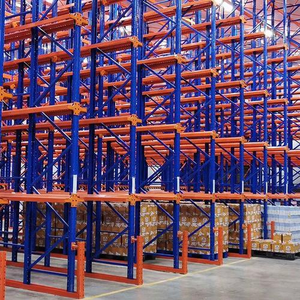 VNA High Bay
- Aisle Width: 1,600 – 1,800 mm compact
- Clear Height: Up to 15,000 mm vertical
- Guidance: Floor guide rails / wire induction
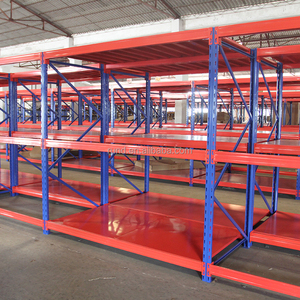 Precision Fit
- Profile: Box beams & P-beams interchangeable
- Safety Factor: 1.5 to 1.8 static deflection limit
- Fast Delivery: Shipped direct from Guangzhou
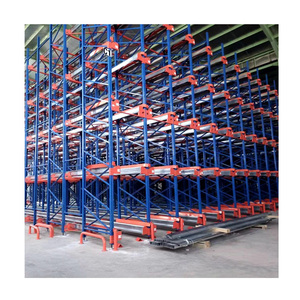 Semi-Automation
- Carrier Speed: Up to 1.1 m/s loaded
- Battery: Long-life LiFePO4 cold-resistant
- Logistics Mode: FIFO & LIFO configurable
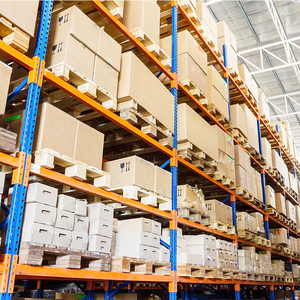 Custom Cradle
- Design: Dedicated saddle / roll support brackets
- Capacity: Tailored for textile cylinders & drums
- Markets: Southeast & South Asia regional hubs
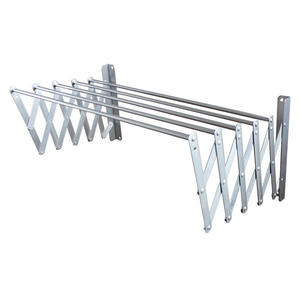 Hardware Line
- Material: Anodized corrosion-free aluminum
- Hardware: Cross-border e-commerce supply
- Application: Facilities, dormitories, workshops
The Mechanics of Back-to-Back Pallet Racking: Engineering, Stability, and Space Optimization
In standard intralogistics terminology, a Back-to-Back Pallet Racking System is constructed by placing two single rows of selective pallet racks back-to-back, mechanically connected through structural row spacers. While a single-row rack requires dedicated forklift access on its front face, a back-to-back run doubles the storage depth per aisle cycle. Aisles service two pallet faces on either side, effectively reducing operating aisle floor consumption by up to 35% to 42% compared to single-row configurations, while retaining pure 100% direct picking access to every pallet position.
Structural Mechanics & Row Spacer Dynamics
The fundamental engineering advantage of back-to-back racking lies in the transverse moment connection provided by rigid row spacers. In structural engineering analysis, an isolated rack upright frame exhibits a high slenderness ratio ($\lambda = L / r$) in the cross-aisle direction. When back-to-back frames are structurally joined at vertical intervals by calibrated tubular or channel row spacers, the effective buckling length of the upright system is substantially mitigated. This inter-frame coupling acts as an integrated structural truss:
- Overturning Moment Dissipation: Overturning loads caused by eccentric pallet placement, forklift contact shocks, and horizontal seismic wave accelerations ($S_s, S_1$) are distributed across both upright frames and transmitted through dual baseplates into the structural concrete slab.
- Standard Flue Space Compliance: Fire suppression standards (NFPA 13 and European FM Global guidelines) mandate maintaining a continuous vertical longitudinal flue space (typically 150mm to 300mm / 6" to 12") between back-to-back loads to enable rapid sprinkler heat penetration and smoke exhaust. Row spacers are precision-manufactured to lock these exact dimensions across miles of continuous racking.
- Pallet Overhang Clearance: Standard warehouse practices specify a 50mm (2-inch) front and rear pallet overhang beyond the beam edge to guarantee stable seating. Row spacers maintain a engineered clearance gap (e.g., 200mm spacer for two 50mm rear overhangs leaves a 100mm absolute safety air corridor).
Comparative Analysis: Racking Geometries Across Operational Metrics
| Storage System Type | Aisle Width (m) | Floor Space Efficiency | SKU Access Selectivity | Capital Cost / Position | Forklift Compatibility |
|---|---|---|---|---|---|
| Back to Back (Selective) | 3.0 – 3.5 m | 40% – 45% | 100% Direct | Lowest ($) | Standard Counterbalance / Reach Truck |
| Double Deep Racking | 3.0 – 3.4 m | 55% – 60% | 50% (Last-In, First-Out) | Low-Medium ($$) | Pantograph / Deep-Reach Forklift |
| Very Narrow Aisle (VNA) | 1.6 – 1.9 m | 60% – 68% | 100% Direct | Medium-High ($$$) | Articulated / Turret Truck / Rail Guided |
| Radio Shuttle System | Aisle-free blocks | 75% – 85% | Batch Selective (FIFO/LIFO) | High ($$$$) | Any Standard Forklift + Autonomous Cart |
| Drive-In Racking | Drive-in lanes | 65% – 75% | Low (Filo / Batch) | Medium ($$) | Counterbalance / Reach (Mast clearance) |
Steel Metallurgy & Structural Tolerances
As a direct exporter, our components are rolled from hot-rolled and cold-rolled carbon steel coils compliant with GB/T 700 Q235B / Q355B, metallurgically equivalent to European EN 10025 S235JR and S355JR, and American ASTM A36 and A572 Grade 50. Upright profiles utilize multi-bend omega (Ω) section cold roll-formed geometry with return lips that inhibit local flange buckling under extreme compression. Beams employ dual C-sections seam-welded automatically into closed structural boxes, engineered with safety factor coefficients ($\gamma_m$) exceeding 1.65 based on allowable stress design (ASD) and limit state design (LSD) methodologies.
Global Trends Transforming Heavy Industrial Pallet Racking (2025–2030)
Strategic sourcing of storage equipment has evolved beyond basic per-kilogram steel procurement. Forward-looking supply chain executives, general contractors, and logistics directors are navigating transformative macro shifts across international procurement:
Why Leading Global Importers Source From Our Guangzhou Racking Complex
Operating since 2001, Guangzhou Heda Shelves Co., Ltd. has established an elite benchmark in industrial storage systems manufacturing. Spanning a 30,000 m² automated manufacturing footprint with over 300 technical and production specialists, our facility produces up to 30,000 tons of precision-engineered racking per month. Our strategic location in Guangzhou provides rapid ocean transit to major worldwide transshipment ports:
Our Closed-Loop 10-Step Quality Manufacturing Process
Every upright column, box beam, baseplate, and bracing link is produced completely in-house to maintain rigorous dimensional tolerances (<0.5mm variance across roll formations):
Our manufacturing system maintains active CE Certification No. 2435-CPR-8605159 (governing structural steel execution under EN 1090), ISO 9001:2015 Quality Management System Certification No. 18624Q00169R0M (valid through June 2027), and complete RoHS Compliance on all industrial coatings.
Frequently Asked Questions for Sourcing Back-to-Back Pallet Racking
Actionable answers to technical, commercial, seismic, and logistical questions from international project managers.
Request Your Customized Warehouse Engineering Design & Direct Factory Quotation
Connect directly with our Guangzhou structural engineering team. Receive complimentary CAD floor plans, finite element capacity calculations, and comprehensive ocean freight estimations tailored to your exact facility dimensions.