Heavy Duty Mezzanine
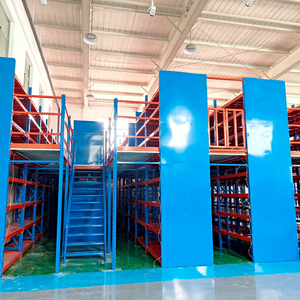
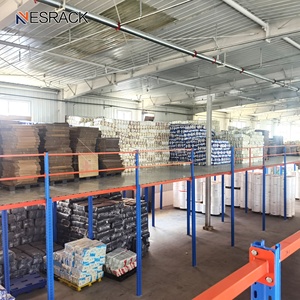
Industrial Warehouse Steel Mezzanine Storage Shelving Platform System
Load: 300–1000 kg/m²
Multi-Tier Expandable
Q235B / Q355B Steel
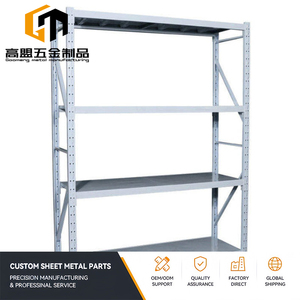
Direct factory-manufactured industrial storage racking, automated vertical platform solutions, and high-throughput handling equipment engineered for extreme load tolerance and compliance with FEM, RMI, and ISO standards.
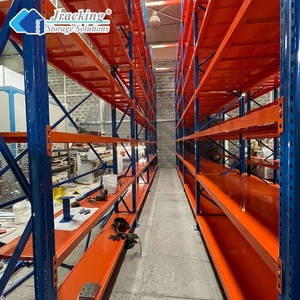
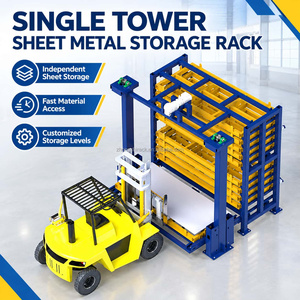
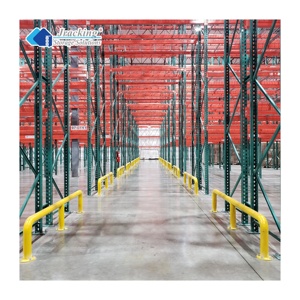
A rigorous comparative evaluation based on structural engineering compliance (FEM 10.2.02, EN 15512, RMI MH16.1), steel tensile grade integrity, surface conversion coating quality, and international fulfillment capacity.
| Supplier / Exporter Tier | Primary Technical Specialization | Engineering Standards | Surface Treatment Durability | Export Lead Time / Capacity | Strategic Best Fit |
|---|---|---|---|---|---|
| HEDA Shelves (Guangzhou) | Heavy Pallet Racking, Multi-Tier Mezzanines, Radio Shuttle | CE No. 2435, ISO 9001:2015 | Pickling + Phosphating + Electrostatic Epoxy (80%+ RH) | 30,000 tons/mo; 2-10 Days Sea Transit (ASEAN) | Turnkey 3PL, Cold Storage, Fast-Track ASEAN & Global DCs |
| SSI Schaefer | Automated High-Bay Warehouses, AS/RS, Shuttles | EN 15512, DIN standards | Industrial Multi-Stage Powder Coat | High lead times, complex project execution | Mega-automated corporate distribution hubs |
| Dexion (Stow Group) | Selective, Drive-In, Dynamic Flow Solutions | FEM, SEMA approved | High-Grade Epoxy-Polyester Finish | Global footprint; centralized European hub | European supply chain & regional manufacturing hubs |
| Mecalux | Clad-Rack Warehouses, Automated Pallet Shuttles | EN / RMI compliant | Automated continuous cataphoresis coating | Extensive global presence; multi-continent plants | High-rise automated vertical warehousing |
| Jracking Group | EURO & US Teardrop Storage Systems, Cantilever | AS4084, RMI MH16.1, CE | Polyester Powder Spray Coated | Large-scale Chinese & international export lines | Standard pallet distribution, bulk industrial trade |
| Interlake Mecalux (US) | Roll-formed & Structural Steel Storage Systems | RMI ANSI MH16.1 | Industrial Baked Enamel / Powder | North American manufacturing centers | Heavy American automotive & retail logistics |
| Bito Storage Systems | Small-Parts Storage, Dynamic Order Picking Racks | RAL-RG 614, FEM | Multi-stage immersion cleaning & coating | Central European production centers | Pharmaceutical, e-commerce order fulfillment centers |
| Nedcon (Freudenberg) | Complex Structural Steel Mezzanines & AS/RS Racks | EN 1090, ISO 3834 | Pre-galvanized & industrial powder paint | Specialized engineering lead cycles | Automated material handling system integrators |
| AR Racking | Adjustable Pallet Racks, Drive-in, Shuttle | EN 15512, ISO 14001 | Galvanized uprights + Epoxy beams | European manufacturing, global sales hubs | High-demand industrial and chemical storage |
| Kardex Remstar | Vertical Lift Modules (VLM), Carousel Systems | CE, UL Machinery Directive | Industrial sealed precision housing | Specialized precision machinery export | High-density micro-fulfillment & electronics tooling |
In high-throughput warehousing, logistics operations and modern supply-chain networks, industrial storage racking is no longer treated merely as passive steel scaffolding. Instead, structural racking forms the foundational physical backbone of warehouse velocity, direct volumetric cubic efficiency, and employee life safety. Selecting top-tier warehouse racking manufacturers and exporters requires evaluating structural engineering calculations, steel metallurgy, chemical surface passivation, and compliance with rigorous international safety guidelines.
Key Engineering Rule (FEM 10.2.02 / RMI MH16.1): Beam deflection under maximum rated load must not exceed L/200 (where L is the clear span distance between upright columns). Structural upright columns must incorporate seismic ductility factors ($R$-values) aligned with geotechnical site reports to prevent progressive collapse under kinetic seismic wave loading.
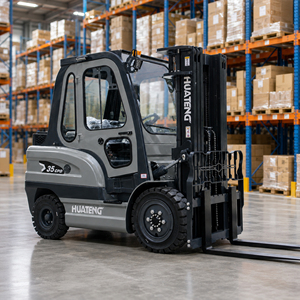
Industrial racking systems endure constant dynamic loading cycles caused by counterbalanced lift trucks, automated reach trucks, and high-bay stacker cranes. Premium exporters utilize high-tensile hot-rolled steel strip, cold-formed into multi-bend omega ($\Omega$) or closed-tube box profiles. The structural geometry of an upright column—specifically the quantity and radius of cold-formed bends—determines its axial compressive strength and torsion resistance.
Inferior low-cost racking often substitutes structural grade Q235B or Q355B steel with uncertified commercial-grade scrap sheets, resulting in severe cold-work embrittlement along punch perforations. In high-density installations, localized micro-fissuring around teardrop or diamond connector slots can trigger catastrophic structural frame failure when subjected to horizontal harmonic fork impacts.
Corrosion failure in warehouse storage begins sub-surface. Export shipments heading into tropical climates—such as the ASEAN nations, Central America, or coastal industrial belts—routinely encounter prolonged relative humidity levels above 80% accompanied by airborne saline aerosol. Racking systems manufactured with simple solvent degreasing and direct-to-metal dry powder spraying show blistering, pin-holing, and localized delamination within 12 to 18 months.
To ensure 10- to 15-year operational lifespans, world-class exporters implement an intensive pickling and phosphating chemical immersion protocol prior to electrostatic epoxy-polyester thermosetting powder application. By immersing steel components in targeted acid baths to dissolve mill scale, followed by zinc or iron phosphate chemical conversion coating, a microscopic crystalline barrier forms directly over the iron substrate. This barrier ensures irreversible mechanical adhesion for the powder coat and stops lateral under-film rust creep if mechanical surface scrapes occur.
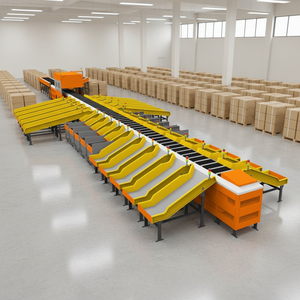
Industrial warehousing is experiencing a decisive structural transition away from wide-aisle, single-selective setups toward automated high-density dynamic topologies. Facilities facing escalating cubic land costs are deploying semi-automated four-way radio shuttle systems and vertical rack-supported mezzanine platforms.
Integrating autonomous mobile robots (AMRs) and automated guided vehicles (AGVs) requires tightening manufacturing tolerances across the entire racking structure. Runout tolerances along guide rails, base-plate levelness, and connector stiffness must be maintained within ±1.5 mm across a 50-meter bay run. Procurement engineers must choose racking exporters who operate robotic laser punching and continuous roll-forming lines capable of delivering high repeatability across thousands of structural components.
How cutting-edge exporters and robotics integrators are reshaping heavy-duty storage economics over the 2025–2030 planning cycle.
Deep-lane radio shuttle pallets integrated with vertical parent lifts eliminate traditional forklift access aisles. This shift boosts net cubic warehouse utilization from 42% in standard selective configurations to over 78% within identical floor boundaries, reducing HVAC refrigeration volume in cold-chain centers.
Modern distribution centers are moving away from dedicated primary steel building frames in favor of self-supporting rack-integrated platforms. By utilizing structural pallet racking uprights as primary vertical support columns for intermediate floors, building owners reduce total structural steel consumption by up to 28%.
Advanced non-linear dynamic analysis under pushover loading conditions enables structural engineers to design semi-rigid beam-end connectors. These connectors dampen kinetic energy during seismic disturbances, protecting both workers and multi-million-dollar inventory stocks in earthquake-prone regions.
Every beam, upright column, bracing diagonal, and mezzanine beam profile undergoes rigorous stage-gate quality verification inside an ISO 9001:2015 accredited production infrastructure.
Combining 25+ years of factory-direct heavy structural manufacturing with specialized logistics design, seismic structural calculation, and comprehensive ASEAN port coverage.
Our dedicated engineering department drafts full AutoCAD spatial blueprints, 3D structural perspective renderings, load calculation sheets, and slab anchor stress evaluations free of charge before production begins.
Situated in Guangzhou with direct access to Nansha and Shenzhen container terminals, our facilities offer fast port-to-port ocean transit: 2–5 days to Vietnam, 3–5 days to Manila, 5–7 days to Singapore and Bangkok, and 6–8 days to Port Klang.
Fully compliant with international safety mandates. HEDA maintains official CE Certification (Certificate No. 2435-CPR-8605159), ISO 9001:2015 Quality Management (No. 18624Q00169R0M), and full material test RoHS certificates.
Technical guidance for supply chain managers, warehouse directors, and industrial contractors on structural tolerances, customs clearance, and system configuration.
Send us your warehouse CAD floor plan, target throughput goals, and storage profile. Our structural engineering department will deliver a comprehensive, code-compliant storage proposal within 24 hours.