Executive Summary: The Geometrical & Financial Mechanics of Very Narrow Aisle (VNA) Systems
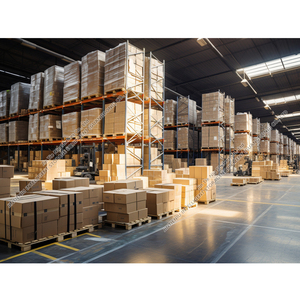
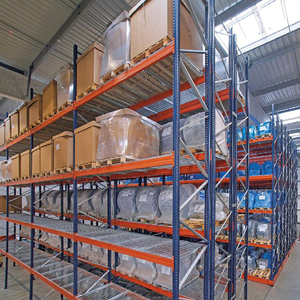
Very Narrow Aisle (VNA) racking systems represent the pinnacle of static warehouse density optimization. In conventional selective pallet racking layouts, operating transfer aisles require a width of 3.2 to 3.8 meters to accommodate standard counterbalance forklifts or reach trucks. This spatial configuration allocates roughly 60% of total facility floor footprint purely to vehicular dead travel. Conversely, VNA racking compresses aisle operational clearances down to 1.5 to 1.8 meters—a direct reduction of over 50% in operational floor space requirement, while elevating clear storage heights upward to 17 meters.
By transforming horizontal transit lanes into cubic storage real estate, logistics directors achieve upwards of a 40% to 50% increase in SKU density without sacrificing 100% individual pallet selectivity. However, shifting from wide-aisle storage to VNA is an uncompromising structural engineering discipline. The high aspect ratios of upright profiles, extreme mast deflection at 15+ meters, floor dynamic load distribution, and laser-guided turret truck (man-up or man-down) navigation require manufacturing tolerances that surpass general commercial shelving by an order of magnitude.
VNA Engineering Standards vs. Conventional Storage
| Performance Parameter | Standard Selective Racking | Very Narrow Aisle (VNA) Systems | Engineering Compliance Standard |
|---|---|---|---|
| Aisle Clear Width | 3,200 mm – 3,800 mm | 1,500 mm – 1,800 mm | FEM 10.2.02 / ISO 20336 |
| Operating Height | Up to 8,000 mm | Up to 17,000 mm+ | EN 15512:2020 / RMI MH16.1 |
| Floor Flatness Tolerance | DIN 18202 Table 3, Line 3 | DIN 18202 Line 4 / TR34 DM2 / F-Min 75+ | Concrete Superflat Classification |
| Truck Guidance Mechanism | Free steering (No guidance) | Mechanical Guide Rails (C-profile) or Wire Inductive Guidance | FEM 9.831 Operational Safety Code |
| Mast Deflection Safety Factor | Standard Dynamic Deflection | Dynamic Sway Control ±15 mm at full lift height | EN 15620 Tolerance Class 300 |
| Floor Space Utilization | 35% – 42% Net Usable | 60% – 72% Net Usable | Cubic Optimization Index |
Top 10 Very Narrow Aisle Pallet Racking Factories & Manufacturing Giants
Procuring VNA racking at scale necessitates evaluating suppliers against rigorous criteria: cold-formed steel tensile yield strengths (Q235B, Q355B, S355JR), continuous automated roll-forming roll passes, anti-corrosion chemical pre-treatments, automated robotic welding, structural finite element analysis (FEA), and third-party certified credentials (CE EN 1090-1, ISO 9001:2015). Below is the comprehensive technical appraisal of the top 10 global VNA manufacturing facilities.
1. Guangzhou Heda Shelves Co., Ltd.
Direct OEM/ODM PowerhouseOperating as a premier direct manufacturing exporter, HEDA Shelves manufactures up to 30,000 metric tons per month of precision racking, serving 120+ countries with custom structural engineering.
- Core Strengths: Complete in-house cold roll-forming lines, automated punching, pickling & phosphating anti-corrosion pre-treatment.
- Certifications: CE Certificate No. 2435-CPR-8605159, ISO 9001:2015 No. 18624Q00169R0M, RoHS.
- Engineering Services: Complimentary structural FEA calculations, seismic profiling (PGA > 0.4g), and full 3D/CAD system layout models.
2. SSI SCHAEFER Group
European MultinationalA titan in intralogistics systems, producing ultra-high tolerance upright configurations capable of integrating directly into fully automated AS/RS and manual VNA turret truck operations.
- Core Focus: Turnkey mega-distribution automation, dynamic picking platforms, and extreme verticality tolerance adherence.
- Structural Benchmark: Rigorous German DIN/FEM engineering compliance with proprietary beam connector geometries.
3. Dexion Storage Solutions (Gonvarri)
Continental EuropeRenowned for structural reliability in industrial cold store and heavy industrial logistics applications, offering standardized VNA and narrow aisle profiles.
- Engineering Focus: Advanced finite element structural modeling, seismic load optimization under Eurocode 3 and 8.
- Market Base: Widespread adoption across UK, Northern Europe, and pan-continental retail fulfillment centers.
4. Mecalux, S.A.
Iberia & AmericasMecalux maintains extensive automated continuous punching and rolling lines producing high-grade structural racking for high-bay warehousing throughout Europe and the Americas.
- Key Technology: High-yield steel alloys with specialized interlocking beam connectors minimizing torsional sag.
- Software Integration: Seamless coordination with in-house Easy WMS platforms and automated guided VNA vehicles.
5. Stow Group
Western EuropeOne of Europe’s leading racking producers, delivering heavy duty VNA systems, mobile racking, and automated warehouse structures under brand names Stow and Movu Robotics.
- Design Excellence: Specialized upright configurations providing torsional stiffness to neutralize asymmetric dynamic rack loading.
- Quality Standards: Strict EN 15512 and FEM standard verification with high-precision robotized beam fabrication.
6. Nedcon B.V. (A Voestalpine Company)
Northern EuropeOperating under Voestalpine's high-performance steel division, Nedcon specializes in high-complexity customized VNA racking and high-bay clad racks.
- Metallurgical Quality: Certified European high-tensile strip steel delivering exceptional ductility in seismic zones.
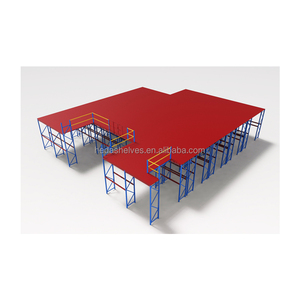
- Application Focus: Multi-tier mezzanine integration, high-bay automated pallet storage, and mission-critical 3PL hubs.
7. AR Racking (Grupo Arania)
Southern EuropePart of the Arania Group with decades of steel transformation history, AR Racking manufactures heavy duty adjustable pallet and VNA systems using automated laser profiling.
- Surface Protection: Automated zinc-coating and high-grade electrostatic powder finishes resilient to scratching.
- Certification Rigor: Complete compliance with EN 15620, EN 15629, and EN 15635 inspection parameters.
8. Frazier Industrial Company
North American GiantThe premier North American manufacturer of structural steel pallet racks, Frazier utilizes hot-rolled structural shapes rather than roll-formed sheet steel for heavy abuse applications.
- Structural Material: Hot-rolled structural C-channels delivering extreme resistance to forklift impact.
- Regional Standards: Compliant with ANSI/RMI MH16.1 specifications and AISC seismic provisions.
9. Ridg-U-Rak, Inc.
North AmericaA high-volume supplier of roll-formed and structural VNA systems, selective racks, and automated storage racking, producing over 100 million pounds of steel rack annually.
- Safety Enhancements: Patented column-reinforcing designs, heavy-gauge baseplates, and seismic isolators.
- Truck Interfacing: Specialized low-profile floor guide rail fabrications for high-lift order picker operations.
10. Jungheinrich AG
Intralogistics & SystemsJungheinrich uniquely manufactures both the material handling equipment (turret trucks, EKX order pickers) and the physical steel racking infrastructure.
- System Synergies: Absolute mechanical tolerance pairing between wire guidance systems and rack entry funnels.
- Turnkey Validation: Single-vendor accountability for floor flatness testing, rack assembly, and truck commissioning.
Technical Deep-Dive: Structural Mechanics, Deflection & Superflat Tolerances
Very Narrow Aisle installations operate on razor-thin margins of mechanical error. When a man-up turret truck hoists a 1,200 kg unit load to 15 meters within a 1,600 mm aisle width, the clearance between the pallet corners and the front face of the upright columns or guide rails can be as narrow as 75 to 100 mm on either side. At these heights, dynamic structural sway and building floor imperfections become existential operational liabilities.
Superflat Floor Dynamics (TR34 / DIN 18202)
A floor angular variation of just 1 mm across a 1.5-meter truck wheel axle translates into a lateral mast tilt exceeding 10 mm at a 15-meter lift elevation. Consequently, VNA installations mandate concrete superflat finishing matching UK Concrete Society TR34 (Class DM1 or DM2) or ASTM E1155 F-Min 75 to 100 standards.
Upright Frame Section Modulus & Bending
Under EN 15512 codes, upright columns in VNA bays require advanced multi-flange roll profiles (10 to 12 reverse bends) engineered to maximize the section modulus (Wx and Wy). This structural geometry counteracts torsional-flexural buckling under combined vertical gravity and horizontal seismic forces.
Truck Guidance Systems: Mechanical vs. Inductive
Mechanical Guide Rails: High-rigidity structural C-channels or inverted angles (100x75x6 mm) anchored securely to the slab along both rack lines with adjustable entry shoes. Wire Guidance: High-frequency inductive wire embedded within a 15 mm floor saw-cut, eliminating mechanical floor obstructions.
Future Sourcing & Procurement Trends (2025–2030)
Logistics directors, facility managers, and enterprise procurement executives must anticipate four macro shifts reshaping the VNA pallet racking landscape:
Autonomous AGV / AMR Turret Truck Convergence
Manual man-up turret trucks are rapidly yielding to unmanned, autonomous robotic reach trucks equipped with LiDAR, SLAM navigation, and optical camera guidance. VNA racking must accommodate automated pick-and-drop (P&D) stations at aisle heads, optical barcode targets on beam connectors, and tighter operational stop-start deflections.
High-Strength Micro-Alloy Steels (Q355B & Beyond)
To reduce steel raw material consumption while increasing total bay load ratings (up to 24,000 kg per upright frame), leading factories are transitioning from conventional mild steel (Q235B) to high-strength cold-rolled micro-alloy steels (Q355B / S355MC). This engineering progression delivers a 35% higher yield point while preserving essential elongation and seismic ductility.
Decarbonization, ESG & Eco-Coatings
Enterprise procurement now weighs embodied carbon. Modern OEM factories must phase out toxic chromate washes in favor of multi-stage closed-loop pickling, phosphating, and TGIC-free electrostatic polyester powder coating cured in energy-efficient ovens. This achieves RoHS compliance, zero volatile organic compound (VOC) emissions, and superior salt spray resistance.
Enterprise Direct OEM/ODM Benchmark: Guangzhou Heda Shelves Co., Ltd.
Sourcing directly from an established production powerhouse eliminates multi-tiered trading brokerages, shortens technical communication latency, and slashes capital expenditure (CAPEX) per pallet position by 25% to 40%. Established in 2001 in Guangzhou, China, Guangzhou Heda Shelves Co., Ltd. stands as an authoritative direct manufacturing benchmark for global enterprise storage systems.
Direct Factory Scale
A sprawling 30,000 m² production complex with 300+ technical personnel and a monthly cold-forming capacity exceeding 30,000 metric tons guarantees rapid order turnaround.
Certified Compliance
Fully certified under CE Certification No. 2435-CPR-8605159, ISO 9001:2015 Quality Management No. 18624Q00169R0M, and RoHS green environmental standards.
Engineered Pre-Treatment
Multi-stage chemical pickling and phosphating lines remove microscopic mill scale prior to electrostatic powder coating, delivering unmatched durability in humid, coastal, and cold-chain settings.
Complimentary Engineering
Every commercial inquiry receives direct support from professional structural engineers: free 3D modeling, AutoCAD floor plans, static/dynamic load calculations, and seismic simulations.
Very Narrow Aisle (VNA) Procurement & Engineering FAQ
Technical clarity for warehouse operators, project contractors, structural engineers, and commercial supply chain buyers.
Request an Engineered Layout & Factory-Direct Quotation
Transform your warehouse cubic capacity with custom-engineered Very Narrow Aisle systems, heavy duty selective racks, or multi-tier mezzanine platforms. Our structural engineering team delivers free AutoCAD layouts, 3D renderings, and load calculations within 24 hours.