Global Logistics Whitepaper & Procurement Index

Top 10 Small Pallet Racking Suppliers & Exporter Analysis

An authoritative engineering handbook evaluating high-density compact racking, load-bearing integrity, international steel compliance, and high-efficiency global supply networks.

Engineered Storage Portfolio

Specialized Small & High-Density Pallet Racking Systems

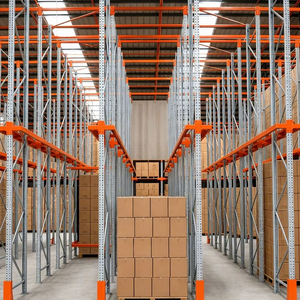
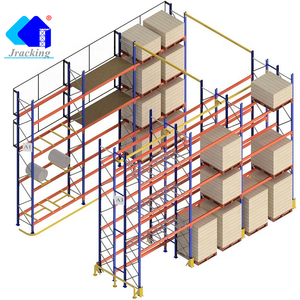
From compact urban fulfillment depots to high-bay industrial distribution hubs, each storage configuration is cold-formed to international structural safety factors (EN 15512, RMI MH16.1, and AS 4084) using certified Q235B/Q355B structural steel.

25+
Years Industrial Racking Mastery
30,000t
Monthly Steel Fabrication Capacity
120+
Global Export Destination Countries
10,000+
Delivered Turnkey Warehouse Projects
Global Benchmark Report

Evaluating the Top 10 Small Pallet Racking Suppliers & Exporters

Industrial supply chain directors, contract logistics operators, and global EPC contractors require stringent benchmarks when selecting pallet rack manufacturers. We evaluate the world's leading small pallet racking and micro-distribution shelving exporters against steel metallurgy, custom engineering capabilities, lead times, and global shipping velocity.

Manufacturer / Exporter Primary Production Hub Certified Steel Grade Quality Certifications Custom Structural FEA Competitive Export Strength
Guangzhou Heda Shelves Co., Ltd. Guangzhou, China (30,000 m²) Q235B / Q355B Cold-Rolled CE / ISO 9001 / RoHS Complimentary 2D/3D & FEA Direct factory pricing, tropical anti-corrosion coating, 2–10 day ASEAN shipping.
SSI Schaefer Neunkirchen, Germany High-Tensile European Steel EN 15512, ISO 9001, DIN Integrated within Enterprise EPC Premium automated warehouse integration; premium tier project pricing.
Dexion (Gonvarri Material Handling) Laubach, Germany / Malaysia S235JR / S355MC FEM 10.2.02, ISO 14001 Standardized Engineering Long-standing brand presence across European and Commonwealth logistics nodes.
Stow Group Dottignies, Belgium High-Yield Structural Coil CE Mark, EN 15512 Proprietary Structural Suite Extensive European multi-bay distribution center presence; automated pallet shuttles.
Interlake Mecalux Chicago, USA / Barcelona, Spain ASTM A1011 / Structural RMI MH16.1, ISO 9001 Standard Project Level Dominant North American footprint; established retail distributor channel.
Jracking Group Nanjing, China / Da Nang, Vietnam SS400 / Q235B Cold-Rolled AS 4084, ISO 9001 Available Upon Request Dual-country export facilities catering to trans-Pacific tariff minimization.
BITO-Lagertechnik Meisenheim, Germany EN 10025 Standard Steels RAL-RG 614, CE Catalog Standardized Specialized modular pick-bins, boltless light duty, and carton flow roller shelves.
Jungheinrich AG Hamburg, Germany European Certified Profiles FEM, ISO 9001, CE System Package Inclusive Forklift-rack integrated ecosystems; strong OEM service warranty in Western markets.
Frazier Industrial Company Long Valley, NJ, USA Structural Channel Steel AISC, RMI Member Heavy Impact Structural Specialist in heavy structural channel steel pallet racks; higher raw steel weight.
NEDCON B.V. Doetinchem, Netherlands European Micro-Alloyed EN 15512, ISO 9001 Advanced Mezzanine FEA Intralogistics shelving integration for complex e-commerce order routing centers.

Structural Engineering Benchmark: Cold-Rolled vs. Structural Steel

For small pallet racking and micro-distribution centers, cold-rolled high-tensile Q235B/Q355B steel delivers optimal strength-to-weight performance. By engineering precision profile bends and interlocking column notches, cold-rolled racking eliminates unnecessary dead weight, reduces foundation loading pressures, and substantially lowers ocean freight shipping volume per pallet position compared to traditional heavy structural channels.

Market Dynamics & Intelligence

Future Procurement Trends in Small Pallet Racking Systems

Global supply chain disruptions, fluctuating steel commodities, and the rise of decentralized urban fulfillment are revolutionizing how logistics enterprises source industrial racking. Procurement officers must align their capital expenditure with these four critical shifts.

Decentralized Micro-Hubs & Dark Stores

The rapid expansion of rapid-delivery e-commerce has mandated hyper-localized urban sorting nodes. Buyers are transitioning away from monolithic mega-warehouses toward modular small pallet racking installations capable of fitting ceiling clearances between 3.5m and 6.0m, demanding extreme reconfigurability without structural re-welding.

Total Cost of Ownership (TCO) vs. Raw Unit Price

Savvy procurement teams assess total landed cost, factoring in container space utilization, modular boltless assembly velocity, anti-corrosion life cycle, and structural safety margins. High-precision manufacturing that avoids on-site drill modifications saves up to 35% in mechanical installation labor costs across global destinations.

Climate-Resilient Tropical Surface Protection

With massive supply chain infrastructure moving into high-humidity coastal zones (Southeast Asia, Latin America, and the Gulf Coast), standard enamel spray painting fails within 18 months. Procurement policies now enforce 10-stage pre-treatment, chemical pickling, phosphating, and electrostatically cured thermo-setting epoxy polyester powders resisting 500+ hours of ASTM B117 salt spray exposure.

Automation-Ready Hybrid Racking Frameworks

Even small-scale storage facilities are deploying Autonomous Mobile Robots (AMRs), Automated Guided Vehicles (AGVs), and carton shuttles. Procured racking uprights must adhere to strict deflection thresholds (L/200 under maximal load) with laser-calibrated floor anchors to integrate seamlessly with robotic material handling sensors.

Direct-to-Manufacturer Strategic Sourcing

Disintermediation is accelerating. Warehouse operators bypass domestic middlemen and buy direct from accredited Chinese and Asian manufacturing plants. Shaving 20% to 35% off equipment margins, direct engineering channels enable free CAD space planning, certified FEA analysis, and custom dimensioning matching localized seismic codes.

Decarbonized Green Steel & Circularity

Major 3PL firms now require Environmental Product Declarations (EPDs) and low-emission electric arc furnace (EAF) steel sourcing. Racking designs utilizing standardized modular components allow decommissioned warehouse systems to be disassembled, re-sold, or 100% recycled without landfill footprint.

Engineering Evolution

Technological & Structural Development of Pallet Racking

Industrial storage engineering has advanced from crude, heavy mild steel sections to scientifically optimized, cold-formed architectural systems. Examine the critical breakthroughs driving modern warehouse efficiency.

Phase 01: Metallurgy

High-Strength Micro-Alloy Steels

Transition from standard hot-rolled structural steel to continuous roll-formed micro-alloyed Q355B coils. Micro-alloying with vanadium and niobium enhances yield strength beyond 355 MPa while decreasing steel dead weight, enabling thinner cross-sections to bear identical or superior vertical loads.

Phase 02: Geometry

Continuous Roll-Formed Profiles

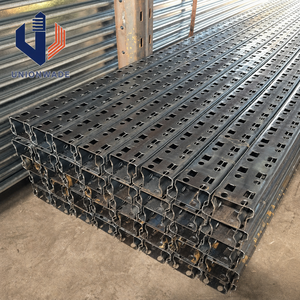
Advanced multi-station continuous cold roll-forming lines stamp, notch, and fold uprights with up to 13 separate structural return bends. These intricate return lips stiffen the column profile against torsional buckling under intense vertical compression and accidental lateral forklift nudges.

Phase 03: Fastening

High-Efficiency Safety Connectors

Elimination of vulnerable bolts on load-bearing beams. Modern connectors use multi-claw forged steel plates that wedge tighter under heavier pallet loads, supplemented by zinc-plated spring-lock automatic safety pins that physically cannot dislodge during aggressive pallet retrieval maneuvers.

Phase 04: Intelligence

IoT Stress Telemetry & Safety Sensors

Pioneering integration of fiber-optic or piezo-resistive strain gauges into critical upright columns. Wireless sensors monitor beam deflection and physical forklift impact shocks in real-time, alerting facility managers via cloud dashboard if seismic or loading stress exceeds engineered safety thresholds.

Factory-Direct Manufacturing Benchmark

Guangzhou Heda Shelves Co., Ltd. Enterprise Competencies

Established in 2001, Guangzhou Heda Shelves Co., Ltd. operates as a premiere tier-one manufacturer of industrial storage systems, delivering factory-direct engineering and fabrication excellence across 120+ global markets.

30,000 m² Automated Manufacturing Base

Equipped with heavy CNC steel slitting units, automated continuous punch lines, high-precision robotic welding arms, and proprietary roll-forming mills, yielding an immense monthly capacity of over 30,000 metric tons of certified steel racking.

Verifiable Quality Certifications

Full compliance with global regulatory and safety standards, holding verifiable documentation including CE Certification (Certificate No. 2435-CPR-8605159), ISO 9001:2015 Quality Management System Certification (No. 18624Q00169R0M), and strict RoHS materials compliance.

Free 2D/3D Engineering & FEA Calculations

A dedicated team of 300+ technical and production specialists delivers complimentary CAD layout design, 3D photorealistic renderings, and complete structural loading calculations tailored to client forklift corridors, column obstacles, and local seismic acceleration values.

Industrial Tropical-Grade Anti-Corrosion Finishing

Components undergo an intensive 10-step surface treatment incorporating degreasing, acid pickling, zinc phosphating, and electrostatically applied thermo-setting epoxy polyester powder coating (60–80 microns), safeguarding steel against blistering in extreme 85%+ relative humidity environments.

Strategic Maritime Port Gateway (2–10 Day Transit)

Direct positioning in Guangzhou adjacent to Nansha and Huangpu deep-water container terminals allows rapid dispatch across global sea routes, achieving record transit times: 2–5 days to Vietnam, 3–5 days to Manila, 5–7 days to Singapore and Bangkok, and 6–8 days to Port Klang.

Turnkey Packaging & International Field Guidance

Steel parts are systematically labeled, bundle-strapped with edge guards, and container-optimized to maximize cubic utilization in 40ft High Cube containers. Every overseas shipment is accompanied by detailed CAD isometric installation manuals and video construction blueprints.

Technical Clarifications

Industrial Small Pallet Racking Procurement FAQ

Clear, engineering-grounded responses to the most critical technical and operational questions posed by warehouse facility planners and international procurement specialists.

? What are the key structural distinctions between small pallet racking and standard heavy-duty selective racking?
Small pallet racking systems are engineered for compact foot-print facilities, lower clear-ceiling heights (typically 3 to 6 meters), and localized micro-distribution hubs handling fractional or half-pallet units (e.g., 500 kg to 1,000 kg per pallet level). While standard heavy-duty racking uses larger upright profile depths (100mm to 120mm web) to handle 2,000–4,000 kg per pair of beams over high spans, small pallet racking optimizes upright cross-sections (typically 80mm to 90mm web) with gauge thicknesses calibrated to balance floor loading limitations without compromising the EN 15512 safety deflection factor of L/200.
? How is pallet racking deflection calculated, and what is the accepted international engineering tolerance?
Under both European EN 15512 and American RMI (Rack Manufacturers Institute) MH16.1 codes, allowable horizontal beam deflection under full design working load must not exceed 1/200th of the clear beam length ($L/200$). For example, a standard 2700mm pallet rack beam supporting two 1,000 kg pallets is permitted a maximal downward flexure of 13.5mm ($2700 / 200$). Once the pallet load is discharged, the steel profile must return elastically to its original plane without permanent plastic deformation. Upright vertical out-of-plumbness must remain below $1/500$ of total height.
? What anti-corrosion protection is required for coastal regions and high-humidity cold-chain facilities?
For humid tropical climates or cold storage warehouses with continuous condensation, standard air-dried industrial enamel paint is completely unacceptable as it allows subsurface rust creep within 12–18 months. Instead, high-grade thermo-setting electrostatic powder coating preceded by industrial pickling and zinc phosphating is mandatory. In sub-zero freezer cold stores or aggressive coastal atmospheres (within 10km of ocean water), structural components should specify Hot-Dip Galvanizing (HDG) conforming to ASTM A123 or EN ISO 1461, achieving a minimal zinc coating thickness of 65 to 85 microns to guarantee 25+ years of maintenance-free service.
? Can cold-formed small pallet racking be safely certified for seismic regions like the Philippines and Indonesia?
Yes. Seismic engineering for pallet racking is governed by regional spectral response parameters ($S_s, S_1$), soil classification, and building occupancy categories (IBC/ASCE 7 or Eurocode 8). Guangzhou Heda Shelves adjusts base plate surface dimensions, thickness (scaling from 6mm to 10mm–12mm), base anchor bolt embedment depths (using certified M12–M16 seismic mechanical wedge or chemical epoxy anchors), and incorporates heavy rear upright cross-bracing with reinforced horizontal strut trusses to dissipate cyclic seismic shear forces safely into the warehouse concrete slab.
? What parameters must a buyer supply for an exact 3D CAD layout and structural quotation?
To generate an accurate engineering layout and finite load calculation, buyers must provide: (1) Architectural floor plan depicting clear inside building height, column grid coordinates, floor slab thickness, and door openings; (2) Pallet specifications including overall pallet footprint ($W \times D \times H$), gross weight per loaded pallet, and pallet entry style (2-way vs. 4-way); (3) Forklift material handling equipment specifications including mast collapse height, maximum lift height, and minimum aisle turning clearance ($A_{st}$); (4) Inventory flow velocity (FIFO vs. LIFO) and operating environment temperatures.
? How does container packing optimization reduce the total landed shipping cost per pallet position?
Pallet racking components are inherently dense and heavy, meaning standard sea containers risk reaching gross weight limits (26 to 28 tons) before cubic volume is fully filled. Heda Shelves uses nested modular stacking: upright frames are nested with interleaved wooden spacers, beams are strapped in bundles using robotic steel strapping with protective corner angles, and smaller brackets/accessories are packed in heavy-duty wooden crates. This engineering approach eliminates dead shipping volume, preventing transit chafing and lowering ocean freight costs by $2.50 to $4.20 per pallet storage position.
Transform Your Warehouse Density with Factory-Direct Engineering

Connect with our structural engineering team to receive a complimentary 2D/3D CAD warehouse layout proposal, seismic load calculation, and comprehensive factory-direct export catalog within 24 hours.