Factory Inventory & Engineered Systems
High-Throughput Carton Flow & Heavy-Duty Warehouse Storage
Explore field-tested gravity flow racks, pallet shuttles, and industrial configurations engineered for high-density distribution centers and fulfillment operations.
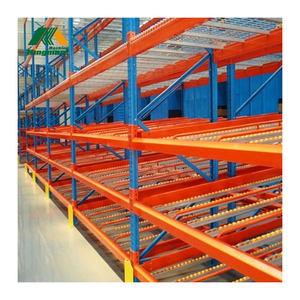
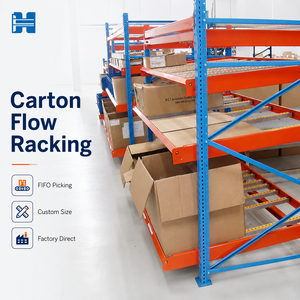
Warehouse Storage Carton Flow Rack Industrial Automation Storage Gravity Carton Flow Rack
View Product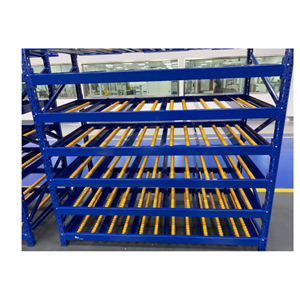
AOCHEN China Factory's Easy Assembly High-Strength Steel Warehouse Carton Flow Racking System Collapsible Powder Coated
View Product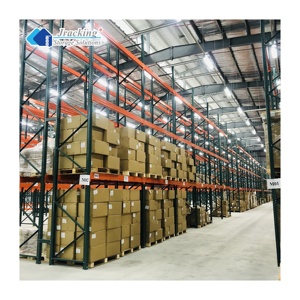
Jracking Vertical Warehouse Storage Shelving Rack Heavy-Duty Steel Teardrop Pallet Racking For Logistics Centers
View Product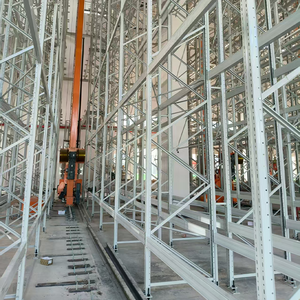
Mobile Heavy Duty Steel 5-Layer Warehouse Rack Supporting Frame 3000kg Load Capacity Customizable for Logistics Park Goods
View Product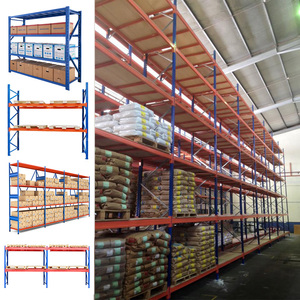
Certificate Light Duty Cargo Tile Rack Light Duty Racking Racking Storage 1000KG 2000KG 3000KG Pounds Tons
View Product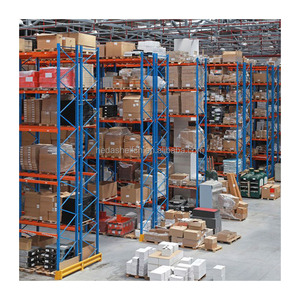
CE Industrial Rack Steel Metal Shelving Heavy Duty Warehouse Storage Racking System Selective Pallet Rack
View Product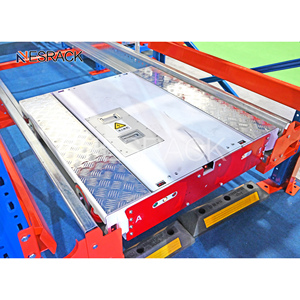
High Quality Customized Warehouse Storage Pallet Shuttle Rack Heavy Duty Racks Manufacturer Racking System Made In China
View Product
Executive Engineering Brief
Mechanics, Kinematics, & Ergonomics of Carton Flow Storage
Carton flow rack systems—often referred to in intralogistics as gravity feed racking or dynamic box picking lanes—represent the industrial bridge between high-density passive buffer storage and high-frequency fulfillment throughput. By leveraging natural gravitational forces across inclined roller tracks, these systems establish a strict, autonomous First-In, First-Out (FIFO) material progression that completely isolates stocking personnel from retrieval operators.
In standard static shelving environments, order pickers spend between 55% and 70% of their total shift hours navigating aisles, searching for SKUs, and manually repositioning stock. Carton flow systems reduce physical walking distances by up to 75% while simultaneously compressing horizontal storage footprints by upwards of 50%. The engineering foundation of an optimized carton flow lane rests upon three fundamental mechanical variables: track inclination angle (pitch), roller surface friction coefficients, and dynamic braking assemblies.
75%
Reduction in Picker Travel Distance
40–50%
Warehouse Floor Area Reclamation
3–5°
Optimal Engineering Gravity Pitch Angle
99.9%
FIFO Inventory Rotation Compliance
From a structural perspective, a commercial-grade carton flow installation comprises heavy-duty upright frames cold-rolled from high-tensile structural steel (minimum Q235B or equivalent ASTM A1011 standards), interconnected by structural step beams or bespoke side channels. Inside this structural perimeter, heavy-duty roller beds or aluminum-sheathed wheel tracks are suspended via adjustable clip-in brackets. Track pitch must be dialed between 2.5° and 5.0° depending on carton deformation tendencies, base rigidity, and weight thresholds (typically spanning 5 kg to 35 kg per carton). In heavier industrial applications or sub-zero cold-chain facilities, custom-extruded zinc-plated steel rollers and specialized silicone-lubricated bearing races are required to counteract operational fatigue and thermal contraction.
Critical Kinematic Insight: Tackling the "Hydroplaning & Impact" Effect
Improperly engineered carton flow lanes frequently experience two catastrophic failures: carton hang-up (static friction exceeding kinetic gradient force) and excessive acceleration velocity (leading to carton ruptures at the pick face). Superior manufacturing mandates continuous testing against varying bottom-sag variables of corrugated cardboard in high-humidity climates (e.g., ASEAN and coastal maritime zones), utilizing polyurethane-damped entry guides and integrated impact trays.
Procurement Intelligence
Top 10 Carton Flow Rack System Factories & Suppliers
A vendor evaluation based on metallurgical integrity, manufacturing output, engineering support, and track-level dynamic performance.
Selecting an industrial-scale carton flow partner requires evaluating fabrication scalability, steel roll-forming tolerances, proprietary wheel track designs, and international compliance (CE, ISO 9001:2015, FEM 10.2.02, RMI). Below is an audited analysis of the top 10 global manufacturers dominating the dynamic flow and warehouse logistics arena.
| Manufacturer / Brand | Headquarters | Primary Specialties | Track & Roller Technology | Certifications | Global Presence |
|---|---|---|---|---|---|
| HEDA Shelves | Guangzhou, China | Custom Carton Flow, Shuttle Racking, Mezzanines | High-impact Polypropylene & Galvanized Steel Rollers | CE / ISO 9001 / RoHS | Direct Export to 120+ Countries (Strong ASEAN & EU) |
| SSI Schaefer | Neunkirchen, Germany | Automated Logistics & Live Storage | Precision Steel Roller Conveyor Tracks | ISO 9001 / EN 15512 | Global Footprint & Direct System Integration |
| Interroll Group | Sant'Antonino, Switzerland | Conveyor Rollers, Carton Flow Modules | Proprietary Floway® Polyethylene Wheel Beds | CE / UL / ISO 14001 | Extensive Global Distribution Network |
| UNEX Manufacturing | New Jersey, USA | SpanTrack®, Order Picking Flow Beds | Full-Width Steel Hex Hub Rollers | RMI Certified | North American Distribution Focus |
| Mecalux | Barcelona, Spain | Live Storage Systems & AS/RS Solutions | Multi-Wheel Dynamic Picking Trays | ISO 9001 / CE | Pan-European & Latin American Reach |
| Dematic (KION Group) | Atlanta, USA / Germany | Turnkey Intralogistics & Flow Racks | Automated Heavy & Light Duty Flow Modules | ISO 9001 / RMI | Global Enterprise Engineering Operations |
| Bito Storage Systems | Meisenheim, Germany | Piece-Picking Carton Flow & Bins | Adjustable Axle Flow Shelves & Poly Rollers | EN Standards / ISO 9001 | European Logistics Centers |
| Jracking Group | Nanjing, China | Teardrop Systems & Carton Flow Shelving | Standard Aluminum Alloy Roller Tracks | ISO 9001 / AS4084 | Worldwide Direct and Wholesale Sourcing |
| Dexion Storage Solutions | Melbourne, Australia | Industrial Shelving & Dynamic Live Beds | Composite Wheel Gravity Channels | AS4084 / ISO 9001 | Asia-Pacific & Oceanic Logistics |
| Daifuku Co., Ltd. | Osaka, Japan | High-Density Flow & AS/RS Material Handling | Ultra-Low-Noise Precision Roller Assemblies | JIS / ISO 9001 | Global Manufacturing & Integration |
1. HEDA Shelves (Guangzhou, China)
Established in 2001, HEDA Shelves represents the top tier of vertically integrated Chinese manufacturing. Operating an expansive 30,000 m² factory with automated cold roll-forming lines, computerized punching stations, and dual powder-coating tunnels, HEDA delivers custom-engineered carton flow racks at factory-direct pricing. With monthly structural steel output exceeding 30,000 tons and exports reaching 120+ countries, HEDA excels at tailored roller configurations, tropical anti-corrosive prep (pickling and phosphating), and zero-cost 3D/CAD layout engineering.
2. Interroll Group (Switzerland)
The benchmark in dynamic material flow components. Interroll supplies specialized modular wheel tracks and heavy-duty carton flow beds utilized by global 3PL integrators. Their patented Floway® system allows variable pitch drop-in installation, ensuring continuous self-cleaning roller action and high resistance to chemical and thermal degradation.
3. SSI Schaefer (Germany)
An undisputed global titan in turnkey intralogistics. SSI Schaefer's live storage solutions feature continuous lane dividers, integrated ergonomic pick trays, and seamless connectivity to Pick-to-Light (PTL) arrays, making them a preferred choice for high-volume automated pharmaceutical and cosmetic distribution hubs.
4. UNEX Manufacturing (USA)
Renowned across North America for their SpanTrack® line. UNEX pioneered drop-in roller beds that convert standard selective pallet racking into high-velocity carton flow lanes without necessitating specialized intermediate crossbeams, driving rapid brownfield warehouse retrofits.
5. Mecalux (Spain)
Mecalux delivers high-density dynamic storage with robust European structural engineering. Their carton flow beds utilize steel frame side rails and high-density polyethylene rollers capable of absorbing high dynamic shock loads from manual hand-loading and automated robot piece replenishment.
6. Dematic (KION Group)
Focusing primarily on massive enterprise supply chains, Dematic incorporates carton flow lanes within comprehensive conveyor, AGV, and sortation ecosystems. Their structural systems are calculated for heavy industrial duty cycles where 24/7 picking demand leaves zero tolerance for component binding.
Future Industry Forecast
Technological Evolution in Carton Flow Architecture (2026–2030)
How automation, advanced polymer engineering, and edge-connected intralogistics are redefining gravitational flow systems.
Dynamic picking storage is undergoing a technological renaissance. While the fundamental law of gravity remains constant, the mechanical and electronic systems surrounding carton flow are evolving rapidly to meet the challenges of SKU proliferation, micro-fulfillment centers, and high-labor-cost environments.
1. Hybrid Gravity-Motorized Lanes
The emergence of motorized zero-pressure accumulation (ZPA) micro-rollers integrated directly into gravity tracks. For extra-deep picking lanes (exceeding 8–10 meters), low-voltage 24V brushless DC motor segments provide pulsed assistance when lightweight or deformed corrugated cartons hang up, eliminating operator lane-poking.
2. Integrated Pick-to-Light (PTL) Channels
Modern carton flow crossbeams are now pre-engineered with built-in data bus tracks and snap-on power rails. Rather than retrofitting wiring harnesses with cable ties, structural beams house flush-mounted multicolor LED displays, optical confirmation sensors, and pick-face replenishment alerts connected directly to warehouse WMS/MES backbones.
3. Bio-Polymer Low-Resonance Rollers
Acoustic pollution in massive fulfillment centers has become a pressing ergonomic issue. Next-generation rollers deploy dual-injection molded compounds—combining a rigid recycled polyolefin core for bearing alignment with a soft polyurethane outer tread—reducing ambient warehouse decibel levels by up to 14 dB during carton transit.
Strategic Procurement
Future Procurement Trends: Total Cost of Ownership (TCO) Economics
Global supply chain leaders are shifting procurement criteria away from pure upfront capital expenditure (CAPEX) toward Total Cost of Ownership (TCO) and agility metrics. A carton flow rack system represents an active mechanical investment; subpar rollers crack under repeated impact loads, substandard axle crimps induce track binding, and inadequate surface preparation leads to premature rust flaking in humid climates.
1. Factory-Direct Modular Engineering: Sourcing direct from tier-one manufacturers like HEDA Shelves eliminates multi-tier trading markups (which traditionally add 25–40% to project costs) while enabling customized lane pitch and frame dimensions tailored to specific warehouse column grids.
2. Climate-Resilient Surface Metallurgy: With logistics hubs expanding across Southeast Asia, Latin America, and coastal transport corridors, surface chemistry is paramount. Standard spray paints quickly degrade under 80%+ relative humidity. Industrial procurement protocols now demand continuous automated pickling and phosphating pre-treatments, followed by high-adhesion electrostatic thermosetting epoxy-polyester powder coats cured at 180°C–200°C.
3. Standardized Skid Loading & Freight Optimization: Shipping cost per pallet position is a key procurement metric. Forward-thinking suppliers design nested upright profiles and modular track assemblies that maximize high-cube (40HQ) ocean container utilization, achieving 95%+ volumetric packing efficiency.
Engineering Mastery: Why Global Buyers Source Direct from HEDA Shelves
Founded in 2001 and headquartered in Guangzhou, China, Guangzhou Heda Shelves Co., Ltd. has spent over two decades establishing manufacturing excellence in the heavy-duty storage and dynamic warehousing sector. Serving distribution centers, automated retail operations, and 3PL enterprises across Southeast Asia, Europe, and the Americas, HEDA provides complete end-to-end engineering from CAD spatial analysis to factory production and international installation guidance.
30,000 m² Facility Footprint
Equipped with computerized high-speed roll forming, robotic welding stations, and specialized dynamic track testing jigs.
30,000 Tons Monthly Capacity
Continuous structural steel throughput guarantees rapid project fulfillment and scalable component delivery.
300+ Engineering & Factory Staff
In-house technical teams review floor plans, calculate structural beam deflection, and provide free 3D layout renderings.
International Certifications
Audited compliance with CE Certification No. 2435-CPR-8605159, ISO 9001:2015 (No. 18624Q00169R0M), and RoHS environmental standards.
Tropical-Grade Corrosion Shield
Automated 10-step surface finishing featuring chemical pickling and phosphating for resilience in extreme humidity.
10,000+ Completed Projects
Proven structural performance across 120+ countries, with short sea transit routes to major Asian and global shipping hubs.
Ready to Engineer Your Dynamic Storage Facility?
Connect directly with our senior intralogistics project engineers to receive a free warehouse CAD layout, roller lane pitch calculation, and complete factory price matrix.
Get Catalog
Technical Clearinghouse
Frequently Asked Questions: Industrial Carton Flow Procurement
Authoritative engineering answers addressing common design, installation, and performance questions.
How is the optimum gravity slope angle calculated for carton flow racks?
The standard slope for carton flow beds ranges between 2.5° and 5.0° (equivalent to approximately a 3.5% to 7% pitch, or roughly 40–50 mm of drop per meter of lane depth). The exact angle is governed by carton weight, bottom surface roughness, and cardboard moisture content. For instance, rigid plastic totes require shallower angles (2.5°–3.0°), while lightweight, recycled corrugated cartons in humid climates exhibit bottom deflection and require a steeper pitch (4.0°–4.5°) combined with closer roller spacing to prevent lane hang-ups.
What is the difference between dedicated track lanes and universal full-width wheel beds?
Dedicated roller track lanes utilize specific aluminum or steel flow tracks aligned to fixed carton dimensions, separated by physical sheet-metal dividers. This setup is ideal for consistent, predictable SKU dimensions. Full-width wheel beds (often called span-track or bed flow) cover the entire shelf surface with a dense grid of staggered wheels. This universal layout accommodates variable carton widths on the same shelf without necessitating track readjustment, maximizing flexibility for fast-changing e-commerce catalogs.
Can carton flow racks be retrofitted into existing selective pallet rack frames?
Yes. Modern carton flow systems are engineered for modular retrofit applications. Factory-engineered hanger brackets and shelf assemblies can drop directly into step beams or box beams of existing teardrop, structural, or European-pattern upright frames. This allows operators to convert the lower 1 to 2 levels of an existing pallet rack into dynamic case-picking bays while maintaining standard pallet reserve storage overhead.
How do carton flow systems withstand high humidity and corrosive environments?
In humid tropical facilities or refrigerated cold storage, bare steel components corrode quickly. Reliable manufacturers use a rigorous multi-stage preparation process: fully submerging roll-formed steel into acid pickling and phosphating baths to remove mill scale and create an anti-corrosive chemical bond before applying an electrostatically charged epoxy-polyester powder coat. For roller assemblies, galvanized steel axles, stainless-steel internal springs, and high-density virgin polyethylene (HDPE) or polypropylene (PP) wheels are specified to ensure zero rust binding.
What load ratings are standard for commercial carton flow shelf levels?
Standard-duty carton flow shelves typically carry uniform distributed loads (UDL) of 150 kg to 300 kg per square meter (or approximately 50 kg to 100 kg per linear meter of track). Heavy-duty industrial configurations, often used for automotive hardware, castings, or chemical containers, incorporate reinforced side frames, heavy-gauge intermediate tie bars, and steel-jacketed rollers to accommodate dynamic payloads exceeding 500 kg to 1,000 kg per shelf tier.
How does carton flow integrate with ergonomic pick trays and Pick-to-Light (PTL)?
To optimize order picking ergonomics, carton flow discharge points frequently feature tilted presentation pick trays (knuckle trays) angled toward the picker at 15° to 30°. This gives workers complete visibility inside open cases without having to reach into deep rack apertures. Structural crossbeams can be ordered with integrated aluminum extrusion raceways designed to secure digital Pick-to-Light hardware, wiring conduits, and barcode scanning brackets cleanly along the pick face.