Precision Structural Roll-Forming • ISO 9001:2015 • CE Certified

OEM/ODM Warehouse Racking Uprights Manufacturers & Exporter

High-yield cold-rolled steel column profiles, custom hole-punch engineering (Teardrop, Omega, Hexagonal, Butterfly), and rigorous structural integrity calculations for automated logistics hubs and heavy-duty storage worldwide.

Engineered Upright Assemblies

Factory-Direct OEM/ODM Upright Column Systems

Continuous-roll profile uprights manufactured with high-ductility Q235B/Q355B structural steel, tailored for international compatibility with RMI (USA), FEM 10.2.02 (Europe), and AS 4084 (Australia) standards.

2001EST.
Over Two Decades of OEM/ODM Expertise
30,000m²
State-of-the-Art Guangzhou Manufacturing Plant
30,000TONS
Monthly Structural Steel Processing Capacity
120+
Export Nations Across Europe, ASEAN & Americas
CE Factory Production Control Certificate No. 2435-CPR-8605159
ISO 9001:2015 Registered Registration No. 18624Q00169R0M
RoHS Compliant Finish Non-Toxic Heavy-Metal-Free Powder Coat

Engineering White Paper: Section Modulus, Torsional Rigidity, and Hole-Punch Geometries

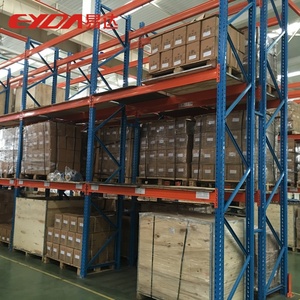
In modern high-density intralogistics systems, the warehouse racking upright column functions as the critical primary vertical compression member, sustaining combined axial compression and flexural bending moments under both static live load conditions and transient dynamic seismic vectors. The engineering of high-performance cold-formed upright profiles requires an exact understanding of thin-walled structural mechanics. Because racking uprights feature continuous repetitive perforations for beam connector lug engagement, their structural design departs fundamentally from conventional structural steel design (such as hot-rolled wide flanges). The presence of continuous perforation holes along the upright centerline significantly influences the effective net cross-sectional area, introducing complex distortional, local, and global flexural-torsional buckling failure modes governed by international design frameworks such as EN 15512:2020, RMI MH16.1, and AS 4084:2023.

At our Guangzhou manufacturing base, our technical team calculates the polar moment of inertia ($J$) and Saint-Venant torsional constant ($I_t$) for every cold-formed profile. By incorporating up to 14 cold-bent longitudinal stiffening bends into our flagship Omega upright cross-sections, the shear center of the profile is shifted closer to the geometric centroid. This mechanical configuration dramatically elevates the critical buckling load ($P_{cr}$) without inflating raw steel coil deadweight. When evaluated under finite element analysis (FEA) and stub column physical destructive compression tests, cold-formed profiles with multi-ribbed returns retain over 93% of their axial load capacity post-perforation, compared to a degradation of up to 28% observed in generic, unribbed C-channels.

Profile Section Standard Widths (mm) Primary Perforation Types Yield Strength ($f_y$) Buckling Resistance Factor Standard Compliance
Multi-Flange Omega (Ω) 80, 90, 100, 120, 140 Diamond, Teardrop, Hexagonal (50/75mm) Q235B to Q355B (≥355 MPa) Exceptional (High Torsional Restraint) EN 15512, FEM 10.2.02, ISO 9001
North American Teardrop 76.2 (3.0"), 80, 90 Keyhole / Teardrop (50.8mm Pitch) ASTM A1011 / SS Grade 50 High (Self-Locking Lug Interlock) RMI MH16.1, ANSI MH28.1
Butterfly Perforated Post 55, 60, 75 Butterfly / Hourglass (50mm Pitch) Q235B Cold Rolled Steel Medium (Light-to-Medium Duty KD) CE Factory Certified, RoHS
Heavy Welded Structural H 100, 150, 200, 250 Drilled / Punched Custom Bolt Patterns Q355B Hot-Rolled Structural Beam Maximum (Impact & Cantilever Loads) AISC 360, EN 1993-1-1 Eurocode 3

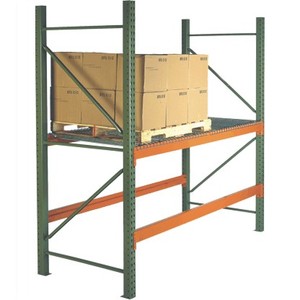
The interaction between the upright column and bracing members (diagonal and horizontal trusses) forms the vertical frame truss. At Guangzhou Heda Shelves, frame bracing connections utilize custom-formed C-profile and closed rectangular tube bracing elements assembled via high-tensile Grade 8.8 structural bolts equipped with flanged nylon locking nuts. By maintaining precision pitch spacing tolerances within ±0.15 mm across the entire length of continuous single-piece uprights (up to 12 meters in height), our manufacturing process eliminates secondary residual stresses during frame assembly, ensuring optimal vertical plumbness and uncompromised structural load distribution across automated multi-bay installations.

Zero-Defect Quality Chain

10-Step In-House Precision Manufacturing Lifecycle

Complete metallurgical and dimensional quality control from raw steel coil slit inspection to final ocean container packing.

01

Raw Material Inbound

Spectrometric chemical analysis and mill test certificate (MTC) validation of Q235B/Q355B coils.

02

Precision Coil Slitting

CNC slitting lines ensure strict strip width tolerances (±0.1mm) with zero burr formation.

03

Automated Punching

Multi-stage hydraulic CNC punch presses stamp hole patterns with continuous pitch accuracy.

04

Multi-Roll Forming

Up to 24 progressive roll-forming stations cold-bend the complex multi-flange Omega profiles.

05

Flying Hydraulic Cut

In-line cut-to-length shear units achieve micro-precision lengths up to 12,000mm without distortion.

06

Laser Baseplate Welding

Robotic MIG/MAG welding stations fuse heavy seismic baseplates to upright columns.

07

Surface Pretreatment

Comprehensive 4-step immersion pickling, degreasing, and silane/phosphate nano-etching.

08

Electrostatic Coating

Automated Gema powder spray booths apply 70–90 μm dry film thickness thermosetting epoxy.

09

High-Temp Curing

Polymerization curing at 200°C ensures impact resistance, scratch tolerance, and adhesion.

10

Export Packing & QC

Finished frames wrapped in heavy-duty polyethylene, steel strapped, and container-optimized.

Market Intelligence

Future Sourcing & Engineering Trends (2026–2030)

Key technological, metallurgical, and supply-chain shifts transforming the global procurement of industrial racking uprights.

Transition to High-Strength Micro-Alloyed Steels

Global procurement is rapidly pivoting from standard Q235B/mild steels to micro-alloyed Q355B and high-yield grades (yield strength ≥355–420 MPa). This transition reduces structural deadweight by 12–18% while enabling higher vertical bay capacities for high-clearance warehouses, lowering raw material freight expenses per pallet location.

Seismic Micro-Zoning & High-Ductility Baseplates

With distribution centers proliferating in earthquake-prone logistics corridors across the Pacific Rim, upright engineering incorporates non-linear dynamic time-history simulations. Modern upright frames feature ductile yield zones and oversized, multi-anchor baseplates capable of dissipating cyclic seismic energy without localized post collapse.

Integration with Automated ASRS High-Bay Systems

Automated storage and retrieval systems (ASRS) demand unprecedented dimensional precision. Modern upright manufacturing requires column straightness deviation tolerances tighter than 1/1000 along the vertical axis. Continuous roll-forming lines with in-line laser feedback now eliminate profile twist and camber, ensuring flawless automated crane and shuttle operation.

Extreme-Environment Galvanized Upright Posts

The global surge in cold-chain logistics, sub-zero pharmaceutical storage (-30°C), and coastal distribution centers has expanded procurement requirements for continuous pre-galvanized (HDG) and post-hot-dip zinc treatments (conforming to ISO 1461). Galvanized uprights resist continuous dew-point condensation and caustic washdowns without protective coating flaking.

Zero-Carbon 'Green Steel' Sourcing Audits

Multinational corporate enterprise procurement charters increasingly demand verified Environmental Product Declarations (EPD). Upright roll-formers are transitioning to electric arc furnace (EAF) steel coils processed with closed-loop recycled water lines and low-temperature curing powder coatings, reducing embedded carbon footprints by up to 35%.

Smart Uprights with Structural Health Recesses

Next-generation upright profiles incorporate engineered indentations and channels specifically dimensioned to house wireless strain gauges, optical deflection reflectors, and RFID collision detection sensors. These embedded sensors provide logistics directors with continuous structural load monitoring and immediate forklift impact warnings.

Procurement Advisory

Frequently Asked Questions on Upright Sourcing & Engineering

Direct answers from our structural engineering and export division to help procurement managers, logistics consultants, and rack distributors mitigate project risk.

What steel certifications and mechanical test reports accompany each upright shipment?

Every production batch shipped from our Guangzhou factory is accompanied by an authentic Mill Test Certificate (MTC) conforming to EN 10204 3.1. This certificate details heat numbers, carbon equivalent value (CEV), chemical spectrometry (C, Si, Mn, P, S), and tensile test parameters (Yield Strength $R_{eH}$, Ultimate Tensile Strength $R_m$, and Percentage Elongation $A$). Third-party metallurgical inspection through SGS or Bureau Veritas can be coordinated upon request prior to container dispatch.

How does hole punch geometry impact load capacity and structural interchangeability?

The punch geometry determines both the net section area and the beam end-connector interlock stiffness ($K_i$). While the North American Teardrop hole pattern (50.8mm / 2-inch pitch) offers near-universal compatibility across the Americas, proprietary European Omega diamond and hexagonal patterns (50mm / 75mm pitch) often feature higher localized contact bearing strength. Our tooling library includes interchangeable precision CNC punch tooling for Teardrop, Omega, Butterfly, and Hexagonal profiles, allowing our OEM partners to distribute racking systems fully compatible with their regional markets.

What surface treatment is recommended for high-humidity or sub-zero environments?

For ambient dry warehouses, our automated 4-stage chemical pre-treatment (pickling, degreasing, nano-ceramic phosphate passivation) followed by electrostatic polyester powder coating (60–90 μm) provides over 500 hours of continuous salt-spray resistance. For sub-zero cold rooms (-25°C to -30°C) where condensation cycles occur, or open-air coastal yards, we recommend continuous pre-galvanized coil forming (Z275 coating mass) or batch hot-dip galvanizing according to ISO 1461, which provides decades of cathodic corrosion protection.

How are upright column freight costs optimized for international ocean shipping?

Upright frames can be shipped either fully assembled (welded or bolted) or in flat-packed Knocked-Down (KD) condition. For long-distance sea shipping, Knocked-Down packaging is vastly superior: upright posts are nested in tightly banded steel-strapped bundles, and bracing members and baseplates are palletized separately. This packing methodology elevates ocean container volume utilization to over 92% of payload capacity in standard 40ft High Cube (40HQ) containers, reducing ocean freight costs per pallet position by 30% to 50% compared to pre-assembled frames.

What is the minimum order quantity (MOQ) and lead time for custom OEM upright profiles?

For catalog standard profiles and perforation tooling, our standard production MOQ is 5 metric tons (roughly equivalent to a combined 20GP container trial run). For bespoke OEM profile cross-sections requiring custom cold-roll forming dies and specialized punching heads, our in-house tooling workshop designs and validates custom roller tooling within 20 working days, with initial production batch delivery within 25–30 days from engineering sign-off.

Can your structural engineering department calculate site-specific seismic baseplate designs?

Yes. Our licensed in-house structural engineering group calculates anchor shear, uplift tension, concrete slab bearing stresses, and frame ductility factors using specialized software packages (including ANSYS and RFEM). By inputting your facility's seismic acceleration coefficient ($S_s, S_1$), site soil class (A through F), and concrete compressive strength ($f'_c$), we provide stamped calculation packages complete with baseplate thicknesses (from 6mm up to 20mm) and high-strength mechanical or chemical anchor specifications.

Request Engineering Consultation & OEM Profile Catalog

Collaborate directly with Guangzhou Heda Shelves' structural engineering team. Submit your warehouse architectural CAD drawings, frame height requirements, or OEM custom profile specifications for complimentary FEA load modeling, detailed cost estimation, and container optimization schedules.