Multi-Tier
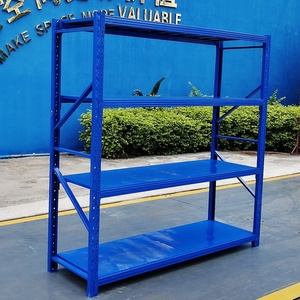
Manufactured under strict ISO 9001:2015 and CE certification standards, our modular heavy-duty racking configurations deliver immediate pallet accessibility and load safety for enterprise logistics.
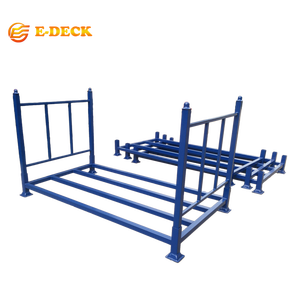
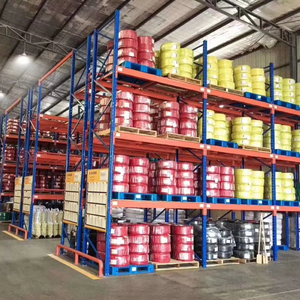
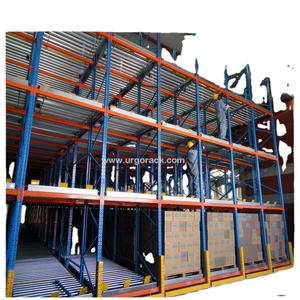
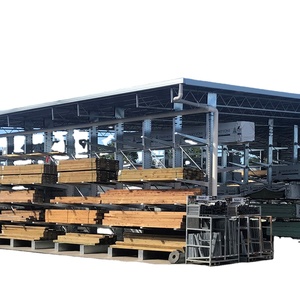
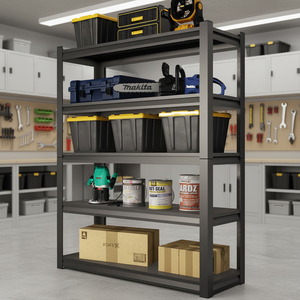
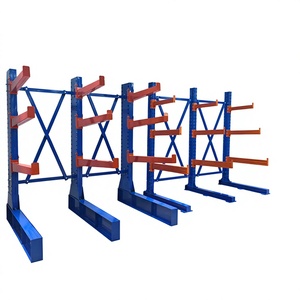
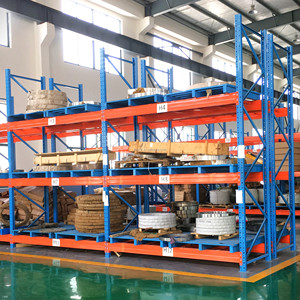
Single deep pallet racking represents the foundational benchmark of modern global logistics engineering, offering an uncompromised 100% SKU selectivity index coupled with immediate mechanical accessibility.
Single deep racking (standard selective pallet racking) operates on a dedicated aisle access model where every single pallet location sits adjacent to an operational forklift transit corridor. Unlike high-density nested systems (such as double deep, drive-in, or push-back configurations), single deep engineering eliminates honeycomb inventory trapping, making it indispensable for high-velocity FMCG operations, cross-dock logistics centers, pharmaceutical compliance depots, and multi-SKU manufacturing distribution centers.
Fabricated from prime structural hot-rolled micro-alloyed steel (Q235B and Q355B grades), upright columns undergo automated 20-stage cold continuous roll forming to impart cold-work strain hardening, optimizing elastic yield strength under high torsional loads.
Beam connectors feature precision 3, 4, or 5-claw interlocking mechanical knuckles welded via multi-axis robotic MAG welding stations. Integral snap-lock spring steel safety pins prevent dislodgement caused by erratic upward mast impacts.
Engineered to satisfy European standard EN 15512:2020 and RMI MH16.1 design parameters. Every upright section undergoes rigorous FEM computational modeling to evaluate second-order global P-Delta frame buckling under dynamic forklift loads.
The key engineering advantage lies in the modular adjustability of the longitudinal beam elevations along standard 50mm, 75mm, or 76.2mm vertical pitch intervals. This allows warehouse system architects to optimize overhead clear height utilization without leaving redundant volumetric air gaps between distinct pallet heights. By integrating heavy-gauge baseplates anchored using high-tensile wedge expansion bolts or chemical capsule anchors, the structure successfully disperses dynamic concentrated axial forces straight down to the reinforced concrete floor slab.
| Structural Component | Material Specification | Engineering Dimension Profile | Yield Strength & Tolerances |
|---|---|---|---|
| Omega Upright Post | Q235B / Q355B (EN 10025) | 80×60, 90×70, 100×70, 120×95 mm; T: 1.5–2.5 mm | Yield ≥ 235–355 N/mm²; Perforation Pitch 50/75 mm |
| Boxed Interlocking Beam | Cold-Rolled Twin-C Profile Welded | 80×50 to 160×50 mm; Gauge: 1.5–2.0 mm | Deflection limit ≤ L/200 standard (L/300 high tolerance) |
| Diagonal / Horizontal Bracing | High-Tensile C-Channel Tubing | Profile: 30×30 mm, 40×40 mm; T: 1.0–1.5 mm | Triangulated K-truss/Warrentruss arrangement |
| Surface Metallurgy | Thermosetting Epoxy-Polyester | Electrostatic Dry Spray: 60–90 µm thickness | Cross-hatch adhesion Grade 0 (ISO 2409); 500h Salt Spray |
| Seismic Baseplates | Structural Steel Plate (Q235B) | Custom engineered 6.0 mm–12.0 mm forged steel | Complies with regional seismic factors (0.15g to 0.40g) |
Direct-from-factory procurement eliminates middleman price inflations while granting project developers direct technical access to experienced mechanical design engineers.
Our expansive production facility in Guangzhou houses multi-stand cold profile roll-forming machines, computerized multi-station punching presses, and automatic continuous robotic welding arms yielding over 30,000 tons of structural racking per month.
We maintain full institutional compliance with valid CE Certification (No. 2435-CPR-8605159), ISO 9001:2015 Quality Management Systems (No. 18624Q00169R0M), and environmental RoHS testing protocols covering all export finishes.
Components undergo an automated 9-stage pre-treatment wash including chemical acid pickling, degreasing, and zirconium phosphating before entering computerized electrostatic powder coating chambers. Ideal for high humidity coastal and ASEAN microclimates.
Our specialized design engineering department calculates structural load bearing, aisle turning radius tolerances, and slab floor loading capacity before submitting comprehensive CAD drawings and 3D visualization renders completely free of charge.
The global warehousing landscape is evolving rapidly. Procurement managers must navigate automation hybridisation, structural decarbonisation, and enhanced supply-chain resilience.
As logistics real estate costs escalate across major distribution corridors, the strategic procurement of single deep selective racking is shifting away from standardized static installations toward modular, dynamic, and technology-ready platforms. Enterprise buyers are increasingly optimizing total lifecycle costs rather than initial capital outlay.
Multinational procurement mandates now require verifiable ISO 14064 embodied carbon declarations. Suppliers utilizing recycled scrap metal electric arc furnace (EAF) steel and zero-effluent pre-treatment phosphating baths are securing procurement preference over conventional fossil-fueled blast furnace operations.
Single deep racking is becoming the physical framework for Autonomous Mobile Robots (AMRs) and Automated Guided Forklifts (AGVs). Procurement specifications demand tighter floor-level column run-out tolerances (EN 15620 Class 300) and embedded floor QR markers with collision-deflecting heavy armor guards.
Modern supply contracts demand "hybrid conversion capability." Single deep frameworks must allow effortless mechanical field retrofitting into carton-flow lanes, push-back nests, or upper-tier catwalk mezzanine floors without necessitating structural upright tear-downs or foundational re-drilling.
Discover how contemporary structural engineering research is redefining load-to-weight ratios, joint stiffness parameters, and preventative warehouse maintenance.
Historically, single deep racking was considered a simple static steel framework. However, escalating safety compliance laws and seismic disruptions in seismically active corridors (such as Indonesia, the Philippines, and the Western United States) have driven significant mechanical upgrades in rack connection performance.
The traditional design assumption of treating beam-to-column connections as simple pinned joints is obsolete. Modern OEM manufacturers calibrate connection moment-rotation characteristics ($C_d$ and $S_j$) through rigorous cyclical cantilever laboratory load tests. This data optimizes rotational stiffness, enabling taller unbraced column runs while reducing the requirement for expensive heavy-gauge steel uprights.
High-end smart warehouses are actively testing wireless tri-axial accelerometer nodes mounted on upright frame bases. These devices monitor real-time mast impact spikes, structural plastic deformation, and dangerous dead-weight overloading, transmitting alerts to warehouse management system (WMS) maintenance dashboards before catastrophic frame collapse occurs.
Expert answers addressing the primary technical, logistics, and structural inquiries submitted by industrial warehouse engineers and procurement officers.
We require structural CAD floor plans highlighting column spacing, building clear heights beneath ceiling purlins/sprinklers, pallet footprint dimensions (width × depth × overall height inclusive of overhang), maximum unit gross load per pallet, and specific forklift parameters (minimum turning aisle clearance and reach elevation).
All raw profiles pass through shot-blasting, chemical pickling, degreasing, and zirconium phosphating before receiving a durable 60–90 µm electrostatic thermosetting powder coating. For open marine yards, chemical plants, or sub-zero blast freezers, we offer hot-dip galvanizing complying with ISO 1461 standards.
Yes. By utilizing localized seismic coefficient parameters ($S_s$, $S_1$ spectral response accelerations), our engineering department runs finite element simulations incorporating amplified diagonal frame bracing, ductile high-yield anchoring baseplates, and reinforced beam connectors to resist cyclical earthquake shearing loads.
Our standard manufacturing deflection criteria conforms strictly to FEM 10.2.02 and EN 15512 specifications, maintaining a vertical beam deflection limit not exceeding $1/200$ ($L/200$) of the clear beam span under full safe working load (SWL). For automated installations, tighter $L/300$ criteria can be specified.
Uprights are nested into tight timber cradles using steel strap binding, while beams are stacked flange-to-web with protective separator interlayers. This container-optimized palletizing approach maximizes freight cube utilization, achieving average container load densities between 22 to 26 metric tons per 40HQ container.
Every commercial batch is supported by Mill Test Certificates (MTC 3.1) confirming chemical and mechanical steel characteristics, CE Certification No. 2435-CPR-8605159, ISO 9001:2015 Quality Management documentation, and raw powder RoHS compliance safety sheets.