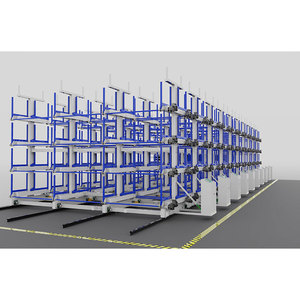
High-Density Warehouse Equipment
Engineered Industrial Storage Systems & Handling Fleet
Custom-engineered structural steel racks, gravity pallet rollers, and material handling solutions manufactured under strict CE, ISO 9001:2015, and RoHS parameters.
25+
Years Manufacturing Heritage (Since 2001)
30,000t
Monthly Production Steel Tonnage
10,000+
Global Warehousing Projects Executed
120+
Countries Exported Across ASEAN & Worldwide
Engineering Whitepaper: The Strategic Architecture of Roller Pallet Racking Systems
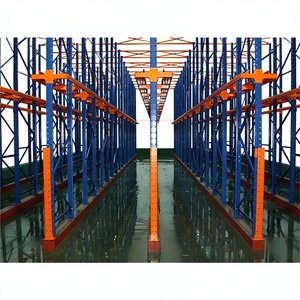
In contemporary intralogistics and industrial warehousing, maximizing volumetric space utilization while strictly controlling labor, cycle times, and operational risks is the definitive metric of competitive advantage. Roller pallet racking systems—commonly engineered as gravity flow racking, pallet flow systems, or dynamic live storage—represent the pinnacle of non-powered, high-density throughput management. Utilizing precision-pitched roller beds integrated into engineered structural steel frameworks, these dynamic solutions capitalize on natural gravitational kinetic force to move palletized goods smoothly from the loading aisle (replenishment end) to the unloading face (dispatch retrieval end).
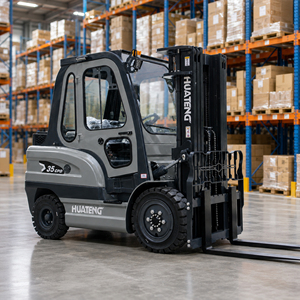
Operating predominantly on the First-In, First-Out (FIFO) stock management protocol, roller flow structures permanently segregate vehicle replenishment lanes from operational picking routes. This physical decoupling eradicates up to 65% of cross-aisle forklift traffic congestion, prevents catastrophic lift-truck impacts against structural uprights, and establishes a seamless picking buffer vital for time-critical cold rooms, fast-moving consumer goods (FMCG) distribution hubs, pharmaceutical staging operations, and agricultural export packing terminals.
Key Engineering Fact: An optimized gravity roller pallet system increases usable warehouse floor footprint density by up to 75% compared to standard wide-aisle selective racking, while eliminating the constant parasitic battery draw and software downtime associated with fully motorized automated guided systems.
Dynamic Mechanical Engineering: Components That Define Safety & Longevity
Unlike conventional static structural shelving, an OEM/ODM roller pallet racking installation is an active mechanical ecosystem subject to continuous dynamic momentum, brake-drum friction, dynamic shock absorption, and high repetitive surface shear. When selecting or commissioning an engineered system, warehouse directors and supply chain engineers must examine five mission-critical assemblies:
Graduated Speed Controllers
Centrifugal or magnetic internal speed retarders installed at predetermined track intervals maintain uniform pallet coasting speeds under 0.3 m/s, safeguarding fragile inventories from violent collisions regardless of lane depth.
Engineered Safety Separators
Mechanical pallet separators disengage trailing line pressure by locking the second pallet back approximately 6 inches from the pick face until the leading pallet is extracted by a counterbalanced forklift.
Multi-Ribbed Heavy Rollers
Cold-formed galvanized steel tubular rollers supported by heavy-duty spring-loaded hex axles and sealed ball bearings, tested across 500+ fatigue cycles to handle up to 1,800 kg static unit capacity per load track.
Future Procurement Trends: Where Strategic Supply Chains Are Investing
The procurement methodologies governing industrial storage infrastructure are transitioning from reactive unit-price bidding to total life-cycle asset evaluation. Global supply chain shocks, increasing warehouse land premiums, and climate-specific storage challenges across Southeast Asia, Europe, and the Americas have triggered several pivotal buying shifts:
1. Climate-Specific Protective Metallurgy
Importers across equatorial zones—including Malaysia, Indonesia, the Philippines, and coastal Vietnam—consistently report rapid cosmetic deterioration and structural pinhole corrosion when purchasing standard paint-dipped racking. Future-proof procurement demands rigorous surface pre-treatment consisting of 8-stage automatic acid pickling, zinc phosphating, and heavy-build electrostatic epoxy-polyester thermosetting powder coatings, or deep-vat hot-dip galvanizing capable of enduring sustained relative humidity surpassing 85%.
2. Seismic-Engineered Frameworks
With major manufacturing operations expanding across the Pacific Rim, structural resilience calculations can no longer remain generic. Buyers now mandate certified Finite Element Analysis (FEA) structural verification validating base plate anchoring, upright profile deformation limits, and horizontal diagonal bracing compliance against local seismic coefficients (such as UBC Zone 4 or Eurocode 8 seismic parameters).
3. Modularity for Hybrid Automation
Warehouses are increasingly resisting rigid, permanent mechanical structures. The trend favors modular gravity lanes engineered with adjustable frame pitches (50mm or 75mm increments) that allow facilities to convert manual flow lanes into autonomous mobile robot (AMR) loading stations or semi-automated radio shuttle tunnels with minimal scrap steel or layout downtime.
Evolutionary Trajectory: Future Development Trends in Roller Systems
The technical trajectory of roller pallet racking systems is defined by the convergence of low-cost passive mechanics with ambient digital operational intelligence:
Passive Self-Regulating Kinetic Dampening: Emerging development in roller metallurgy focuses on eddy-current magnetic retardation rollers that eliminate wear-prone physical friction brakes, offering frictionless, lifelong speed governance unaffected by oil, dust, or cold-storage ambient freezing temperatures down to -30°C.
IoT-Embedded Lane Sensing: Smart gravity lanes are now being prototyped with miniature, vibration-harvested piezoelectric sensors embedded within roller hubs. These self-powered units stream real-time pallet occupancy metrics, queue length, coasting velocity variations, and lane friction warnings directly to local Warehouse Execution Systems (WES) without requiring complex overhead electrical busways.
Universal Ergonomic Optimization: Advanced end-stop buffer plates equipped with pneumatic damper springs and tilting unload trays are evolving to reduce operator strain during full-pallet picking, ensuring smooth manual or robotic vacuum case handling directly at the discharge face.
Enterprise Advantage: Why Industry Leaders Partner with HEDA Shelves
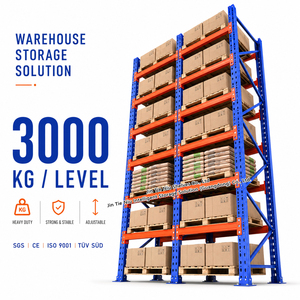
Founded in 2001, Guangzhou Heda Shelves Co., Ltd. has established an internationally certified manufacturing footprint specializing in high-capacity warehouse racking, industrial shelving, and multi-tier structural steel mezzanine systems. Our modern production base covers over 30,000 square meters, supported by an advanced metallurgical engineering team, dedicated QC inspectors, and a reliable throughput output exceeding 30,000 metric tons per month.
Verified CE & ISO Credentials
Holding CE Certificate No. 2435-CPR-8605159, ISO 9001:2015 No. 18624Q00169R0M, and comprehensive RoHS compliance.
10-Stage Precision Fabrication
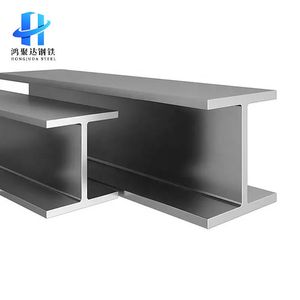
Raw Q235B/Q355B coil slitting, cold roll profiling, automated CNC punching, structural beam welding, phosphating, and powder coating under one roof.
Free 3D & CAD Engineering
Complimentary layout drawings, dead/live weight load calculations, and photorealistic 3D warehouse simulations before procurement commitment.
Strategic Port Logistics
Fast ocean dispatch from Guangzhou and Nansha ports with indicative 2–10 days sea transit to major Southeast Asian and global hubs.
Comprehensive Strategic Storage Comparison
Evaluating an investment in dynamic roller flow systems against other dense storage topologies requires understanding throughput selectivity and structural space returns:
| Racking Architecture | Density Index | Stock Rotation | Throughput Speed | Maintenance Overhead |
|---|---|---|---|---|
| Roller Pallet Flow | Very High (Up to 85%) | Strict FIFO | Rapid (Dedicated Faces) | Low (Non-Powered Gravity) |
| Drive-In Racking | High (Up to 75%) | Strict LIFO | Moderate (Truck in Bay) | Moderate (Collision Risk) |
| Push-Back Racking | Moderate-High (70%) | Strict LIFO | Moderate-Fast | Low-Medium (Cart Wheels) |
| Selective Pallet Racking | Low-Moderate (40%) | 100% Random Access | Fast (Direct Access) | Minimal |
Technical Knowledge Base
Frequently Asked Questions on Roller Pallet Procurement
Key technical, structural, and commercial inquiries resolved by HEDA Shelves application engineers.
What is the standard roller bed gradient required for reliable pallet flow?
Standard installations employ a gradient pitch between 3.0% and 4.0% (approximately 30mm to 40mm of vertical drop per linear meter of track). This slope guarantees smooth startup inertia for standard wooden Euro (800x1200mm) or industrial GMA (1000x1200mm) pallets weighing between 300kg and 1,500kg, while preventing uncontrolled sliding when governed by built-in speed retarders.
Can roller pallet racks operate reliably inside blast freezers and sub-zero cold stores?
Yes. For cold chain applications operating at temperatures from -25°C to -30°C, HEDA Shelves utilizes specialized low-temperature synthetic lubricants within sealed roller bearings, spring-tempered internal brake mechanisms, and pre-galvanized track profiles that prevent brittle failure and condensation corrosion during temperature fluctuations.
How does HEDA Shelves guarantee OEM/ODM custom dimensional compatibility?
Our OEM/ODM engineering protocol starts with full verification of your specific pallet bottom profile (skids, 9-block, perimeter base, or plastic ribbed). We execute structural roll-forming tailored to your required lane depth (from 2 deep up to 20 pallets deep), bay clear height, and forklift mast parameters, providing complete CAD layout blueprints and structural calculation documentation prior to stamping and rolling.
What documentation and certifications are provided for tender and regulatory compliance?
Every industrial installation shipped from our Guangzhou factory includes full mill test certificates (MTC) verifying raw material steel composition (Q235B or Q355B grade), CE certification documentation (No. 2435-CPR-8605159), ISO 9001:2015 quality registry records, static load calculation sheets, and multi-lingual step-by-step 3D assembly guides.
What is the export lead time and container packing standard for international shipments?
Standard fabrication cycle spans 15 to 25 business days depending on tonnage. Finished uprights and structural roll rails are packed with corrugated protection, strapping bands, and custom steel stillages designed for safe container de-stuffing without surface paint scuffs, maximizing weight and cube utilization inside 40ft High Cube containers.
Ready to Optimize Your Warehouse Dynamic Footprint?
Submit your warehouse layout drawings, pallet specifications, and throughput goals for an immediate engineering assessment and complimentary 3D rendering proposal.
Get a Quote