Industrial Dynamic Racking & OEM Specialized Handling Equipment
Explore our precision-fabricated push-back pallet storage assemblies, multi-tier high-density carts, and structural rack fixtures engineered to standard and customized warehouse footprints.
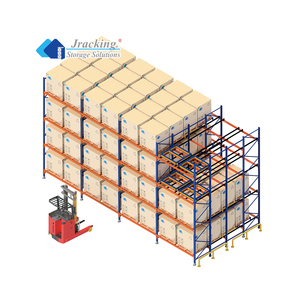
Jracking Push Back Racking Push-in Racking Pallet Racking Warehouse Storage System
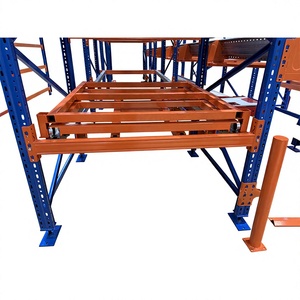
Factory Industrial Push Back Rack For Storage LIFO Rack Warehouse Racking System
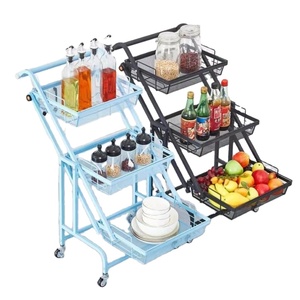
Stainless Steel Kitchen Storage Mesh Hand Push Cart 3-Tier Rolling Folding Trolley Rack Easy to Clean
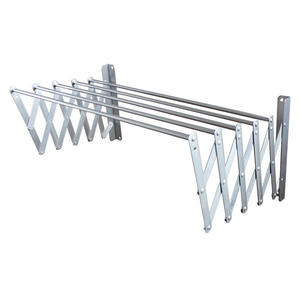
Cross Border Aluminum Alloy No Drill Wall Mounted Push Pull Five Rod Sliding Rack for Balcony Toilet and Indoor Use
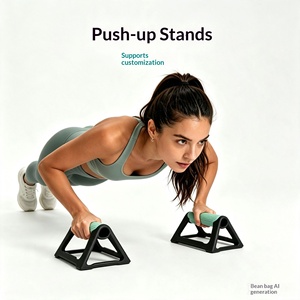
H-shaped Push-up Rack Training Stand Multi-functional I-beam Design No Installation Required Home Gym Equipment
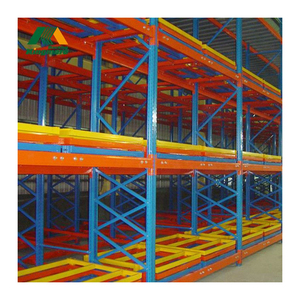
Heavy Duty Push Back Rack Stacking System Industrial Metal Rack Storage Equipment Warehouse Rack
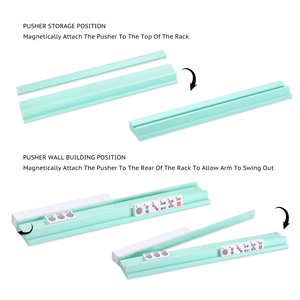
American Mahjong Magnetic Wooden Push Racks Lake Blue, Pusher Set of 4 Holiday Gift Accessories
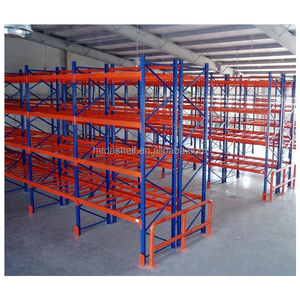
Wide Aisle Pallet Racking Heavy Duty Metal Rack Double Deep Clothes Racking System for Warehouse
Kinematic Mechanics, Slope Tolerances, and Nested-Cart Structural Design
Push-back pallet racking systems operate as dynamic Last-In, First-Out (LIFO) accumulation matrices. By leveraging gravitational incline vectors and nested rolling carriages, warehouse managers achieve exceptional volumetric density without driving forklifts directly into rack bays.
Nested Carriage Architecture
Unlike continuous roller tracks susceptible to debris jamming, our OEM push racks utilize interlocking, low-profile nested steel carts riding on inclined structural channels. Each successive pallet rests on its own rolling frame; when loading, the forklift operator pushes back the preceding cart to expose the next underlying tray, accommodating 2, 3, 4, 5, or 6 deep unit loads per lane with zero lane binding.
Gravitational Gradient & Kinetic Damping
Kinematic stability hinges on our calibrated rail slope angle, typically set between 1.5° and 2.5° (approximately 15–25 mm rise per linear meter). This precise gradient ensures smooth gravity-assisted deceleration during pallet extraction, preventing dangerous runaway acceleration while eliminating the need for complex internal centrifugal mechanical brakes across moderate travel distances.
Structural Metallurgy & Cold Forming
Columns, step beams, and cart guide channels are roll-formed from certified Q235B and high-yield Q355B structural steel coils. Uprights feature an omega profile with multi-bend reinforcement ribs to resist eccentric torsional buckling under dynamic seismic loading, certified to meet stringent FEM 10.2.02, RMI, and EN 15512 safety deflection criteria.
Push Back Racking vs. Alternative High-Density Warehouse Systems
Evaluating volumetric floor utilization, operating cycle velocity, initial capital expenditure, and operational safety to guide industrial material handling procurement decisions.
| Storage System Type | Pallet Flow Dynamic | Space Utilization Ratio | Forklift Cycle Time | Aisle Requirements | CapEx Index | Operational Safety Level |
|---|---|---|---|---|---|---|
| OEM Push Back Racking | LIFO (Nested Cart) | 70% – 85% Utilization | Fast (Face-Aisle Only) | Standard Reach / Counterbalance | Moderate | Superior (Zero Bay Entry) |
| Drive-In / Drive-Through | LIFO / FIFO | 65% – 75% Utilization | Slow (Deep Maneuvering) | Dedicated Entry Channels | Low - Moderate | Medium (High Upright Impact Risk) |
| Gravity Pallet Flow | FIFO (Roller Beds) | 80% – 90% Utilization | Very Fast (Separate In/Out) | Dual Aisles (Loading & Discharge) | High | High (Speed Controllers Required) |
| Radio Shuttle System | FIFO & LIFO | 85% – 92% Utilization | Automated In-Lane Transfer | Face-Aisle Loading | High - Advanced | Superior (Semi-Automated Cart) |
| Selective Pallet Rack | 100% Direct Access | 35% – 45% Utilization | Immediate Single-Pallet Pick | Wide Aisles Required (3.2m–3.8m) | Low | High (Subject to Aisle Traffic) |
Why Global Supply Chains Source OEM/ODM Push Racks from Us
Operating from our 30,000 square-meter advanced manufacturing facility in Guangzhou since 2001, we deliver complete turn-key custom engineering—from raw coil slitting to automated electrostatic anti-corrosion finishing.
25+ Years of Dedicated Metallurgy
Founded in 2001, our team has accumulated over two decades of metallurgical and roll-forming know-how. We produce up to 30,000 metric tons per month across automated rolling lines, ensuring rock-solid supply stability for tier-one logistics integrators.
10-Stage Precision Production Flow
Every structural profile undergoes uncoiling, laser shearing, multi-axis automated column CNC perforation, roll forming, robotic welding, 9-step pickling & phosphating immersion, and cure-bonded electrostatic powder coating for ultimate tropical durability.
Compliant Certifications
All push rack assemblies are backed by traceable third-party certificates: European CE Certification No. 2435-CPR-8605159, ISO 9001:2015 Quality Management No. 18624Q00169R0M, and RoHS green environmental compliance.
Free Layout & Finite Element Calculations
Our 300+ strong engineering wing prepares 2D CAD floor plans, full 3D visual renderings, and structural beam deflection stress reports customized to your building heights, column grids, and forklift lift constraints free of charge.
Severe Climate & Anti-Corrosion Formulations
For high-humidity ASEAN regions and sub-zero cold chain warehouses (-30°C), we apply specialized zinc-rich primers, hot-dip galvanizing, and anti-icing flanged polyurethane rollers to stop moisture corrosion and bearing freeze-up.
Complete Container-Optimized Packing
Uprights and carts are flat-packed in high-density nesting bundles with custom pallet skids, maximizing 40HQ maritime container payload volumes, reducing landed freight costs, and preventing shipping damage during transit.
Procurement & Technology Trends Shaping Dynamic Push-Back Systems
Forward-thinking logistics directors are modernizing pallet storage architecture to mitigate rising square-meter real estate leases, skyrocketing energy costs, and robotic workflow transformations.
Cold Chain Optimization
With freezer warehouse energy costs up 40%, multi-tier push-back systems provide 75% cubic density in sub-zero chambers without requiring heated forklift cabs to penetrate refrigerated racking bays.
AGV/AMR Hybrid Interfacing
Modern push rack loading faces are being fitted with photoelectric positioning targets, tapered alignment rails, and pallet stop sensors to enable autonomous guided forklifts to deposit and pick unit loads seamlessly.
High-Ductility Seismic Frames
In Pacific seismic belts (Philippines, Indonesia, Western Americas), push racks now feature reinforced footplates, heavy back horizontal-diagonal trusses, and safety cart latches to keep carts seated during earth tremors.
Modular Boltless Cart Rails
Older systems required extensive on-site field welding. Modern OEM architectures feature pre-welded, precision-jigged sub-frames that bolt directly into standard teardrop or slot beams, cutting field assembly labor by over 50%.
B2B Procurement & Engineering FAQ
Clear, technically rigorous answers covering structural capacity, forklift compatibility, carriage clearances, and custom OEM manufacturing parameters.
Request an Engineered Layout & Factory Quote
Send our Guangzhou engineering department your warehouse floor drawings, ceiling clear heights, and pallet specifications. We provide complete 2D CAD layouts, 3D renders, and certified loading calculations within 24 hours.