Engineered Solutions
Industrial Pallet Storage Configurations & Dynamic Systems
Precision-manufactured structural racking units, dynamic gravity flow platforms, and automated storage solutions built to international static and dynamic load compliance standards.
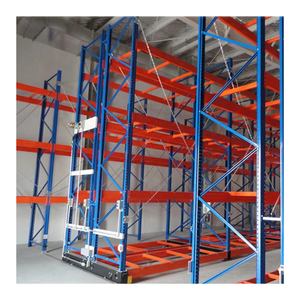
Automated Electric Mobile Pallet Racking
System Specifications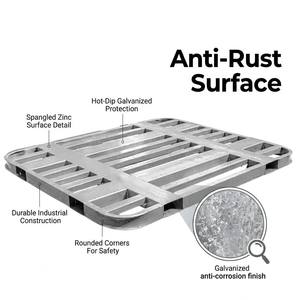
Heavy-Duty Stackable Steel Forklift Pallet
System Specifications
High Bay Pallet Racking & Structural Design
System Specifications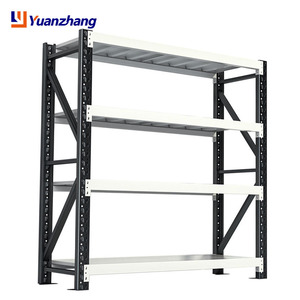
Adjustable Bolted Metal Storage Shelving
System Specifications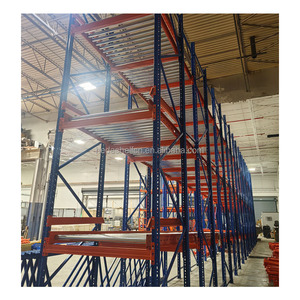
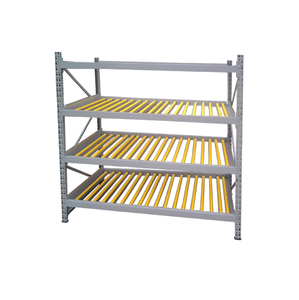
Industrial Gravity Roller Pallet Flow System
System Specifications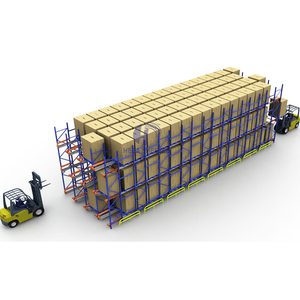
Automated 4-Way Shuttle Pallet Racking
System Specifications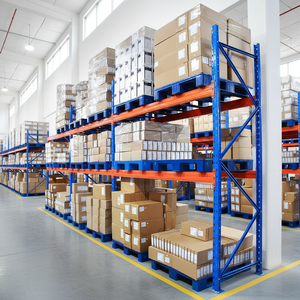
Selective Pallet Racking (Blue & Orange)
System Specifications30,000 m²
Dedicated Factory Floor
30,000 t
Monthly Cold-Form Output
10,000+
Global Installations
ISO & CE
Third-Party Verification
Procurement Technicalities
Engineering Pallet Storage Units: The OEM/ODM Structural Guide
In modern industrial facilities, the procurement of a pallet storage unit has transitioned from standard material acquisition to an advanced structural engineering challenge. An industrial storage structure is subjected to extreme dead weights, variable dynamic seismic moments, repeated forklift mechanical impacts, and environmental stresses such as tropical humidity or deep-freeze cold storage cycles. When engaging with an OEM (Original Equipment Manufacturer) or ODM (Original Design Manufacturer), warehouse planners and logistics consultants must evaluate cold-formed thin-walled steel profiles, material yield tolerances, and column-to-beam connection stiffness rather than purely superficial unit costs.
A resilient storage framework relies heavily on steel alloy chemistry and precise roll-forming techniques. Standard configurations utilize high-grade certified structural steel (such as Q235B or Q355B), engineered to maintain load integrity across multivariable rack heights exceeding 12 to 30 meters. In dynamic configurations—such as Radio Shuttle Racking, Four-Way Automatic Shuttles, and Pallet Flow Channels—tolerances for deflection under maximum rated load must be strictly managed below 1/200th (or 1/300th for robotic AS/RS integrations) of the clear span. Without high-precision automated punching and cold-bending profiles, variations across adjacent upright bays can induce rail misalignment, causing automatic guided vehicles (AGVs) or radio shuttles to stall.
Surface chemistry preparation forms another core vector of longevity. In regions characterized by high ambient moisture, coastal sea-spray salinity, or cold-chain condensation, basic spray painting degrades rapidly, inducing structural micro-fissuring and rust creep beneath the film. True industrial OEM fabrication mandates a comprehensive chemical pre-treatment cycle: multi-stage continuous degreasing, acid pickling, surface conditioning, and zinc phosphating prior to electrostatic polyester powder coating. For exterior or sub-zero refrigeration operations, continuous hot-dip galvanization guarantees that structural steel uprights retain their mechanical resilience across multi-decade operational horizons.
Strategic Trajectory
Macro Trends: The Future of Pallet Storage Procurement
Navigating the intersection of automation, localized environmental resilience, and total cost of ownership (TCO) across 2026–2030 intralogistics investments.
Transition to 4-Way Shuttle & AS/RS
Static storage footprints are being rapidly replaced by high-density, multi-directional shuttle matrices. Warehouses are shifting from manual forklift operations to autonomous 4-Way Radio Shuttle architectures that eliminate aisle wasted cubic footage, drastically accelerating SKU turnover while minimizing product damage.
Seismic & Environmental Engineering
Global procurement protocols now demand site-specific finite element analysis (FEA). Storage units destined for active tectonic corridors (e.g., the Pacific Rim) must incorporate reinforced portal frames, widened anchor baseplates, and dynamic energy-dissipation cross-bracing to prevent catastrophic failure under seismic shear.
Direct Factory ODM Customization
Supply chain managers are bypassing middleman markups by establishing direct OEM/ODM links with dedicated manufacturing hubs. Direct factory customization enables tailored upright profiles, non-standard beam connectors, and integrated floor-to-ceiling mezzanine configurations optimized for exact site geometries.
Engineering Matrix
System Performance & Operational Comparison
| Storage Architecture | Space Utilization | Stock Rotation Strategy | Handling Equipment Type | Optimal Industry Application |
|---|---|---|---|---|
| Selective Pallet Racking | 40% – 50% Volumetric | 100% Direct Access (FIFO) | Standard Counterbalance / Reach Truck | 3PL Distribution, FMCG, Diverse Retail Warehousing |
| Drive-In Racking System | 65% – 75% Volumetric | LIFO (Last-In, First-Out) | Counterbalance / Specially Guided Trucks | Bulk Raw Materials, Seasonal Cold Stores, Homogeneous SKUs |
| Gravity Pallet Flow Rack | 70% – 80% Volumetric | Strict FIFO (Gravity Incline) | Standard Forklifts (Separate Load/Unload) | Food & Beverage, Pharmaceuticals, Perishable Goods |
| 4-Way Radio Shuttle Matrix | 85% – 92% Volumetric | Flexible FIFO / LIFO Automated | Automated Shuttles + Vertical Lifts / AGVs | High-Density Cold Storage, Deep Chill, Smart Factories |
| Rack-Supported Mezzanine | Doubles/Triples Footprint | Multi-Tier Manual + Pallet Mix | Hydraulic Lifts, Pallet Jacks, Pickers | E-commerce Fulfilment, Automotive Spare Parts Distribution |
Factory Pedigree
Why Source Direct from Our Manufacturing Base
Over two decades of proven metalworking mastery, large-scale production capability, and comprehensive project execution.
25+ Years Industrial Heritage
Founded in 2001, our facility has evolved from precision rolling lines to a premier integrated OEM/ODM manufacturing campus serving over 120 countries globally.
Certified Structural Compliance
Fully compliant with international building codes, maintaining verifiable CE Certification (No. 2435-CPR-8605159) and ISO 9001:2015 Quality Management standards.
End-to-End In-House Control
From raw uncoiled steel coils, laser cutting, automated column punching, and robotized welding to automatic electrostatic coating—zero subcontracted shortcuts.
Complimentary Layout & FEA
Our senior structural engineering team prepares comprehensive AutoCAD layouts, 3D digital twins, and detailed weight-loading stress simulations prior to project signing.
Procurement Advisory
Frequently Asked Questions: Pallet Storage Units
Q: What core structural parameters are required for a custom OEM/ODM racking layout?
To deliver an accurate structural quotation and CAD blueprint, we require: clear architectural warehouse height under the lowest obstruction (sprinklers/beams), exact floor slab thickness and concrete compressive strength (PSI/MPa), pallet footprints (Width x Depth x Height including cargo overhang), gross load weight per pallet, and your intended forklift turning radius and maximum mast lift reach.
Q: How is steel surface longevity preserved in humid or high-salinity regional environments?
We employ a thorough multi-stage chemical pre-treatment system comprising alkaline immersion degreasing, hot acid pickling, rinsing, and deep zinc phosphating. This forms a crystalline foundation for our electrostatic powder coating, exceeding 500-hour salt spray benchmarks. For marine or condensation zones, hot-dip galvanizing with up to 70–85 microns of zinc layer thickness is deployed.
Q: Can structural calculations factor in localized seismic hazard zone parameters?
Yes. Our engineering division conducts site-specific seismic response analyses conforming to local building codes. In high-risk seismic environments (such as Indonesia, the Philippines, or western regions), we configure enlarged footplates, high-tensile anchor bolting, heavy-gauge steel uprights, and longitudinal diagonal cross-bracing to prevent dynamic sway and buckling.
Q: What is the standard international maritime delivery window from Guangzhou port?
Our Guangzhou/Nansha factory benefits from direct maritime access. Average port-to-port sea transit across Southeast Asia and coastal corridors is extraordinarily fast: 2–5 days to Vietnam, 3–5 days to Manila, 5–7 days to Singapore and Laem Chabang, 6–8 days to Port Klang, and 7–10 days to Jakarta. Consolidated packing maximizes container cubic utilization to keep sea-freight overhead low.
Upgrade Your Facility with Factory-Direct Storage Engineering
Speak directly with our structural engineering team. Receive complimentary customized CAD blueprints, 3D renderings, and transparent OEM/ODM factory-direct volume pricing within 24 hours.