Heavy Duty Logistics
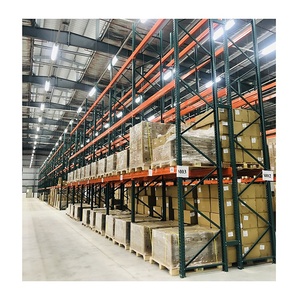
Direct from our ISO 9001:2015 and CE-certified manufacturing facility, explore structural steel storage configurations precision-built for automated DCs, cold chain environments, and high-throughput distribution hubs.
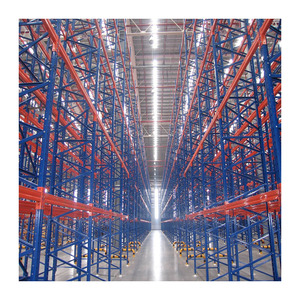
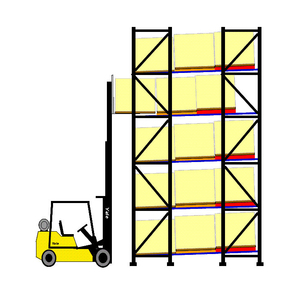
Founded in 2001, Guangzhou Heda Shelves Co., Ltd. operates an advanced 30,000 square meter industrial manufacturing base. With over 300 dedicated fabrication, structural engineering, and robotics experts, we deliver certified intralogistics infrastructure across Europe, the Americas, and ASEAN markets.
Our facility utilizes automated, multi-station continuous roll-forming lines capable of handling structural strip steel thicknesses from 1.5mm to 3.5mm. Precision online CNC punching ensures strict column pitch tolerances (±0.5mm) across entire 12-meter upright upright lengths.
To counter aggressive tropical humidity and coastal salt corrosion, components undergo automated acid pickling, ultrasonic degreasing, and phosphating passivation before electrostatic thermosetting epoxy-polyester powder coating cured at 200°C.
Our engineering department delivers comprehensive structural calculations for every project. We calculate Euler buckling, local member torsion, seismic acceleration vectors ($S_s, S_1$), and beam deflection limits conforming strictly to FEM 10.2.02 and RMI MH16.1 codes.
We engineer custom tooling sets for proprietary column geometries: teardrop styles for North American markets, European 50mm diamond patterns, and Australian 76.2mm pitch standards. Complete white-label branding, customized color schemes, and private-label embossing available.
Positioned adjacent to major maritime gateways (Guangzhou / Shenzhen / Nansha), direct container sailings reach Vietnam in 2–5 days, Manila in 3–5 days, Singapore and Bangkok in 5–7 days, and Port Klang in 6–8 days, guaranteeing critical milestone delivery.
Our operations are audited under international certification frameworks: CE Certificate No. 2435-CPR-8605159, ISO 9001:2015 Registration No. 18624Q00169R0M, and RoHS heavy metal compliance certificates, verifiable directly with issuing testing bodies.
Modern warehouse structures are no longer passive static steel fixtures. They represent highly engineered mechanical interfaces designed for high dynamic loads, robotic shuttle integration, and extreme thermal resilience.
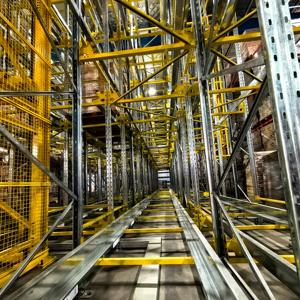
The global shift from manually driven counterbalance lift trucks toward high-bay autonomous warehouses has transformed upright column and guide rail tolerance parameters. In modern automated storage and retrieval systems (AS/RS) and radio shuttle configurations, tolerance envelopes for rail alignment have compressed from ±3.0mm to less than ±1.0mm over a 50-meter run.
Our manufacturing lines integrate robotic laser guidance systems to achieve ultra-precise cold roll-formed guide profiles. This eliminates carriage derailment, minimizes acoustic resonance during high-speed acceleration (up to 4.0 m/s²), and supports battery-operated autonomous carriers operating at full 1,500 kg capacities inside continuous deep-lane bays.
Escalating global freight rates and raw steel commodity volatility have driven structural engineering teams toward high-yield micro-alloyed carbon steels (such as Q355B and S355JR). By optimizing the physical profile geometry—introducing longitudinal stiffening ribs along the column web and flanges—the section modulus can be improved by 18–25% without adding net deadweight.
This structural optimization reduces steel consumption per pallet location by up to 14%, directly shrinking ocean transport container requirements. As an OEM factory, we simulate these load-to-weight efficiencies via ANSYS and SolidWorks Simulation before tooling production runs, guaranteeing code compliance at lower shipped cost.
With the unprecedented expansion of global frozen pharmaceutical cold chains and perishable food logistics, pallet shelving systems are exposed to continuous operational temperatures ranging from -25°C down to -40°C. Conventional carbon structural steels risk transitioning through their ductile-to-brittle transition temperature (DBTT), heightening catastrophic structural fatigue risks under sudden forklift shock loads.
HEDA Shelves incorporates fine-grained normalized killed steel coils with documented Charpy V-Notch impact toughness down to -40°C. Combined with continuous hot-dip post-weld galvanization (ISO 1461) or specialized anti-cracking elastomeric polyester powders, our racks prevent micro-fissuring and cyclic condensation corrosion across multi-year operational cycles.
Logistics corridors throughout seismic hot zones—including the Pacific Ring of Fire (Philippines, Indonesia, Japan, New Zealand, and West Coast Americas)—demand performance-based seismic structural design. Racking structures must deform plastically without progressive cross-aisle or down-aisle collapse under maximum considered earthquake (MCE) events.
Our engineering configurations specify heavy-gauge ductile baseplates, double-anchor stud spacing, oversized structural anchor embedment depths, and specialized bracing nodes. High-ductility beam connectors dissipate mechanical energy via controlled mechanical slippage and pin deformation, protecting facility personnel and critical supply chains.
How Fortune 500 procurement directors, global 3PL operators, and warehouse racking distributors are restructuring their procurement frameworks to manage risk, ensure engineering accountability, and drive carbon reduction.
Procurement teams are cutting through tiered distribution networks to contract directly with original equipment manufacturing factories. Direct collaboration with factory engineering desks eliminates trading intermediary markups (typically 18–35%), reduces design turnaround latency from weeks to hours, and establishes unified technical accountability for layout errors, load ratings, and weld integrity.
Ocean freight economics dictate that dead volumetric space directly increases landed cost per pallet position. Modern procurement contracts require automated 3D nested bundling configurations. We package beams, upright frames, column footplates, and accessories to consistently achieve 95%+ cube utilization inside 40-foot High Cube (40HQ) maritime shipping containers.
Global warehouse operators seek to escape vendor lock-in. Sourcing demands universal pitch standards (such as teardrop or standardized 50mm metric punches) that allow beams, safety accessories, and wire decking to interchange seamlessly across facilities worldwide. This modular architecture simplifies asset relocation and amortizes capex investments across multi-decade corporate leasing horizons.
| System Architecture | Pallet Density Ratio | Selectivity Profile | Inventory Turnover Policy | Optimum Handling Equipment | Primary Industrial Sector |
|---|---|---|---|---|---|
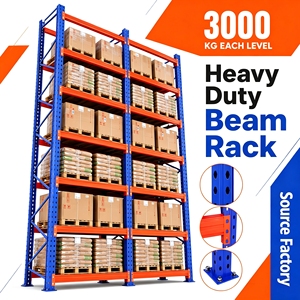
| Selective Pallet Racking | Baseline (100% Footprint) | 100% Direct Immediate Access | FIFO (First-In, First-Out) | Standard Counterbalance / Reach Trucks | General FMCG, Multi-SKU E-Commerce, 3PL |
| Drive-In Racking | High (+60% to +75% Cube Gain) | Low (Lane-Restricted Access) | LIFO (Last-In, First-Out) | Standard Reach / Narrow Chassis Trucks | Bulk Raw Materials, Seasonal Fruit, Beverage |
| Push Back Racking (2-6 Deep) | Medium-High (+45% to +55%) | Medium (Per Lane Selectivity) | LIFO (Gravity Cart Nested) | Standard Reach Trucks | Cold Storage Staging, Food Buffering, Pharma |
| Four-Way Radio Shuttle AS/RS | Ultra-High (+80% to +90%) | Programmed Batch Selectivity | Flexible FIFO & LIFO Mode | Autonomous Shuttle Carrier + Vertical Lift | Deep Freeze (-30°C), Meat/Dairy, High-Volume DCs |
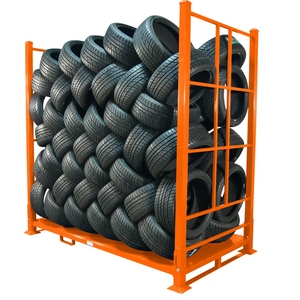
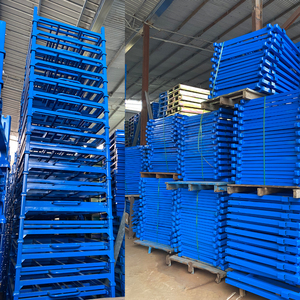
| Foldable Stacking Stillages | Flexible Seasonal Stacking | Batch Handling | Dynamic Floor Repositioning | Any Standard Forklift | Textiles, Automotive Fabrication, Export Yards |
Detailed answers prepared by our senior structural engineering team addressing load calculations, international standards, surface chemistry, and logistics execution.
Connect directly with our senior intralogistics structural engineers. We provide complimentary 2D AutoCAD floor plans, 3D structural model renderings, and comprehensive static FEA load calculation reports within 24 hours.