Industrial Storage Systems & High-Tolerance Warehouse Racks
Custom OEM/ODM configurations engineered for high-bay stability, variable pallet dimensions, heavy sheet metals, and corrosive sub-zero cold storage environments.
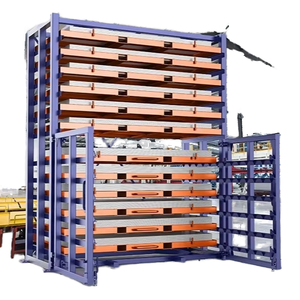
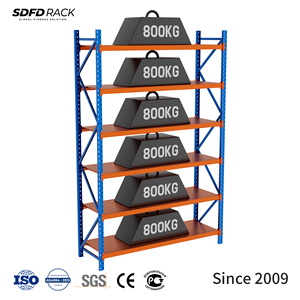
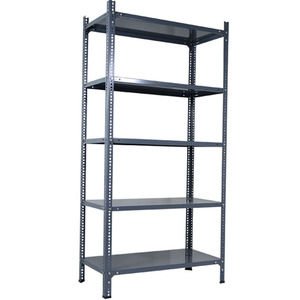
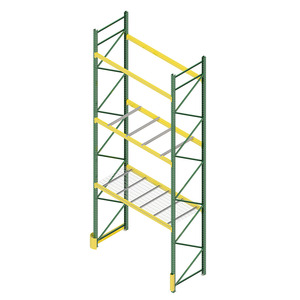
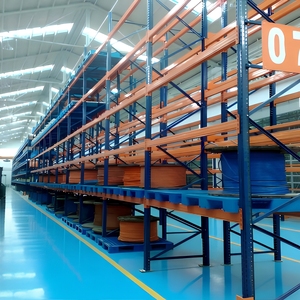
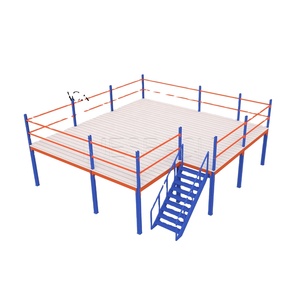
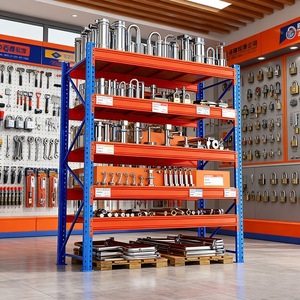
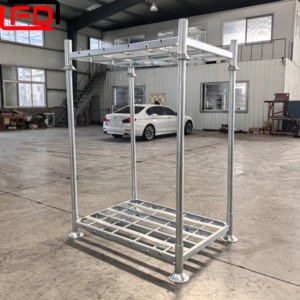
Architectural Precision in Very Narrow Aisle (VNA) Logistics Systems
A rigorous review of structural dynamics, floor flatness compliance (TR34 / DIN 15185), and vertical deflection optimization under high-bay cyclic loads.
In high-density modern intralogistics, Narrow Racking Systems (commonly designated as Very Narrow Aisle or VNA racking) constitute the critical architectural equilibrium between maximum cubic storage efficiency and direct 100% SKU selectivity. Standard wide-aisle selective pallet configurations consume roughly 3,200 mm to 3,800 mm of floor span exclusively for counterbalanced forklift turning radiuses. By contrast, a turnkey narrow aisle configuration shrinks working operational corridors down to a mere 1,500 mm to 1,800 mm. By transforming horizontal wasted circulation footprint into vertical volumetric capacity—often scaling clear heights from 9 to over 17 meters—logistics hubs and manufacturing plants systematically capture an immediate 40% to 55% surge in usable pallet positions on the exact same real estate footprint.
However, elevating unitized pallet loads reaching up to 2,000 kg per position to heights topping 15 meters places monumental kinematic and structural demands on cold-formed thin-walled structural members. Upright profiles must withstand complex biaxial bending, torsional bucking, and axial compressive stress simultaneously. As certified OEM/ODM manufacturers, our engineering protocols align with international structural codes, including EN 15512:2020 (European Racking Code), RMI ANSI MH16.1 (North American Standard), and AS 4084-2023 (Steel Storage Racking). We utilize high-yield structural grade coil stock (Q235B and Q355B micro-alloyed carbon steel) with precise moment-resisting beam-to-column beam-connector configurations.
Floor Flatness Class (DIN 15185 / TR34)
Elevating VNA turret trucks to 15+ meters amplifies millimeter-scale floor irregularities into dangerous top-mast sway. We provide comprehensive guidance on DM1/DM2 grinding and TR34 "Superflat" requirements to eliminate dynamic mast collision and beam striking.
Dual Tracking: Mechanical vs Wire Guidance
Every bay layout integrates either low-profile mechanical structural steel guide rails (e.g., unequal angles with anchored end-run entry horns) or high-frequency inductive wire guidance sub-floor loops, facilitating full-speed blind-run turret transit inside the aisle.
Finite Element Seismic Dissipation
Engineered for seismically active regions across the Pacific Rim and Southeast Asia. We model finite element frame sway, plastic hinge formation at baseplate-to-concrete interfaces, and bracing node rigidity to prevent collapse under transient harmonic earthquakes.
High-Density Intralogistics Topology Comparison
Quantitative trade-off metrics comparing Narrow Aisle (VNA) systems against legacy selective, drive-in, and shuttle storage paradigms.
| Storage Topology | Working Aisle Width | Volumetric Density Gain | SKU Accessibility | MHE Handling Velocity | Typical Investment ROI |
|---|---|---|---|---|---|
| Narrow Racking (VNA) | 1,500 – 1,800 mm | +45% to +60% vs. Selective | 100% Direct Immediate Access | High (Dedicated Turret/Man-Up) | 12 – 18 Months |
| Standard Selective Rack | 3,200 – 3,800 mm | Baseline Reference (0%) | 100% Direct Immediate Access | Medium (Standard Counterbalance) | Immediate / Standard |
| Drive-In Pallet Racking | Tunnel Lanes (~Pallet Width) | +60% to +75% | Low (Strict LIFO / Batch Run) | Slow (Mast Enters Structure) | 18 – 24 Months |
| Radio Shuttle Automation | Aisle + Semi-Auto Deep Lane | +70% to +85% | Medium (FIFO or LIFO Batch) | Very High (Automated In-Lane) | 24 – 36 Months |
Future Procurement & Technological Trends in Narrow Racking
Anticipating the technological shift: How robotics, climate resilience, structural telemetry, and circular procurement are reshaping racking procurement.
AGV/AMR Hybrid Turret Convergence
Warehouses are shifting from manual man-up/man-down VNA trucks to driverless automated guided vehicles (AGVs) navigating narrow aisles via optical or SLAM lidar. Uprights must now be manufactured with sub-millimeter tolerances to prevent sensor false-alarms.
Digital Twin & Deflection Telemetry
Next-generation narrow racking deployments integrate wireless load-pin telemetry and acoustic emission sensors along critical cantilever arms and main beam locks to continuously register deflection, metal fatigue, and unauthorized forklift impacts in real time.
Tropical-Grade Pre-Treatment Advancements
Exporting to humid, high-salinity zones in Southeast Asia or coastal Middle Eastern transshipment ports requires elevated surface longevity. Procurement is shifting towards 10-stage automated pickling, phosphating, and thermo-polymer epoxy powder coating tested to 500+ salt-spray hours.
Container Modularization for Ocean Freight
With volatile maritime logistics rates, progressive buyers mandate nesting section designs that eliminate void volumes inside 40ft High Cube containers. Our structural engineers design spliced upright column profiles that maximize shipping container weight density.
Why Global Importers & EPCs Choose Our Factory Direct Supply
Operating from our 30,000 m² state-of-the-art intelligent manufacturing facility in Guangzhou, China, we combine metallurgical engineering mastery with aggressive export trade terms (FOB, CIF, DDP).
-
Scale & Capacity: 30,000 metric tons per month capacity powered by 300+ technicians and automated CNC roll-forming lines.
-
Compliant Certifications: Audited and verified CE Certificate No. 2435-CPR-8605159, ISO 9001:2015 No. 18624Q00169R0M, and complete RoHS directives.
-
Zero-Cost Engineering Support: Turnkey 2D structural CAD layouts, 3D photorealistic renderings, and dynamic load stress calculations delivered within 24 hours.
-
Direct Port Logistics: Located minutes from Guangzhou/Nansha ports; direct maritime lines provide 2-5 days sea transit to Vietnam, 3-5 days to Manila, and 5-7 days to Singapore/Laem Chabang.
Verified Quality Control Ecosystem
Our automated 10-step production protocol ensures zero-defect delivery: Raw steel ultrasonic testing → CNC precision shearing → High-speed column perforating → Progressive roll-forming → Robotized beam welding → Shot-blasting & pickling → Phosphating pre-treatment → Electrostatic polyester powder coating → Curing at 200°C → Standardized container packing.
Frequently Asked Questions on Sourcing Narrow Racking Systems
Essential structural, logistics, civil engineering, and trade considerations for procurement managers, 3PL developers, and general contractors.